Does A Motorcycle Have An Alternator – Fact Check
Yes—most motorcycles have an alternator. It’s usually a compact stator-and-rotor charging system rather than a car-style unit.
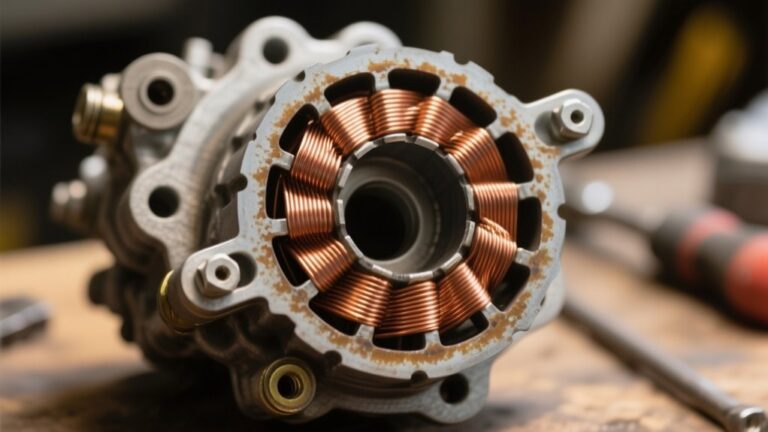
The rotor spins past the stator to generate AC power. A rectifier and regulator convert it into stable DC for the battery and electronics, typically around 13.5 to 14.5 volts.
Some older or smaller bikes use a magneto or generator instead. If you want the details, the next section breaks down how each part works.
What Does a Motorcycle Alternator Do?
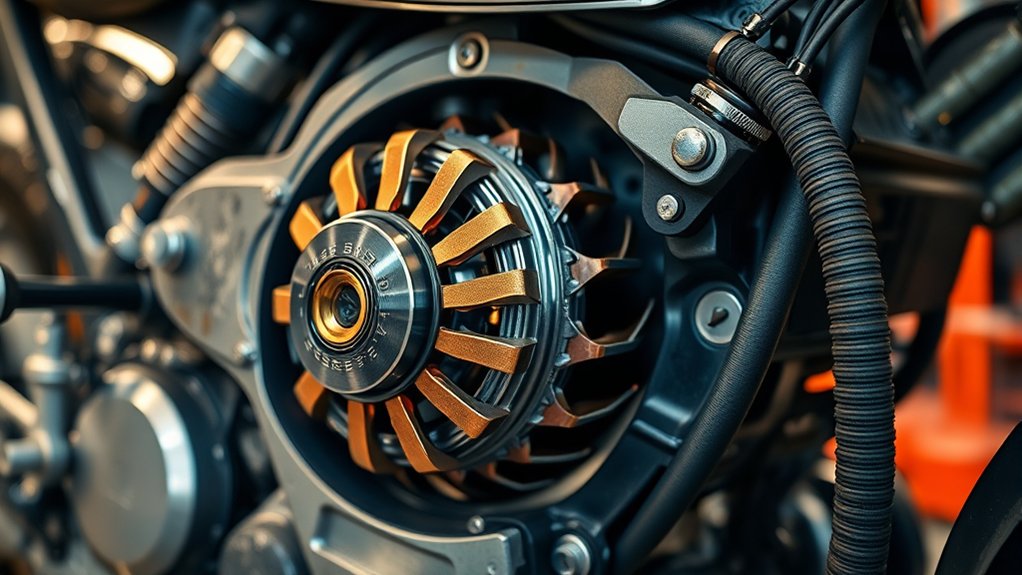
A motorcycle alternator converts mechanical energy from the engine, usually through the crankshaft or rotor, into alternating current (AC). It powers the bike’s electrical systems while the engine is running.
A motorcycle alternator turns engine motion into AC power for the bike’s electrical systems.
In a three-phase alternator, a rotating permanent-magnet rotor and a stationary stator generate AC output as engine RPM rises. Then the rectifier/regulator converts that AC into stable DC charging voltage, typically about 13.5–14.5 volts.
That helps maintain battery charging and protects electronics. Output varies by design and engine speed, and many street-bike stators produce roughly 100–500 watts.
When the alternator works correctly, you keep lights bright and ignition stable. You also maintain a charged battery while you ride.
Do All Motorcycles Have an Alternator?
Most modern motorcycles do use an alternator.
Usually it’s a rotor and stator assembly that generates AC power for the bike’s electrical system and charges the battery.
You’ll find this in most street bikes, but not every machine uses the same charging system.
Small or very old motorcycles may use a magneto or generator instead of an alternator, so the answer isn’t absolute.
Your rectifier regulator converts the AC output to DC and keeps voltage stable for the battery.
Typically it runs around 13.5–14.5 V.
- A compact stator
- A spinning rotor
- A charged battery
- A lit instrument panel
In normal use, alternators often produce 100–500 watts.
That’s enough for lights, ignition, and accessories.
Alternator vs Stator: What’s the Difference?
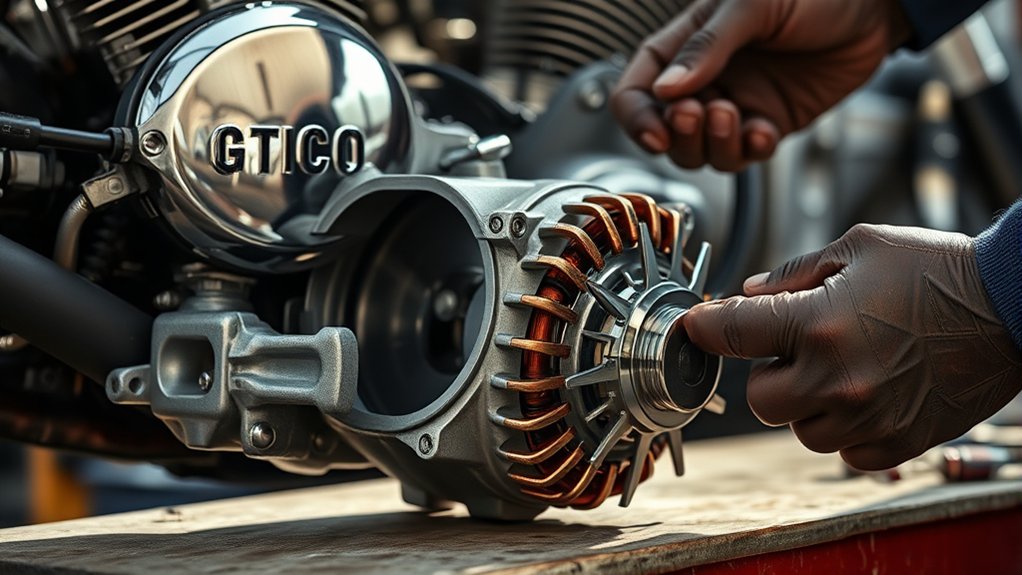
Although people often use the terms interchangeably, a motorcycle’s charging system usually relies on a stator-and-rotor assembly rather than a car-style alternator.
You’ll find the stator fixed in the engine case, while the rotor, often called the flywheel, spins past its coils.
That motion creates three-phase AC, which a rectifier/regulator converts to DC for the battery and electronics.
Technically, this setup is still an alternator because it produces alternating current, and older designs may be called a magneto.
The key difference is packaging. Motorcycle units are compact and air-cooled, and the rectifier/regulator is often separate, while many cars use a larger alternator with integrated regulation.
Signs Your Motorcycle Charging System Is Failing
When your motorcycle’s charging system starts failing, the first clues are usually electrical.
Headlights and dash lights may dim or flicker, especially as engine speed changes, because the stator and rectifier/regulator can’t hold battery voltage in the proper range.
You may also notice:
- dim headlights at idle
- dash lights pulsing with RPM
- intermittent stalling under load
- starting problems after a ride
A healthy motorcycle charging system should keep battery voltage near 13.5–14.8 volts at cruising RPM.
If you keep needing jump starts, or the bike starts with a jump pack but drains quickly, charging failure is likely.
Heated grips, brake lights, and fuel injection can push a weak system over the edge.
That can lead to intermittent stalling and weak cranking.
How to Test the Battery, Stator, and Rectifier
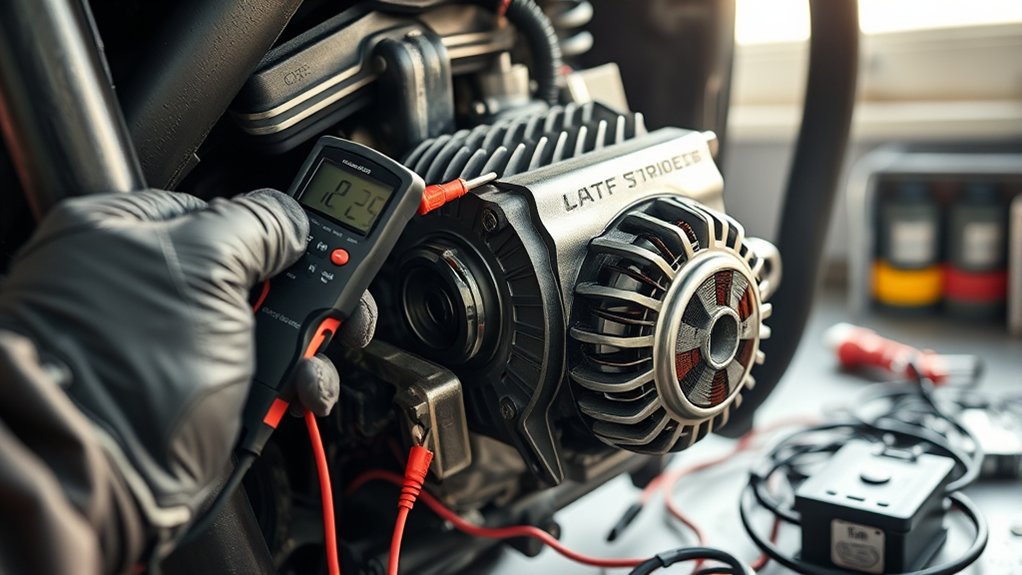
Start by fully charging the battery.
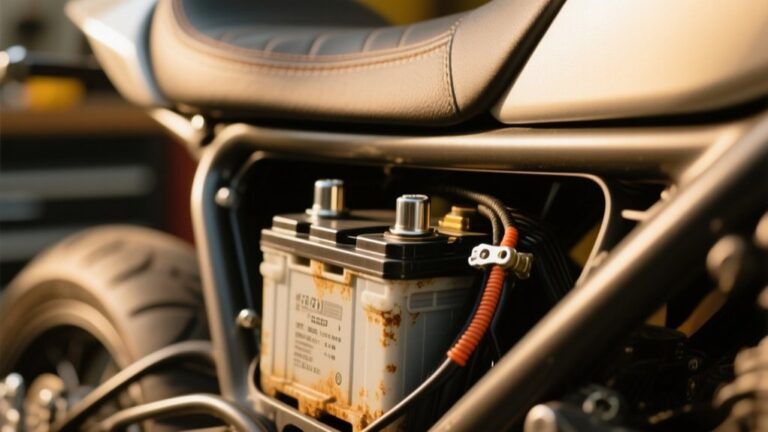
Confirm it holds a resting voltage of about 12.6–12.8 volts, since a weak battery can make a good charging system seem faulty.
With the engine running, check battery voltage at the terminals.
You should see about 13.5–14.8 volts, depending on the regulator, which confirms the charge rate is working.
If you see 12–11 volts, the system isn’t charging properly.
For a stator test, disconnect it.
Use an AC voltmeter across the output leads at idle and at 3,000–4,000 rpm, and the output should rise sharply.
Next, inspect the rectifier regulator with the engine revving.
Check AC at the battery, or look for more than 15–15.5 volts.
If you see those readings, the unit may be failing.
Finally, use a multimeter diode test on the isolated rectifier.
Frequently Asked Questions
Can a Motorcycle Run Without a Battery?
Yes, you can sometimes run a motorcycle without a battery.
If your bike uses a self-sufficient stator, magneto, or alternator-fed ignition, it may start and run on charging-system power alone.
However, modern fuel-injected bikes usually won’t.
They often need battery voltage for the ECU and starter, so without it you may get unstable voltage, dim lights, and possible electronics damage unless you add the proper load or capacitance.
How Long Does a Motorcycle Alternator Last?
Usually, you’ll get 10–20 years or about 20,000–60,000 miles from your motorcycle alternator. It’s a bit of a “blink and you miss it” lifespan for a part that prefers not being noticed.
You can shorten its life with heat, oil contamination, vibration, and electrical overloads. If your lights dim at idle or voltage drops below about 13.5–14.5 V, you’ve probably got trouble.
Clean the connections, keep the battery healthy, and avoid heavy loads at low RPM. These small habits can help your alternator last longer.
What Causes Motorcycle Charging System Failure?
Motorcycle charging system failure usually comes from a bad stator, a failing rectifier/regulator, a weak battery, or wiring faults.
You might burn stator windings from heat, oil contamination, or shorts.
You can damage the rectifier/regulator from heat cycling or voltage surges.
That can cause overcharging or undercharging.
A sulfated battery can mimic a charging failure, too.
Corroded connectors, blown fuses, or poor grounds can also interrupt charging.
You should verify battery voltage with a multimeter.
Can Aftermarket Accessories Overload the Charging System?
Yes, aftermarket accessories can overload your charging system like a thirsty engine draining a fuel tank. You add LED bars, heated grips, or a powerful audio amp, and your bike’s stator may not keep up.
If total draw exceeds available output, voltage drops and the battery starts discharging. Then charging suffers.
Compare your accessory amps to your system’s rated output, especially at idle. Upgrade the stator or battery capacity if needed.
Is Alternator Repair Cheaper Than Replacement?
Usually, you’ll save money repairing the charging unit instead of replacing it.
If your stator only needs rewinding, you might pay $80–$200, while a full replacement assembly can run $200–$600 or more.
If the rectifier/regulator failed, you could fix it for $50–$200.
You’ll want to test voltages first, because accurate diagnosis tells you whether repair is the cheaper, smarter option.
Conclusion
To sum up, you can’t assume every motorcycle has an alternator. Many bikes use a stator and rectifier instead.
That matters because nearly 80% of motorcycle electrical faults trace back to charging-system problems. So, the battery, stator, and rectifier should be the first parts you test.
If your lights dim, your battery dies, or your voltage drops, it’s likely a charging issue. It’s not just a weak battery.