How Long Do Motorcycle Tires Last – Quick Facts
You can expect motorcycle tires to last between 1,000 and 15,000 miles, heavily depending on tire type and riding style. Sport tires wear fastest, while cruiser tires last longest. Tires also degrade over 5 to 7 years due to heat, oxygen, ozone, and UV exposure, regardless of mileage.
Proper inflation, storage, and regular inspection help extend life, but age and visible damage always warrant replacement. Below, you’ll find detailed guidance on maintenance, wear signs, and lifespan factors.
How Motorcycle Tires Wear Out Over Time
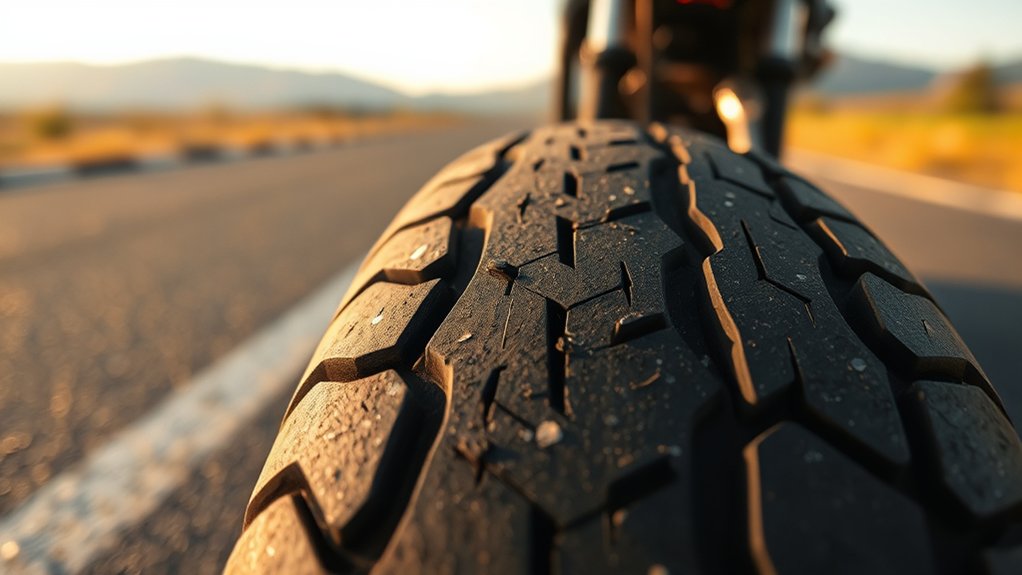
Motorcycle tires wear out through a combination of mileage-based tread wear and age-related rubber degradation.
Motorcycle tires deteriorate due to both tread wear from miles ridden and natural rubber aging over time.
As you use your tires, tread wear naturally occurs, typically lasting between 3,000 and 15,000 miles depending on tire type and riding conditions.
At the same time, tire aging degrades rubber compounds through oxidation, ozone exposure, and UV radiation.
Heat from friction and ambient temperature speeds this up, especially during track use or heavy loads.
You can identify tire manufacturing dates via the DOT code, which helps assess how many years old your tires.
This is important since factory antioxidants only delay aging, not prevent it.
Proper storage slows degradation, but prolonged exposure to heat or ozone makes the rubber harden and break down, reducing tire lifespan even if tread looks fine.
Signs Your Motorcycle Tires Are Too Old or Worn
Tire wear and aging don’t just reduce performance. They can also compromise safety. Pay close attention to your motorcycle tire’s tread depth and sidewall cracking to assess its condition.
Check the tire’s year of manufacture. Tires over 5–6 years old need extra scrutiny for hardening or dry rot.
| Sign | What It Means |
|---|---|
| Low tread depth | Worn tire, replace immediately |
| Sidewall cracking | Tire age-related deterioration |
| Hardened tread surface | Rubber oxidation, grip loss |
| Structural deformities | Bulges/cuts indicate failure |
If you spot deep cracks, a hardened surface, or tread below legal limits, replace your tires promptly. Regularly inspect tire age and condition to make certain your rides stay safe.
Factors That Speed Up Motorcycle Tire Aging
You’ll notice that heat and mechanical stress really speed up tire aging because they make the rubber harden faster and wear out the tire’s internal structure.
On top of that, oxygen and UV light also take a toll by breaking down the tire materials, which leads to cracking and the loss of protective stabilizers.
Knowing about these factors can help you take better care of your tires and get the most mileage out of them.
Heat And Mechanical Stress
Although heat may seem unavoidable during riding, it markedly accelerates the aging of your motorcycle tires. Heat cycling from aggressive riding raises carcass temperatures, causing faster rubber hardening and chemical degradation.
Mechanical stress from carcass fatigue worsens when you ride under-inflated tires or carry heavy loads. This increases crack formation and tread wear. High-stress applications like track use intensify this process by combining heat and mechanical strain, greatly shortening tire life.
| Factor | Effect | Result |
|---|---|---|
| Heat cycling | Raises carcass temps (~175°F) | Accelerated rubber aging |
| Carcass fatigue | Flexing under load | Crack formation |
| Under-inflation | Increased heat and stress | Faster wear |
| High-stress apps | Heavy loads, sustained speed | Premature failure |
| Incorrect pressure | Heat buildup | Oxidative degradation |
Oxygen And UV Exposure
When oxygen interacts with the rubber compounds inside your motorcycle tires, it initiates slow oxidation that hardens the rubber and reduces elasticity, even if the tires sit unused for years.
UV radiation speeds up this degradation by breaking elastomer molecular bonds, causing surface cracking and loss of strength. Ozone, a reactive gas formed by exhaust, sunlight, and electrical discharges, aggressively attacks tire rubber. This can lead to dry-rot damage within a year if exposure is high.
To slow these chemical aging processes, store your tires wrapped in opaque plastic in cool, dark, and well-ventilated areas. This helps limit contact with oxygen, ozone, and UV. Manufacturers add antioxidants and UV stabilizers to delay damage, but these additives wear out over time. So, proper storage is key to preserving tire flexibility and extending their lifespan.
How Heat and Mechanical Stress Damage Tires
You should know that frictional heat really raises the temperature inside the tire carcass. This makes the rubber harden faster and speeds up its chemical aging.
On top of that, mechanical stress from factors like load, speed, and incorrect pressure causes the tire to flex more on the inside. This added flexing leads to increased fatigue.
When you put these together, they break down the tire’s elasticity and structural strength much quicker than just normal wear and tear over time.
Heat Effects On Rubber
Heat markedly influences the durability and performance of motorcycle tires by accelerating chemical changes in the rubber compound. High ambient temperatures and elevated carcass temps, often reaching around 175°F during track use, increase vulcanization and oxidative hardening. This diminishes grip and flexibility.
When you ride aggressively or expose tires to repeated heat cycling, the rubber hardens faster, and carcass fatigue accelerates compared to steady street use. Mechanical flexing under load also generates internal heat, which further promotes chemical aging. So, maintaining correct inflation and avoiding heavy loads is critical.
Moreover, storing tires in direct sunlight or high temperatures depletes UV stabilizers and antioxidants. This makes heat-driven degradation worse even without use.
Ultimately, frequent exposure to high heat causes tires to stiffen and crack, limiting service life more than age alone.
Mechanical Stress Impact
Mechanical stress plays a vital role in accelerating tire degradation by generating internal heat and causing carcass fatigue. As you ride, tire flexing under load raises internal temperatures, speeding oxidation and compound breakdown.
Frictional heating can push carcass temperatures to around 175°F, especially during aggressive or track use. This causes faster chemical aging and rubber hardening compared to steady street mileage.
Underinflated tires increase flex and heat, markedly shortening tire life, so maintaining correct tire pressure is essential to minimize mechanical stress and extend shelf life. While age and shelf life factor into tire wear, heavily used or high-speed tires often wear out from mechanical stress before age becomes limiting.
You should tailor tire replacement conservatively based on your riding style and intended application to ensure safety and performance.
How Oxygen, Ozone, and Sunlight Affect Tires
Although tires may sit unused for long periods, oxygen, ozone, and sunlight continuously degrade their rubber compounds. You need to understand how these elements affect your tires’ longevity:
- Oxygen causes slow oxidation inside and outside the tire. This hardens the rubber and reduces elasticity over months to years.
- Ozone, produced by exhaust and electrical arcs, attacks elastomer double bonds. This leads to dry rot and cracking within a year under strong exposure.
- UV radiation breaks polymer chains, accelerating molecular breakdown. It especially affects exposed sidewalls and tread, diminishing grip and flexibility.
Manufacturers add antioxidants and UV stabilizers to delay degradation, but these chemicals deplete over time. Minimizing exposure to ozone, oxygen, and UV through proper storage is vital to preserving tire performance and lifespan.
Why Proper Storage Extends Motorcycle Tire Life
Storing your motorcycle tires properly slows the chemical processes that degrade rubber compounds, markedly extending their lifespan. By keeping tires in a cool (32–77°F), dark, and well-ventilated area, you minimize oxidation, UV damage, and preservative depletion.
Proper tire storage slows rubber degradation by minimizing oxidation, UV damage, and preservative loss.
Always wrap unused tires in opaque plastic to block oxygen and ozone, which cause dry rot and cracking. Keep them away from direct sunlight, heat sources, and concrete floors because heat and moisture accelerate rubber hardening and chemical breakdown.
Avoid placing tires near motors or transformers, which emit ozone. Proper storage can keep tires serviceable for 2–7 years or more.
For long-term motorcycle storage, lift the bike or rotate tires periodically, maintaining correct pressure to prevent flat spots and uneven aging. Following these steps guarantees your tires remain safe and effective longer.
How to Read and Understand Tire Date Codes
You can figure out a tire’s age by finding the four-digit DOT date code on its sidewall. The first two digits tell you the week it was made, while the last two show the year.
Knowing the exact week helps you judge how fresh the tire is and whether it meets the manufacturer’s recommendations. So, make sure to check this code carefully before buying or installing tires to keep things safe and running smoothly.
Decoding Date Codes
When inspecting motorcycle tires, decoding the DOT date code on the sidewall is essential to determine their age and safety. The DOT date code reveals the week and year the tire was manufactured. This helps you decide when to replace motorcycle tires.
- Look for a four-digit DOT date code in an oval. The first two digits indicate the week, and the last two specify the year (e.g., 1016 means the 10th week of 2016).
- A three-digit code means the tire was made pre-2000. These are harder to interpret and should be considered very old unless you have clear provenance.
- If the DOT date code is faded or missing, don’t trust the tire’s age. Instead, inspect for signs of degradation and prepare to replace motorcycle tires as necessary.
Identifying Manufacture Week
How can you quickly determine the exact week your motorcycle tire was manufactured? Look for the DOT code stamped on the sidewall, typically inside an oval.
This four-digit code reveals the manufacture date: the first two digits represent the week (01–52), and the last two indicate the year (e.g., “1016” means the 10th week of 2016).
Always check both tires since wheels or stock age can vary.
When buying used tires or bikes, recording the DOT week and year helps assess if the tire falls within safe usage, generally 5–6 years for inspection and up to 10 years maximum.
If the DOT code is missing or unreadable, treat the tire’s age as unknown.
Inspect it carefully for signs of aging or replace it for safety.
Typical Mileage Ranges for Motorcycle Tires
Typically, motorcycle tire mileage varies markedly based on the tire type and riding conditions. How many miles do motorcycle tires last? Here’s a breakdown by tire type:
- Sport and track tires last 1,000–3,000 miles, using soft compounds for maximum grip.
- Sport-touring tires deliver 4,000–8,000 miles, balancing durability and traction.
- Cruiser and touring tires often exceed 8,000–15,000 miles, thanks to harder compounds designed for longevity.
Keep in mind, rear tires wear about twice as fast as fronts, so expect shorter mileage on the rear tires.
Your actual tire lifespan depends heavily on your riding style, road conditions, and maintenance practices like proper inflation and alignment. These ranges give you a solid reference to gauge when your tires last and when to anticipate replacement.
When to Replace Tires Despite Good Tread
Even if your motorcycle tires show good tread depth, you should replace them if you notice sidewall cracks, bulges, or exposed cords. These signs point to structural failure risks.
Tire age also plays a critical role. Always check the DOT date code and consider replacing tires older than 5 to 6 years regardless of tread depth. Over time, oxidation hardens the rubber, reducing grip and flexibility.
Moreover, if the tire feels hard or brittle—assessable via a thumbnail press or durometer test—it indicates compound degradation despite remaining tread. Watch for flat spots, uneven cupping, or internal delamination, which can cause vibrations and loss of control.
Prioritize safety over appearance. Even with adequate tread depth, these factors demand timely tire replacement to maintain performance and prevent failure.
Tips to Maximize the Life of Your Motorcycle Tires
Proper maintenance directly influences your motorcycle tires’ longevity and safety. To maximize tire life over the years and delay premature tire replacement, focus on these key practices:
- Monitor tire pressure regularly. Underinflation leads to excessive flex, heat, and carcass fatigue, which accelerates wear and reduces tire lifespan.
- Store your motorcycle in a cool, dark, and ventilated area away from sunlight, ozone, and solvents. This helps minimize rubber degradation caused by UV and oxidative damage.
- Rotate or move the bike every few weeks during storage. Also, elevate it off the ground for long-term parking to prevent flat spots and uneven tire wear.
Additionally, inspect tires frequently for cracks, hardening, or bulges. Replace them immediately if severe damage appears, even if the tread remains.
Buying fresh stock from reputable retailers also helps avoid age-related tire issues.
Frequently Asked Questions
Can I Use Motorcycle Tires on a Scooter?
You can use motorcycle tires on a scooter if you make sure the tire sizing, wheel diameter, and load rating match your scooter’s specifications exactly. Check the tire’s sidewall for size and load index to confirm this.
Using tires with the wrong load ratings or incompatible wheel diameters can lead to poor handling and premature wear.
Always prioritize tires designed specifically for scooters, or consult the manufacturer to keep safety and performance in check.
Are Tubeless Tires Better Than Tube Tires?
Think of tubeless tires as your motorcycle’s shield against sudden troubles. They offer superior puncture resistance and better heat dissipation, keeping your ride cooler and safer.
You’ll appreciate the maintenance ease since small punctures can be repaired without removing the tire. Plus, they improve ride comfort by reducing flex and heat buildup.
How Does Tire Pressure Affect Fuel Efficiency?
Tire pressure directly impacts your fuel economy by affecting rolling resistance. When you keep your motorcycle at optimal inflation, rolling resistance stays low, improving fuel efficiency.
Underinflated tires increase carcass flex, raising resistance and fuel consumption, especially at highway speeds. Overinflation slightly lowers resistance but sacrifices traction.
Regular pressure monitoring guarantees you maintain recommended cold pressures, maximizing fuel economy and tire life while providing safe handling.
Can Tire Type Impact Motorcycle Handling in Rain?
Yes, tire type markedly impacts your motorcycle’s handling in rain. Softer compounds improve wet grip by maintaining traction, while harder compounds reduce it.
Deeper grooves enhance water evacuation, increasing aquaplaning resistance and stability. Tires with optimized groove depth channel water efficiently, preventing loss of contact patch.
Choosing tires designed for wet conditions guarantees better control, shorter braking distances, and safer rides on slippery surfaces.
Are There Eco-Friendly Motorcycle Tire Options?
Don’t worry that eco-friendly tires compromise performance. They use sustainable compounds and bio-based materials like soybean oil derivatives to maintain grip and durability. You’ll find some tires incorporate recycled rubber in non-structural parts, reducing waste without sacrificing safety.
Plus, low rolling resistance designs improve fuel economy, so you save fuel and extend tire life. By choosing these tires and maintaining proper pressure, you actively reduce your environmental impact while riding.
Conclusion
You might think motorcycle tires last forever if they look good, but ironically, age and unseen damage often dictate otherwise. Even with deep tread, heat, ozone, and time silently degrade rubber integrity.
So, don’t just trust what you see. Check those date codes and watch for subtle wear signs. Your tires’ lifespan isn’t just about mileage; it’s about understanding the hidden science beneath your ride for safer, smarter replacements.