How Many Harley Davidson Dealerships Have Closed – Guide
You’ve seen over 400 Harley-Davidson dealerships close across the U.S. recently. This is mainly due to declining sales, high operational costs, and shifting rider demographics.
The closures hit harder in less populous states and traditional Harley regions. Financial pressures like excess inventory and high-interest costs are really straining dealers. At the same time, changing consumer preferences are reducing demand.
Harley-Davidson is restructuring to adapt to these changes. But these trends are reshaping their market presence quite a bit. Keep exploring to understand the causes, impacts, and what the future might hold for these closures.
How Many Harley-Davidson Dealerships Have Closed Recently?
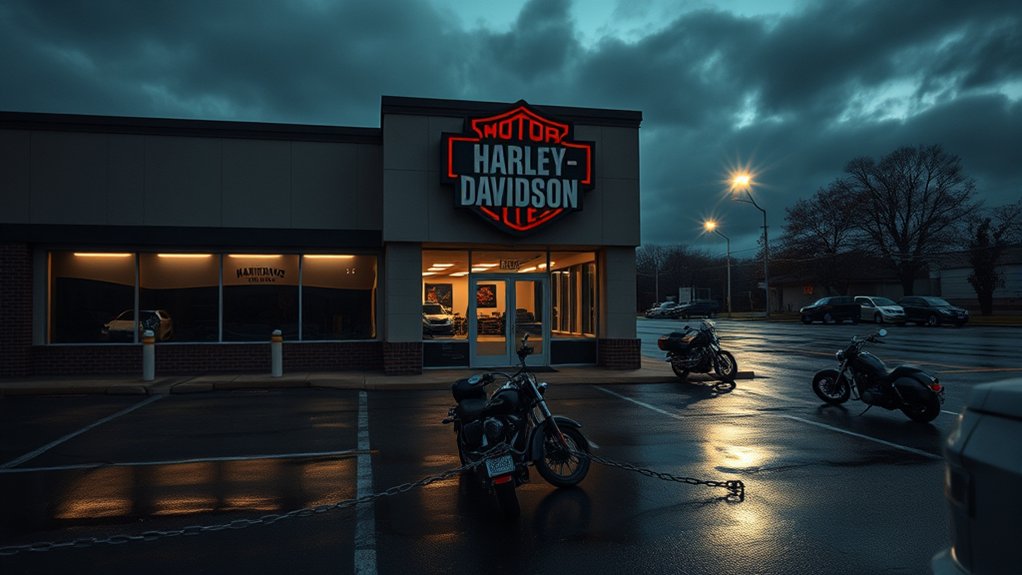
While exact numbers vary, hundreds of Harley-Davidson dealerships across the United States have closed recently due to financial pressures and declining sales. This significant reduction reflects ongoing industry challenges, including excess inventory and shifting consumer preferences away from traditional Harley-Davidson models.
Dealership closures have been particularly notable in specific regions, such as the announced shutdowns of High Country Harley-Davidson locations in Cheyenne, WY, and Frederick, CO, slated for July 2025.
High operational costs also contribute to the difficulty in sustaining dealership profitability.
Overall, the trend indicates that only the most financially stable Harley-Davidson dealerships continue operating amid these pressures.
Understanding the scale of these dealership closures is essential to grasp the broader impact on the motorcycle retail landscape and the evolving challenges facing Harley-Davidson in the current market.
Why Are Harley-Davidson Dealerships Shutting Down Across America?
You’re probably noticing more Harley-Davidson dealerships closing down lately. It’s mainly because financial pressures are really squeezing their profits.
High overhead costs and big investments in showrooms are eating into their margins.
On top of that, excess inventory and rising interest costs mean many dealers have to offer hefty discounts just to move bikes. That just cuts into their earnings even more.
When you put all that together with shrinking demand, it creates a tough situation that a lot of dealerships just can’t keep up with.
Financial Pressures Impact
Because of high overhead costs and challenges managing excess 2024 inventory, many Harley-Davidson dealerships across America are shutting down. Financial pressures hit hard as dealerships face large fixed expenses, including costly showroom investments and amenities that don’t boost profitability.
You’ll find that struggling dealerships often resort to deep discounts on surplus inventory, which further strains margins.
Poor inventory management makes these issues worse, making it tough to balance stock levels with demand. Plus, disputes among owners and ineffective management contribute to closures.
Dealership closures reflect a broader trend tied to declining motorcycle sales and shifting consumer preferences.
Ultimately, only dealerships with strong financial footing can navigate these challenges. Many others continue to close due to persistent financial pressures and inefficient inventory management. It’s a tough market out there.
Inventory Challenges
Financial struggles at many Harley-Davidson dealerships stem largely from inventory challenges that strain cash flow and increase carrying costs. Excess inventory, including unsold 2024 to 2026 models, ties up capital and generates high-interest expenses, which only worsens financial pressure.
To manage this, dealerships offer discounts up to $2,000 off MSRP to reduce stock. But with sales declining, it’s tough for them to bounce back.
Large showroom investments add to overhead costs and make the risk even greater.
These factors create a cycle where too much inventory and rising costs eat into profitability. This often forces many dealerships to shut down.
Understanding how inventory management directly impacts financial health can help explain why so many dealerships across America are closing.
If you’re involved with or thinking about owning a dealership, it’s really important to tackle inventory challenges early on. Doing so can help you avoid the same financial pitfalls and the risk of closure.
How Changing Consumer Preferences Are Hurting Harley Dealerships
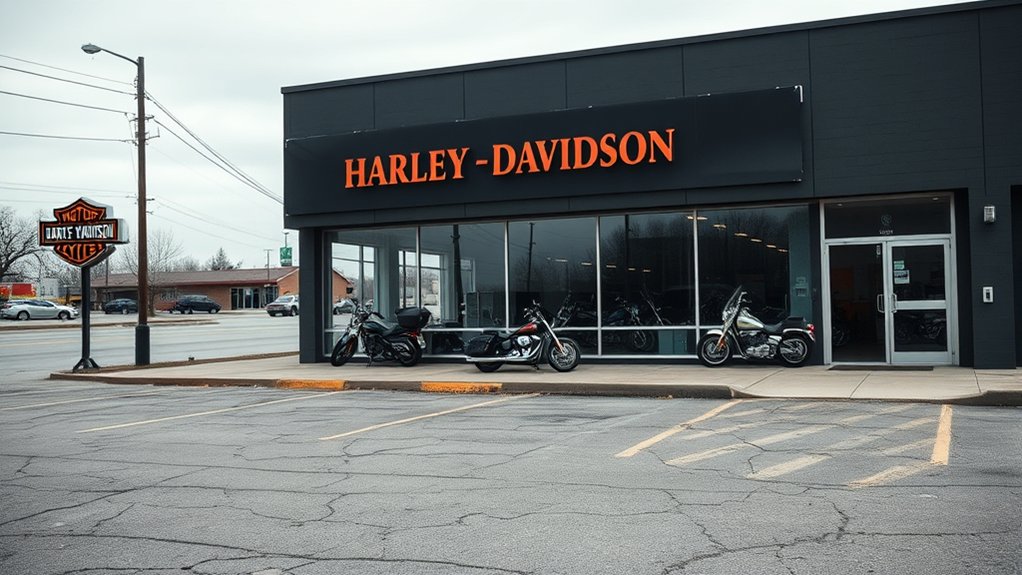
You’re noticing fewer younger riders getting interested in Harley-Davidson these days. Data actually shows that the number of riders under 35 is going down.
People’s tastes are changing—they’re looking for motorcycles that are more comfortable, have the latest tech, and offer quieter rides. That’s quite different from what Harley’s traditional models provide.
Because of this shift, demand is dropping, and dealerships that depend on classic Harley fans are feeling the pressure.
Declining Younger Interest
Why are younger riders turning away from Harley-Davidson? The core Harley customer base is aging, which lessens the brand’s appeal to younger consumers.
Younger interest has declined because they prefer modern, comfortable, and tech-savvy motorcycles over Harley’s traditional loud, heavy bikes.
Plus, the shift away from classic Harley culture and aesthetics further reduces enthusiasm among this demographic.
Electric Harley models haven’t helped either. Their limited range and battery problems deter younger, tech-oriented buyers.
All these factors combined contribute to weakening demand from younger riders.
This directly impacts dealership performance. As fewer young customers engage with the brand, Harley-Davidson faces increasing dealership closures.
This data-driven trend highlights how evolving consumer preferences and cultural shifts are eroding Harley’s younger interest and dealership viability.
Shifting Riding Preferences
As consumer preferences shift toward lighter, more comfortable motorcycles, Harley-Davidson dealerships are feeling the impact. Shifting riding preferences contribute considerably to dealership closures, driven by an aging core demographic and younger riders’ declining interest. You’re witnessing a market realignment.
Older Harley owners ride less, lowering sales volume. Younger riders prefer refurbishing older Japanese bikes or alternative brands. Harley models face criticism for being loud, heavy, and overpriced.
Demand rises for engineering-focused bikes like the Triumph Bonneville. Electric Harley models underperform due to limited range and battery issues.
This data shows that Harley’s traditional appeal is eroding, directly influencing dealership viability. If you’re tracking the motorcycle market, these shifts explain why many Harley-Davidson dealerships have shuttered recently.
What Financial Challenges Are Harley Dealers Facing Today?
Though Harley-Davidson dealerships have long been symbols of motorcycle culture, many are now grappling with severe financial challenges that threaten their survival. You see dealership closures rise as financial pressures mount from high overheads and inventory issues.
Dealers face discounts up to $2,000 off MSRP and steep interest on unsold 2024 models. Investments in showrooms and amenities strain resources amid declining sales. Selling merchandise no longer offsets losses.
Only dealers with robust finances can endure. Others fold due to poor management or fixed costs.
| Financial Challenge | Impact on Dealers | Example Data |
|---|---|---|
| Inventory Issues | High interest on unsold bikes | $2,000 off MSRP discounts |
| Overhead Costs | Unsustainable showroom expenses | Large investments in amenities |
| Shrinking Sales | Reduced revenue streams | Declining motorcycle demand |
| Management Problems | Owner disputes and poor decisions | Dealer closures increasing |
| Merchandise Sales | Insufficient to offset losses | Minimal profit contribution |
How Inventory and Overhead Costs Cause Dealership Closures
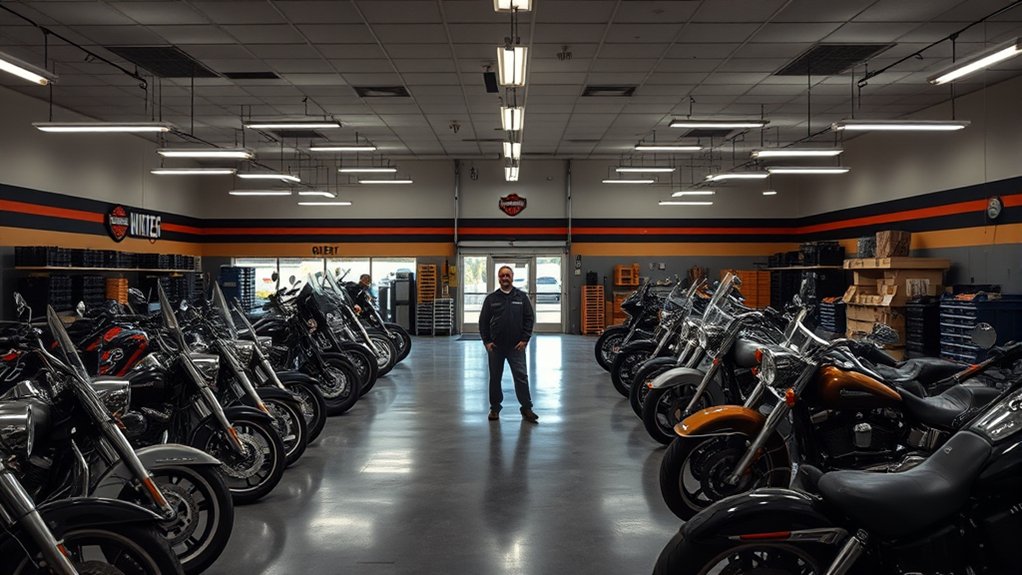
When dealerships carry excessive inventory, they face steep discounts, sometimes up to $2,000 off MSRP, just to move 2024 models. This directly cuts into their profit margins.
This inventory surplus, combined with high overhead costs, creates a financial squeeze that many Harley-Davidson dealerships simply can’t withstand.
Overhead expenses include showroom maintenance, expanded lot investments, and branded merchandise costs. Plus, high-interest charges on 2024 to 2026 models add even more pressure. All these factors contribute notably to dealership closures.
To understand the impact, consider these points:
- Excess inventory forces deep discounts, which erode profitability
- High overhead costs strain cash flow and operational budgets
- Interest expenses on new models increase the financial burden
- Investments in amenities and lots become unsustainable
- Only dealerships with strong finances resist closure risks
This data-driven insight really highlights why inventory and overhead costs are driving Harley dealership closures.
What Regions Have Experienced the Most Harley Dealership Closures?
Because Harley-Davidson dealerships rely heavily on regional demand, closures have concentrated primarily in less populous states like Wyoming and Colorado. In these places, the smaller market size limits sales volume.
You’ll also notice that the Midwest and parts of the South, regions with a higher concentration of traditional Harley riders, have seen significant dealership closures. This reflects shifting consumer preferences in those areas.
Urban areas with dense populations experience fewer closures. That’s because they offer more diverse motorcycle options and stronger demand overall.
Moreover, the Pacific Northwest and Northeast report closures linked to declining sales and high operational costs.
Overall, Harley-Davidson dealership closures follow clear regional trends. They tend to concentrate in areas with lower demand for large cruiser-style bikes and evolving market dynamics.
It really shows how geography and consumer behavior shape the network’s contraction.
How Is Harley-Davidson Responding to Dealership Network Changes?
Harley-Davidson is actively reshaping its dealership network in response to the wave of closures seen across various regions. You’re seeing the brand address dealership closures by focusing on dealer restructuring to optimize profitability and reduce overhead.
At the same time, Harley is leveraging digital sales channels to reach customers more effectively. Here’s how they’re responding:
- Prioritizing high-performing dealerships and closing less profitable ones
- Investing heavily in online platforms for direct-to-consumer sales
- Strengthening partnerships with remaining dealers to enhance brand loyalty
- Expanding revenue streams through branded merchandise and experiences
- Reducing operational costs while maintaining market presence
This strategic shift balances physical dealer optimization with digital innovation. It positions Harley-Davidson to adapt efficiently amid changing market dynamics.
What Impact Do Dealership Closures Have on Harley’s Market Presence?
Although dealership closures streamline operations, they considerably reduce the brand’s physical retail footprint. This makes it harder for you to access Harley-Davidson products in person.
With fewer locations, local visibility takes a hit, and opportunities for you to engage through test rides or community events become limited.
Dealership closures also negatively affect brand loyalty. When there are fewer touchpoints, existing customers have less frequent interaction with the brand, which can weaken their connection to Harley.
Plus, a shrinking dealer network often signals declining demand and financial challenges.
All of this further hampers Harley’s ability to stay culturally relevant in key markets. For you, this means a less accessible and less vibrant Harley-Davidson experience.
Ultimately, it impacts both new customer acquisition and long-term loyalty within the motorcycle community.
What the Future Holds for Harley-Davidson Dealerships
As dealerships continue to close across the U.S., only the most financially stable locations are set to endure. This reflects a sharp 45% decline in motorcycle shipments over the past decade. It’s clear the market is facing some serious challenges.
This trend really shows how complex things are for Harley-Davidson dealerships right now. You’ll want to think about how these closures are changing the retail landscape. The future success of the dealerships that remain depends on a few key factors.
The evolving retail landscape poses complex challenges that will define the future success of Harley-Davidson dealerships.
They’ll need to manage overhead costs efficiently, adapt to shifting consumer preferences, and leverage technological innovations. On top of that, they’ll have to navigate increased competition from alternative mobility options.
Strengthening financial and operational resilience is also crucial.
Even though Harley has posted strong quarterly profits, the ongoing dealership closures tell a different story. There are definitely challenges that aren’t going away anytime soon.
Understanding these factors will give you a better sense of what lies ahead for Harley-Davidson dealerships as the industry continues to evolve.
Frequently asked questions
How Can I Find the Nearest Open Harley-Davidson Dealership?
You can find the nearest open Harley-Davidson dealership by using their official website’s dealer locator. It lets you search by city, state, or ZIP code. You’ll get accurate, up-to-date info on locations and hours.
You can also check Google Maps or Yelp for customer reviews and real-time status updates.
Don’t forget to explore dealership social media pages or apps. They often share current contact details and special offers.
Are There Any Incentives for Customers at Closing Harley Dealerships?
You might spot discounts reaching up to $2,000 off MSRP at closing Harley dealerships. While incentives aren’t widespread, some dealers offer clearance sales on bikes, accessories, and merchandise to move inventory fast.
These deals focus on reducing stock rather than broad customer benefits. So, if you’re hunting for savings, check the final sale period closely.
Just don’t expect consistent or large incentives across all closing locations.
Can I Still Get Harley-Davidson Service and Parts After a Dealership Closes?
Yes, you can still get Harley-Davidson service and parts after a dealership closes. Harley-Davidson has a nationwide parts distribution network, so parts stay available. You can order parts online or visit authorized service centers nearby.
Warranty work and recalls? No worries. Other Harley dealerships handle those, even if your local one has closed.
If you need help finding a nearby service provider, Harley-Davidson’s customer support team is ready to assist you quickly and easily. Just reach out, and they’ll point you in the right direction.
How Do Dealership Closures Affect Harley-Davidson Motorcycle Warranties?
Dealership closures don’t void your Harley-Davidson warranty because your coverage stays valid as long as you use authorized service centers.
If your local dealership closes, Harley-Davidson will transfer warranty services to nearby authorized dealers or regional centers.
In rare cases where no authorized facility is close, they offer alternative support options.
Just keep in mind, you might experience some delays if authorized centers get overburdened.
But overall, your warranty protection remains intact through Harley-Davidson’s broader network.
What Alternatives Exist for Buying Harley-Davidson Motorcycles Online?
You can buy Harley-Davidson motorcycles online through the official Harley-Davidson website. It offers direct sales and dealer locators, making it easy to find what you need.
Besides that, third-party platforms like eBay Motors and CycleTrader list both new and used bikes. They provide detailed specs and seller ratings, which helps you make a smart choice.
Some dealerships also team up with online retailers or offer virtual consultations. These digital options make sure you can access inventory and support even if there aren’t many physical dealerships nearby.
It’s all in line with the current trend toward online motorcycle shopping.
Final Thought
You’ve seen how Harley-Davidson dealerships are closing due to shifting consumer tastes and rising costs, yet the brand still holds a loyal market base. While financial pressures and regional declines challenge the network, Harley’s strategic responses aim to stabilize and innovate.
This contrast between contraction and adaptation reveals a complex future. Dealership closures signal struggle, but Harley’s efforts suggest resilience. So, the brand’s market presence feels both vulnerable and hopeful moving forward.