How Much Is A Motorcycle Helmet – Here’s the Math
You’ll usually spend $100 to $220 for a basic, certified motorcycle helmet.
Expect $300 to $600 for better comfort, ventilation, and noise control.
Premium carbon or composite helmets often cost $700 or more.
If you ride daily or cover long distances, budget around $300 to $500.
That range usually improves fit, durability, and quieter performance.
Replace any helmet after a crash.
You should also replace it every 3 to 5 years.
The right model depends on materials, liner design, and features.
How Much Should You Spend on a Motorcycle Helmet?
You should expect to spend about $100–$220 for a solid, compliant motorcycle helmet that meets ECE/DOT standards. Look for decent ventilation and a removable liner in this range.
For $300–$600, you’re in the mid-range, with improved comfort and fit. You’ll also typically get multi-density EPS for better energy management.
If you want premium options, plan on $700+ for carbon-fiber shells or handmade helmets. These usually include lighter shells and more advanced interior designs.
If you ride occasionally, the entry range can still deliver good quality protection. If you ride daily or cover long miles, budget $300–$500 for better comfort, durability, and noise control.
Don’t chase price alone; shell material, EPS design, and interior features drive cost. Try helmets in person because fit matters more than brand.
A helmet shouldn’t shift when you move your head. Skip second-hand gear, and replace yours every 3–5 years or after any crash.
What Makes a Motorcycle Helmet Worth the Price?
A helmet’s price usually reflects more than the brand name on the shell. You’re paying for shell engineering, EPS liner tuning, visor quality, fit precision, and certified safety systems.
Helmet prices reflect more than branding—they cover shell design, liner tuning, visor quality, and safety certification.
Budget lids often use simple polycarbonate shells and basic single-density foam. Expensive helmets add multi-density liners, precision channels, multiple shell sizes, and tighter tolerances that improve energy management and comfort.
Better visors, anti-fog inserts, antimicrobial removable interiors, and drop-down sun shields can add real value too. If you ride often, features like lower noise, longer durability, Snell or MIPS protection, and a five-year warranty can justify the premium.
For most riders, mid-range helmets deliver the best mix of protection, comfort, and features without paying for showy extras.
Which Helmet Materials Are Worth Paying For?
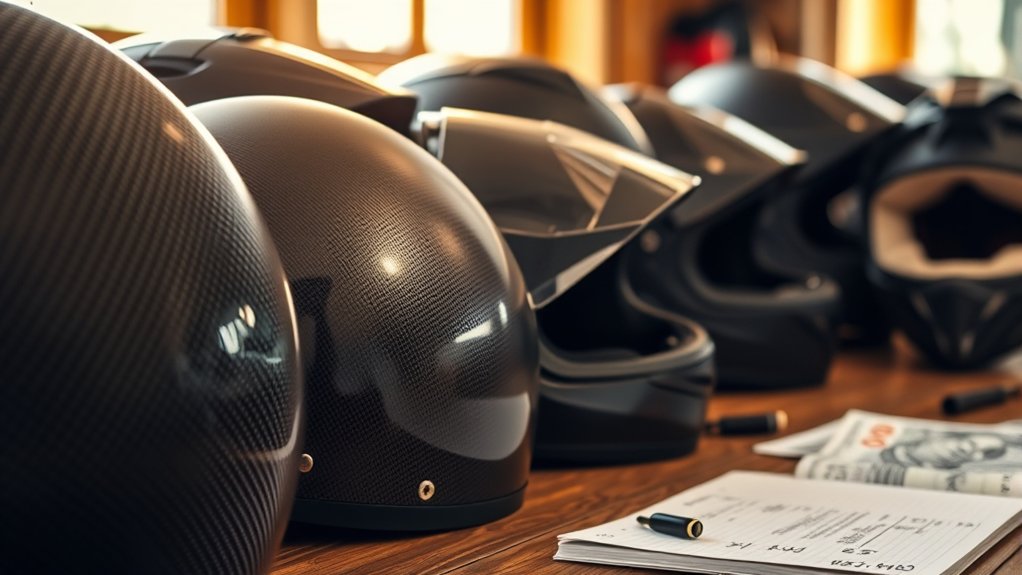
When it comes to helmet materials, carbon-fibre and multi-composite shells are usually the premium options worth paying for. They’re lighter, stiffer, and better at spreading impact forces than cheaper thermoplastic shells.
You’re paying for layered fibres, resin, and tighter manufacturing tolerances, not just a badge. A well made composite shell can use thinner walls, multiple shell sizes, AR matting, and peripheral belts to boost integrity while keeping weight down.
Budget polycarbonate lids can still meet standards. But they’re usually thicker, heavier, and less crack-resistant to get there.
If you ride often, the extra cost can buy smarter energy management, better fit engineering, and more advanced EPS shaping. In practice, that’s where the money goes, and where it’s worth it.
Are Motorcycle Helmet Liners All the Same?
Not all helmet liners are built the same, and the differences matter just as much as shell material. When you compare helmet liners, you’ll see basic single-piece EPS in budget lids and multi-density EPS in premium models.
Multi-density layouts use different foam zones and precise cuttings to tune how the liner crushes. That helps your helmet manage impacts more effectively than a simple uniform liner.
Those channels also support ventilation, and they can change how forces spread across your head. Some helmets pair a stronger outer shell with a softer liner for better comfort without giving up crash performance.
Why Do Some Motorcycle Helmets Cost More?
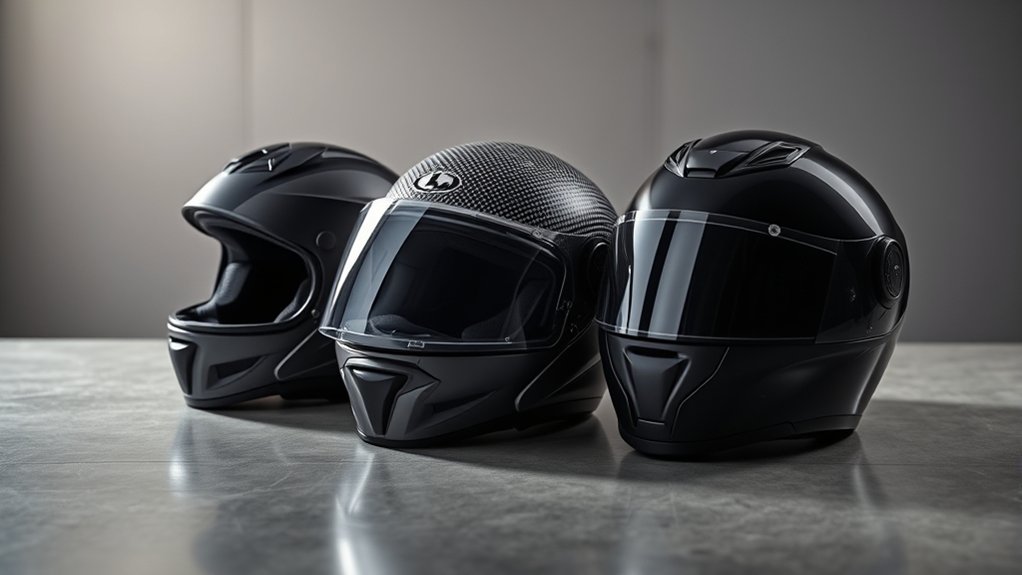
You’ll usually pay more for a motorcycle helmet when it uses a composite or carbon-fibre shell, because those materials are harder to produce and, in many cases, offer better strength than basic polycarbonate.
On top of that, the price goes up when the EPS liner is more complex—like when it uses multiple densities, shaped channels, and a more refined fit system to help manage impact and improve comfort.
Then there are the extra features that push costs higher. Things like higher-end vents, visors, built-in sunshades, upgraded liners, and nicer finishing details can all add up, even if the helmet still meets the same basic safety standard.
Shell Materials And Build
Shell materials and construction are a major reason some motorcycle helmets cost more than others.
Premium helmets use composite fibre laminates like carbon, fiberglass, and Kevlar.
They’re often built in layered “super-fibre” shells with AR matting or peripheral belts.
That construction costs more, but it gives you a stiffer shell.
It also improves crack resistance and supports controlled deformation.
Budget helmets usually rely on polycarbonate or thermoplastic.
Those materials are cheaper, but they’re less tough.
So manufacturers may need more material or thicker walls to reach similar rigidity.
You’ll also see price changes from multiple shell sizes and reinforced visor mounts.
Budget options often have fewer perforations.
Premium models include engineered vents or spoilers as well.
These details improve structural integrity and manage airflow.
They also help helmets behave better in a crash.
That said, they add complexity and increase manufacturing time.
EPS Liners And Fit
Inside the helmet, the EPS liner is a major driver of cost. Better models use multi-density foam instead of a single uniform layer.
You get staged deceleration. Softer foam handles low-g hits, while denser zones manage harder impacts.
That layered structure takes more tooling, tighter quality control, and smarter shaping. So it costs more than basic homologated foam.
Cutouts and internal channels can fine-tune force transmission and fit. They also add complexity.
When the EPS matches your head better, the helmet feels more stable. The shell can spread loads more effectively too.
Cheek pads matter here as well. They help lock the helmet in place.
EPS also ages with sweat and time. Any crushed liner means replacement, which affects long-term value.
Vents, Visors, And Extras
Extra vents, spoilers, and complex vent channels can drive helmet prices up fast. They’re harder to mold, machine, and validate.
You’re paying for tighter shell and EPS machining. You’re also getting breakaway features that reduce snag risk.
Multi-port internal channels improve cooling, too. But they raise production cost and can tune impact behavior.
Drop-down sun visors add weight. They also require thicker brow sections and more moving parts.
They do save you from buying a separate tinted shield. Still, better visors cost more overall.
Premium optics raise the MSRP. Pinlock anti-fog-ready inserts are a big factor as well, especially higher-tier Pinlock systems.
Add MIPS, tool-free shield swaps, antimicrobial liners, or extra shell sizes. Then you’ll usually see the price climb again.
How Important Are Helmet Vents?
Helmet vents matter most when their placement actually moves air through the forehead, crown, and exhaust channels—not just when they look like they should. You also need to balance airflow with shell strength, because any vent (and especially internal cutouts) can change how the helmet performs in an impact if the design isn’t properly reinforced.
And don’t forget the basics: make sure the controls are easy to use with gloves on. After all, a vent you can’t adjust while you’re riding won’t do much for comfort.
Vent Placement Matters
Vent placement matters more than raw vent count. A well-designed helmet uses large forehead and chin intakes, matching internal channels, and rear exhaust ports to create real through-flow. Random extra openings often add little cooling.
You should judge vent placement by size and location, because that’s what determines whether air actually moves across your head. Look for operable controls you can use with gloves.
Make sure the vents sit in reinforced zones, or use breakaway hardware. Internal EPS cutouts can boost airflow, but they also change foam behavior.
Reputable brands balance comfort with tested protection. If the shell is stronger, it can support more venting; if it’s lighter, expect fewer openings or more engineered vents.
Airflow Versus Strength
Airflow can be worth a slight trade-off in strength, but only when the vent system is engineered well.
In a motorcycle helmet, vents aren’t just comfort features; they change shell behavior, airflow, and impact management.
- Larger vents can cool better
- Poor ports waste airflow
- Shell continuity can weaken
- EPS channels boost flow
- Strong shells tolerate more venting
If you choose a composite or carbon motorcycle helmet, you usually get more room for effective venting without losing much structure.
Thinner polycarbonate shells need tighter limits.
Look for aligned forehead, mouth, and exhaust openings with internal channels that actually move air.
More vents can improve concentration, but they also add snag points and may complicate high-level impact performance.
Airflow matters, yet strength still sets the ceiling.
Glove-Friendly Vent Controls
When you’re riding in gloves, vent controls need to be big enough, well placed, and easy to operate without fumbling. You want vents operable with gloved hands, especially thick textile or winter gloves. Test slider size and reach before you buy.
Don’t judge a helmet by exterior vent count alone. Internal ports and channels must line up with those openings, or airflow drops fast.
Exhaust ports matter too. They pull air through the forehead and cheek channels, helping intake vents work better.
More vents can weaken the shell. That’s why premium lids often use reinforced surrounds or breakaway designs.
Inner-liner channels can boost cooling, but they may also alter EPS layout. Weigh comfort against safety trade-offs carefully.
Are All Motorcycle Helmet Visors the Same?
No, motorcycle helmet visors aren’t all the same. Most are made from polycarbonate or acrylic, but the real differences come down to optical clarity, visibility, and durability.
You’ll notice the gap fast. Cheap visors can blur at the edges. Premium visors improve peripheral and vertical view.
A visor with a Pinlock helps stop fogging. Pinlock inserts come in 30, 70, or 120 grades.
Dark visors often can’t be used on the road. Many helmets add a sun-shield, which can save you buying a tinted visor, but some brands skip it.
Clean your visor with approved products only. The wrong spray can cause cracks and ruin clarity.
Keep a clear spare for legal, all-weather riding.
Do Expensive Motorcycle Helmets Last Longer?
Yes—expensive motorcycle helmets often last longer. You’re usually paying for a stronger shell material, better overall construction, and an interior that stays comfortable and supportive even after repeated use and cleaning. As a result, premium lids tend to show less wear and better structural retention than cheaper helmets, especially those built with thinner shell materials.
That said, you still shouldn’t treat price as a guarantee. The EPS foam liner inside the helmet breaks down over time, so you generally need to retire it after about 3–5 years. And if you’ve been in a crash, replace the helmet right away, even if it looks fine.
Build Quality
Premium motorcycle helmets usually last longer because they’re built with better materials and more complex construction. When you buy premium helmets, you’re paying for composite fiber/resin shells, AR matting, and peripheral belts that boost stiffness and crack resistance.
- multi-layer shell design
- stronger impact management
- softer, multi-density EPS
- replaceable premium components
- better long-term serviceability
That stronger shell lets manufacturers use tuned EPS liners instead of a simple one-piece foam block. As a result, you get a better fit and engineered energy absorption.
In heavy use, sturdier shells and higher-grade laminates often stay serviceable far longer than budget lids. Better finishes and replaceable parts also help you maintain performance.
Still, don’t confuse longevity with crash survivability. Replace any helmet after impact, and follow the maker’s 3–5 year guidance.
Wear And Tear
Build quality also shows up in everyday wear and tear, where expensive motorcycle helmets usually pull ahead. If you ride hard, a premium shell and multi-density EPS liner tend to handle abrasion, sweat, and repeated handling better than a cheaper lid.
Composite shells, multiple shell sizes, and higher-grade interiors resist scuffs, fit loss, and liner breakdown. That means the helmet stays comfortable and structurally consistent for longer.
Field use backs this up. Some high-end models have survived around 100,000 miles of instructor abuse, while budget polycarbonate lids can look tired after 15,000–20,000 miles.
That doesn’t mean a helmet lasts forever. EPS still ages with oils and heat, and any impact means immediate replacement, because crushed foam can’t be relied on again.
Replacement Timeline
Replacement timing matters because even a pricey helmet doesn’t last indefinitely. Most manufacturers and retailers still recommend replacing it every 3–5 years, since EPS foam hardens and degrades from sweat, UV, and normal aging, which reduces its energy-absorbing performance.
Check the replacement timeline on your motorcycle helmets. If you crash, replace it immediately.
Different brands and price ranges can affect durability and fit. Premium shells, head shape support, and standard required liners may last longer.
Some features help with comfort, like a Pinlock or a drop-down sun for cold weather. Just make sure they don’t delay replacement.
Sweaty daily use shortens life, so stay safe and inspect often.
Which Helmet Features Are Worth Paying For?
If you’re deciding where to spend more on a helmet, put your money into upgrades that improve protection, fit, and usability rather than cosmetics. A composite or carbon-fibre shell can make the lid lighter and stronger, and it often allows the manufacturer to use a softer EPS liner than a basic polycarbonate shell.
Multi-density EPS is worth paying for because it manages different impact energies better than a single-piece foam block. If you ride long distances, spend extra on ventilation too, since well-placed channels and exhaust ports help you stay focused.
Choose a visor with good optical quality and a Pinlock insert for real anti-fog performance. Premium liners, moisture-wicking materials, and multiple shell sizes also matter, because they improve comfort and durability.
How to Test Fit a Motorcycle Helmet Properly
Start by measuring your head circumference about 1 inch (2.5 cm) above your eyebrows.
Then match that measurement to the brand’s size chart and try the corresponding size instead of relying on the label alone.
Once it’s on, fasten the chin strap and check the fit methodically.
Shake your head side to side and front to back.
Look for even pressure across your forehead and temples.
Make sure the cheek pads compress your cheeks firmly.
Confirm the visor opening doesn’t block your peripheral view.
Wear it 10–15 minutes in a riding posture.
If the helmet shifts, it’s too loose.
If you feel sharp pressure points, size up or change shell shape.
A proper helmet should feel snug, then break in slightly.
Also test vents and controls with gloves before you buy.
Frequently Asked Questions
Do Motorcycle Helmet Prices Vary by Certification Standard?
Yes, they do, but not just because of the label. You’ll often pay more for helmets that meet Snell, dual-certification, or ECE 22.06 standards. Manufacturers may use stronger shells, denser EPS foam, and extra testing.
Basic DOT or ECE helmets can still cost under $200. So certification can influence price, but materials, construction, and added safety tech usually drive the biggest differences.
How Much Do Replacement Visors Typically Cost?
Replacement visors typically cost about $25 to $60, depending on your helmet and shield type.
If you buy a basic polycarbonate visor, you might pay around $25.
A branded OEM shield often lands at $40 to $60.
You’ll usually pay more for tinted, photochromic, or premium visors, which can run $80 to $150.
If you’re replacing a visor, check fit, optics, and warranty before you buy.
Are Modular Helmets More Expensive Than Full-Face Helmets?
Yes—modular helmets usually cost more than full-face helmets for similar features. You’re paying for the hinge, latch, and extra reinforcement.
Budget modulars can start under $200. Good ones often land in the $250–$500 range.
Comparable full-face models may cost $200–$400. Premium modulars can hit $600+.
Does Helmet Weight Affect Long-Distance Riding Comfort?
Yes—helmet weight absolutely affects long-distance comfort.
A heavier lid can feel like a brick on your neck after hours in the saddle, increasing fatigue in your shoulders and reducing focus.
You’ll usually notice the difference once you pass the two-hour mark.
Lighter composite or carbon helmets cost more, but they cut strain.
For touring, balance weight, fit, and ventilation.
A well-vented helmet can offset some mass.
Can You Finance a Motorcycle Helmet Purchase?
Yes, you can finance a motorcycle helmet purchase through retailer credit, BNPL services, layaway, or in-house payment plans.
You’ll often split $100–$1,200+ over 3–12 installments, sometimes interest-free.
If you use a credit card, watch APRs, since interest can raise your total cost fast.
Before you commit, confirm fit, compare fees, and review return and warranty terms, especially on bundled helmet-and-accessory deals.
Conclusion
So, how much should you spend? The math says a helmet is worth what it delivers in fit, certified protection, and durability, not just brand name.
Expensive helmets often use lighter shells, better liners, quieter aerodynamics, and clearer visors. But they don’t automatically protect you better.
You should test fit first, then pay for the features you’ll actually use. If a helmet doesn’t fit right, no price tag can make it the right choice.