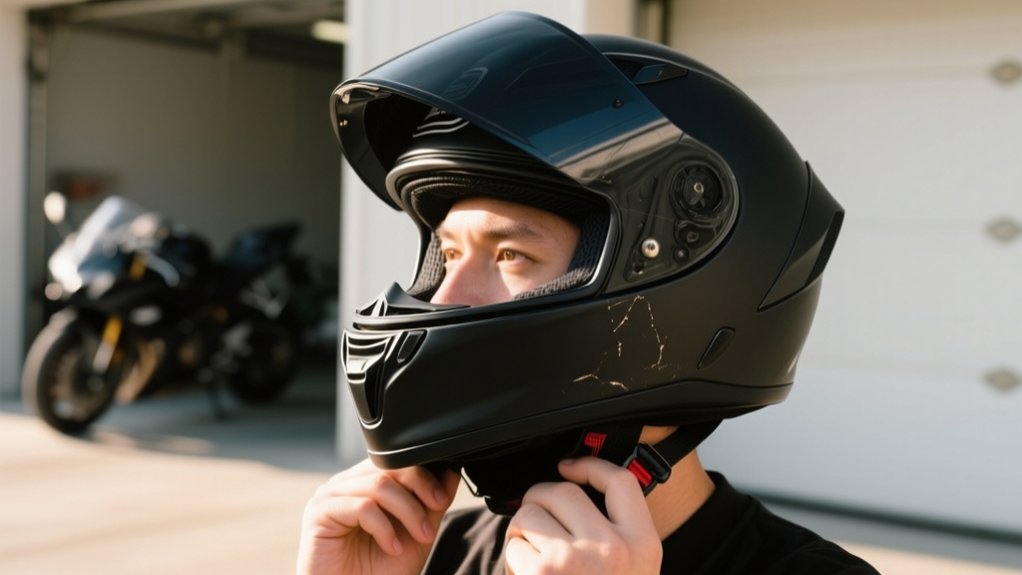
How Should A Motorcycle Helmet Fit – Here’s the Answer
You want your motorcycle helmet to fit snugly around the widest part of your head without sharp pressure points or discomfort. Make certain it matches your head shape for even pressure, and check that cheek pads fit firmly without forcing your teeth apart.
Fasten and test the chin strap for secure retention. Wear the helmet for about 15 minutes to confirm lasting comfort. If you want to optimize your fit and safety further, exploring professional fitting techniques and certification choices will help.
Measuring Your Head for the Perfect Helmet Fit

When measuring your head for the perfect helmet fit, start by wrapping a soft tape measure around the widest part of your head, just above your eyebrows and ears, keeping the tape level.
Take multiple measurements and record the largest stable number in either centimeters or inches, depending on your preferred unit.
This measurement is vital because motorcycle helmets are sized by true head circumference, not hat sizes.
Once you have your measurement, consult the helmet brand’s size chart for that unit, as sizes vary between manufacturers.
While measuring, note your head shape—round, intermediate oval, or long oval—to help rank helmets for fit, though it doesn’t replace circumference measurement.
Re-measure if you’re near size borders, and always test helmet fit thoroughly before purchase.
Understanding Your Head Shape for Better Helmet Fit
Measuring your head circumference gives you the size, but understanding your head shape helps you achieve a truly comfortable helmet fit. Head shapes fall into round oval, intermediate oval, and long oval categories, each influencing how the helmet’s shell geometry aligns with your skull.
About 80% of helmets target the intermediate oval, so if your head shape differs, fit tuning through different brands or models becomes essential. Proper helmet ergonomics rely on even pressure mapping across comfort zones like the crown and cheeks.
Avoid sharp pressure points front to back or excessive side pressure, as these indicate a mismatch in head shape. Instead of upsizing, try helmets designed for your specific head shape to maintain safety and enhance comfort. Recognizing your head shape streamlines your search for a helmet that fits perfectly.
How to Pick Helmet Coverage for Your Riding Style

Helmet coverage plays a crucial role in balancing protection, comfort, and convenience based on how and where you ride. To pick the right helmet coverage for your riding style, consider your primary activities:
Choosing the right helmet coverage balances protection, comfort, and convenience tailored to your riding style and environment.
For urban commuting, open-face helmets offer better ventilation and awareness but lack chin protection. Festival cruising suits half helmets, giving you a lightweight feel with minimal coverage.
Offroad adventure demands full-face helmets for maximum protection against impacts and debris. Touring or high-speed rides benefit from modular helmets, blending convenience with solid coverage.
Match your helmet choice to your speed and ride type. Full-face or modular helmets provide superior protection for longer, faster rides. Meanwhile, open-face and half helmets fit low-speed or recreational use where comfort and visibility take priority.
Choosing the Right Helmet Certification
Choosing the right helmet certification is super important because it directly affects your safety and the types of helmets you can choose from. You’ve probably heard of certifications like DOT, ECE, and Snell — each one has its own unique testing standards.
These differences can influence the helmet models available to you and how well they fit. So, knowing what sets each certification apart helps you find the perfect balance between protection and the style that matches your riding needs.
Certification Types Explained
Because your helmet’s certification affects its safety and legality, understanding the different types is essential.
Certification myths often cloud judgment, especially when comparing Snell vs ECE standards.
Both follow international standards but serve different purposes.
ECE 22.06 guarantees broad legal acceptance with rigorous lab testing, while Snell applies tougher impact criteria, focusing on higher performance.
DOT is the US minimum standard, self-certified by manufacturers, and widely recognized.
Knowing these distinctions helps you choose a helmet that meets your needs and complies with local laws.
- DOT: US legal minimum, self-certified
- ECE 22.06: Europe-wide, lab-tested, internationally accepted
- Snell: Voluntary, stringent testing, high-performance focus
- SHARP: UK rating system, not a certification, aids comparison
Choose certification wisely to balance legality and protection.
Impact On Helmet Selection
When selecting the right helmet certification, you’ll want to balance safety standards with availability and fit. DOT helmets offer broad U.S. legal compliance and diverse models. ECE 22.06 provides advanced impact testing for enhanced protection.
Snell-certified helmets suit track riders seeking rigorous repeat-impact resistance but come with fewer options and higher costs. Remember, liner materials, ventilation strategies, and aero performance vary by certification and model, influencing comfort and safety.
| Certification | Key Benefits |
|---|---|
| DOT | Widest selection, legal in US |
| ECE 22.06 | Stricter global safety tests |
| Snell | Highest impact standards, costly |
Start with proper fit and head shape, then narrow by certification to find the best helmet for your needs.
Balancing Safety And Preference
Finding the right helmet certification means weighing safety features against your personal preferences and riding needs. You’ll want to take into account weight tradeoffs, comfort priorities, and usage scenarios when choosing between DOT, ECE 22.06, and Snell certifications. Each has distinct benefits and limitations.
DOT meets U.S. street-legal minimums, offering broad protection with lighter helmets. ECE 22.06 demands advanced impact tests, providing enhanced real-world safety and international acceptance. Snell excels in track conditions, with rigorous testing but typically heavier, stiffer helmets. Certification choice often affects helmet ventilation, fit, and price.
Balance your protection needs with comfort and intended use to find a helmet that fits safely without compromising your riding experience.
Checking Helmet Fit: Crown, Cheeks, and Chin Strap
Ensuring your helmet fits correctly starts with examining the crown, cheeks, and chin strap. The liner comfort is critical. Make sure the liner makes snug, even contact across your crown without pressure points.
Cheek pads must press firmly but not painfully. Open and close your mouth to confirm they don’t shift. Next, fasten the chin strap and adjust it firmly.
Perform the roll test to verify retention without excess movement. Don’t forget to check vent placement for airflow without compromising fit.
| Aspect | What to Check | Key Action |
|---|---|---|
| Crown | Snug, even liner contact | Feel for pressure points |
| Cheeks | Firm, non-painful cheek pads | Open/close mouth test |
| Chin Strap | Secure, properly tightened | Perform roll test |
| Strap Adjustment | Correct tension, no slack | Adjust and recheck |
| Vent Placement | Proper airflow, no gaps | Inspect vents |
Performing the 15-Minute Helmet Fit Test

Wearing your helmet for at least 15 minutes without adjusting it lets the foam liners compress and reveal any hidden pressure points that might cause discomfort or numbness.
This comfort break in period is vital to make certain a proper fit.
During this time, focus on ventilation testing and visor alignment to confirm airflow and clear sightlines.
Check these key points during the 15-minute helmet fit test:
- Open and close your mouth; cheek pads should stay snug without pushing against teeth.
- Feel for sharp pressure spots on the crown, forehead, temples, and base of skull.
- Fasten the chin strap and perform the retention/roll test to ensure stability.
- Verify a clear, comfortable field of view without peripheral vision restrictions.
This test guarantees lasting comfort and safety on every ride.
When to Visit a Store for Professional Helmet Fitting
If your helmet doesn’t fit snugly or starts to feel uncomfortable after the 15-minute test, that’s a good sign it’s time to visit a store for a professional fitting.
The experts there can measure your head accurately, check its shape, and help you find the right size and style that suits your needs. Plus, they’ll make sure your helmet meets the necessary safety certifications.
Going to a professional fitter means you get personalized advice and adjustments that really boost both comfort and safety.
Signs You Need Help
Whenever you notice sharp pressure points on your temples or forehead within the first 15 minutes of wearing a helmet, it’s a clear sign to seek professional fitting.
These localized pressures indicate a poor shape match, not just sizing issues.
Pressure mapping during in-store assessments can pinpoint problem areas you might miss on your own.
Pay attention to your comfort timeline and visual cues like restricted peripheral vision or eyeport misalignment.
If your helmet fails the roll test or cheek pads force your teeth apart, it’s time to visit a specialist.
Look for these signs:
- Sharp pressure points early in wear
- Uneven crown or cheek-pad contact
- Excessive movement or failed retention test
- Restricted peripheral vision or poor eyeport alignment
A pro can guarantee a safer, more comfortable fit tailored to your head shape.
Benefits Of In-Store Services
Professional helmet fitting services frequently provide the most reliable way to make certain your helmet matches both the size and shape of your head accurately. When you visit a store, expert fitters measure your head circumference and shape, helping you find helmets that fit your profile rather than guessing sizes.
In-store fitting lets you try multiple brands and sizes, benefiting from brand variety and immediate swaps to compare comfort and fit side by side. You’ll also undergo essential tests like the retention roll and wear tests to ascertain proper fit and safety.
Plus, stores offer certification confirmation for helmets like DOT, ECE 22.06, or Snell, so you know your chosen helmet meets safety standards in the exact size and shape you need.
Choosing The Right Expert
Because helmet fit can vary widely based on your head shape and size, knowing when to seek expert help is essential.
Choosing the right expert means prioritizing store selection carefully. Look for shops with experienced fitters who understand diverse head shapes and helmet brands.
Fitter qualifications matter. Skilled professionals provide accurate measurements, adjust liners, and perform retention and comfort tests.
Always practice good appointment etiquette by scheduling fittings in advance, arriving on time, and communicating your specific needs clearly.
Consider visiting a store if you:
- Struggle to find comfort due to an unusual head shape or inconsistent sizing
- Plan to buy a premium helmet needing precise fit verification
- Require fit adjustments like cheek pads or liner shims
- Want a final professional check after an online purchase
This guarantees peak safety and comfort.
Frequently Asked Questions
How Often Should I Replace My Motorcycle Helmet?
You should replace your motorcycle helmet every 5–7 years because the EPS liner and padding degrade over time.
If you crash or drop it, replace it immediately even if there’s no visible damage.
Inspect the straps regularly for fraying or damage.
Swap the helmet if the fit changes or if the certification expires.
Riding often in hot, humid climates means replacing your helmet sooner, within 3–5 years, since heat speeds up liner breakdown and reduces protection.
Can I Wear Glasses Comfortably With My Helmet?
Yes, you can wear glasses comfortably with your helmet by choosing one designed with eyewear retention features and adequate temple padding.
Look for helmets that offer a prescription fit option or removable cheek pads to create space for your glasses’ temples without compromising safety.
Always test the fit with your glasses on, fastening the retention system so you avoid pressure points or shifting.
If discomfort persists, consider optical inserts or a different helmet shape.
How Do I Clean and Maintain My Helmet?
Like tending a fine watch, you need precise care for your helmet.
Remove the liner for gentle hand washing and air-dry before liner replacement to prevent mildew.
Clean the visor with a microfiber cloth and avoid harsh chemicals to protect coatings.
Use mild soap on the shell and avoid solvents.
Regularly check moving parts, lubricate hinges, and tighten screws.
Store your helmet properly to avoid damage and replace it if it’s worn or after impacts.
Are There Helmets Designed Specifically for Hot Weather?
Yes, helmets designed for hot weather feature ventilated liners and mesh faceplates to maximize airflow and keep you cool. Many include solar visors to protect your eyes from harsh sunlight without adding bulk.
These helmets use lightweight materials and advanced ventilation systems, ensuring comfort during long rides in heat. Choosing one with these features helps you stay comfortable and focused, even when temperatures soar.
What Should I Do if My Helmet Feels Too Tight After a Few Hours?
If your helmet feels too tight after a few hours, don’t just grin and bear it. Take a break! Remove it for 15–30 minutes to let the liner decompress and ease pressure points.
Try some liner adjustments or short break-in sessions to help it conform to your head. If tightness or discomfort persists, especially sharp pressure points, swap it out for a better-fitting size or shape.
Your comfort is key for safety.
Conclusion
Finding the perfect helmet fit is like crafting your armor; every inch matters. By measuring your head, understanding its shape, and testing the fit thoroughly, you make certain your helmet becomes a trusted shield on every ride.
Don’t rush this process. A well-fitted helmet wraps you in safety and confidence, turning the road into your domain. When in doubt, seek expert guidance. Your head deserves nothing less than the best protection.