How To Get Motorcycle License In Va – Simple Steps
To get your motorcycle license in Virginia, start by passing a vision and knowledge test to get an M1 learner permit at age 16 or older. Practice riding with restrictions, then either complete the Basic Rider Course to skip the road test or take the DMV road skills test.
After passing, add the motorcycle endorsement to your license. Don’t forget your insured, street-legal motorcycle and gear. Keep going to discover detailed steps on training, testing, and legal requirements.
Which Motorcycle License Do You Need in Virginia?

When you’re gearing up to ride in Virginia, you’ll need to figure out which motorcycle license fits your ride. Virginia offers three classes: Class M for two- and three-wheel motorcycles, Class M2 for mopeds and limited-speed motorcycles, and Class M3 for autocycles.
To legally operate any of these, you must add the appropriate motorcycle license endorsement to your Virginia driver’s license. If you’re 18 or older, you’ll need a learner permit for at least 30 days before taking the road skills test, unless you complete an approved rider training course.
Riders under 18 face a 9-month permit period with additional graduated licensing steps. Completing an approved Basic Rider Course can simplify the process by waiving the road test and providing a completion card for endorsement.
How Do You Get Your Virginia Motorcycle Learner Permit?
Before you can hit the road with your motorcycle license endorsement in Virginia, you’ll need to secure a learner permit. To do this, you must be at least 16 years old, pass a vision screening, and successfully complete the DMV Motorcycle Permit Test.
Study the Virginia Motorcycle Operator’s Manual thoroughly to prepare for the written knowledge exam. When you visit the DMV, bring a valid Virginia ID and proof of residency if required.
The learner permit costs just a few dollars and allows you to practice riding under supervision, with some restrictions like no passengers and limited riding hours.
If you’re 18 or older, you must hold this permit for at least 30 days before taking the road skills test, unless you complete an approved Rider Training Program that waives the road test.
Do You Need a License for 50cc Motorcycles in Virginia?

Maneuvering the rules for 50cc motorcycles in Virginia can be a bit tricky, as licensing requirements depend on how the vehicle is classified. If your 50cc scooter or moped is classified as a moped, usually under 50cc, automatic, and with a limited top speed, you mightn’t need a separate motorcycle license endorsement.
However, you still must meet state registration and age requirements. Many 50cc models require registration and insurance even without a motorcycle endorsement, so check the Virginia DMV’s classification rules carefully. Local laws can also influence whether you need a motorcycle license or additional permits.
When you’re unsure, it’s best to secure at least a motorcycle learner permit or a Class M endorsement to ride legally and confidently on Virginia roads.
Why Should You Take a Basic Rider Course?
Taking Virginia’s Basic Rider Course helps you build essential safety skills through hands-on training and expert guidance. It’s a great way to get comfortable on your bike while learning from the pros.
And here’s a bonus: once you complete the course, you can skip the DMV road skills test. That makes getting your license a whole lot easier and quicker.
Safety Skill Development
Enroll in Virginia’s Basic Rider Course to build essential motorcycle safety skills that can protect you on the road. This Rider Training combines classroom lessons with hands-on practice, teaching you vital maneuvers like cornering, emergency stops, and hazard avoidance.
Using motorcycles under 500cc, the course helps you gain confidence handling real-world situations safely. Besides preparing you for the road, completing the BRC can waive the DMV road skills test, saving you time and stress.
Insurers often offer discounts to riders who finish approved basic rider courses, which means you can reduce your insurance costs too. By taking this training seriously, you’ll develop the practical skills needed to lower your crash risk and become a safer, more responsible motorcyclist in Virginia.
Road Test Waiver
Although you might be keen to get on the road quickly, completing Virginia’s Basic Rider Course (BRC) offers a valuable advantage: it waives the DMV’s on-cycle road skills test. This road test waiver means you can skip the standard riding exam and still earn your motorcycle endorsement.
The BRC combines classroom lessons with hands-on riding, teaching you essential skills like braking, cornering, and hazard avoidance on provided motorcycles. When you finish, you receive a Rider Training Program card to present at the DMV for your Class M, M2, or M3 endorsement.
Besides saving time, the course boosts your riding confidence and safety, which insurers often reward with discounts. Taking the BRC isn’t just about convenience; it’s a smart step toward becoming a skilled, safer rider on Virginia’s roads.
What Happens During the Virginia Motorcycle Road Test?
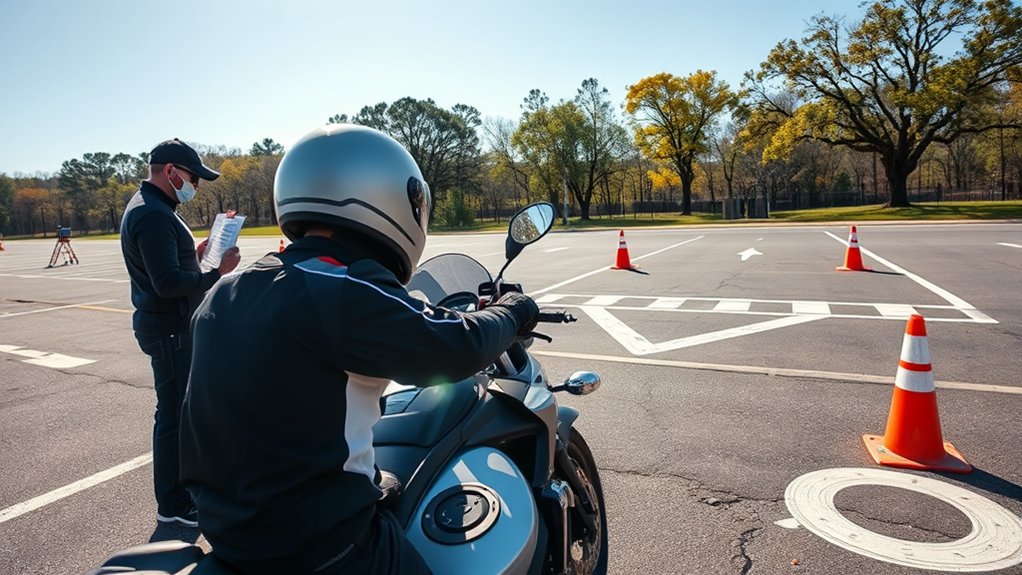
Before you can earn your motorcycle endorsement in Virginia, you’ll need to demonstrate your riding skills during the road test unless you’ve completed an approved rider training course. The road test evaluates your ability to handle basic maneuvers on a controlled course, so thorough motorcycle practice is key to passing.
You’ll be tested on vehicle control, including slow-speed handling, quick stops, and proper turning techniques. You also need to maintain safety and avoid major errors like stalling or striking cones.
You must use your own registered, insured, and street-legal motorcycle. If you’re 18 or older, hold a learner permit for at least 30 days before testing. Remember, major faults cause immediate failure, and too many minor faults will also lead to failing. Preparation and practice will help you pass confidently.
How Do You Move From a Learner Permit to a Full Motorcycle License?
When you’ve held your Virginia motorcycle learner permit for the required time, at least 30 days if you’re 18 or older, or 9 months if you’re under 18, you can take the next step toward getting your full motorcycle endorsement.
To move from your learner permit to a full license, complete an approved Virginia Rider Training Program like the Basic Rider Course. This will get you a completion card that waives the DMV road test. If you skip the course, you’ll need to schedule and pass the DMV motorcycle road test after the permit period.
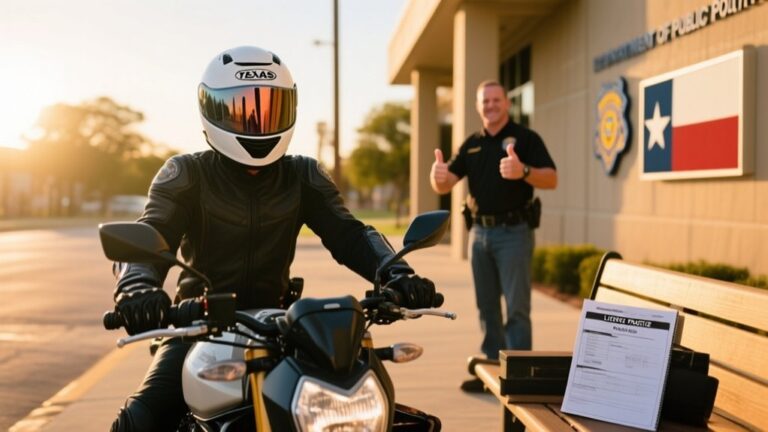
When you’re ready, bring your learner permit, ID, proof of residency, vision screening, and either the course completion card or road test pass to the DMV. Pay the endorsement fee, and you’ll have Class M/M2/M3 added to your license.
What Are Virginia Motorcycle Street Legal Requirements?
If you want to ride legally in Virginia, the first thing you need to do is make sure your motorcycle is properly registered and insured. It’s important to keep all that paperwork in order.
On top of that, you’ll have to stay on top of safety inspections to ensure your bike is roadworthy.
And don’t forget about the equipment standards your motorcycle needs to meet. Virginia has specific rules about what gear your bike must have, so make sure everything checks out.
Oh, and wearing the right helmet and safety gear? That’s not just a good idea—it’s essential for keeping yourself safe while you’re out there on the road.
Registration And Insurance
Registering your motorcycle and securing proper insurance are essential steps to legally ride on Virginia’s roads. You must register your motorcycle with the Virginia DMV, display a valid license plate, and keep the registration card handy when riding.
Virginia law also requires liability insurance with minimum coverage limits (25/50/20), and you’ll need proof of insurance to complete registration.
Here’s what you need to keep in mind: Your motorcycle’s title must be clear or properly transferred if from out-of-state. Pay all registration fees and taxes during the process.
Operating without registration or insurance can lead to fines, points on your license, or vehicle impoundment.
Following these steps guarantees your motorcycle meets legal requirements and keeps you safe on the road.
Inspection And Compliance
Although securing registration and insurance are key steps, making certain your motorcycle meets Virginia’s inspection and compliance standards is just as important for legal street use. Your bike must pass any required safety inspection and be in safe operating condition.
This includes functioning headlights, taillights, turn signals, mirrors, brakes, horn, and tires. You also need to confirm your motorcycle complies with equipment rules like muffler noise limits and proper classification, especially if you ride a small-displacement bike.
Remember, meeting these standards not only keeps you legal but also prepares you for the road skills test. Maintaining compliance helps make certain safety and smooth progression through the licensing process.
Stay proactive, and your ride will be ready for Virginia’s roads in no time.
Helmet And Safety Gear
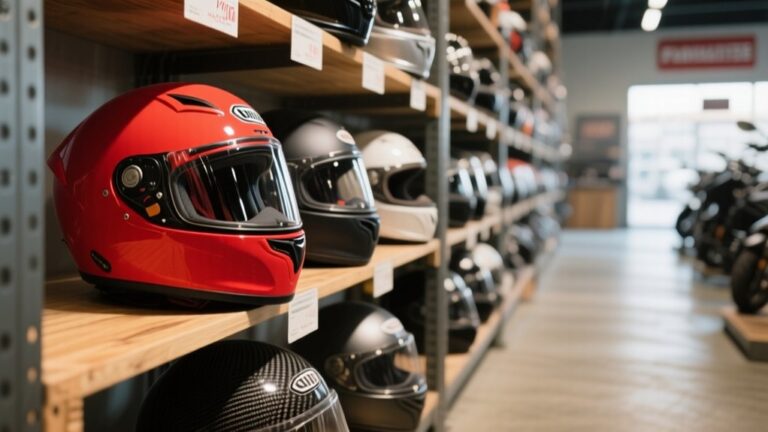
Protecting yourself on Virginia’s roads starts with wearing the right helmet and safety gear. If you’re under 21, you must wear a U.S. DOT-compliant helmet. Riders 21 and older can skip the helmet only if they’ve two years of licensed riding experience or carry insurance with at least $20,000 in medical benefits.
Eye protection is mandatory if your helmet lacks a face shield. Wearing protective gear like jackets, gloves, long pants, and boots is strongly recommended.
Staying safe on the open road means meeting these legal requirements and gearing up properly.
- Wear a DOT-compliant helmet or meet exemptions
- Use eye protection when needed
- Equip yourself with protective clothing for crash protection
This guarantees you ride legally and confidently on Virginia’s open road.
What Are the Costs to Get and Keep Your Virginia Motorcycle License?
Typically, you’ll spend a modest amount to get and maintain your Virginia motorcycle license. The M1 learner permit costs about $3, plus you’ll need to pass a vision screening and knowledge test at the DMV.
Taking the Basic Rider Course (BRC) costs around $180 for residents but can waive the road skills test, saving time and stress. Adding a motorcycle endorsement to your driver’s license usually costs about $6 per year.
Remember, you’ll also need to budget for motorcycle registration, mandatory insurance, and inspection fees to keep your bike street legal. Don’t forget safety gear like helmets and jackets, which are essential investments.
Frequently Asked Questions
Can I Transfer My Out-Of-State Motorcycle License to Virginia?
Yes, you can transfer your out-of-state motorcycle license to Virginia, as the state supports license transferability. Just visit a DMV customer service center, surrender your current license, pass a vision screening, and pay the required fees.
If your license is expired or missing, you might need to pass knowledge and skills tests unless you have completed an approved rider course. This process makes getting your Virginia motorcycle endorsement straightforward and hassle-free.
Are There Specific Insurance Requirements for Motorcyclists in Virginia?
Think of Virginia’s mandatory coverage for motorcyclists like a safety net catching you when things go wrong.
You must carry at least the state’s minimum motor vehicle liability insurance, typically 25/50/20, to protect yourself and others.
Keep proof of insurance handy whenever you ride, as law enforcement or the DMV can ask for it.
Staying insured not only keeps you legal but also helps avoid fines, license suspension, and financial risks.
What Are the Penalties for Riding Without a Motorcycle License in Virginia?
If you ride without a motorcycle license in Virginia, you’ll face serious license penalties, including misdemeanor charges and fines up to $500.
You might also get cited for operating without a proper endorsement, which adds court costs and local penalties.
Insurance companies could deny coverage or hike your premiums, and you’ll be personally liable for damages if you crash.
Repeated offenses can suspend your driver’s license and make future endorsements harder to get.
Is There a Minimum Age to Obtain a Motorcycle License in Virginia?
Wondering about the minimum age to get a motorcycle license in Virginia? You need to be at least 16 years old to apply for a motorcycle learner permit, which is the first step toward full licensure.
If you’re under 18, you’ll have to hold that permit for nine months and complete a rider training course before getting your full license.
Can I Use My Own Motorcycle for the Basic Rider Course?
Yes, you can use your personal motorcycle for the Basic Rider Course, but it has to meet specific safety and size requirements. Make sure your bike is street-legal, registered, insured, and in good mechanical condition.
Bring your own DOT helmet, eye protection, gloves, long sleeves, pants, and boots. Instructors will inspect your bike during check-in and may refuse it if it doesn’t comply.
Check with the course for engine size limits before you arrive.
Conclusion
Getting your motorcycle license in Virginia isn’t just about passing tests. It’s your ticket to freedom on two wheels. By following the steps, from securing your learner permit to completing the road test, you’re setting yourself up for safe and confident rides.
Taking a rider course and knowing the street-legal requirements smooths the journey ahead. Keep in mind the costs, but remember, investing in your license is investing in countless adventures waiting just around the corner.