How To Measure For Motorcycle Gloves – Pro Tips
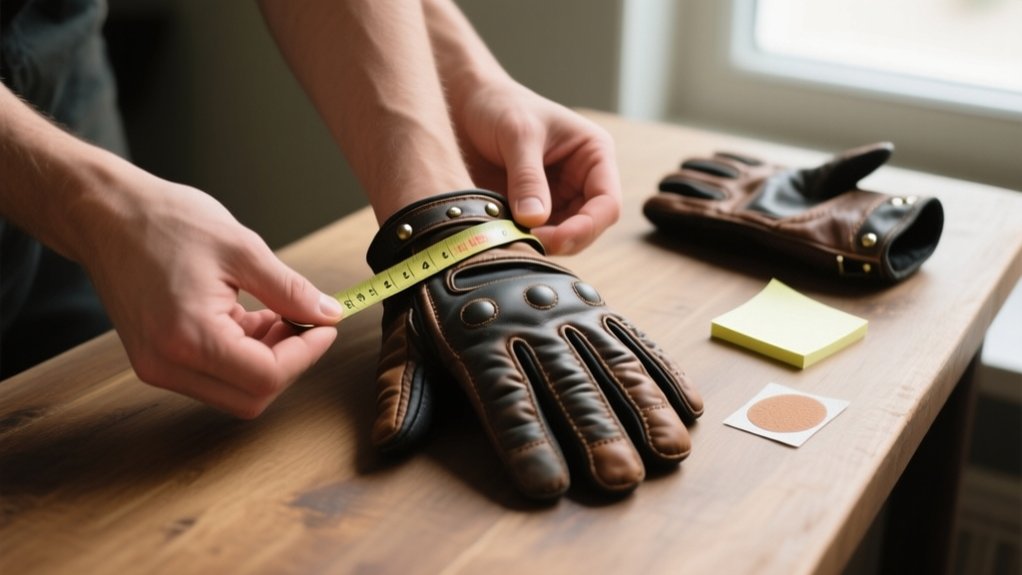
Measure your dominant palm around its widest point, excluding the thumb. Then check your middle-finger length to the palm base.
Match both numbers to the brand’s sizing chart, since men’s and women’s scales can differ. Your fingers should just touch the glove tips, with no bunching, gaps, or knuckle pinch.
Flex your hand and fasten the wrist closure to test slip, protector alignment, and control. Leather can break in slightly, and the rest matters too.
How to Measure Motorcycle Gloves
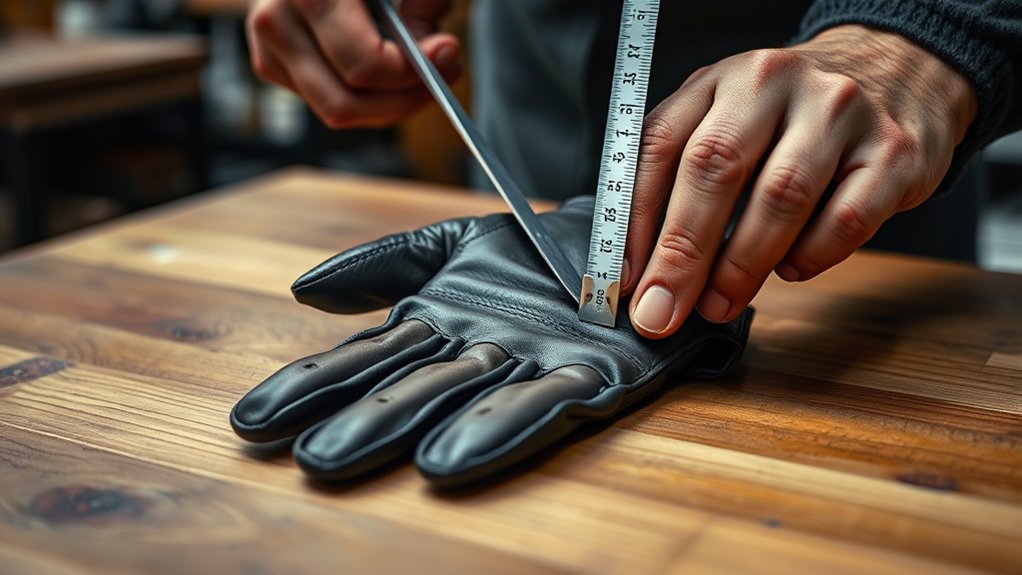
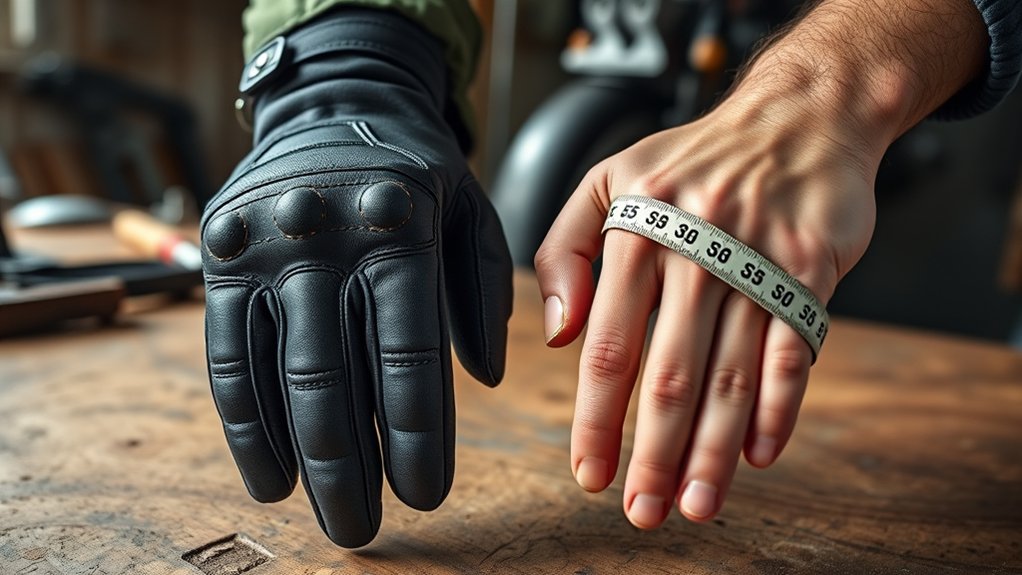
To measure motorcycle gloves accurately, wrap a soft tape measure around the widest part of your dominant hand’s palm, excluding the thumb. Then match that circumference to the brand’s sizing chart.
For many motorcycle gloves, men’s medium usually fits about 8.5–9 inches, and large about 9.5–10 inches. Women’s medium is often near 7 inches.
Measure finger length from the tip of your middle finger to the base of your palm. Then compare both numbers if brands size differently.
Try the gloves on with your fingers curved as if you’re gripping bars. You want no fingertip pressure, no excess material, and enough movement so they feel secure and comfortable.
Remember that leather can stretch, while textile gloves typically won’t. For international brands, adjust for regional sizing differences.
Read Motorcycle Glove Sizing Charts
Use the manufacturer’s sizing chart to find the range that matches your knuckle circumference. If you want a snug fit, choose the lower end of the range—if you prefer more comfort, go with the higher end.
Also, don’t assume men’s and women’s gloves use the same sizing scale; women’s charts often run smaller and may use different measurements.
Finally, double-check the brand’s specific chart and whether it uses the U.S. or an international sizing system, since sizing can vary a lot between manufacturers.
Chart Size Ranges
A proper glove size chart turns your hand measurement into the right fit.
Wrap a tape around the circumference of your dominant hand just below the knuckles, excluding the thumb, then match that inch value to the brand’s chart.
Use the listed range to decide where you land.
If you’re between sizes, choose the lower end for leather since it can relax with use, or the higher end for textile gloves which won’t stretch and must fit exactly.
This matters when you’re riding a motorcycle because a loose or tight glove can cause discomfort.
It can also reduce control in changing weather conditions.
When you shop international brands, don’t trust the label alone.
Compare your measurement to that brand’s chart, since U.S. sizing often runs larger than U.K. or European equivalents.
Men’s And Women’s Sizes
Once you’ve matched your hand measurement to a chart range, check whether the gloves are men’s or women’s. The starting sizes differ, so use the right chart.
For men’s gloves: XS is 7 inches, S is 7.5–8.5, M is 8.5–9, L is 9.5–10, and XL is 10.5–11.
For women’s gloves: XS is 6 inches, S is 6.5, M is 7, L is 7.5, and XL is 8.
Measure your dominant hand around the widest part of the palm, excluding the thumb. Then compare that number directly to the size range.
If you’re between sizes, choose the larger one. This helps you add liner layers and keeps circulation unrestricted.
Leather gloves may feel snug at first because they’ll stretch slightly. Textile gloves should fit precisely instead.
When buying internationally, remember U.S. sizing often runs larger than U.K. or European sizing.
Brand-Specific Fit Differences
Even if you know your measured hand size, you still need to check the brand’s sizing chart. Cuts and conventions vary by manufacturer and country.
Measure your palm circumference at the widest point, excluding the thumb. Then match it to that brand’s inch or centimeter range.
Men’s medium often falls around 8.5–9 inches. However, don’t trust generic size names.
U.S. gloves often fit larger than U.K. or European versions. Also, read the material notes too.
Leather may stretch, while textile gloves usually won’t. You may need to size up accordingly.
Check finger length and cuff fit as well. This matters if you wear liners or have long fingers.
When buying internationally, follow the brand’s conversion guide. Review model-specific fit feedback before you order.
How Motorcycle Glove Fit Affects Safety
Glove fit directly affects how safely you can ride. Both tight and loose gloves interfere with control. If your gloves squeeze too hard, they limit finger flexion, cut circulation, and speed up fatigue. You lose accuracy at the throttle, brake, and clutch.
If they’re too big, they shift and dull tactile feedback. Mis-grips become more likely.
- Check that your fingers move freely without excess slack.
- Make sure closures hold the glove firmly at the wrist.
- Confirm protectors sit over the palm, fingers, and wrist.
Well-positioned polyurethane protectors help absorb impact and abrasion. That lowers injury severity. A secure closure also keeps the glove in place during a crash. Choose fit with material behavior in mind, since leather stretches over time while textile gloves typically stay dimensionally stable.
How Leather and Textile Gloves Fit Differently
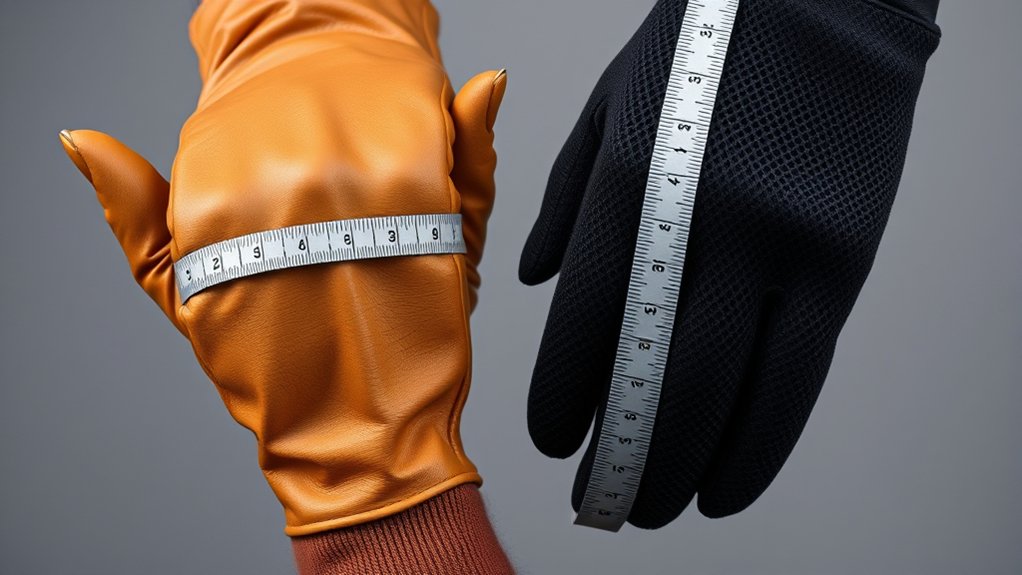
Leather gloves usually stretch a bit as they wear in, so it helps to start with a snug fit across the palm and at the finger bases—this way, you’ll have room for that natural relaxation over time.
Textile gloves, on the other hand, don’t stretch much, so you’ll want to match your hand measurements more closely and expect the fit to stay pretty much the same.
Because of that, leather can feel tighter at first, while textile tends to give you full-range movement right away, with fewer pressure points.
Leather Stretch Over Time
Because leather motorcycle gloves usually stretch about 5–10% with regular wear, start with a snug fit. You should still have full finger movement and a secure wrist closure.
Then expect the leather to relax as it breaks in. Leather can also expand with humidity or body heat, so don’t size down aggressively.
Use short rides and, if needed, a leather-softening spray to help the fibers loosen evenly.
Choose a fit that’s snug, not constricting. Account for extra give from heat and moisture.
Expect U.S.-made leather gloves to run slightly larger than U.K./European models.
If the glove pinches at the knuckles or fingertips, move up one size. The goal is controlled break-in, not overstretching.
Textile Fit Stays Fixed
Textile motorcycle gloves usually keep the same fit after purchase.
So try them on in your normal riding position and make sure they feel snug right away in the fingers and palm.
Textile shells don’t stretch much.
So the dimensions you buy are the dimensions you’ll keep.
If you feel slack at the fingertips or excess material in the palm, that looseness can shift on the controls.
It also reduces precision.
That’s why you should use the manufacturer’s size chart carefully when ordering online.
Avoid sizing up for comfort.
Leather can break in, but textile won’t loosen with wear.
If you want a glove that conforms over time, choose leather.
If you want consistent sizing, choose textile and nail the fit from the start.
How Motorcycle Gloves Should Fit
Your motorcycle gloves should fit snugly across the fingers and palm. You should have full control without pinching or limiting movement.
Aim for the right size range: XS 7“, S 7.5–8.5″, M 8.5–9″, L 9.5–10″, XL 10.5–11”. A correct fit keeps your hand stable while preserving dexterity.
Tight gloves restrict motion, increase fatigue, and can cause hand pain. Loose gloves shift, reduce precision, and may come off in a crash.
Properly shaped gloves with polyurethane protectors and secure closures should move with you, not against you.
Leather may stretch with wear, heat, or moisture. Textile usually won’t.
Choose perforated or lightly lined gloves for heat. Insulated models are best for cold, so you keep control in every season.
When to Size Up Motorcycle Gloves
Even when a glove fits correctly at first, you may need to size up in a few specific cases. If your fingers feel pinched or your grip on the throttle and controls shortens your range of motion, go larger. A tight glove causes fatigue and hand pain.
If your fingers feel pinched or your grip feels restricted, size up. A tight glove leads to fatigue and hand pain.
Choose the next size up when you’ll wear thermal liners or thicker winter gloves. Cold-weather layers demand extra internal volume.
With leather gloves, a slight increase helps account for stretch from heat, moisture, and conditioning. For textile gloves, size up only when you can’t try them on in person, since textile won’t relax much.
When buying across sizing systems, compare the chart carefully. Choose the safer larger option.
Final Fit Checks Before You Buy
Before you buy, put the gloves on and mimic a riding grip by wrapping your fingers around an imaginary handlebar. You should be able to fully flex without the fabric pulling tight or leaving gaps at the knuckles.
Check the fingertips next. They should just touch the end and not bunch up.
If you’re around a men’s medium, 8.5–9 inches should align this way.
Fasten the wrist closure and shake your hands. The glove shouldn’t slip more than 1/4 inch.
Grip again and confirm the knuckle and palm protectors stay centered over contact points.
Wear them several minutes on and off the bike. The leather should feel snug, and the textile should match your measured circumference.
Frequently Asked Questions
How Do I Measure My Hand Accurately for Motorcycle Gloves?
Measure your hand with a soft tape.
Wrap it around the widest part of your palm, excluding your thumb, and note the circumference in inches.
Then measure from your palm base at the wrist crease to the tip of your middle finger.
Compare both numbers with the brand’s size chart.
If you’re between sizes, account for material stretch.
Test the fit in a riding grip for comfort and control.
Should I Measure Both Hands for Glove Sizing?
Yes, you should measure both hands for glove sizing. Your hands can differ slightly, especially if your dominant hand is larger.
Measure each palm’s circumference across the knuckles, excluding the thumb, and note finger length too. Then use the larger hand’s measurements to select your size.
Finally, confirm the fit on both hands. If needed, use adjustable closures or thin liners to tighten the smaller hand without restricting the larger one.
Do Motorcycle Glove Sizes Vary Between Brands?
Yes—motorcycle glove sizes can vary like road maps drawn by different hands.
You’ll find differences between brands, and U.S. sizes often run a bit larger than U.K. or European ones.
Material matters too.
Leather can stretch, while textile usually won’t.
Check each maker’s size chart, measure your knuckles and finger length, and test fit with liners if you’ll wear them.
How Often Should I Remeasure My Hands for New Gloves?
You should remeasure before every new glove purchase if you’ve switched brands, materials, or seasons.
You should also recheck at least every 12–18 months.
Recheck after weight changes, swelling, muscle changes, hand injuries, surgery, or an arthritis flare.
Fit can shift, and leather may stretch while textile won’t, so don’t rely on old numbers.
If you plan to wear liners, measure again with them on for the most accurate fit.
Can I Use My Street Glove Size for Motorcycle Gloves?
Yes, you can use your street glove size as a rough starting point.
But don’t rely on it alone.
Measure your palm circumference and compare it with the motorcycle brand’s sizing chart.
Fits vary by maker and country.
Leather can loosen after break-in, while textile usually won’t.
For safety and control, you need a snug fit in the fingers and palm, not a loose street-glove match.
Conclusion
Getting the right motorcycle glove size isn’t a luxury. It’s your last line of control.
Measure your hand carefully, then compare it to the brand chart. After that, test the fit with your riding position in mind.
If the gloves feel like a second skin—not a borrowed one—you’ve done it right. And as the saying goes, the devil is in the details.
Because a few millimeters can change comfort, grip, and safety on every ride.