How To Winterize A Motorcycle – Quick Guide
To winterize your motorcycle, start by filling the tank fully and adding fuel stabilizer to prevent degradation and varnish buildup. Change the oil and filter to avoid acidic sludge.
Clean and dry the bike, lubing the chain and protecting metal and rubber parts against corrosion. Disconnect and maintain the battery with a charger or store it properly.
Inflate tires to recommended pressure and store the bike in a dry, ventilated spot with a breathable cover. Explore further steps to fully safeguard your bike for winter storage.
Why Winterizing Protects Your Motorcycle From Damage

Proper winterizing preserves your motorcycle’s mechanical integrity and prevents costly damage during storage.
Winterizing your motorcycle safeguards its mechanical health and avoids expensive repairs during storage.
When you winterize your motorcycle, you prevent fuel degradation that causes carburetor and jet clogging within 30–90 days.
Adding a fuel stabilizer keeps the gasoline fresh and prevents varnish buildup, ensuring smooth starts come spring.
You also guard against moisture and road salt corrosion by storing the bike clean and dry.
Battery maintenance is vital; otherwise, it self-discharges, risking sulfation and permanent capacity loss.
Old oil and contaminants left in the engine create acidic sludge that accelerates wear, so change your oil before storage.
Finally, protecting tires from flat spots by using stands or proper inflation preserves their shape.
Taking these steps means your motorcycle stays ready and reliable after winter.
Cleaning and Protecting Your Motorcycle Before Winter Storage
After securing the engine and fuel system, focus on cleaning your motorcycle thoroughly to prevent corrosion during storage.
Wash the entire bike, including the frame, underbody, chain, wheels, and brake calipers, with a mild motorcycle-safe detergent. Then dry it completely to remove salt and grit.
Degrease and lubricate the chain, applying a long-lasting lube to prevent rust and stiff links. Polish exposed metal surfaces and coat painted areas with a corrosion protectant or wax to block moisture.
Treat rubber seals and plastics with a dedicated protectant to prevent drying and cracking. Inspect cables and controls for corrosion or stiffness, lubricating pivot points as needed.
Finally, cover your bike with a breathable motorcycle cover in a dry, ventilated spot to store it safely until spring. Don’t forget to change the oil and filter before storage to maintain engine health.
Preparing Fuel, Oil, and Fluids for Winter Storage

Before you store your motorcycle, make sure to fill the fuel tank completely and add a quality stabilizer. This helps prevent the fuel from breaking down and stops corrosion from forming.
Next, it’s a good idea to change the engine oil and filter. Doing this removes any contaminants that could harm the engine’s internal parts while your bike is sitting unused.
Finally, don’t forget to flush out the old coolant and replace it. This keeps your cooling system protected from freezing and helps prevent any corrosion inside the system. Taking these steps will help keep your motorcycle in great shape over the winter.
Fuel Stabilization Tips
Regularly treating your motorcycle’s fuel system is essential to prevent degradation during winter storage. Fill the tank completely to minimize air space and add a quality fuel stabilizer. Follow the product dosage (e.g., STA-BIL at 1 oz per 2.6 gallons).
Run the engine for a few minutes to circulate the treated fuel through the lines. Carbureted bikes require draining carb bowls or shutting off the petcock to avoid varnish buildup. Fuel-injected bikes benefit from a full tank of ethanol-free gas if available.
| Step | Action | Purpose |
|---|---|---|
| Fill Tank | Fill full tank | Minimize air space |
| Add Stabilizer | Use correct fuel stabilizer | Prevent fuel oxidation |
| Circulate Fuel | Run engine briefly | Distribute stabilizer |
| Drain Carbs (carbureted) | Drain carb bowls or close petcock | Prevent varnish and clogging |
Oil Change Importance
Prioritize changing your motorcycle’s engine oil and replacing the oil filter before storage to prevent internal corrosion caused by moisture and combustion acids in old oil. If your bike has clocked over 1,000 miles since its last service, perform this oil change now.
Use fresh engine oil with the manufacturer-recommended viscosity to guarantee peak protection of bearings and cylinder walls during inactivity. Old oil breaks down and traps contaminants that accelerate wear when the bike sits unused.
After changing the oil, top off other fluid reservoirs as needed to reduce sludge and corrosion risk. Proper oil maintenance before winter storage safeguards your bike’s engine internals, making it easier to start and run efficiently when you ride again.
Neglecting this step increases the chance of costly damage and compromises your bike’s longevity.
Cooling System Care
Once you’ve secured the engine oil and filter, focus on maintaining the cooling system and other fluids to protect your motorcycle during winter storage. Flush and replace coolant if it’s beyond the manufacturer’s recommended interval, typically around two years, to guarantee freeze protection and corrosion inhibitors remain effective.
Check and top off brake and clutch fluids to prevent moisture absorption that can cause corrosion or freezing. Fill the fuel tank with ethanol-free gas and add a stabilizer, running the engine to circulate it. For carbureted bikes, drain carb bowls or run carbs dry to avoid varnish buildup.
Proper fluid care also helps prevent the battery from draining due to cold, damp conditions.
| Fluid Type | Winter Prep Action |
|---|---|
| Coolant | Flush and replace |
| Brake Fluid | Check and top off |
| Clutch Fluid | Check and top off |
| Fuel | Stabilize and circulate |
| Carburetor Bowls | Drain or run dry (if applicable) |
Maintaining Battery and Tires for Winter Storage
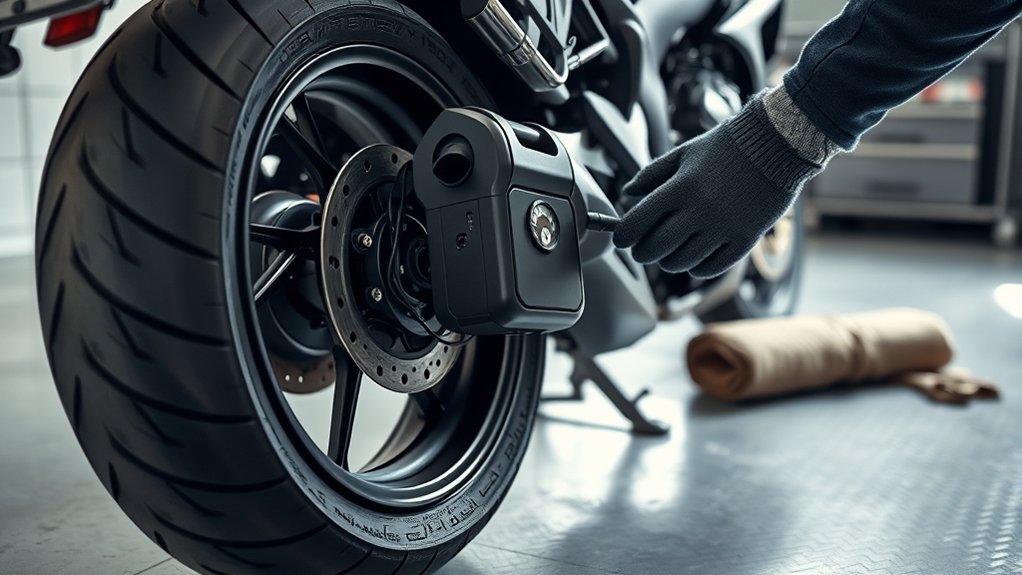
You’ll want to disconnect the battery and either store it in a cool, dry place or connect it to a smart charger. That way, the charger can keep the voltage at the right level without overcharging.
Before putting your bike into storage, make sure to inflate the tires to the recommended pressure. If you can, try to place the bike on stands—this helps prevent flat-spotting over time.
Also, take a good look at the tires for any signs of damage or dry rot. It’s important to know they’re safe before you bring the bike back out for a ride.
Battery Care Tips
Regularly maintaining your motorcycle’s battery and tires before winter storage guarantees reliable performance when you’re ready to ride again.
To preserve battery health, disconnect the battery or at least the negative terminal and store it in a cool, dry area.
Connect it to a smart maintainer or battery tender that provides float charging to prevent sulfation. For lead-acid batteries, maintain a float voltage of 13.2–13.6 V. Lithium-ion batteries need manufacturer-specific care, often stored at 40–60% charge without constant float charging.
Check electrolyte levels on serviceable batteries and top off with distilled water before fully charging. If you keep the battery installed, use a quality sealed battery tender with a smart controller, ensuring secure, weather-protected connections.
Always inflate tires to the recommended PSI to avoid flat spots during storage.
Tire Storage Methods
Maintaining your motorcycle’s tires during winter storage requires specific steps to prevent flat spots and degradation. First, inflate tires to the manufacturer’s cold PSI specification or the maximum PSI indicated on the sidewall if the bike remains on the ground.
To minimize weight on the tires, use paddock or center stands. If unavailable, roll the motorcycle a few inches every 2–4 weeks to shift the contact patch.
For optimal tire storage, keep tires out of direct sunlight and away from heat sources and ozone generators to prevent dry rot. Place a plywood sheet, rubber mat, or cardboard under the tires to avoid prolonged contact with concrete, which can cause moisture-related cracking.
Before riding again, inspect tires for cracks, flat spots, bulges, and tread depth. Make sure they’re at the proper PSI or replace tires older than 5–7 years.
Choosing the Best Location to Store Your Motorcycle
When selecting a storage location for your motorcycle, prioritize an indoor space that stays dry, ventilated, and maintains a stable temperature between 40 and 70°F. This helps reduce condensation and corrosion risks.
If indoor storage isn’t an option, find a covered, secure spot shielded from sun, wind, and water, and use a breathable, weatherproof cover.
Follow these steps for ideal winter storage:
- Avoid exterior walls or windows to minimize temperature swings and light exposure. These can accelerate paint fading and condensation.
- Use paddock or center stands; if unavailable, over-inflate tires to max sidewall pressure and rotate periodically to prevent flat spots.
- Seal entry points against rodents and pests. Plug exhaust and intake openings with steel wool or breathable plugs.
- Make certain proper ventilation to maintain air circulation and reduce moisture buildup.
When and Why to Choose Professional Winterization Services
If you don’t have access to a dry, climate-controlled storage space or plan to store your motorcycle for longer than three months, opting for professional winterization services is a smart choice.
These services include a thorough inspection, oil and filter changes, fuel system treatment, and battery testing, which prevent contaminants and corrosion during storage.
Professional shops follow manufacturer guidelines, especially for complex bikes with fuel injection, liquid cooling, or advanced electronics. This ensures precise fluid intervals and proper lithium battery care.
Certified providers often add chain lubrication, corrosion protection, coolant service, and rodent-proofing, steps hobbyists might overlook.
Many also offer secure, climate-controlled storage combined with documentation and re-commissioning advice.
Choosing professional winterization services streamlines preserving your bike’s condition, making winterizing your motorcycle efficient and reliable.
Frequently Asked Questions
Can I Winterize My Motorcycle Without a Garage?
Yes, you can winterize your motorcycle without a garage by using a breathable, weatherproof cover and placing it on a hard, level surface off the ground.
Use fuel stabilizer in the tank to prevent varnish and phase separation.
Remove the battery and connect it to battery tenders in a frost-free area, or at least disconnect the negative terminal and insulate it if left outdoors.
Inflate tires to max PSI to avoid flat spots.
How Often Should I Check on My Bike During Winter Storage?
You should check on your bike during winter storage as regularly as clockwork, like a metronome ticking monthly inspections.
Focus on battery monitoring, ensuring connections stay clean and corrosion-free every 2–4 weeks.
Inspect tire pressure, sidewalls, and cover condition monthly, and roll the bike periodically to prevent flat spots.
Regular checks help you catch moisture, leaks, or rodent damage early, preserving your motorcycle’s health throughout winter storage.
Is It Necessary to Fog the Engine if Storing Only a Few Weeks?
No, you don’t need engine fogging for short term storage of just a few weeks.
Running the bike to full operating temperature and using fresh oil usually provides enough protection against condensation and acids.
Engine fogging is more critical for long-term storage to coat the cylinder walls and intake valves.
For short gaps, normal riding deposits a sufficient oily film, so focus on keeping the bike clean, dry, and covered instead.
What Type of Cover Is Best for Outdoor Motorcycle Storage?
You want a breathable cover designed for outdoor use. It blocks rain, snow, and UV rays while letting moisture escape, which prevents paint damage. Avoid plain waterproof tarps that trap condensation.
Instead, choose covers with heat-sealed seams and waterproof coatings combined with breathable fabrics or vents. Look for fitted or semi-fitted designs with elastic hems and reinforced grommets to secure against wind.
Adding a waterproof tarp underneath can reduce ground moisture wicking during long-term storage.
Can Winterizing Methods Vary by Motorcycle Type or Model?
Yes, winterizing methods vary by motorcycle type and model due to engine differences and suspension care needs.
Carbureted engines require draining fuel to prevent varnish, while fuel-injected ones benefit from a full tank to avoid corrosion.
Liquid-cooled bikes need coolant checks, unlike air-cooled models.
Suspension care also differs: heavy cruisers need stands or tire rotation to prevent flat spots, whereas sportbikes demand fuel stabilization and rodent protection for their complex electronics.
Conclusion
Winterizing your motorcycle is like wrapping it in a shield against harsh cold and corrosion. By thoroughly cleaning, treating fluids, and maintaining tires and battery, you make certain your bike wakes ready and reliable.
Choose a dry, secure spot to rest it through winter’s bite, or entrust pros for expert care. Taking these precise steps protects your investment, so come spring, your motorcycle roars back to life, primed and powerful, ready to hit the road.