Should I Get A Motorcycle – Full Story
If you crave freedom, sharpen your focus, and enjoy a physical, thrilling ride, a motorcycle can change your daily life for the better. But it’s not without risk.
You’ll need quality gear to stay safe, solid training to avoid common mistakes, and regular maintenance to build skill and confidence. Choosing the right bike fits your style and helps you master control.
Embracing the community brings support and shared passion. There’s much more to discover before you ride off.
Is Motorcycling Right for You? Benefits and Risks

Although motorcycling offers impressive time and cost savings, like fuel efficiency of 50–70 mpg, easier parking, and the ability to slip through traffic, it also demands serious consideration of the risks involved.
When riding a motorcycle, you engage your body and mind in unique ways, benefiting your balance, cardiovascular health, and focus. Yet, motorcycles carry a fatality rate about 27 times higher per mile than cars, contributing to roughly 15% of U.S. traffic deaths. You must weigh these risks carefully against the rewards.
Riding a motorcycle requires constant vigilance and self-control to avoid common dangers like speeding or poor gear use. If you’re ready to commit to responsible riding and maintenance, the benefits can be deeply rewarding. It’s essential to respect the risks from the start.
The Gear You Need to Stay Safe and Confident
Equip yourself with the right gear to transform your ride from risky to confident and controlled. Safety gear starts with a full-face helmet meeting DOT or ECE standards, fitting snugly without pressure points. Replace it after any crash or every 5–7 years to maintain protection.
A CE-rated motorcycle jacket with Level 1 or 2 armor shields your shoulders, elbows, and back from impact and abrasion. Don’t forget CE-certified gloves with knuckle protection and gauntlet cuffs; they maintain grip and guard against fractures.
Sturdy boots covering your ankles with reinforced toes and oil-resistant soles protect from crush injuries and enhance control. Add CE-rated knee and hip armor, a high-visibility vest, and regularly inspect your gear to keep your protection reliable and your confidence high.
Common Motorcycle Riding Mistakes and What They Teach

You’ll quickly find that common mistakes like stalling at lights or tipping over at low speeds aren’t just frustrating—they’re actually powerful lessons in clutch control, balance, and body positioning. It’s all part of the learning curve.
Then there’s overconfidence and skipping maintenance, which can lead to some serious accidents. But once you recognize these slip-ups, you start to get the hang of smooth throttle use and why regular bike checks matter so much.
Frequent Riding Errors
Frequent riding errors provide invaluable lessons that shape you into a more skilled and confident motorcyclist.
Stalling at lights teaches clutch control and throttle coordination. Practicing in a quiet parking lot builds smoothness and confidence.
Low-speed tip-overs reveal the importance of balance, foot positioning, and slow-speed handling drills.
Over-braking or under-braking, especially favoring one brake, risks losing control. Mastering combined braking with progressive pressure improves your stopping power dramatically.
Misjudging hazards like gravel or wet paint stresses the need for constant scanning, route awareness, and a relaxed grip to handle traction changes.
Finally, excessive speed or overconfidence on familiar roads warns you to set personal limits and maintain self-control.
These errors aren’t failures—they’re lessons that make you a safer, more aware rider on your bike or motorcycle.
Lessons From Mistakes
Although mistakes on a motorcycle can be frustrating, each one offers a valuable lesson that sharpens your skills and instincts. As new riders, stalling at lights or tipping your bike teaches clutch control, foot placement, and balance at low speeds.
Skipping essential pre-ride checks like T-CLO—tyres, chain, lights, oil—can lead to breakdowns or loss of control, so make inspections routine. Overconfidence and abrupt throttle corrections increase crash risks; practice smooth inputs to stay safer.
Riding without proper gear or impaired vastly raises injury severity, so always gear up fully.
Finally, off-road or low-speed practice boosts hazard avoidance and reflexes, transforming your riding confidence. Embrace your mistakes; they’re the best teachers on your journey.
What Riding Does to Your Body and Mind
Experiencing the rush of opening the throttle sends a powerful surge of adrenaline and dopamine through your system, igniting exhilaration and sharpening your focus both during and after the ride.
Riding a bike demands full-body engagement. Your core and leg muscles work hard to maintain balance, while your hands and feet coordinate clutch, shifter, throttle, and brakes with precision.
This constant attention hones your reflexes and sensorimotor skills. Your heart rate spikes during acceleration and maneuvering, giving you a modest cardiovascular boost compared to sitting in traffic. The vigilant “head on a swivel” mindset enhances situational awareness but can also tire your mind if you ride too long without breaks.
Facing real-world risks often shifts your perspective, encouraging you to live more deliberately and embrace the present moment.
How Maintaining Your Motorcycle Builds Confidence and Skill
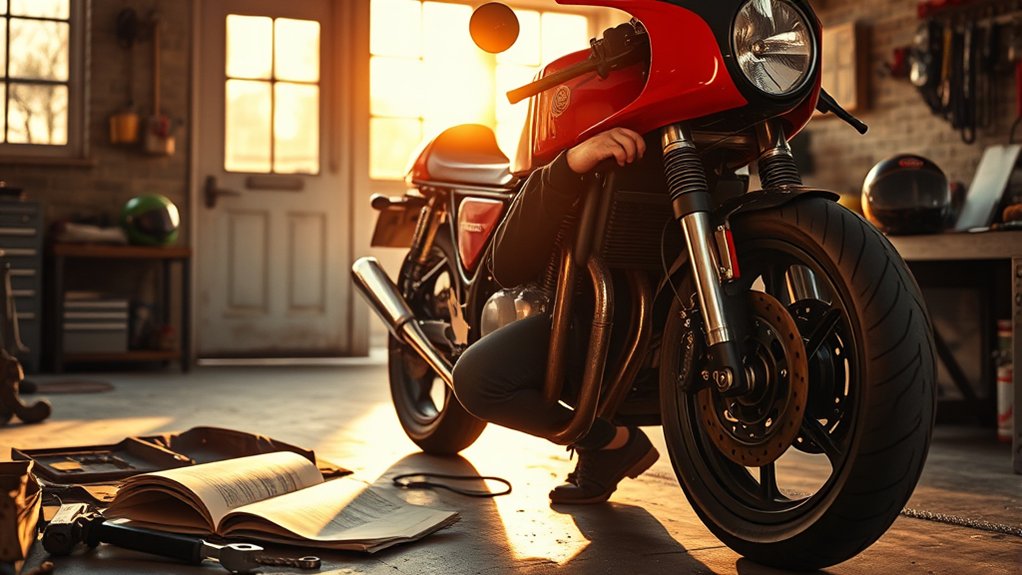
You’ll build real confidence by mastering basic maintenance tasks, like lubing the chain and regularly checking tire pressure. And honestly, making mistakes along the way? That’s totally part of the process.
When you see them as learning opportunities, it helps you troubleshoot issues without feeling afraid. Every repair you complete not only proves you’re capable but also deepens your understanding of how your bike works.
Mastering Basic Maintenance
Every rider benefits from mastering basic maintenance tasks, transforming what once seemed intimidating into empowering routines. Regular oil changes every 3,000–5,000 miles keep your engine healthy, while checking tyre pressure before every ride makes certain safety. Adjusting chain slack to the manufacturer’s specs sharpens your mechanical skills and prevents costly breakdowns.
| Task | Frequency/Spec |
|---|---|
| Chain Lubrication | Every 300–600 miles |
| Tyre Tread Depth | Minimum 1–1.6 mm |
| Oil Changes | Every 3,000–5,000 miles |
Taking charge of upkeep like tightening bolts, cleaning carburettors, and replacing filters boosts self-reliance and saves workshop fees. Hands-on maintenance builds your mechanical intuition, helping you spot issues early and truly own your riding journey.
Embracing Learning Mistakes
Mastering basic maintenance lays a solid foundation, but true confidence grows when you face and learn from the inevitable mistakes along the way. When you ride a motorcycle, small errors like overtightening a drain plug or mis-threading a bolt aren’t failures; they’re lessons that sharpen your skills.
Regular tasks like lubing the chain and checking tyre pressures become second nature, and diagnosing issues such as a stuck carburetor or blown fuse reduces your dependence on mechanics. Each successfully completed job builds self-reliance and pride, while stalling or dropping the bike in a parking lot normalizes growth.
Embracing these learning moments transforms embarrassment into expertise, ensuring you not only maintain your bike safely but ride with greater confidence and skill every mile.
Choosing the Right Motorcycle for Your Needs
Although choosing the right motorcycle can feel overwhelming, focusing on your specific needs and experience will guide you to the perfect match. If you’re a beginner, consider a lightweight new bike with 250–500cc to ease handling and build confidence safely.
Think about how you’ll use it: commuters do well with standards or scooters for fuel economy and parking, while longer trips call for sport-touring or adventure bikes.
Don’t forget practical factors like fuel efficiency, storage options, and weather protection.
Test-ride to make certain the bike fits you comfortably. Seat height, control reach, and confidence at stops matter. Prioritize models with ABS and rider-assist features for safety.
Finally, budget for total ownership costs, including insurance and gear, so your new bike becomes a rewarding investment.
How Motorcycling Changes Your Daily Life and Sense of Freedom
Experiencing motorcycling daily transforms your routine by sharpening your attention and reflexes, as you constantly coordinate clutch, throttle, gears, signals, and brakes.
Daily motorcycling hones your focus and reflexes through continuous coordination of controls and signals.
As a motorcycle rider, you’ll notice commutes become quicker and parking easier, thanks to nimble bikes that sip fuel and weave through traffic.
The physical engagement, feeling the wind, catching scents, sensing temperature, connects you to your environment in ways cars never do. This boosts your mood and reduces stress.
Wearing protective gear might feel odd at first, but it builds your confidence riding in all conditions, even as you acknowledge the inherent risks.
Facing mortality every ride sharpens your appreciation for life, helping you live more deliberately and cherish moments with loved ones. This daily dance redefines freedom for motorcycle riders.
Joining the Motorcycle Community and Feeling Connected
Feeling the rush of the open road and the freedom motorcycling brings is only part of the experience. You also become part of a vibrant community that welcomes you with open arms.
This sense of community thrives through group rides, clubs, and events where riders share a unique language and mutual respect. You’ll find yourself greeting fellow riders on the road and at stops, turning strangers into mentors or ride buddies.
Clubs and online forums offer practical support like gear advice, maintenance tips, and route planning that accelerates your learning curve. Whether you join beginner-friendly groups or participate in charity rides and rallies, you’ll gain skills, confidence, and a deeper connection.
This inclusive community spans all ages and backgrounds, making it easy to feel connected and supported from the start.
Tips for Starting Your Motorcycle Journey Safely
Before you hit the open road, you’ll want to build a solid foundation of skills and safety habits that protect you and boost your confidence. Riding on two wheels demands respect and preparation. Here are three essential tips to start safely:
- Enroll in a certified rider safety course to master basics and reduce accident risk. Many insurers reward this commitment.
- Choose a lightweight, low-power bike (250–500cc) to hone your control and balance before upgrading.
- Always wear DOT/SNELL/BSI-rated helmets and CE-rated gear. This protective barrier markedly lessens injury severity.
Practice low-speed maneuvers and emergency braking in safe spaces, and learn basic maintenance to guarantee reliability. Starting right means enjoying every ride with confidence and safety.
Frequently Asked Questions
How Do I Legally Register and Insure a Motorcycle?
To legally register your motorcycle, you’ll need the vehicle title or bill of sale, proof of identity and residency, and completed state registration forms.
Pay registration and title fees at your DMV.
For insurance, get mandatory liability coverage and consider additional protections like collision or all-encompassing.
Shop around for quotes, factoring in your bike’s specifics.
Don’t forget, you’ll likely need a motorcycle endorsement or license to ride legally.
What Is the Best Time of Year to Buy a Motorcycle?
Imagine Jake snagging a sleek sportbike in late October during those unbeatable seasonal deals. The best time to buy a motorcycle is typically fall, when demand drops and dealers offer discounts on outgoing models.
You’ll find lower prices and more room to negotiate. Winter’s even better for bargains, but watch for storage issues. Spring brings variety but higher costs.
Timing your purchase around these seasonal deals saves you serious cash.
Can I Ship My Motorcycle if I Move to Another State?
Yes, you can ship your motorcycle interstate when moving to another state. Professional motorcycle shipping services handle interstate shipping with options like open or enclosed carriers.
Enclosed transport offers extra protection but costs more. To guarantee a smooth process, prepare your bike by securing parts, checking battery rules, and documenting its condition.
Also, verify insurance coverage and book in advance for the best rates and timing.
How Much Does Motorcycle Theft Prevention Typically Cost?
When it comes to motorcycle theft prevention, you have to put your money where your mouth is. A solid security investment typically ranges from $30 for basic locks up to $700 for advanced electronic immobilizers.
Adding GPS trackers and alarm systems may cost you $50 to $300 upfront plus monthly fees. Don’t forget secure parking solutions, which can add another $100 to $500.
These expenses protect your bike and can even lower your insurance premiums.
Are There Financing Options Specifically for Motorcycle Purchases?
Yes, you’ll find financing options specifically for motorcycle purchases, including specialized motorcycle loans with terms from 24 to 72 months. These loans often require the bike’s title as collateral.
If you want loan alternatives, consider credit cards for smaller amounts, home-equity loans for lower rates but higher risk, or peer-to-peer lending platforms. Each option varies by credit score and interest rate, so weigh your choices carefully before committing.
Conclusion
So, picture yourself gripping the handlebars, the wind rushing past, your heart racing not just from speed but from newfound freedom. You’ve weighed the risks, geared up right, learned from mistakes, and built skills that boost your confidence every ride.
The motorcycle isn’t just a machine; it’s a gateway to adventure, connection, and growth. Ready to take that first twist of the throttle? Your journey is waiting, bold, thrilling, and entirely yours.