Where Can I Sell My Motorcycle – Buying Guide
You can sell your motorcycle through local dealerships for fast, secure sales and handled paperwork. Or choose trade-in options for convenience and possible incentives.
Online marketplaces and private sales offer wider exposure and top dollar if you present your bike well with quality photos and service history. Consignment shops provide expert support for a commission.
Each method varies in speed, price, and effort, so knowing your priorities helps. Keep exploring to master timing, pricing, and safe selling steps.
Where Can You Sell Your Motorcycle?

Wondering where you can sell your motorcycle to get the best balance of speed, price, and convenience? You have several strong options. Selling to a local dealership like Motoworks or a Harley-Davidson dealer guarantees a fast, secure sale with professional paperwork handling and competitive offers.
If you want wider exposure, online marketplaces such as CycleTrader or Facebook Marketplace let you reach thousands, though you’ll handle inquiries and logistics yourself. Consignment shops offer dealer-stage exposure and expert support, but you’ll pay a commission and wait for a sale.
Selling privately can fetch top dollar if you provide quality photos and service history but requires buyer vetting and patience. Finally, consider trade-ins for convenience and possible incentives, especially when demand is high and new bikes are scarce. Each method lets you sell your motorcycle effectively.
When’s the Best Time to Sell Your Motorcycle?
You’ll get the best offers by timing your sale with market trends. Usually, spring and early summer are the sweet spots when demand really picks up.
Different types of motorcycles tend to sell better in certain seasons, so it helps to know when buyers are most active.
If you can align your listing with recent maintenance and seasonal interest, you’ll maximize your bike’s value and increase your chances of selling quickly.
Market Trends Impact Timing
Although market conditions can fluctuate, understanding seasonal demand cycles is key to selling your motorcycle at the best time. Selling your motorcycle between March and June usually attracts the most buyers, as spring and early summer kick off riding season.
Sportsbikes and café racers peak early summer, while dirtbikes see stronger interest in autumn and winter. Current market trends also favor sellers: COVID-related production delays have pushed pre-owned prices higher over the past two years, letting you maximize value now.
However, timing matters less if you’re selling rare classics or exotic machines due to steady collector demand. Don’t forget to take into account local factors like weather and dealership inventory. Checking nearby dealers and listings helps you gauge buyer activity and pinpoint the most advantageous moment to list your bike.
Seasonal Selling Advantages
Timing your motorcycle sale to align with peak seasonal demand can really boost your chances of a quick sale at a strong price.
Most demand surges from late March through June, so listing during this period attracts enthusiastic buyers, especially for sportsbikes and café racers gearing up for summer rides.
Dirtbikes, however, perform better in autumn and winter when off-road trails are popular.
Classics and exotic motorcycles are less sensitive to seasonality, often fetching top dollar year-round.
Avoid listing seasonal motorcycles in deep winter unless targeting niche buyers, as cold weather discourages test rides and viewings.
Tailoring your sale to your local riding season, like spring in northern climates, maximizes exposure to motivated buyers.
This way, your motorcycle sells faster and at a price that truly reflects its value.
How to Prepare Your Motorcycle to Sell
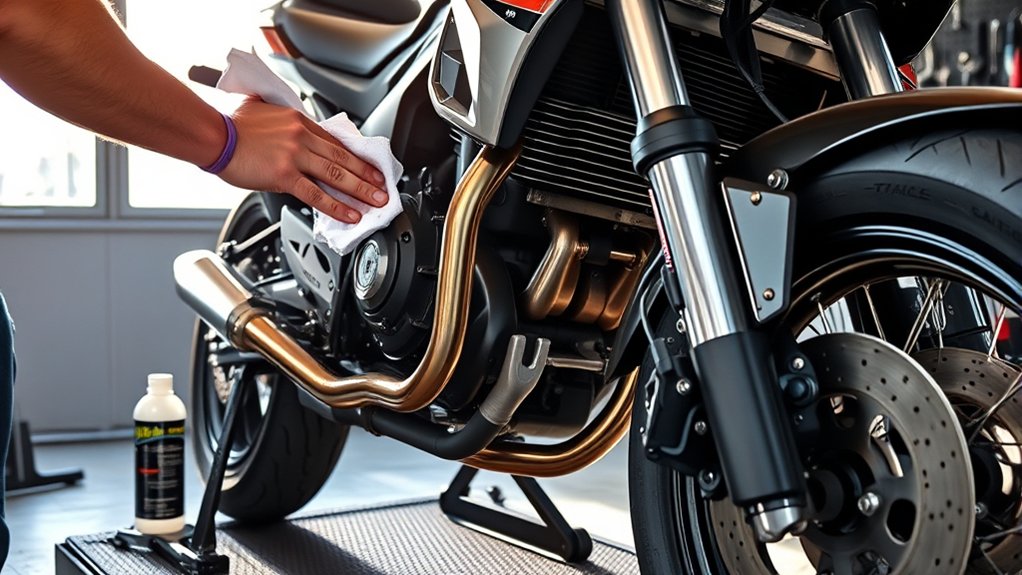
Getting your motorcycle showroom-ready can markedly boost its appeal and value.
If you’re looking to sell, start by thoroughly cleaning your bike inside and out. Remove fairings if needed, degrease the chain, and polish all brightwork.
Service key consumables like tyres, brake pads, and fluids, and keep receipts handy to reassure buyers.
Fix minor cosmetic issues such as replacing cracked indicators, rusty bolts, and torn seat covers. Swap aftermarket parts back to stock, offering extras separately.
Don’t forget to compile all paperwork, including the title, service records, and MOT if applicable, plus transfer documents to speed the sale.
Present your bike in top condition to attract serious buyers and get the best price possible.
How to Price Your Motorcycle Right
You’ll want to start by checking out local market trends. This will help you set a realistic price range based on what similar motorcycles are selling for.
Then, take a close look at your bike’s condition. Any recent maintenance or cosmetic issues should definitely influence your asking price.
After that, it’s a good idea to compare offers from both dealers and private buyers. Keep in mind, dealers usually pay about 10–25% less since they need to cover their own costs.
Assess Market Trends
Because pre-owned motorcycle prices have surged over the past two years, it’s essential to base your asking price on recent sold listings within the last 60 to 90 days rather than current active offers.
To accurately assess market trends and determine your bike’s market value, consider these key factors:
- Check sold listings for your make, model, and year on local marketplaces and dealer trade-ins.
- Factor in seasonality. List in spring or early summer for top offers, or expect 5–10% lower prices in winter.
- Compare dealer trade-in quotes with private sale prices to gauge convenience premiums and potential discounts.
- Account for supply constraints, like limited new inventory from brands such as Harley-Davidson, which can push used values higher.
Using these steps helps you price your motorcycle competitively and attract serious buyers.
Consider Vehicle Condition
After analyzing market trends to set a competitive price, turn your attention to the motorcycle’s condition to fine-tune your asking amount. Accurately assess mechanical aspects. Make sure the engine runs smoothly, warning lights are off, and clutch and gears work properly. Buyers often deduct $500–$2,000 for visible mechanical issues, so be thorough.
Document recent maintenance like oil changes, brake, and tyre replacements to boost buyer confidence and justify a higher price. Consider mileage and consumables. High mileage lowers value, but fresh tyres or a new chain can offset depreciation.
Don’t overlook cosmetic condition and accessories. Clean paint, no corrosion, and aftermarket parts can raise your bike’s worth. Be honest about defects and provide clear photos to reduce negotiations and speed up your sell.
Compare Dealer Versus Private
When deciding where to sell your motorcycle, weighing dealer offers against private sales can materially impact your final price and selling experience.
Dealers provide convenience and safety, handling paperwork and title transfers quickly, but expect trade-in offers 10–20% below private sale prices.
Private sales often fetch 5–25% more but require you to manage test rides, viewings, payment verification, and all paperwork.
Consider these factors when pricing your bike:
- Use local market comps for accurate pricing.
- Adjust for accessories, service history, and seasonal demand.
- Factor in dealer convenience versus private-sale time and risks.
- Explore consignment or specialty dealers to balance price and hassle.
Choosing wisely guarantees you price your motorcycle right and optimize your sale.
What Paperwork Do You Need to Sell Your Motorcycle?
Gathering the right paperwork is essential to closing the sale of your motorcycle smoothly and legally. If you’re trying to sell, start with the vehicle title. Sign it over to the buyer where required and make sure the VIN matches the bike and sale documents.
Include a full service history with receipts for major maintenance to boost buyer confidence. Provide registration papers and a current MOT or inspection certificate if applicable.
Prepare a detailed bill of sale listing buyer and seller names, sale price, date, and mileage, signed by both parties. Don’t forget to check local laws for emissions certificates or lien releases if the bike was financed.
Finally, promptly notify your DMV or vehicle authority of ownership transfer to avoid future liabilities. Having these documents ready makes your sale transparent and hassle-free.
How to Sell Your Motorcycle Safely and Smoothly
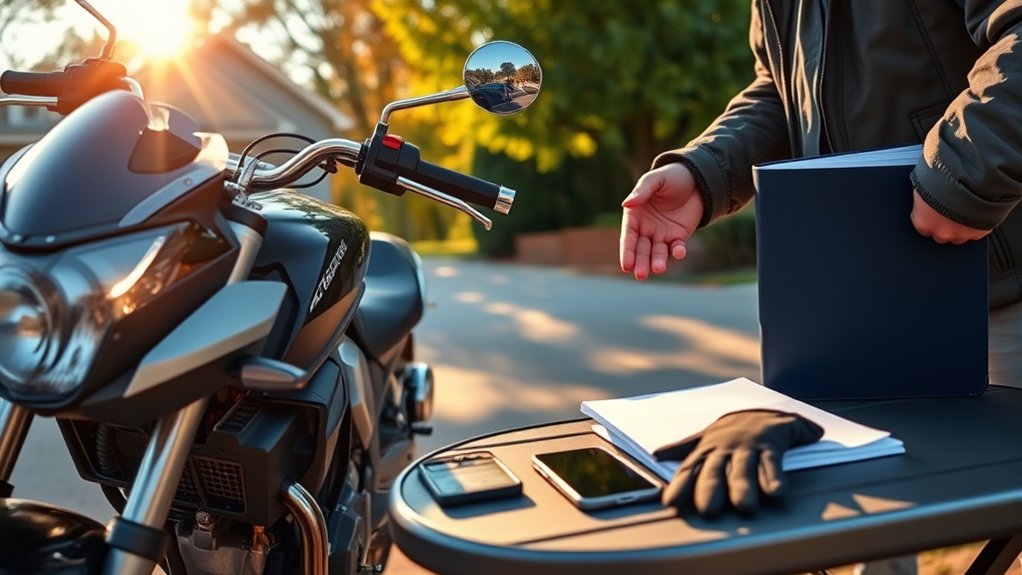
To sell your motorcycle safely and smoothly, you’ll need to combine careful preparation with smart precautions.
Choosing a reputable dealership like Motoworks is a great way to make the process faster and avoid handling paperwork or liability yourself.
If selling privately, follow these key steps:
- Meet buyers in public during daylight and verify their licence and insurance for test rides.
- Prep your bike thoroughly: clean it, do a tune-up, fit fresh tyres, and take clear photos to boost buyer confidence.
- Set a competitive price by comparing local market rates and dealership appraisals.
- Protect yourself from scams by confirming cleared bank transfers and completing ownership transfer promptly.
These actions guarantee a smooth, secure sale that maximizes your motorcycle’s value without risking fraud or delay.
Frequently Asked Questions
Can I Trade in My Motorcycle at a Dealership?
Yes, you can trade in your motorcycle at a dealership. They’ll give you a thorough dealership appraisal, considering make, model, year, condition, mileage, and accessories.
This process is quick and saves you from handling paperwork and logistics. While trade-in offers might be slightly lower than private sales, current market demand often narrows that gap.
Plus, trading in guarantees a safer, faster sale without the hassle of private buyers or test rides.
How Do I Advertise My Motorcycle Online Effectively?
Think of advertising your motorcycle like casting a fishing line where the fish actually swim. You want targeted listings on platforms where serious buyers hang out.
Post crisp photos, detailed descriptions, and competitive pricing on sites like CycleTrader and Facebook Marketplace. Respond fast and offer video walkarounds to hook interest.
This focused approach reels in genuine buyers quickly, avoiding wasted effort and maximizing your sale’s success.
Should I Offer Test Rides to Potential Buyers?
You should offer test rides, but only with strict precautions. Require a valid motorcycle license, proof of insurance, and have the buyer sign a safety waiver to protect yourself legally.
Meet in a public, well-lit place, bring a friend, and accompany them during the ride if possible. Limit the route and time, and consider holding a refundable deposit or cleared payment before handing over keys to minimize risk.
What Are the Tax Implications of Selling My Motorcycle?
Think of selling your motorcycle like closing a chapter in a book. If you sell for more than your adjusted basis, you’ll face capital gains tax. It’s short-term if you owned it less than a year, and long-term if longer.
Selling at a loss won’t get you tax deductions since it’s personal property. If you used the bike for business, you must carefully allocate proceeds and may owe depreciation recapture.
Keep all sale documents for accurate tax reporting.
How Do I Handle Negotiations With Buyers?
When handling negotiations, use a strong counteroffer strategy by starting with a fair asking price slightly above your bottom line. This lets you negotiate without undervaluing your bike.
Back your price with research on local comps and disclose service history to justify your value. Stay firm on non-negotiables and be ready to counteroffer calmly.
This approach keeps talks productive and helps you close a deal that meets your goals efficiently.
Conclusion
Selling your motorcycle doesn’t have to be overwhelming. By choosing the right place, timing your sale well, and prepping your bike thoroughly, you’ll attract serious buyers quickly.
Pricing it correctly and having your paperwork ready guarantees a smooth transaction. Remember, the idea that selling a motorcycle is complicated is just a myth. Armed with the right steps, you can sell confidently and efficiently.
Ready to make your sale? The road ahead is clearer than you think.