Where To Get Motorcycle License – Shopping Guide
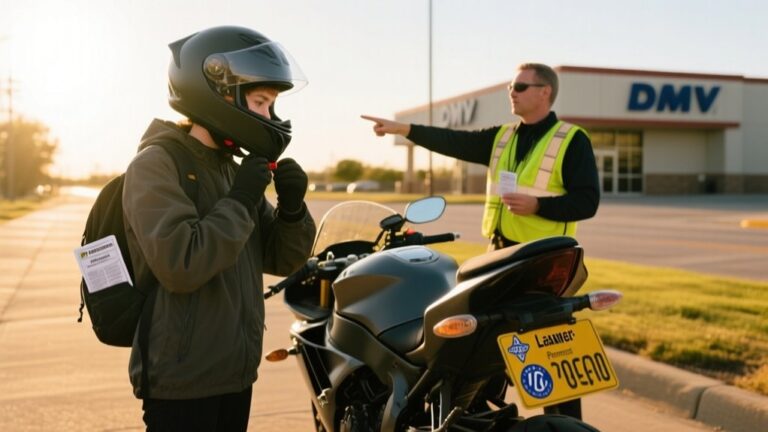
You can get a Colorado motorcycle license at your local DMV.
Start by getting a motorcycle instruction permit, then take an approved safety course, or pass the motorcycle knowledge and skills tests.
Bring proof of identity, Colorado residency, and the required fees.
Also bring your permit, registration, and insurance for testing.
If you’re under 18, you’ll need parental consent.
A course may earn you a waiver card and help you skip the skills test.
There’s still more to know about each option.
Colorado Motorcycle License Requirements

In Colorado, you must be at least 16 and already have a valid Colorado driver’s license or permit. Then you can apply for a motorcycle endorsement.
In Colorado, you must be at least 16 and hold a valid Colorado license or permit to apply.
The endorsement is marked M for two- or three-wheel motorcycles. It’s marked 3 for three-wheelers only.
To start, get a Colorado motorcycle instruction permit. You’ll need to pass the DMV knowledge test and show identity and residency documents.
If you’re under 18, you’ll also need parental consent. Next, complete an approved motorcycle safety course or hold your permit long enough to qualify.
A safety course can waive the DMV skills test. If you take the skills test, bring a properly registered, insured, and inspected motorcycle that meets requirements.
After you pass, or after you get a waiver, visit the DMV. Add the endorsement and pay the required fee.
Choose Your Permit or Endorsement
You’ll need to choose between a motorcycle instruction permit and a full endorsement, and the right option really depends on how soon you want to ride legally. With a permit, you can practice—but you’ll have restrictions. An endorsement, on the other hand, lets you operate your motorcycle on the road without those limits.
If you’re under 18, make sure to check your state’s rules first—things like age requirements, consent requirements, and whether you need to complete a safety course before you apply.
Permit Requirements
Before you can ride legally, choose the permit or endorsement your state requires and gather the right documents.
Most states ask you to pass a motorcycle knowledge test. You’ll also need proof of identity and residency, and sometimes Social Security number verification.
For a motorcycle permit, bring your driver’s license, a utility bill, and any fee your DMV lists.
Review the Florida Motorcycle Driver Handbook or your state guide before you test.
A permit usually limits passengers, night riding, and highway use. It may also require a helmet and eye protection.
If you’re obtaining a motorcycle license, an approved safety course can waive the skills test. It may also shorten your permit wait.
You must still meet age and license rules before seeking a full endorsement. Then you’ll need to prove you can ride safely.
Endorsement Options
Colorado gives you a couple of ways to get legal on a motorcycle.
It helps to pick the right one up front.
You can choose an M motorcycle endorsement for two- or three-wheel bikes.
Or, choose a 3 endorsement for three-wheel motorcycles only.
If you don’t want a combined license, you can get a motorcycle-only license instead.
| Option | Covers | Notes |
|---|---|---|
| M endorsement | 2- or 3-wheel motorcycles | Most flexible |
| 3 endorsement | 3-wheel motorcycles | No two-wheel riding |
| Motorcycle-only license | Motorcycles only | No auto privilege |
| Motorcycle training course | Skills-test waiver possible | Safer prep |
| Motorcycle Instruction Permit | Practice period needed | Must meet age rules |
At 16+, you can earn an endorsement by finishing an approved motorcycle training course.
Or you can earn it by holding a Motorcycle Instruction Permit long enough.
Already licensed out of state?
Bring proof to the DMV.
Riding without the right endorsement can trigger fines and points.
It can also make crash claims tougher.
Get a Motorcycle Instruction Permit
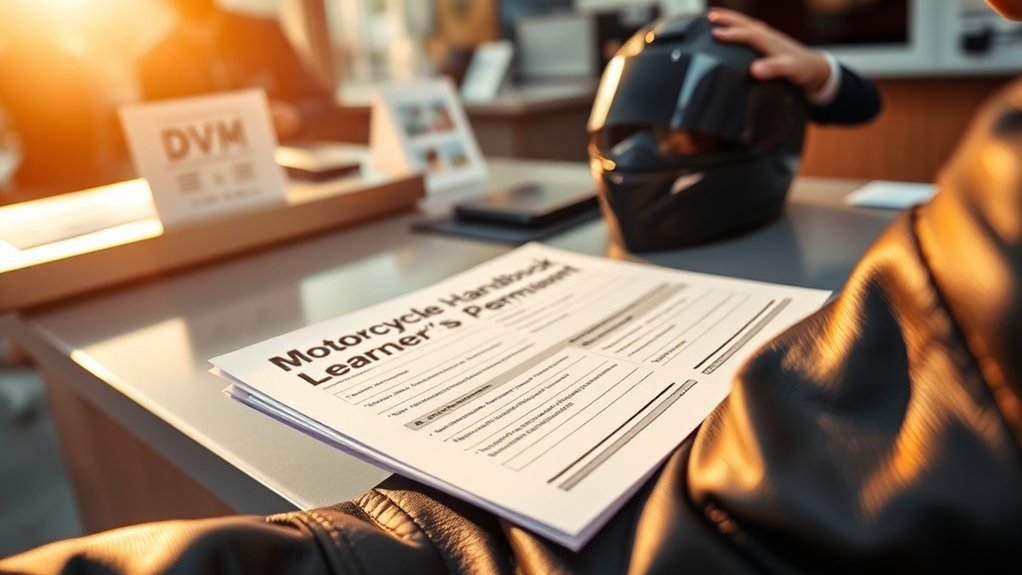
To get a motorcycle instruction permit, pass the motorcycle knowledge test at your local Colorado DMV office. Bring proof of identity and residency, like your driver’s license and a utility bill.
Pass the motorcycle knowledge test at your local Colorado DMV office and bring proof of identity and residency.
You must be at least 16. If you’re under 18, bring parental consent.
The DMV will issue your permit after you pass. You’ll need it before you can take the skills test unless you complete an approved safety course with a waiver.
While riding, wear a helmet and eye protection. Never carry passengers, ride at night, or use the highway.
If you’re under 16, you may ride only under a qualified instructor’s direct supervision. Follow every rule so your motorcycle record stays clean and your driver’s license path stays open.
Find a Colorado Motorcycle Training Course
Once you’ve got your permit, the next step is finding a Colorado Motorcycle Safety Program course that fits your schedule. Look for statewide classes through community colleges and certified providers.
Many offer a Basic RiderCourse. If you complete it successfully, you may earn a DMV skills test waiver.
To enroll, you must be at least 16. You also need a valid Colorado driver’s license or permit, plus proof of identity and residency.
Check whether the school supplies training motorcycles. Or see if they let you bring your own bike.
Confirm registration and insurance rules for on-bike sessions. Course time often includes classroom safety lessons and range drills.
You’ll typically practice starts, stops, turns, cone weaves, quick stops, and swerves. Review dates, fees, and waiver-card details online.
Then bring the required documents to the DMV.
Study for the Knowledge and Skills Tests
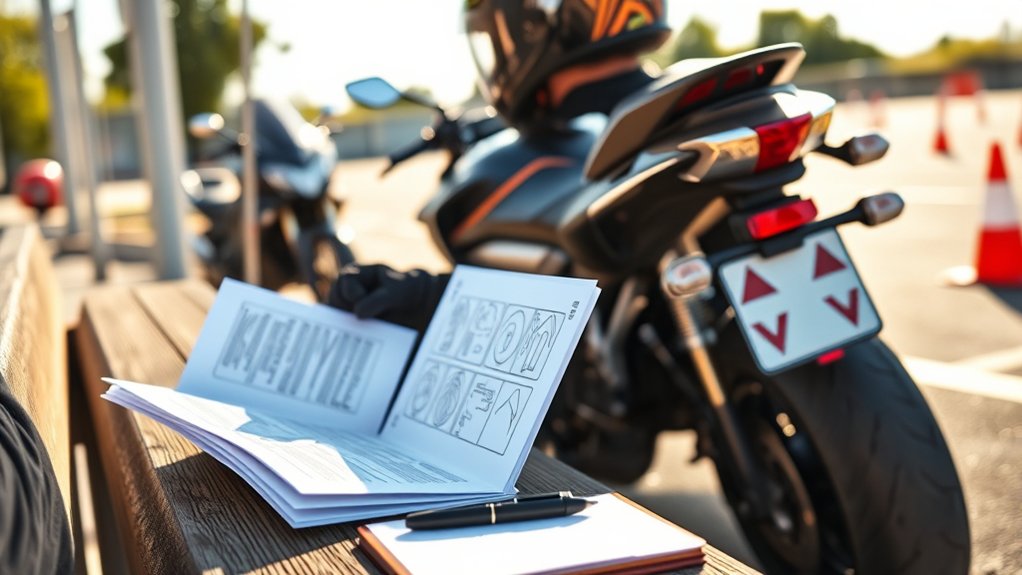
Studying smartly now can save you time at the DMV. It can also help you ride safer later.
Start with the Colorado Motorcycle Operators Handbook, or your state’s equivalent. Use it to master motorcycle knowledge for the written test.
Start with the Colorado Motorcycle Operators Handbook, or your state’s equivalent, to master the written test.
Focus on laws and safe riding habits. Also review helmet and eye protection rules.
Know your permit limits too. For example: no passengers, no night riding, and no highway riding.
Next, use official practice tests and MSF materials. Prepare for the skills test with slow-speed control.
Practice cone weaving and quick stops. Work on swerves and turns, too.
Practice mounting and dismounting. If you finish approved safety training, bring your waiver card if you’re eligible.
Before testing, check your bike. Make sure it’s registered, insured, and roadworthy.
Practice on the same type of motorcycle you’ll use.
Pass the Motorcycle Skills Test
On test day, bring your permit, ID, and the required fee. Also, make sure your motorcycle is properly registered, inspected, and insured. You’ll want to be ready to show your safety gear right away.
Next, you’ll perform the required maneuvers exactly as the examiner directs. That includes starting, stopping, slow turns, weaving, quick stops, and emergency swerves.
If you completed an approved motorcycle safety course, bring your waiver card too. Before you arrive, check the weather and any equipment rules so your test doesn’t get canceled.
Skills Test Maneuvers
Mastering the motorcycle skills test means practicing the exact maneuvers you’ll be asked to perform. That includes slow-speed U-turns, figure-eights, cone weaves, quick stops, and emergency swerves.
Use the Motorcycle Handbook to learn the course rules. Then drill balance, clutch control, throttle finesse, and braking until each move feels smooth.
Practice at low speed on a layout that matches the exam. Use cone spacing and work on emergency braking from 20–30 mph.
Before you can obtain a motorcycle license, make sure your bike is registered, insured, and mechanically sound. Inspectors check lights, tires, brakes, mirrors, and safety gear.
To score well, avoid foot-downs, missed signals, cone hits, and wide stops. If you earned a waiver card from an approved safety course, bring it to the DMV.
Test Day Preparation
Before you head to the DMV, double-check that your motorcycle is properly registered, insured, and inspected. Make sure it meets the equipment rules, with working lights, mirrors, horn, and tires. Bring your valid permit and photo ID, arrive early, and fuel up so you’re ready.
| Prep item | Why it matters |
|---|---|
| wear required protective gear | Many DMVs will refuse the test if you’re not equipped |
| practice the specific maneuvers | Helps you handle cones, turns, stops, and swerves smoothly |
| review course rules | Reduces surprises and automatic-fail mistakes |
Rest well, then mentally run through brakes, throttle, clutch, and lights. Ask the testing office about the drill sequence and fault points. Take a practice run, or consider the MSF/basic rider course if available.
Confidence comes from preparation, and safety comes from precision.
Use a Waiver Card to Skip Testing
If you want to skip the DMV skills test, you can often cash in a waiver card by completing an approved motorcycle safety course. In many states, including Colorado and Georgia, the Motorcycle Safety Foundation basic rider course or another certified state program can earn you this waiver card.
After you finish, the school issues paperwork that may let you bypass the DMV skills test. In some states, it can also shorten permit waits or waive the road test.
Bring the original waiver card, your ID, proof of residency, and your instruction permit, if you have one. Check your state DMV’s approved course list first, since acceptance, fees, and document rules vary.
Keep all completion records handy, so you can move through the licensing process safely and without delays.
Renew Your Colorado Motorcycle License
Once you’ve earned your Colorado motorcycle endorsement, you’ll need to renew it in person at a Colorado DMV office every five years.
Bring your current driver license or instruction permit, plus proof of identity and Colorado residency.
You’ll also pay the DMV renewal fee for your five-year motorcycle license. Check the current rates before you go.
If you’re under 18, a parent or legal guardian must sign the affidavit of liability and guardianship at renewal.
Even if you used a training-course waiver before, you still must renew in person. You may also need a vision screening and updated identification.
Make an appointment at your local Colorado DMV to cut wait time and confirm what documents you need.
Plan ahead so you can renew safely and keep riding legally.
Frequently Asked Questions
How Do I Compare Motorcycle Training Course Prices?
To compare motorcycle training course prices, total every cost.
Include tuition, materials, gear or helmet rental, and DMV test or licensing fees.
Then check whether the course includes a state skills-test waiver.
That can save money if it’s offered.
Also compare class length, instructor ratio, bike availability, and discounts.
Don’t forget to review the refund policy too.
A cheaper course isn’t always better if it offers less practice or no waiver.
What Documents Should I Bring to Enrollment?
You should bring your proof of identity, like an original birth certificate or passport. You’ll also need your Social Security card and two proofs of residential address.
If your name changed, bring your marriage, divorce, or court documents. If you’re a minor, include parental consent and any required driver education certificate.
Bring your current driver’s license or permit. If you have one, also bring your motorcycle permit, plus your registration, insurance, and payment if required.
Do Courses Include Motorcycle Rental and Safety Gear?
Sometimes they do, sometimes they don’t.
Many rider courses include a training motorcycle and at least a helmet.
Others rent gear or ask you to bring your own.
You should confirm the exact policy before you register, since coverage and fees vary by provider.
If you use your own bike, it must be street-legal, insured, and pass inspection.
Always wear DOT-approved protection and follow the instructor’s safety rules.
How Long Do Approved Rider Courses Usually Take?
Approved rider courses usually take about 15 hours total.
You’ll often spend around 5 hours in classroom instruction and 10 hours riding over one or two days.
Some intermediate or advanced classes last 8 to 16 hours.
Refresher modules can run just 3 to 6 hours.
Check your state’s approved program, because schedules and requirements can vary.
You’ll need to complete every required session safely.
Can I Take Classes on Weekends or Evenings?
Yes, you can often take classes on weekends or evenings.
Many approved motorcycle courses offer Saturday/Sunday range sessions and weekday evening classroom work.
Check the full schedule before you enroll.
Some programs split training across multiple days, so it helps to plan ahead.
If you want a license waiver, make sure the course includes all required riding and testing.
Also confirm age rules, gear requirements, weather policies, and make-up options.
Conclusion
Now you know where to get your motorcycle license in Colorado, and you’re ready for the next step.
Choose the right permit or endorsement, complete training, and study hard.
Next, pass your tests with confidence. If you can, use a waiver card to save time.
Keep safety first every mile you ride.
As the saying goes, an ounce of prevention is worth a pound of cure.
Renew on time, and keep your riding legal and safe.