Will Removing Baffles Hurt My Harley – Here’s the Answer
Removing baffles on your Harley lowers exhaust back pressure but often reduces low-end torque and overall engine efficiency without tuning. You’ll get a louder, deeper exhaust note. But increased noise can cause heat buildup, pipe discoloration, and legal issues.
Tuning is critical afterward to regain performance and avoid engine problems. Plus, baffle removal risks voiding your warranty and failing emissions. If you want to understand the full impact and safer alternatives, keep exploring this topic.
What Removing Baffles Means for Your Harley’s Performance
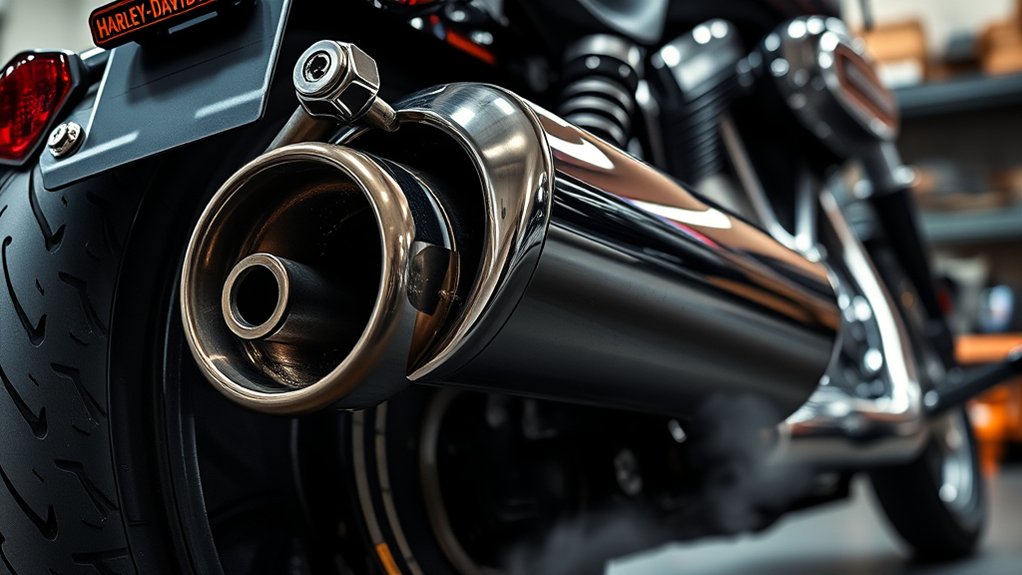
Although removing baffles might seem like a simple way to boost your Harley’s sound and performance, it actually decreases exhaust back pressure, which can reduce engine efficiency and lower low-end torque.
Removing baffles may sound appealing but often harms engine efficiency and reduces low-end torque.
When you remove baffles, the exhaust flow becomes less controlled. This messes with the ideal pressure needed for proper scavenging and combustion.
That change in back pressure can lead to a drop in your bike’s power output, especially at low RPMs.
Also, without the resistance baffles provide, exhaust gases exit more freely. But this can cause increased heat buildup and potential pipe discoloration if not managed properly.
If you want to keep your performance up after removing baffles, you’ll need proper tuning or aftermarket modifications. These help compensate for the changed exhaust flow and get your engine running efficiently again.
How Removing Baffles Affects Your Harley’s Sound and Ride
Removing the baffles from your Harley not only impacts engine performance but also changes the exhaust sound and ride feel quite a bit. When you take out the baffles, the noise level goes up, giving you a deeper, more aggressive tone. However, this can come at the cost of reduced low-end torque and less smoothness in your ride.
It also makes the exhaust system run hotter, which might cause pipe discoloration over time. Plus, louder sound levels could get you into legal trouble depending on where you ride. So, it’s important to keep these factors in mind before making any changes.
Here’s a quick summary of what to expect:
| Aspect | Effect When Removing Baffles | Notes |
|---|---|---|
| Sound Level | Markedly louder | Deeper, aggressive tone |
| Ride Smoothness | Reduced | Lower low-end torque |
| Exhaust System | Higher heat, discoloration | Potential pipe damage |
Knowing these changes helps you weigh the trade-offs before modifying your Harley’s exhaust system by removing baffles.
Why You Should Tune Your Bike After Removing Baffles
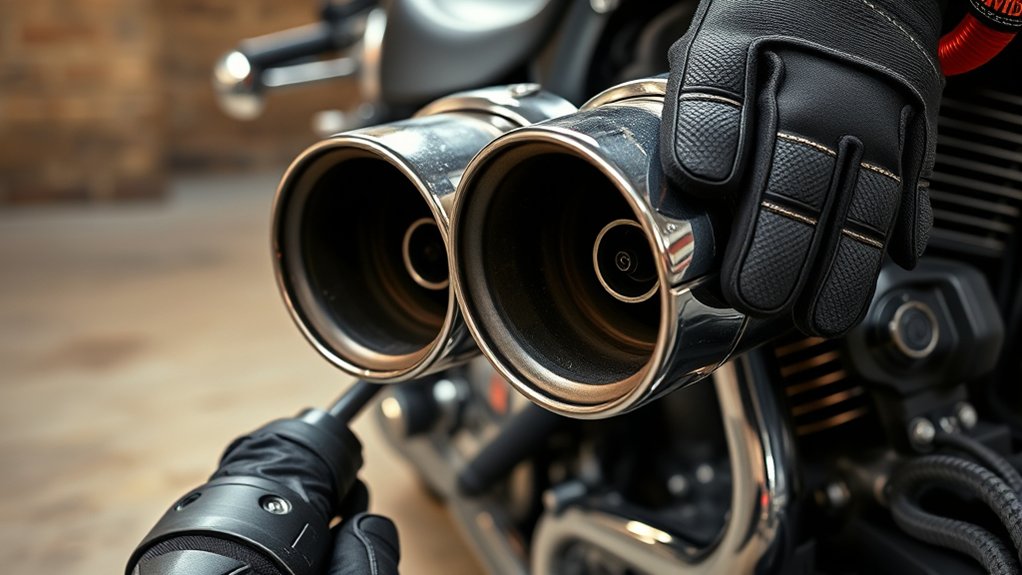
When you take out the baffles, tuning your Harley becomes essential to maintain the correct air-fuel mixture and prevent the engine from running too lean or rich. Removing baffles increases exhaust flow and noise, which disrupts the factory-set balance.
By tuning, whether through ECU remapping or a handheld tuner, you compensate for these changes. This helps optimize performance and protects your engine from heat discoloration and wear.
Without tuning, you risk reduced power, poor fuel efficiency, and issues like popping, backfiring, or misfires due to improper air-fuel ratios. Proper tuning also preserves low-end torque and ensures smooth operation.
It prevents potential damage caused by running lean. In short, tuning after baffle removal is critical to sustain engine health and maximize your Harley’s performance.
What You Need to Know About Legal and Warranty Risks
After tuning your Harley to handle changes from baffle removal, you should also think about the legal and warranty implications. Removing baffles can void your motorcycle’s warranty, especially if it causes engine or exhaust issues. Manufacturers, including Harley Davidson, clearly state that altering exhaust systems can impact warranty coverage on related components.
Legally, many areas have noise ordinances that louder exhausts can violate, which might lead to fines or other penalties. Plus, unauthorized modifications like baffle removal could cause your bike to fail emissions tests. That means it could be illegal to ride on public roads.
To avoid legal trouble and financial loss, make sure you check both local laws and your warranty policy before making any changes. Staying informed helps you stay compliant and protects your investment.
Choosing Performance Upgrades Instead of Baffle Removal
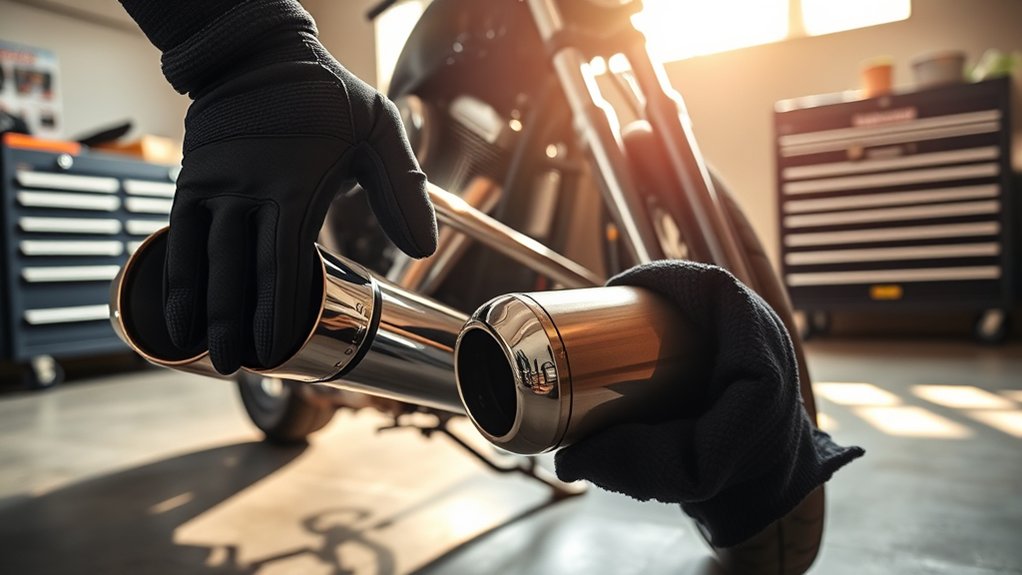
Although taking out baffles might seem like a quick way to boost your Harley’s sound and airflow, choosing purpose-built performance exhaust systems offers a more effective and reliable upgrade. Performance exhausts designed for Harley Davidson models optimize backpressure and flow, preventing the low-end torque loss commonly caused by baffle removal.
These systems enhance airflow while maintaining engine health and reliability, especially when paired with proper tuning like ECU remapping.
Unlike gutted mufflers, high-quality aftermarket performance exhausts often come with sound and emissions certifications, ensuring compliance with local regulations.
Frequently asked questions
Can Removing Baffles Cause Engine Damage Over Time?
Yes, removing baffles can cause engine damage over time if you don’t retune your Harley properly. Without baffles, the exhaust flow changes, which can lead to lean or rich air-fuel mixtures that increase combustion temperatures.
This can cause overheating, valve damage, and piston wear. You’ll also notice more vibration and stress on components, which raises the risk of knocking or detonation. That kind of knocking can speed up engine wear.
How Do Baffles Affect Fuel Economy on a Harley?
Baffles affect your Harley’s fuel economy by managing exhaust backpressure and airflow. Removing them changes these dynamics, which can disrupt combustion efficiency.
Without proper tuning, your engine might run too rich or lean, decreasing fuel mileage.
To maintain ideal fuel economy, you need to remap your fuel injection or carburetor after baffle removal. Otherwise, expect higher fuel consumption due to inefficient exhaust flow and altered engine performance.
It’s all about keeping the engine running just right.
Are There Specific Harley Models More Sensitive to Baffle Removal?
Yes, some Harley models are more sensitive to baffle removal. If you ride a 2011 Street Glide or any bike with a 103 or 107 cubic inch engine, you’ll notice changes due to their specific tuning and reliance on backpressure.
Touring models with factory ECMs are also prone to performance hits. However, if you’ve installed an aftermarket tuner or high-flow intake, your bike can often handle baffle removal better without issues.
What Tools Are Needed to Safely Remove Baffles?
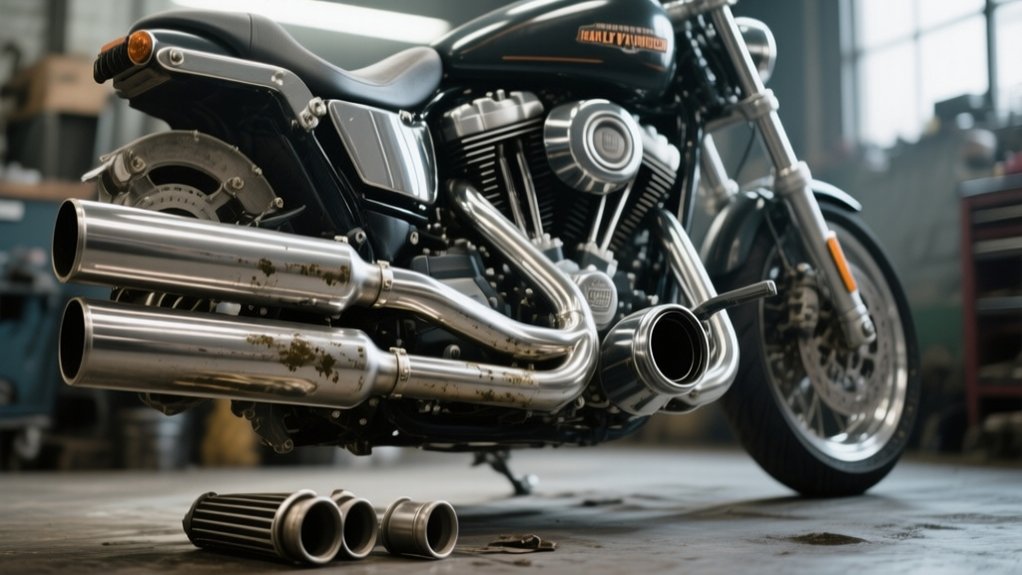
Don’t worry about complicated tools. You mostly need basic hand tools like screwdrivers and socket wrenches. A soft mallet helps tap out stubborn baffles without damage.
Penetrating oil is vital for loosening rusted parts. Gloves and eye protection keep you safe from sharp edges and debris.
Sometimes, you might want specialized baffle removal kits for easier extraction. But you can handle most removals with these essentials efficiently and safely.
Can I Reinstall Baffles After Removing Them Without Issues?
Yes, you can reinstall baffles after removing them, but you need to make sure they’re properly aligned and securely mounted to avoid any exhaust leaks.
Before putting them back, take a good look at the baffles and hardware to check for any damage.
If you spot any worn gaskets or seals, it’s a good idea to replace them so everything fits tight.
Final Thought
Removing baffles can boost your Harley’s sound and performance, but remember, “haste makes waste.” Without proper tuning, you risk engine damage and reduced efficiency. Plus, legal and warranty issues might arise if you’re not careful.
Instead of just pulling baffles, consider performance upgrades that optimize power and compliance. Always weigh the benefits against potential drawbacks to keep your ride smooth, legal, and reliable.