Why Does My Harley Backfire – The Truth
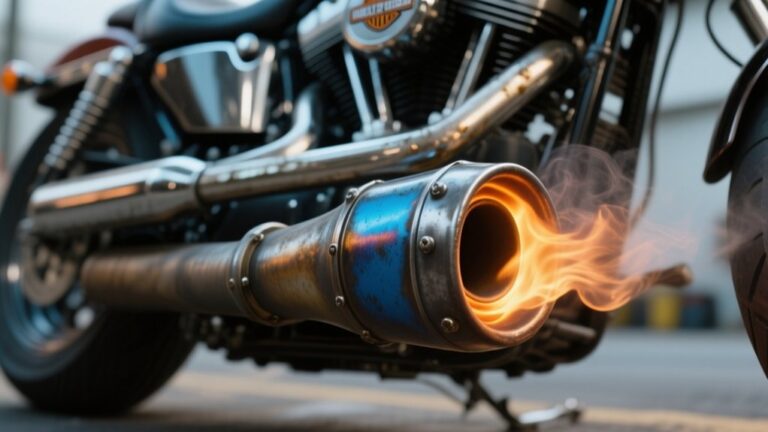
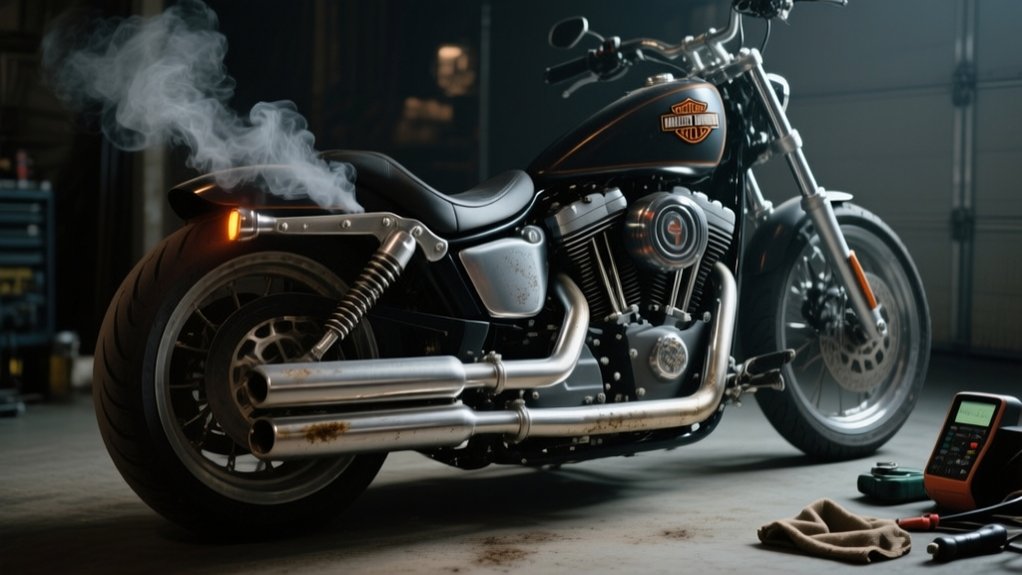
Your Harley backfires because combustion isn’t happening smoothly due to fuel system issues, incorrect ignition timing, or exhaust leaks. Faulty spark plugs, improper air-fuel mixtures, or worn valves cause unburned fuel to ignite prematurely in the exhaust.
Aftermarket parts or damaged exhaust components can make this worse by introducing extra oxygen. Frequent backfires put stress on your engine and reduce its performance.
Understanding these causes helps you pinpoint and resolve the problem effectively. That way, you can keep your Harley running reliably.
Common Causes of Harley Backfire
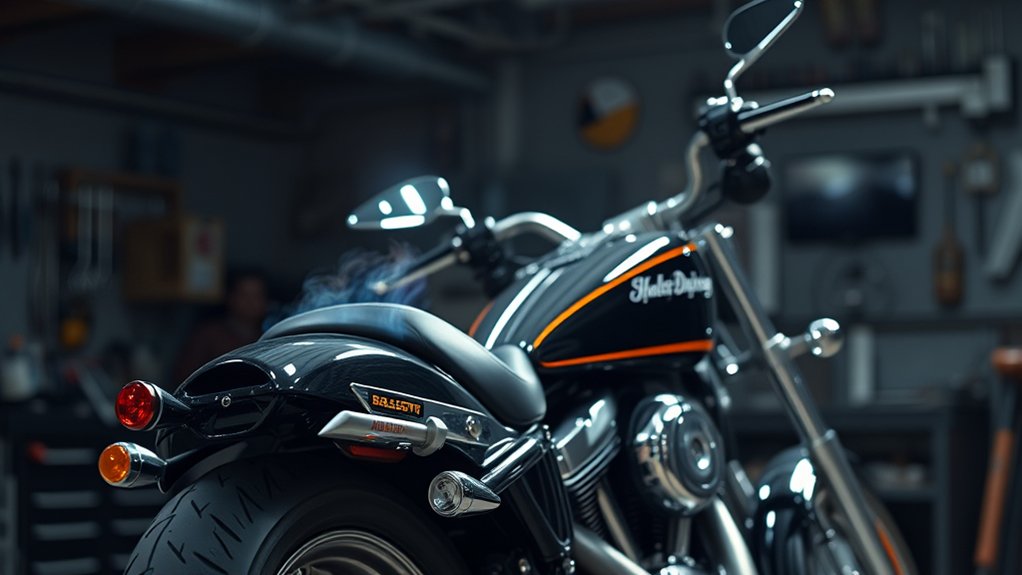
Although Harley backfires can stem from various issues, they most often arise from problems in the fuel and ignition systems, such as faulty spark plugs or incorrect timing. When your fuel system malfunctions, it can deliver an improper air-fuel mixture, causing unburned fuel to ignite prematurely.
Ignition timing plays a vital role. If it’s misaligned, combustion may occur at the wrong moment, leading to backfire.
Moreover, an exhaust leak disrupts the exhaust flow and introduces fresh oxygen, which can ignite escaping fuel vapors. Worn valves or vacuum leaks further exacerbate combustion irregularities.
You’ll want to inspect spark plugs, verify ignition timing, check for exhaust leaks, and assess the fuel delivery system. Doing this will help you pinpoint and correct these common causes of Harley backfire efficiently.
How Fuel and Air Mixture Cause Harley Backfire
Fuel and air mixture plays a significant role in causing Harley backfire by affecting combustion quality. When your fuel mixture is lean, meaning there’s too much air and not enough fuel, unburned fuel can pass into the exhaust during acceleration or deceleration. This often triggers backfire.
On the other hand, an overly rich fuel mixture leads to incomplete combustion. This lets unburned fuel ignite in the exhaust system, producing similar effects.
Faulty air intake components, like vacuum leaks or sensor malfunctions, can mess up this balance and often cause a lean condition.
Also, incorrect carburetor adjustments or malfunctioning fuel injectors change the fuel mixture, which increases the risk of backfire.
To prevent this, you need to maintain precise fuel-to-air ratios through proper tuning and sensor calibration. This ensures efficient combustion and gets rid of unburned fuel residues that cause backfire in your Harley.
Why Ignition Timing Issues Cause Harley Backfire
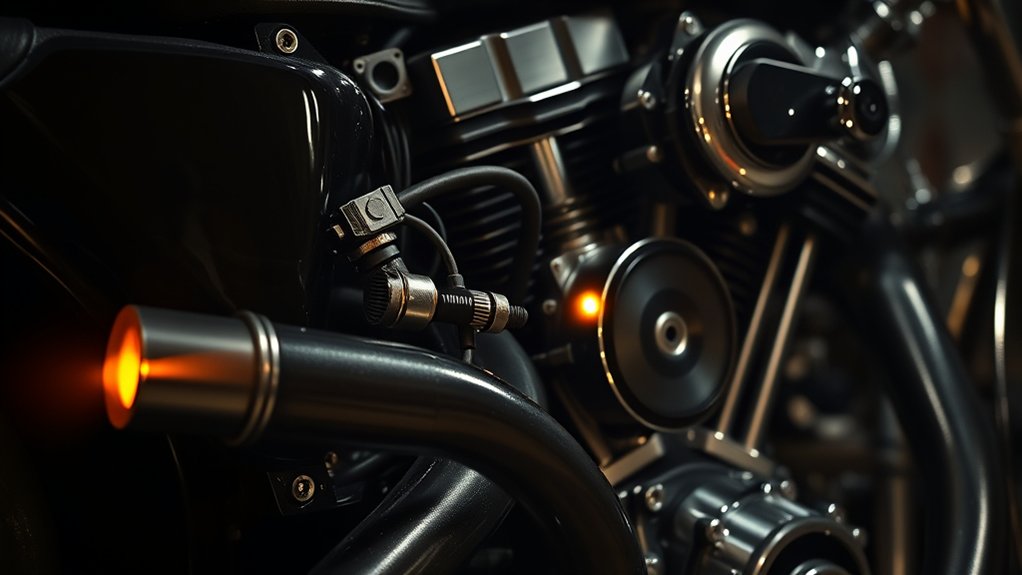
When your Harley’s ignition timing is off, the spark can ignite the fuel either too early or too late. This disrupts the combustion cycle and causes backfire. Advanced or retarded ignition timing leads to unburned fuel igniting in the exhaust, producing that characteristic Harley backfire pop.
Timing issues often stem from a misaligned timing chain or a faulty timing sensor. These problems are especially noticeable during acceleration or deceleration. To avoid backfire, precise timing adjustment with a timing light is really important.
| Timing Condition | Effect on Combustion |
|---|---|
| Advanced Timing | Premature ignition, backfire |
| Retarded Timing | Late ignition, backfire |
| Misaligned Timing Chain | Erratic spark timing |
| Faulty Timing Sensor | Increased misfire risk |
How Exhaust Leaks and Aftermarket Parts Cause Harley Backfire
If you install aftermarket exhaust parts incorrectly, you risk creating leaks that let excess air enter the exhaust system and cause backfire. Exhaust leaks near the cylinder head or muffler gasket disrupt the air-fuel mixture, allowing unburned fuel to ignite in the exhaust.
Using poorly fitted or incompatible aftermarket parts can alter exhaust flow dynamics, further increasing backfire risk.
Furthermore, damage or corrosion in stock exhaust components can cause leaks that introduce oxygen into the exhaust stream, triggering backfire events. To prevent this, make sure you properly seal and install aftermarket parts.
Addressing exhaust leaks promptly helps maintain ideal combustion conditions and minimizes the chance of backfire.
Taking these steps preserves your Harley’s performance and reliability, keeping your ride smooth and trouble-free.
How Spark Plugs and Fuel Filters Cause Harley Backfire

Although spark plugs and fuel filters might seem like simple components, their condition directly impacts your Harley’s combustion efficiency and can cause backfire.
Worn or fouled spark plugs lead to incomplete combustion, allowing unburned fuel to ignite in the exhaust, triggering backfire.
Worn or fouled spark plugs cause incomplete combustion, letting unburned fuel ignite and trigger backfire.
Improper spark plug gaps or corrosion cause misfires, which further increase unburned fuel entering the exhaust system.
Similarly, a dirty or clogged fuel filter restricts fuel flow and disrupts the air-fuel mixture. This often creates lean conditions where excess air combines with unburned fuel, causing backfire noises.
Maintaining clean fuel filters and properly gapped, corrosion-free spark plugs ensures complete combustion and minimizes backfire risks.
Regular replacement of these components is critical to sustaining ideal engine performance and preventing backfire linked to fuel delivery and ignition inefficiencies.
When Does Harley Backfire Occur: Acceleration or Deceleration?
Since Harley backfires can happen during both acceleration and deceleration, understanding the causes at each stage is key for effective diagnosis and prevention.
You’ll mostly notice backfires during deceleration when unburned fuel ignites in the exhaust system. This often happens because of improper ignition timing or a rich fuel mixture.
During acceleration, backfires are usually caused by lean fuel mixtures or vacuum leaks. These issues let unburned fuel escape combustion, which then triggers the backfire.
Key factors include:
- Lean mixture or vacuum leaks causing acceleration backfires
- Improper ignition timing leading to backfires during deceleration
- Unburned fuel igniting in the exhaust system on deceleration
- Carburetor tuning and sealing intake and exhaust leaks to prevent backfires
Keeping an eye on these will help you avoid those annoying backfires and keep your Harley running smoothly.
Does Backfiring Harm Your Harley’s Engine and Performance?
You mightn’t see any immediate damage from an occasional backfire, but if it happens repeatedly, it can really put stress on your Harley’s engine and hurt its performance.
Backfiring also causes extra wear and tear on exhaust parts, and if you ignore it for too long, there’s a chance it could damage valves or pistons.
Engine Damage Risks
When backfiring happens a lot on your Harley, it can seriously damage parts like mufflers and headers. This can lead to some pretty costly repairs down the line. But it’s not just the exhaust you have to worry about.
Persistent backfiring puts extra stress on the engine, which can cause long-term damage to pistons and valves. Plus, repeated backfires mess with the ignition timing, leading to misfires that lower how well your engine burns fuel.
Over time, this incomplete combustion causes carbon buildup that only makes things worse.
Keep an eye out for these engine damage risks linked to backfire:
- Exhaust parts wearing out from constant pressure spikes
- Extra wear on pistons and valves because of engine stress
- Ignition timing getting off, which hurts combustion efficiency
- Carbon deposits forming from misfires and incomplete burning
Taking care of backfire issues quickly is the best way to protect your Harley’s engine and keep it running at its best.
Performance Impact Factors
Backfiring not only risks damaging engine components but also directly impacts your Harley’s performance. It often signals issues with fuel mixture or ignition timing, which reduce power output and fuel efficiency. Continuous backfires can stress the exhaust system, causing vibrations that loosen fittings and mounts, leading to mechanical failures.
Over time, these factors degrade engine longevity and increase emissions, affecting overall ride quality. It’s something you definitely want to keep an eye on to avoid bigger problems down the road.
| Factor | Impact on Performance |
|---|---|
| Fuel Mixture | Poor combustion, power loss |
| Ignition Timing | Misfires, reduced efficiency |
| Exhaust System | Damage, increased vibrations |
| Continuous Backfires | Engine stress, component wear |
Addressing these factors helps maintain peak performance and prevents further damage caused by repeated backfiring. Taking care of these issues early keeps your ride smooth and reliable.
Maintenance And Prevention
Although occasional backfires are usually harmless, frequent or loud backfiring can signal underlying issues that compromise your Harley’s engine performance.
Persistent backfire can damage exhaust components, like gaskets and headers, leading to costly repairs.
It also increases engine stress, risking misfires, valve damage, and premature wear.
To prevent backfire-related harm, prioritize regular maintenance focused on ignition, fuel, and exhaust systems.
Key steps include:
- Inspecting and repairing exhaust leaks promptly
- Maintaining clean fuel injectors and spark plugs
- Checking ignition timing for accuracy
- Replacing worn exhaust gaskets and seals
Taking these steps will help keep your bike running smoothly and avoid bigger problems down the road.
It’s all about staying on top of things before they get out of hand.
Fixing and Preventing Harley Backfire
Since Harley backfire often stems from fuel, ignition, or exhaust system issues, you can substantially reduce occurrences by accurately diagnosing and addressing these components.
Start by inspecting the fuel system for clogged filters or improper carburetor settings that disrupt the air-fuel mixture.
Begin with checking the fuel system for clogged filters or carburetor issues affecting the air-fuel balance.
Verify ignition timing with professional tools to ensure the spark occurs at the correct moment. This helps prevent unburned fuel from igniting in the exhaust.
Also, check for exhaust leaks because they allow fresh air to enter and cause backfire.
Regularly clean or replace spark plugs and fuel filters to maintain peak performance.
If you’ve installed aftermarket exhaust systems, make sure they’re properly fitted and tuned to avoid disrupting combustion.
Consistent inspection and timely repairs of worn parts will effectively fix and prevent backfire.
This way, you keep your Harley running smoothly and reliably.
Frequently asked questions
Can Weather Conditions Affect Harley Backfire Frequency?
Yes, weather conditions can directly affect your Harley’s backfire frequency. High humidity or rain causes moisture buildup in ignition parts, leading to misfires.
Cold temperatures can hinder fuel vaporization and alter ignition timing, which increases the chances of backfire during startup or acceleration.
Temperature shifts also cause metal expansion or contraction in the exhaust system. This can create leaks that trigger backfires.
Plus, changes in barometric pressure influence the air-fuel mixture density, impacting combustion and how often backfires occur.
Does Fuel Type Influence Harley Backfire Occurrences?
Fuel type definitely dictates your Harley’s backfire behavior. Using lower-octane or contaminated fuel causes incomplete combustion, creating unburned fuel that ignites in the exhaust, leading to backfires.
Sticking to high-quality, manufacturer-recommended fuel stabilizes the air-fuel ratio, ensuring smooth throttle shifts and preventing lean or rich conditions.
How Does Riding Style Impact Backfire on a Harley?
Your riding style directly impacts backfire on your Harley by influencing air-fuel mixture and ignition timing. Rapid acceleration or abrupt throttle closures cause unburned fuel to enter the exhaust, igniting as backfire.
Aggressive riding raises engine temperature, which can lead to fuel vaporization and incomplete combustion. Riding consistently with a rich mixture and poor throttle control speeds up component wear and increases the chances of backfire.
Are Backfires Common in Older Harley Models?
Take Joe’s 1975 Harley Sportster: he noticed frequent backfires during acceleration. Yes, backfires are common in older Harley models because of their carbureted engines and simpler ignition systems.
You’ll often find that worn carburetors or valve timing issues cause unburnt fuel to ignite in the exhaust. Regular tuning helps, but these backfires remain typical for vintage Harleys. It’s just part of their mechanical design and age-related wear.
Can Software Updates on Electronic Harleys Reduce Backfiring?
Yes, software updates on electronic Harleys can reduce backfiring. When you update your bike’s ECU firmware, it optimizes fuel mapping and ignition timing. This helps correct misfires caused by outdated calibrations.
These updates improve throttle response and exhaust gas management. They ensure sensors and fuel injection systems work within ideal parameters.
By doing this, you minimize unburned fuel in the exhaust. That means you lower the chance of backfires and boost overall engine performance.
Final Thought
While you might think occasional backfires are harmless, ignoring them can lead to engine damage and reduced performance. Understanding the common causes like fuel mixture imbalances, ignition timing issues, and exhaust leaks helps you pinpoint the problem quickly.
By addressing these factors and maintaining your Harley properly, you not only prevent backfires but also guarantee your bike runs smoothly and efficiently. Don’t overlook backfiring; it’s a sign your Harley needs attention.