When Can You Start Motorcycle Training – Timeline & Facts
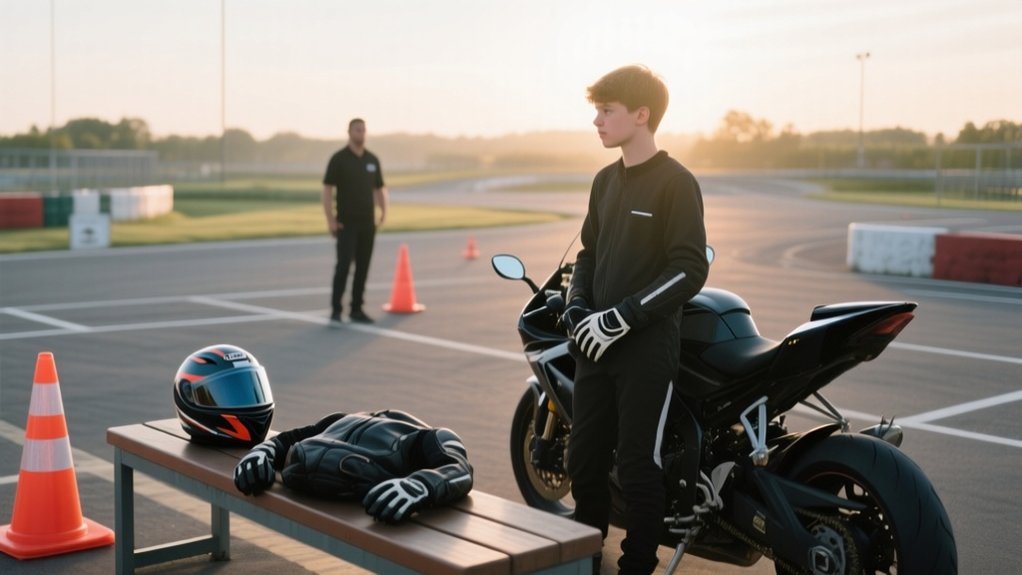
You can start motorcycle training as early as 15½ once you have a valid learner’s permit or driver’s license. Many programs require completing an online course before in-person sessions. These sessions usually last 1 to 2 days with about 15 hours of combined training.
Completing the course often earns you a license waiver, which helps you skip certain tests. To secure your spot, register early and prepare with the right documents and safety gear.
There are more details covering scheduling, practice, and benefits that can help you get ready and make the most of your training.
When Can You Start Motorcycle Training?
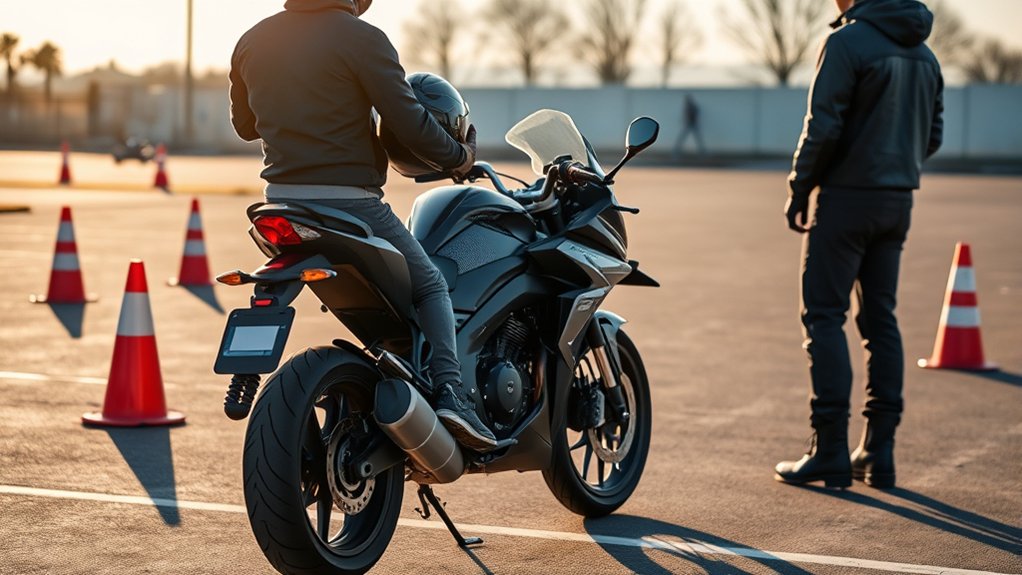
Although requirements vary by state, you can typically start motorcycle training once you have a valid driver’s license or learner’s permit.
Motorcycle training usually begins once you hold a valid driver’s license or learner’s permit.
Beginner riders, sometimes as young as 15½, can enroll in approved training courses designed to build essential riding skills safely.
Many programs offer online e-courses that you complete before beginning on-motorcycle instruction.
Scheduling your motorcycle training well in advance is vital since classes fill quickly due to limited instructor-to-student ratios.
Successfully finishing these courses can sometimes earn you a license waiver, allowing you to bypass certain testing requirements.
What Documents Do You Need Before Training?
What documents do you need before starting motorcycle training? You must have a valid driver’s license or learner’s permit to enroll. Furthermore, some programs ask for proof of bicycle riding experience or basic riding skills. You’ll also need to bring personal identification.
If you plan to use your own motorcycle, motorcycle insurance and registration are required. Certain courses or states might demand you complete an online e-Course or safety awareness module first. Always verify specific training requirements since documentation varies by location and program.
| Document Needed | Purpose |
|---|---|
| Driver’s License/Learner’s Permit | Eligibility to train |
| Proof of Identification | Verify your identity |
| Motorcycle Insurance/Registration | Required if using your motorcycle |
Make sure you confirm all requirements before your training day.
How Long Does Motorcycle Training Take?
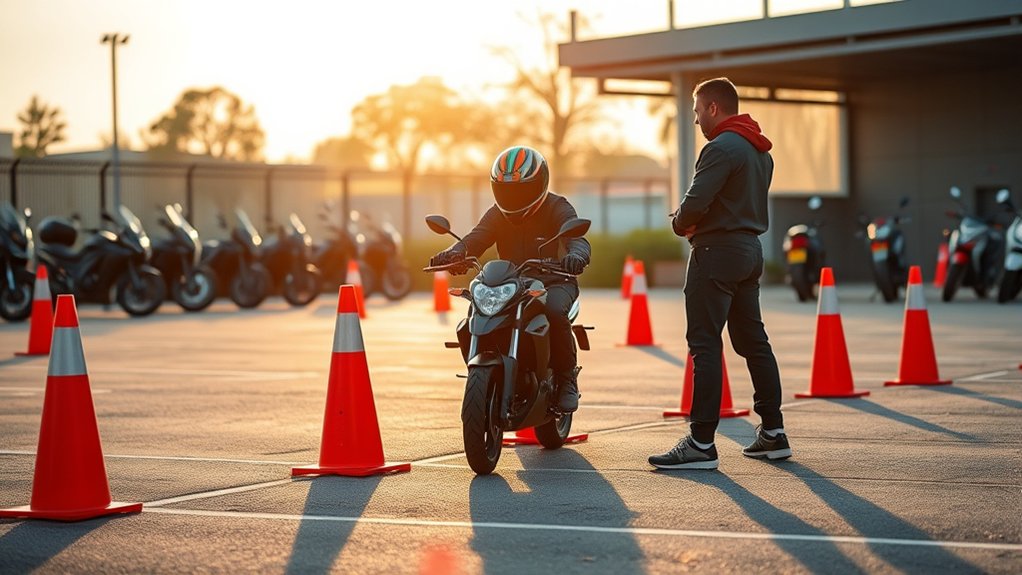
You’ll spend about 5 hours completing online coursework at your own pace. After that, there’s around 10 hours of practical riding instruction.
Most training programs usually schedule the in-person sessions over one or two days. But the full course can stretch anywhere from a weekend to a couple of weeks, depending on your availability.
Knowing these options makes it easier to plan when to start and how to fit the training into your schedule.
Course Duration Breakdown
Motorcycle training typically combines about 5 hours of online learning with 10 hours of hands-on riding practice.
The online learning component usually takes 2 to 3 hours, so you can complete it at your own pace before moving on to practical riding.
Riding sessions involve 10 hours of on-motorcycle time, often spread over multiple days or weekends to fit your availability.
The total training time for most courses ranges from 1 to 2 days, depending on how the training schedule is structured.
This course duration breakdown guarantees balanced instruction between theory and practice, helping you build skills efficiently.
Knowing this timeline can help you plan your motorcycle training effectively and understand what to expect from both online and in-person parts.
Training Schedule Options
Although training programs vary, most combine about 5 hours of online study with 10 hours of riding practice. These sessions are usually scheduled over several days or weekends to suit your availability. This flexible training schedule lets you balance learning with other commitments.
Training providers offer various options, including intensive, single-day courses or spread-out sessions. They adapt the course duration to fit different skill levels. Course scheduling is often managed locally, with frequent start dates throughout the year.
This gives you plenty of choices. The program flexibility guarantees you can select a pace that matches your learning style and timeline. By understanding these options, you can efficiently plan your motorcycle training and gain skills within a timeframe that works best for you.
What’s Included in the Basic RiderCourse?
You’ll complete about five hours of online learning, combined with ten hours of on-motorcycle training. It’s all focused on essential skills and safety.
The course covers everything from basic controls to maneuvering techniques, so you’ll be prepared to ride confidently.
Plus, when you finish, you can earn a DMV waiver—and it might even help lower your insurance costs.
Online And On-Motorcycle
Before hitting the road, you’ll complete the Basic RiderCourse, which combines about 5 hours of engaging online lessons with 10 hours of hands-on riding practice.
The online training covers motorcycle controls, safety strategies, and rider techniques through videos and graphics, letting you study at your own pace.
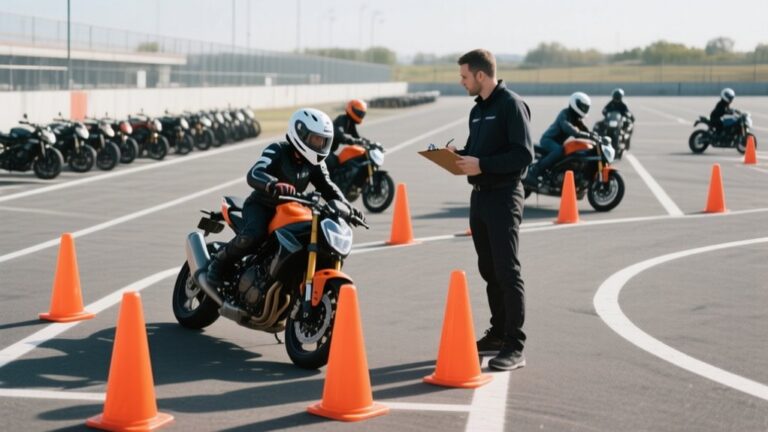
Afterward, on-motorcycle practice under certified RiderCoaches focuses on essential skills like straight-line riding, stopping, turning, and shifting.
This Motorcycle Safety Course blends theory and practical exercises to prepare you thoroughly.
Upon course completion, you often earn a DMV waiver, bypassing the skills test, and may qualify for licensing benefits, including obtaining your learner’s permit.
This structured approach guarantees you gain both knowledge and confidence before riding solo on public roads.
Skills And Safety Focus
While the Basic RiderCourse covers theory through online lessons, its core strength lies in hands-on training that sharpens your essential riding skills. This rider training emphasizes motorcycle safety by combining skills development with safety gear education and hazard awareness.
You’ll master riding techniques that prepare you for real-world traffic situations.
Here’s what you’ll focus on:
- Handling motorcycle controls and different bike types confidently.
- Practicing low-speed maneuvers, U-turns, and obstacle avoidance.
- Learning proper use of safety gear to minimize risks.
- Developing hazard awareness to anticipate and respond to dangers effectively.
This thorough approach ensures you build control, confidence, and responsible riding habits crucial for safe motorcycle operation.
Licensing And Insurance Benefits
Although mastering riding skills is essential, completing the Basic RiderCourse also offers practical advantages like waiving the motorcycle skills test in many states, speeding up your licensing process.
This training program equips you with essential safety strategies, controls, and techniques, making you a more prepared rider.
After finishing, you receive a completion certificate that serves as proof of training. This certificate often allows you to bypass the skills test when applying for your motorcycle license, simplifying the licensing process.
Plus, many insurance providers offer discounts to riders who’ve completed the course, which can help lower your premium costs.
How Do You Register for Motorcycle Training Near You?
To register for motorcycle training near you, start by visiting your state’s motorcycle safety program website. There, you can locate nearby training sites and access their registration links.
Begin your motorcycle training registration by visiting your state’s safety program website to find nearby courses and sign-up links.
From there, follow these steps to complete your registration efficiently: choose your preferred training site and course date based on availability. Then, complete the online registration form with your personal details accurately.
Next, pay the course fee securely online using credit or debit cards to confirm your spot. Make sure you meet any prerequisites, like holding a valid driver’s license or learner’s permit, before registering.
It’s a good idea to register early since courses fill up quickly because of limited instructor-to-student ratios and high demand.
Using the motorcycle safety program’s online registration system makes the whole process quick and convenient.
What Safety Gear Do You Need for Motorcycle Training?
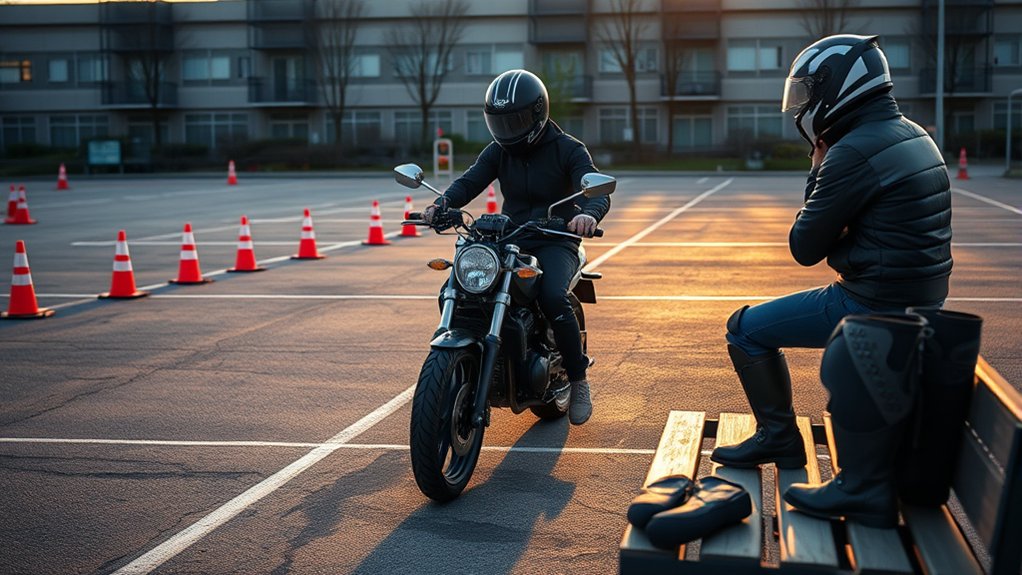
Since safety is paramount during motorcycle training, you’ll need specific gear to protect yourself effectively. Essential safety gear includes a DOT-approved helmet made from durable materials. Bringing your own guarantees a proper fit and comfort.
You must wear protective clothing like a long-sleeve shirt or jacket made of strong textiles such as leather, full-length pants, and sturdy over-the-ankle boots.
Full-fingered gloves are also vital to shield your hands.
Eye protection, such as goggles, glasses, or a face shield, is required to guard against debris and wind. Avoid soft fabrics like canvas or mesh because they don’t offer adequate protection.
Wearing the right gear not only meets safety regulations but also considerably reduces injury risks during training.
This way, you stay safe while learning essential riding skills.
How Does Training Help You Get a License Waiver?
A motorcycle training course can help you bypass the skills test required by the DMV in many states. By completing an MSF-certified course, you show your riding skills and mastery of essential safety techniques. This matches what the DMV looks for.
Because of this, you often qualify for a license waiver, which saves you time and effort.
Here’s how motorcycle training helps you get a license waiver:
- Provides a practical riding skills assessment recognized by the DMV.
- Covers safety skills that meet state licensing standards.
- Awards a completion certificate accepted as proof of competence.
- Lets you skip the DMV’s on-bike skills test.
Can You Start Training With Online Courses?
Many motorcycle training programs now offer online courses that let you build foundational knowledge before hitting the road. You can complete these courses independently, usually in about five hours, preparing you for practical riding sessions.
However, online courses alone don’t fulfill licensing requirements or replace the need for a permit in most states. In-person training remains essential for hands-on experience. Some regions allow you to begin practical riding immediately after finishing the online portion if you have a learner’s permit or driver’s license.
Always check your state’s rules before starting rider training.
| Aspect | Details |
|---|---|
| Online Courses | Build foundational knowledge |
| Time Commitment | Around 5 hours |
| Licensing Impact | Doesn’t replace permit or license |
| Practical Riding | Required for hands-on experience |
| State Variations | Rules vary; verify locally |
When Should You Schedule Additional Motorcycle Practice Sessions?
Although completing your initial motorcycle training is an essential step, you should schedule additional practice sessions to reinforce your skills and boost your confidence.
Additional practice is critical for ongoing skills development and confidence building, especially when mastering complex motorcycle maneuvers.
To maximize your progress, follow these guidelines:
- Schedule at least 10-15 hours of additional practice beyond your course requirements.
- Space out practice sessions over days or weeks to allow gradual skills development and prevent fatigue.
- Practice in varied riding conditions to improve adaptability and safety.
- Focus on challenging maneuvers like U-turns, emergency stops, and low-speed control during your sessions.
Frequently asked questions
Are Motorcycle Training Courses Available for Electric Bikes?
Yes, many motorcycle training courses now accept electric bikes, as long as they’re street-legal, insured, and meet safety standards. You’ll want to check with your local training providers because acceptance varies by state and program.
Instructors usually allow electric bikes if they can handle essential maneuvers like stopping and turning safely. Just make sure your bike’s power and controls are comparable to traditional motorcycles to qualify for most courses.
It’s always a good idea to confirm these details beforehand.
Can You Retake the Training if You Fail Initially?
Failing motorcycle training feels like climbing Everest, but yes, you can retake it. You’ll likely need to re-register and pay again. Some courses let you try multiple times, though limits exist in certain states.
If you fail the riding part, expect a waiting period before retaking. Use that time to practice, review your mistakes, and consult your trainer. Don’t let one stumble stop you—persistence pays off.
Is There a Minimum or Maximum Age Limit for Advanced Courses?
You typically won’t find strict minimum or maximum age limits for advanced motorcycle courses, but some programs require you to be at least 18 or hold a valid license.
Age rules vary by region and provider, often based on safety and experience.
To avoid surprises, always check with your training provider or local authority to confirm their specific age requirements before enrolling in an advanced course.
It’s better to know ahead of time so you can plan accordingly.
Do Training Courses Provide Motorcycles or Must You Bring Your Own?
Over 90% of motorcycle training courses provide bikes, helmets, and gloves, so you usually don’t need to bring your own motorcycle. They’ll supply a bike tailored to your height, weight, and skill level, ensuring safety and comfort.
However, if you want extra practice, some programs let you bring your insured, street-legal bike.
Just make sure to check the specific course rules before doing so.
Are There Discounts for Veterans or Military Personnel?
Yes, you can get discounts for veterans or military personnel in many motorcycle training programs. Providers often offer reduced fees or special rates to honor your service.
You’ll need to show proof, like a military ID or veterans’ card, to qualify.
Check with your local training providers or state programs to find out what discounts they offer and what documentation you’ll need. Don’t miss these savings opportunities.
Final Thought
Now that you know when and how to start motorcycle training, it’s time to take the reins. Just like a knight needed armor before battle, you’ll need your documents, safety gear, and proper training to ride confidently and legally.
Remember, combining hands-on courses with extra practice sets you up for success. Don’t wait for the perfect moment. Start your journey today and ride safely into the future.