Can You Get A Motorcycle License At 16 – Here’s the Answer
Yes, you can get a full Class M motorcycle license at 16 in Texas by passing the DPS written and on-cycle skills tests or by completing a DPS-approved motorcycle safety course that waives those tests.
If you’re 15, you can get a restricted MR license with limitations, including a 250cc cap. You’ll need proper identification, a valid learner permit, and to pass a vision test at DPS.
Keep going to understand the full process and important rules.
Can You Get a Motorcycle License at 16 in Texas?
You can definitely go ahead and get a motorcycle license at 16 in Texas.
At 16 years old, you can apply for a regular Class M motorcycle license by passing the DPS written and on-cycle skills test or by completing a DPS-approved motorcycle safety course.
At 16, earn your Class M motorcycle license by passing tests or completing an approved safety course.
If you finish the safety course, you’ll skip both tests and just present the certificate to get your Class M endorsement.
To qualify, you must already hold a valid Class C driver’s license or learner permit and meet identity and residency requirements.
Alternatively, at 15, you can get a restricted Class M or Mentor permit, which limits you to motorcycles under 250cc and requires holding a learner permit for six months without violations.
Once you turn 16, you can remove restrictions by meeting standard Class M requirements.
Texas Motorcycle License Age Requirements
Understanding the specific age requirements for obtaining a motorcycle license in Texas helps you know which options are available at different stages.
At 16 years old, you can apply for a regular Class M license by passing the written exam and on-cycle skills test or by completing a DPS-approved motorcycle safety course, which waives those tests.
If you’re 15, you may qualify for a Restricted Class M (MR) license, but only after holding a valid Class C learner permit for six months with no violations, completing a motorcycle safety course, and limiting your bike to 250cc or less.
Once you meet these requirements, Texas DPS issues the Class M or endorsement after you submit your documents, pass a vision test, and pay fees.
Restricted vs. Full Class M License: What Teens Need to Know
Maneuvering the differences between a Restricted Class M and a full Class M license is essential for teen riders in Texas.
At 15, you can get a Restricted Class M (MR) license, but you must complete a DPS-approved motorcycle safety course, hold a Class C learner permit for six months without traffic violations, and have a high school driving eligibility certificate.
At 15, obtain a Restricted Class M license by completing safety courses, holding a clean Class C permit, and having a driving eligibility certificate.
The MR limits you to motorcycles with a 250cc engine and includes age-based restrictions that lift once you turn 16.
When you’re 16 years old, you become eligible for a full Class M license by passing the written and on-cycle skills test or presenting a motorcycle safety course completion certificate.
You can also add a motorcycle endorsement to your Class A, B, or C license by completing these requirements.
How a Motorcycle Safety Course Helps You Get Licensed
Completing a motorcycle safety course plays an essential role in helping you get licensed quickly and confidently.
If you’re 16 years old, finishing a DPS- or state-approved motorcycle safety course can waive both the written knowledge and on-cycle skills test. This speeds up your path to a Class M license.
The course blends classroom lessons on laws and hazard recognition with on-cycle training, improving your control and safety skills. After you pass, you’ll receive a course completion certificate. You present this at the license office to add the motorcycle endorsement.
For those with a learner permit, this course may be required to upgrade to a full Class M and remove restrictions. Plus, many insurers offer an insurance discount for completing the course, rewarding your commitment to safe riding.
Documents Needed to Apply for a Texas Motorcycle License
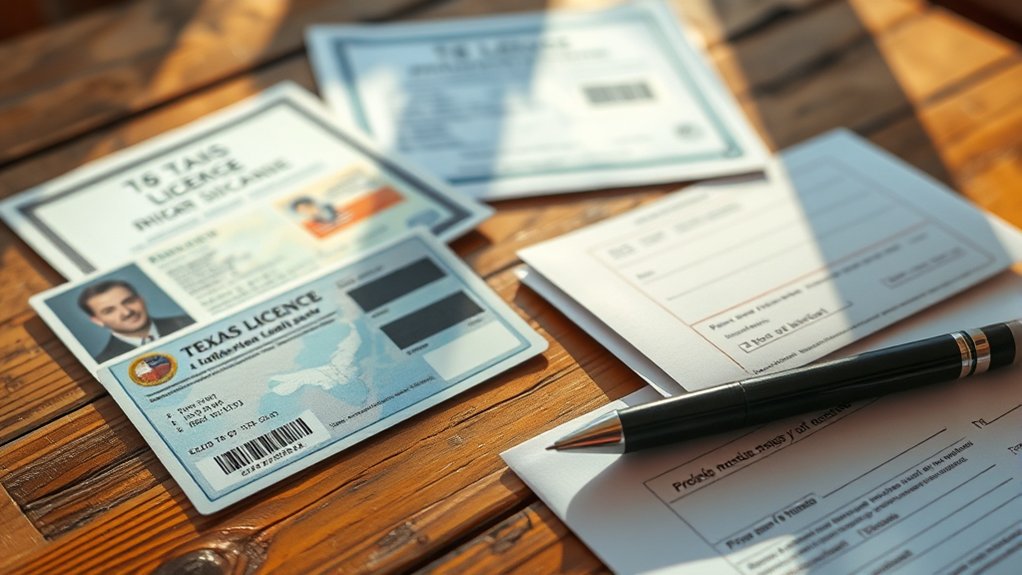
To apply for your Texas motorcycle license, you’ll need to bring some specific ID documents. This includes things like your birth certificate or passport, plus proof that you live in Texas.
Also, make sure to have your Social Security number handy because you’ll need to provide that as part of the process.
If you’ve completed a motorcycle safety course, don’t forget to bring your course completion certificate. Showing that can let you skip the written and skills tests, which is a big help!
Required Identification Documents
Gathering the right identification documents is essential when applying for a Texas motorcycle license at age 16. You’ll need a valid Class C driver’s license or a learner permit that you’ve held for at least six months without violations if applying for a Restricted Class M.
Bring your Social Security number, verified by the original Social Security card or a W-2 with the full number. Provide proof of lawful presence, such as a birth certificate, U.S. passport, or other DPS-accepted documents.
If you want to skip the written and skills tests, present a DPS-approved motorcycle safety course completion certificate. Make sure you have all these ready to guarantee your application process goes smoothly and meets Texas DPS requirements.
Proof Of Course Completion
Presenting your original DPS-approved Motorcycle Safety Course completion certificate (MSRC card) at the Texas DPS office lets you waive both the written and on-cycle skills tests when applying for your motorcycle license. You must bring the original certificate as proof of course completion from a DPS-approved course to qualify for these waivers.
Without your MSRC card, you’ll need to take both tests. Be sure to bring your course certificate to the DPS office along with other required documents. The MSRC card confirms you’ve completed the motorcycle safety course, allowing you to waive the on-cycle skills test and written exam.
Step-by-Step Application Process at Texas DPS
When you head to a Texas DPS office to apply for your Class M motorcycle license at 16, make sure you bring your valid Class C driver’s license or learner permit, proof of identity and citizenship, your Social Security number, and payment for fees.
If you’ve completed a DPS-approved motorcycle safety course, bring the original certificate to waive the written and on-cycle skills tests and have the Class M added to your license. Otherwise, you’ll need to pass these tests at the DPS.
For those under 16, a Restricted Class M requires additional documents and limits bike size.
| Step | Requirement |
|---|---|
| Documents | License/permit, ID, SSN, fees |
| Tests (if no safety course) | Written knowledge, on-cycle skills |
| Certificate (if completed course) | Original safety course certificate |
Rules and Restrictions for 16-Year-Old Motorcycle Riders and How to Upgrade
At 16, you can qualify for a regular motorcycle license by meeting specific age and testing requirements or by completing an approved safety course. Just remember, there are some restrictions you’ll need to follow, like wearing a helmet and staying within engine limits until you’re fully licensed.
Next up, we’ll go over how to upgrade your license and what you need to know to stay compliant with the rules. It’s easier than you might think, and we’ll make sure you’re prepared every step of the way.
Eligibility Criteria Overview
Although turning 16 opens the door to obtaining a regular Class M motorcycle license, you’ll need to meet specific requirements first. In Texas, once you’re 16 years old, you can apply for the standard Class M (or Class CM) without the 250cc restriction that applies to younger riders.
To qualify, you must hold a valid Class C driver’s license or learner permit and pass written and on-cycle skills tests unless you complete a DPS or state-approved motorcycle safety course, which can waive these tests. You’ll also need to provide proper identification, pass vision screening, and pay fees.
For minors, Texas may require parental consent and a learner permit held for a certain period. Completing a motorcycle safety course not only helps you pass but also prepares you for safe riding and easier endorsement upgrades.
License Upgrade Process
Since you’ve turned 16, you can upgrade to a full Class M motorcycle license by passing the required tests or by presenting a certificate from a DPS-approved motorcycle safety course, provided you already hold a valid Class C driver’s license or learner permit.
If you currently have a Restricted Class MR, limited to motorcycles 250cc or less, completing the motorcycle safety course allows you to remove restrictions and upgrade to Class M.
To complete the upgrade process at a Texas DPS office, bring your identification, proof of citizenship or legal presence, Social Security number, and the course completion certificate if you’re waiving tests. Passing a vision test and paying fees are also required.
The motorcycle safety course not only simplifies the process but also offers safety benefits and potential insurance discounts.
Frequently Asked Questions
What Is the Cost of Obtaining a Motorcycle License at 16?
You’ll likely spend around $250 to $450 on training courses, which often waive licensing exams and speed up processing times.
Application fees, vision tests, and documentation costs add up, usually totaling $30 to $50 more.
Don’t forget safety gear like boots and gloves, which can increase expenses.
Permit renewals are less frequent but may cost extra.
Budget carefully to cover all these components when getting your motorcycle license at 16.
Are There Any Motorcycle Insurance Requirements for 16-Year-Olds?
Yes, you’ll need motorcycle insurance with liability coverage and meet state coverage limits. Most insurers require parental consent and adding you as a named driver on their policy. You’ll often need to provide proof like a valid permit or license.
Expect graduated premiums since teenage riders are higher risk, but completing safety courses can earn policy discounts. Uninsured motorist coverage is also important to protect you from drivers without insurance.
Can You Ride a Motorcycle at Night With a Learner’s Permit?
About 40% of motorcycle crashes happen in low-light conditions, so night restrictions on learner’s permits are common.
You usually can’t ride at night due to curfew laws and headlight requirements.
You’ll need supervisor presence and must avoid restricted zones.
Temporary permits often include these night restrictions, though some licensing exemptions allow limited night riding with visibility gear.
Always check your permit’s specific rules to stay safe and legal.
What Types of Motorcycles Can 16-Year-Olds Legally Ride?
At 16, you can ride motorcycles that fit your state’s engine displacement limits, often under 250cc, due to learner limitations and moped restrictions.
You’ll face power-to-weight and speed caps, especially with a learner permit.
Wet weather rules and passenger restrictions usually apply, meaning no passengers until you’re fully licensed.
Plus, you must follow helmet standards strictly.
Always check your state’s specific guidelines to stay safe and legal on the road.
Are There Any Penalties for Riding Without a License at 16?
Yes, you face legal consequences if you ride without a license at 16. You could get fined, have your vehicle impounded, or even face license suspension.
In some cases, juvenile court might get involved, especially if it’s a repeat offense. Criminal charges could also apply for serious violations.
Your parents might be held liable, and schools can impose penalties too. It’s best to follow all rules to avoid these issues.
Conclusion
Getting your motorcycle license at 16 in Texas is like learning to ride a bike with training wheels. You start with restrictions but gain freedom as you prove your skills. By completing the safety course and following the steps, you’re not just ticking boxes; you’re building confidence and responsibility on the road.
Remember, every rider started somewhere. With patience, you’ll soon enjoy the full thrill of the open road safely and legally.