What Does Cc Mean Motorcycle – Quick Answer
CC on a motorcycle refers to cubic centimeters, measuring the engine’s total cylinder volume. This directly indicates the engine’s displacement, which affects power output, acceleration, torque, and fuel consumption.
A higher CC means more power and speed but often comes with heavier weight and higher fuel use. For beginners, smaller CC engines offer easier handling and better efficiency.
Understanding CC helps you choose the right bike for your riding style and skill level, with deeper insights available below.
What Does CC Mean on a Motorcycle?
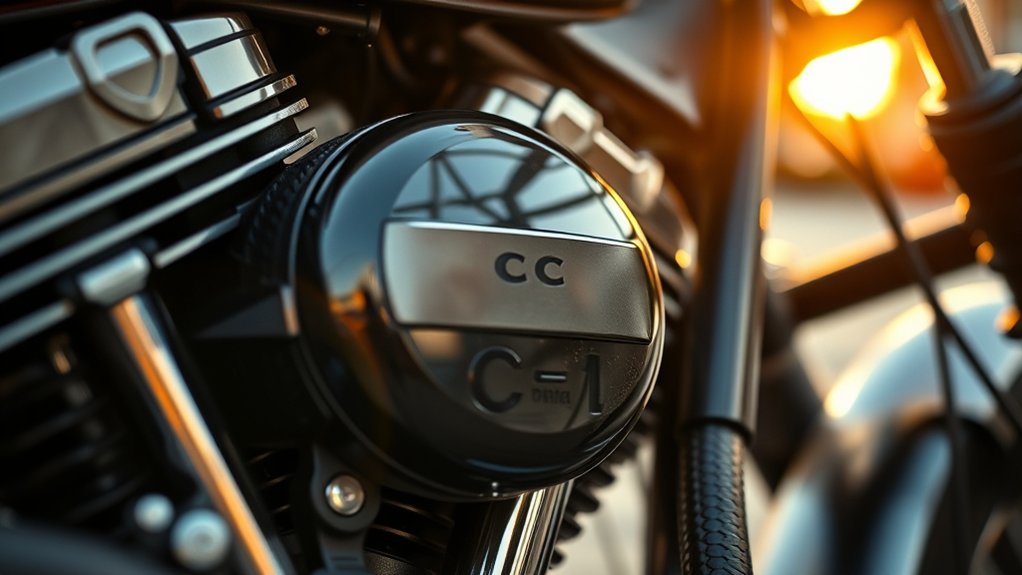
CC, or cubic centimeters, measures the total volume displaced by all the cylinders in a motorcycle’s engine. This engine displacement, often called engine capacity, directly relates to the amount of air and fuel the engine can burn, influencing its power output.
For you as a beginner rider, understanding cc is essential when choosing a motorcycle. Smaller cc engines, typically between 50 and 250cc, suit city commuting due to their manageable power and efficiency.
As engine capacity increases, so does potential power, but higher cc bikes demand more skill to handle safely. Manufacturers usually recommend beginner riders start with motorcycles around 125 to 300cc to balance manageable power and learning curve, avoiding high-displacement engines until you gain experience.
How CC Affects Motorcycle Performance
Your bike’s CC directly influences its power output. Basically, bigger engines with higher displacement produce more horsepower and torque, which means stronger acceleration and better load capacity. That’s great when you want to get moving quickly or carry heavier gear.
But here’s the thing—more CC usually means added weight. And that extra weight can make the bike less agile and less responsive, especially when you’re navigating tight corners or city traffic. So, it’s not just about having a big engine.
You’ve got to find the right balance between CC, the bike’s chassis design, and your own riding skills. When these elements work together, you get the best mix of performance and control.
Power Output Impact
Understanding engine displacement is key to grasping how a motorcycle’s power output changes with CC. Engine size directly influences the volume of air/fuel mixture combusted, impacting torque and power output.
Higher CC generally enhances acceleration and low-end torque, which helps with hill climbs and heavy loads. But power output depends on more than just engine displacement; design and tuning also play vital roles. Larger engines consume more fuel, which affects efficiency.
| Engine Size (CC) | Typical Impact |
|---|---|
| 250-300 | Moderate power, high fuel efficiency (30-40 km/L) |
| 600 | Significant acceleration, balanced torque |
| 1000+ | Peak horsepower, suited for top-speed, heavy loads |
| Variable | Power varies with tuning, cylinders, electronics |
CC increase boosts power but comes with trade-offs in fuel consumption and weight.
Handling And Agility
Maneuvering tight corners and city traffic demands agility that often correlates inversely with engine displacement. Lower-cc motorcycles (50–250cc) are lighter, offering superior maneuverability and quicker directional changes, making handling more responsive.
As cc increases, weight typically rises, which diminishes agility and requires more effort for low-speed control. Midweight bikes (300–400cc) balance power-to-weight ratio and handling, providing enough power while maintaining manageable weight for predictable maneuverability.
High-cc motorcycles (600+cc), despite increased torque and horsepower, often come with heavier frames that slow steering inputs and reduce nimbleness. However, handling depends not only on cc but also on chassis geometry and suspension tuning.
Two bikes with similar displacement can differ markedly in flickability and corner entry. Understanding these factors helps you select a bike that matches your handling and agility needs.
Why Motorcycle CC Matters for Riders

Engine displacement, measured in cubic centimeters (CC), directly impacts how a motorcycle performs under various conditions. CC means the total volume inside the engine’s cylinders, dictating how much air and fuel it can burn per cycle.
This directly influences power and speed, affecting your riding experience.
When you choose the right CC, consider these key factors:
- Performance Needs: Higher CC engines provide more torque and horsepower, improving acceleration and load capacity.
- Fuel Efficiency: Larger displacement usually means lower fuel economy and higher running costs.
- Riding Environment: Smaller CC bikes suit city commuting, while bigger engines excel in highway and long-distance scenarios.
Understanding engine displacement helps you select a bike that balances power, efficiency, and comfort for your specific riding style.
What Are the Common Motorcycle CC Categories?
You’ll find motorcycles grouped into lightweight, midrange, and heavy-duty categories based on their engine displacement in cubic centimeters (cc). Lightweight bikes usually range from 50cc to 250cc. These offer manageable power, making them great for beginners and perfect for city commuting.
Then, you have midrange engines that span from 300cc to 900cc. They strike a nice balance between power and control, suitable for riders who want a bit more performance.
Finally, heavy-duty motorcycles pack engines exceeding 1000cc. These deliver high performance and are really geared towards experienced riders looking for that extra thrill.
Lightweight Motorcycle CC Range
Lightweight motorcycles typically fall within the 50cc to 250cc range, offering varying performance suited to different riding needs. This cc range balances engine size and fuel economy, making these bikes ideal for beginner riders and urban environments.
Here’s a breakdown:
- 50–125cc: Perfect for short urban trips, these lightweight motorcycles often qualify as mopeds or scooters with excellent fuel economy (up to 70 km/L).
- 125–250cc: Offering improved highway capability, these models serve as entry-level motorcycles with manageable power and moderate fuel consumption.
- Handling: Due to their low curb weight and gentler power delivery, bikes in this range are easier to control, which enhances safety for new riders.
Understanding this cc spectrum helps you select a lightweight motorcycle tailored to your riding skills and environment.
Midrange Engine Sizes
Explore the midrange motorcycle segment, which typically spans from 300cc to 600cc, offering a versatile balance of power and control. In this range, cc generally means an engine size that delivers manageable power suited for both city commuting and long-distance riding.
The 300 to 600cc bracket includes diverse models like naked, sport, standard, and lightweight adventure, making it the most widely available category. Entry-level midrange bikes usually fall between 300cc and 400cc, ideal for riders seeking more performance than smaller engines without overwhelming weight.
Meanwhile, the 600cc mark provides stronger acceleration and higher sustained speeds while remaining accessible to intermediate riders. Midrange engines also offer better torque for carrying a passenger or luggage, supported by advanced chassis and electronics that enhance overall ride quality and versatility.
Heavy Duty Categories
While heavy-duty motorcycles cover a broad range, they generally start at engine sizes above 550cc. This includes models designed for touring, cruising, and high-performance riding. Understanding displacement helps you choose based on torque, power, and licensing requirements.
The common heavy-duty categories include:
- 600–900cc: Ideal for riders stepping into heavy-duty motorcycles. These offer balanced torque and manageable weight, perfect for highway cruising and moderate touring.
- 1000cc and up: This full heavy category includes sportbikes and large cruisers, delivering maximum horsepower and top speeds but requiring advanced control skills.
- Above 1000cc: Often equipped with sophisticated electronics and higher curb weight, these demand proper licensing and experience due to their power and complexity.
Selecting the right displacement guarantees you match your skill level and licensing restrictions effectively.
What CC Size Is Best for Beginners?
Choosing the right engine size is crucial for beginner motorcyclists to guarantee manageable power and control. For beginner riders, motorcycles with 125–300cc engines are ideal.
Selecting a 125–300cc engine ensures beginners manageable power and optimal control for confident riding.
Models between 125–150cc suit city commuting due to their lighter bikes and easier low-speed handling, reducing stall risk. If you anticipate highway use, aim for 250–300cc to secure sufficient power without overwhelming weight.
While some experts suggest at least 300cc to experience a “full” motorcycle feel, staying under 600cc avoids heavier, more challenging machines. Remember, engine size is just one factor; lighter bikes provide better maneuverability for novices.
Ultimately, selecting a 125–300cc motorcycle balances power, control, and confidence, making it the best choice for most new riders starting out in diverse urban and suburban environments.
Matching Motorcycle CC to Your Riding Style and Needs
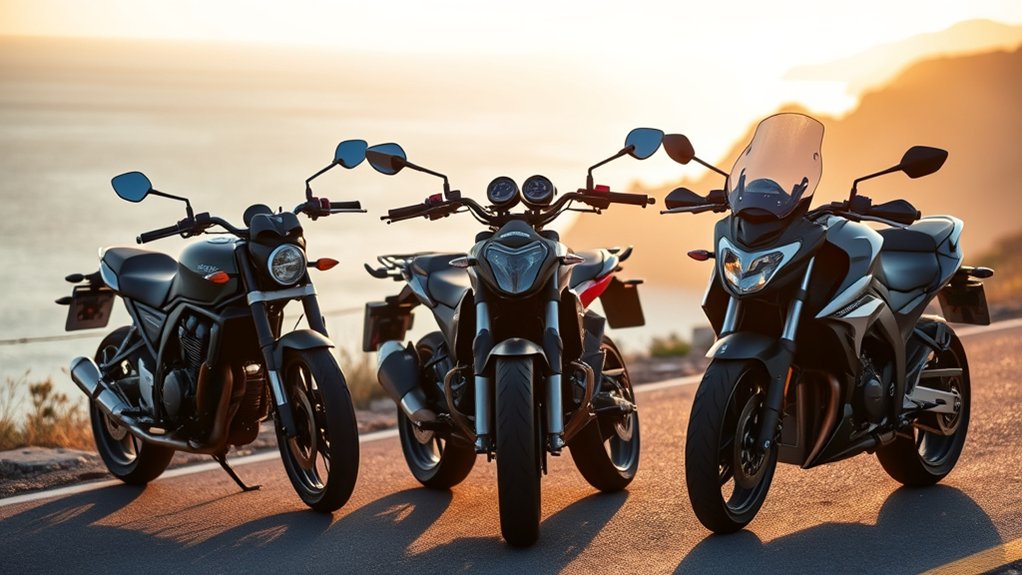
When matching motorcycle CC to your riding style and needs, consider how different engine sizes impact performance and handling. CC affect acceleration, fuel efficiency, and control, so choosing the right size is vital.
Here’s a quick breakdown:
- For city commuting and errands, a smaller engine (50–250cc) offers nimble handling and excellent fuel economy. It’s ideal for stop-and-go traffic and short trips.
- If your riding style includes mixed city and highway use or weekend rides, 250–400cc bikes balance manageable power with highway capability. This provides versatility without overwhelming control.
- For long-distance touring or carrying heavier loads, larger engines (600cc+) deliver sustained torque and cruising comfort. These are essential for endurance and stability on extended rides.
Match CC precisely to your riding needs to optimize safety, performance, and enjoyment.
Pros and Cons of Low vs. High CC Motorcycles
Matching your motorcycle’s CC to your riding needs sets the stage for understanding the trade-offs between low and high CC engines. CC usually means the engine’s displacement, influencing power and fuel efficiency.
Low-CC motorcycles (50–250cc) offer excellent fuel economy, up to 70 km/L, and lightweight handling ideal for city riders but lack sustained highway power. In contrast, higher CC means more torque and top speed, enhancing performance for touring and spirited riding.
However, these bikes consume more fuel (15–25 km/L), incur higher maintenance costs, and demand advanced handling skills. Moreover, increased engine size raises weight and insurance premiums.
How to Choose the Right CC Bike for You
You’ll want to align your motorcycle’s CC with how and where you ride to optimize performance and efficiency. For short city commutes, smaller engines excel. But if you seek versatility, consider these guidelines:
- Choose 125–300cc for a balanced power-to-weight ratio. It’s manageable for new riders and capable of occasional highway speeds.
- Step up to 300–600cc if you regularly carry a passenger and luggage. This range reduces engine strain and improves overtaking.
- Always test-ride models within your target CC to evaluate seat height, weight, and throttle feel. These impact handling more than displacement alone.
Avoid jumping straight to high-CC bikes without experience. Matching CC guarantees safer, more efficient riding tailored to your needs.
Frequently Asked Questions
How Is CC Measured in a Motorcycle Engine?
You measure cc in a motorcycle engine by calculating the engine displacement, which is the swept volume by the piston travel within the combustion chamber.
You use the bore and stroke dimensions. Bore is the cylinder diameter, and stroke is the piston travel length.
For each cylinder, displacement equals π × (bore/2)² × stroke. Then multiply by the number of cylinders.
Keep in mind, volumetric efficiency affects the actual intake volume, so it influences total engine displacement in cubic centimeters.
Can CC Affect Motorcycle Insurance Rates?
Yes, engine size directly affects your motorcycle insurance policy premiums since insurers use it for risk assessment.
Larger cc bikes typically imply higher risk due to power and repair costs, increasing premiums.
Age factors and modification impact also influence rates, as younger riders or modified bikes face stricter scrutiny.
Geographic pricing matters too, because where you ride affects costs.
Does Altitude Impact a Bike’s CC Performance?
Imagine your bike climbing a mountain, fighting thinner air like a swimmer against a strong current.
Yes, altitude effects reduce air density, causing noticeable power loss in your engine’s cc performance.
Naturally aspirated bikes suffer most, as the fuel mixture gets too rich without proper carb jetting adjustments.
Turbo tuning helps by compressing thinner air and restoring power.
To keep your bike running right, you need precise fuel management tailored to altitude changes.
How Often Should a High CC Engine Be Serviced?
You should follow maintenance intervals closely for your high-cc engine. Plan oil changes every 3,000 to 5,000 miles, depending on oil type and riding style.
Valve adjustments typically come every 8,000 to 16,000 miles, while coolant checks and belt inspections fall between 12,000 and 24,000 miles. Don’t forget spark plug replacement as part of regular servicing.
Aggressive riding means you’ll need to shorten these intervals to keep your engine running at peak performance and prevent premature wear.
Are CC Ratings Standardized Worldwide?
You know what they say: “Measures may vary, but the truth remains.” CC ratings for engine displacement follow consistent measurement standards globally, calculated by bore, stroke, and cylinder count.
However, you’ll find nomenclature differences, market classifications, and regional regulations affect how those numbers are interpreted or rounded.
Manufacturing tolerances add slight variations, so while the physical CC is standardized, legal and commercial treatments differ depending on where you ride.
Conclusion
So, CC might just be those mysterious letters you skim past, but they’re actually the heart of your bike’s power and performance. Ironically, the bigger the CC, the louder your ego and your engine roars.
But don’t let a high CC fool you; sometimes, less is more, especially when you’re learning the ropes. Ultimately, choosing the right CC isn’t about bragging rights. It’s about matching your ride to your skills and needs with precision.