How Long Does A Motorcycle Battery Last – Exact Amounts
You can expect your motorcycle battery to last between 2 and 5 years, depending on the type, riding habits, and maintenance. Lead-acid batteries typically endure about 300 full charge cycles with capacity dropping near 75% at end of life, while lithium-ion lasts longer, often 4 to 8 years.
Frequent deep discharges and extreme temperatures shorten lifespan markedly. Proper charging, storage, and monitoring extend service life. Understanding these factors helps you choose and maintain the best battery for your needs.
Typical Motorcycle Battery Lifespan

Typically, a motorcycle battery lasts between 2 and 5 years, depending on its type, how you ride, and how well you maintain it. Motorcycle batteries, especially lead-acid types, usually reach end of life after about 300 full charge and discharge cycles, when capacity drops to roughly 75% of nominal.
If you frequently let your battery deeply discharge before recharging, expect capacity to fall closer to 40%, drastically shortening battery life below the typical range. Environmental factors also impact lifespan: high heat accelerates electrolyte loss and sulfation, while cold temporarily reduces capacity.
Poor maintenance further degrades performance and longevity. Understanding these practical constraints helps you optimize your motorcycle battery’s life by avoiding deep discharges, maintaining proper charge levels, and protecting the battery from extreme temperatures during storage and use.
Battery Types: What They Mean for Lifespan and Performance
You’ll find lead-acid batteries usually last between 2 to 5 years. But to get that kind of lifespan, they need regular maintenance, like topping up with distilled water and cleaning the terminals.
On the other hand, lithium-ion batteries generally last longer—often around 4 to 8 years. That’s because they can handle more charge cycles and resist deep discharges better.
Knowing these differences can really help you pick the right battery for how you ride and the conditions you ride in.
Lead-Acid Battery Lifespan
Although lead-acid batteries are common in motorcycles due to their cost-effectiveness and reliability, their lifespan generally ranges from 2 to 5 years under normal use. This estimate assumes around 300 full charge–discharge cycles, with capacity dropping to about 75% at end-of-life.
To maximize your battery’s service life, avoid deep discharges and maintain regular charging. Letting it run flat can reduce capacity to 40% and drastically shorten lifespan.
Environmental factors also matter. Heat accelerates electrolyte evaporation and sulfation, while cold impairs cranking performance. Performing routine maintenance, like topping off distilled water in flooded cells and using a trickle charger, can prevent sulfation and extend battery life.
Moreover, confirm your charging system works correctly, as both overcharging and undercharging damage the battery.
Lithium-Ion Battery Benefits
If you’re considering alternatives to lead-acid batteries, lithium-ion options offer several advantages that impact lifespan and performance. These batteries excel at maintaining a full charge and can hold a charge longer when not in use.
Key benefits include:
- Lighter weight, 30–50% less than lead-acid, improves power to weight ratio for faster starts and better handling.
- Built-in battery management systems prevent overcharge and deep discharge, which extends cycle life.
- Faster charging reduces downtime and lets you get back on the road sooner.
- High energy density means more power in a smaller package, enhancing efficiency.
Which Riding Habits and Weather Conditions Shorten Battery Life

You don’t want to let your battery run down too much on a regular basis because that really cuts down its cycle life and how much charge it can hold.
Also, riding in extreme temperatures can mess with your battery’s performance. For example, really hot weather speeds up chemical breakdown inside the battery, while cold weather temporarily reduces the power it can deliver when you start up.
Keeping an eye on these things will help your battery stay healthy and last longer.
Frequent Deep Discharges
Frequent deep discharges markedly shorten your motorcycle battery’s lifespan by reducing its effective cycle count and capacity. When your battery regularly discharges below 50%, it accelerates sulfation, cutting usable capacity to about 40%.
To prevent a weak battery, follow these guidelines:
- Avoid multiple short rides with frequent starts that cause partial or deep discharges.
- Minimize accessory use (heated grips, GPS, phone chargers) when the engine is off.
- Use a battery tender for bikes stored long-term to maintain charge above 75%.
- Recharge before the battery falls below roughly 75% capacity to preserve the typical 300-cycle lifespan.
Adhering to these steps helps maintain battery health and prevents premature failure caused by deep discharge stress.
Extreme Temperature Effects
Extreme temperatures consistently impact your motorcycle battery’s performance and longevity. High heat speeds up electrolyte evaporation and chemical breakdown, which cuts lead-acid battery life toward the lower end of the 2–5 year range. It also means more maintenance like topping off with distilled water.
Cold temperatures slow chemical reactions, temporarily lowering effective capacity and making cranking harder. They can cause more deep discharge events, which shorten battery lifespan. Your riding habits also matter: frequent short trips stop the alternator from fully recharging the battery, increasing sulfation.
Leaving your bike stored for a long time without a smart charger worsens self-discharge and internal resistance. Using high-draw accessories in extreme heat or cold deepens discharge and stresses the battery, speeding up capacity loss. To get the most out of your battery, avoid parking in direct sun or freezing conditions without proper care.
Essential Maintenance Tips to Prolong Your Motorcycle Battery Life
Regularly maintaining your motorcycle battery markedly extends its lifespan and guarantees reliable performance. To keep your battery healthy, follow these essential tips:
- Recharge before capacity drops below 75%. This helps prevent deep-discharge damage and premature aging.
- Use a smart trickle charger during storage or infrequent use. It avoids self-discharge and sulfation buildup.
- For flooded lead-acid batteries, check electrolyte levels after charging. If below the recommended line, top up with distilled water to prevent permanent capacity loss.
- Keep terminals clean and tight. Remove corrosion with a baking soda solution and make sure connections are secure to avoid voltage drops and parasitic drains.
Consistently applying these steps will help you maximize battery life and maintain peak performance.
How to Maximize Battery Life With Proper Charging and Storage

Proper charging and storage play an essential role in maximizing your motorcycle battery’s lifespan. Always charge the battery before it drops below 75% capacity to avoid deep discharges that degrade performance.
Use a smart battery tender or trickle charger for long storage or infrequent use. This helps maintain the charge and prevents sulfation. Store the battery in a cool, dry place away from direct sunlight. For flooded types, check electrolyte levels regularly.
Also, keep an eye on your charging system to prevent undercharging or overcharging.
| Aspect | Recommendation | Effect on Battery Life |
|---|---|---|
| Charge Timing | Before 75% capacity | Prevents capacity loss |
| Charger Type | Smart battery tender/trickle charger | Maintains charge, limits sulfation |
| Storage Conditions | Cool, dry, shaded location | Minimizes self-discharge |
| Electrolyte Maintenance | Top up distilled water (flooded) | Prevents evaporation damage |
Signs Your Motorcycle Battery Needs Replacement
Even with careful charging and storage, your motorcycle battery will eventually show signs that it needs replacement. You should watch for these key indicators:
- Slow cranking or dim headlights during startup, signaling capacity below 75%.
- Battery is securely mounted, but the bike repeatedly dies after short rides or shows resting voltage under 12.4 V, indicating it can’t hold a charge.
- Battery age exceeds 2 to 5 years with reduced starting power or failure to hold charge, reflecting chemical degradation.
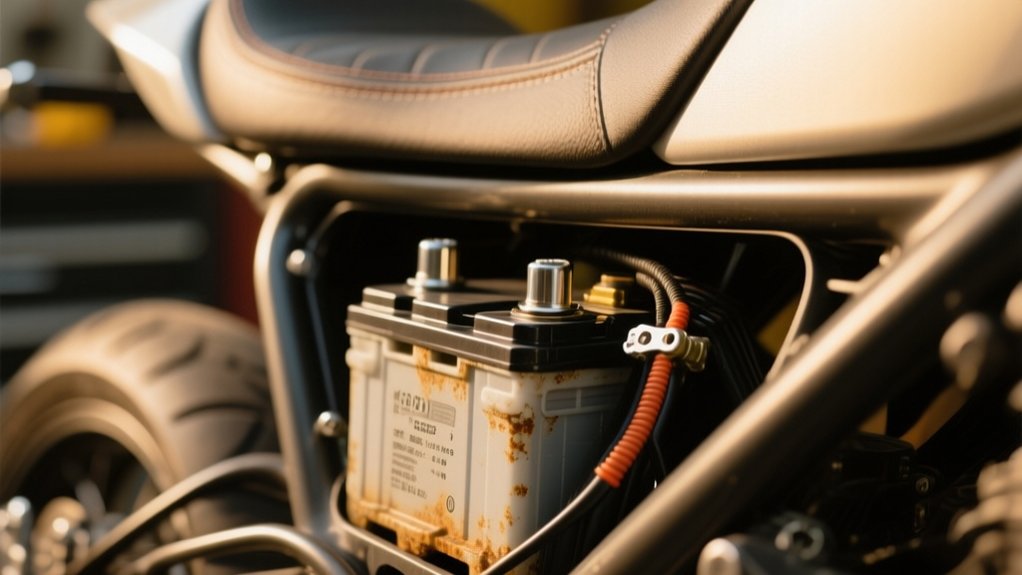
- Physical damage such as bulging, cracked casing, electrolyte leaks, or a dry white diaphragm on maintenance-free batteries demands immediate replacement.
Recognizing these signs promptly helps maintain reliable performance and prevents unexpected failures on the road.
Choosing the Right Battery for Your Riding Style
When selecting a motorcycle battery, you’ll want to match its specifications to your riding habits to maximize performance and lifespan. For daily commuters, a high-cycle lead-acid battery rated around 300 cycles offers cost-effective reliability. Lithium-ion batteries provide longer life and quicker recovery for frequent start-stop use.
Long-distance riders should opt for higher-capacity batteries with strong cranking power, favoring lithium for weight savings and durability. If you ride infrequently, choose a battery compatible with trickle chargers to prevent self-discharge and sulfation.
In extreme climates, prioritize thermal tolerance. Lithium excels in cold, while sealed lead-acid suits hot environments. Always make sure the battery’s size, voltage, and terminal layout precisely match your motorcycle.
Proper maintenance combined with the right battery choice guarantees peak performance and extends your motorcycle battery’s service life.
Frequently Asked Questions
Can Motorcycle Batteries Be Recycled After Use?
Yes, you can recycle motorcycle batteries after use, which markedly reduces environmental impact.
Lead-acid batteries are highly recyclable through established processes that recover lead, plastic, and sulfuric acid.
Lithium-ion batteries require specialized recycling to extract valuable metals like lithium and cobalt, though the infrastructure is less widespread.
To guarantee safe recycling, always return batteries to authorized centers, transport them properly, and follow hazardous-material guidelines, especially for damaged lithium batteries.
How Do Motorcycle Batteries Compare to Car Batteries?
You’ll find motorcycle batteries have lower cold cranking amps than car batteries, which means less starting power in cold conditions.
They’re more prone to capacity degradation due to smaller size, frequent deep discharges, and undercharging from shorter rides.
Car batteries handle cold cranking and capacity loss better because of larger capacity and robust charging systems.
What Safety Precautions Are Needed When Handling Motorcycle Batteries?
Don’t even think about handling a motorcycle battery without acid-resistant gloves and eye protection.
You could suffer acid burns worse than a dragon’s fiery breath! Always work in a well-ventilated area, keep sparks and flames far away, and disconnect the negative terminal first to avoid dangerous shorts.
Use insulated tools and never place metal across terminals.
For battery disposal, rely on authorized recycling points to protect yourself and the environment.
Are There Any Warranty Options for Motorcycle Batteries?
Yes, you’ll find warranty coverage on most motorcycle batteries, typically lasting 6 months to 2 years depending on the type. Manufacturers usually offer full replacement during the initial period, then prorated replacement afterward. This means you get a partial credit based on battery age.
To use warranty coverage, keep your proof of purchase and follow maintenance guidelines strictly, as improper care often voids claims. Always check specific terms for exact prorated replacement details.
How Does Altitude Affect Motorcycle Battery Performance?
You’ll notice altitude charging efficiency can drop by up to 50% at high elevations due to pressure effects reducing air density and cooling.
This forces your charging system to work harder, risking undercharging and battery sulfation, especially at low RPMs.
To maintain performance, monitor your battery’s charge with a multimeter, choose a high-capacity or lithium battery, and consider a portable charger to compensate for these altitude-related challenges.
Conclusion
You might think your motorcycle battery will last forever, but the truth is more complex. Its lifespan depends on the type, your riding habits, and how well you maintain it.
Neglect these factors, and you’ll face unexpected failures. Stay ahead by choosing the right battery, charging it properly, and storing it wisely.
The real question isn’t how long it lasts, but how long you’re willing to risk being stranded.