
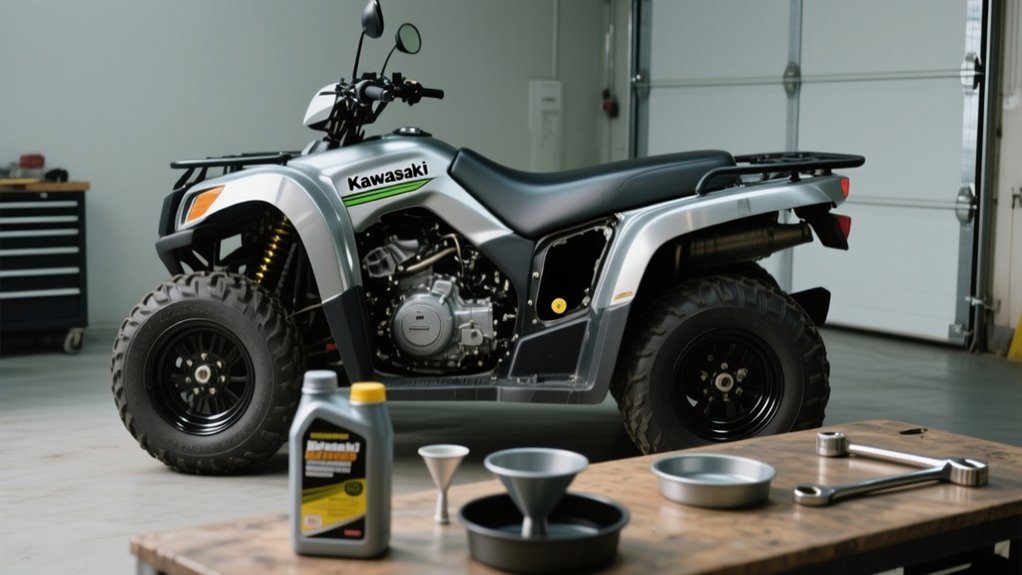
What Kind Of Oil Does A Kawasaki Bayou 220 Take – Guide
You should use 10W-30 or 10W-40 engine oil that meets API SG or higher specs for your Kawasaki Bayou 220 to guarantee peak performance and engine longevity.
For the transmission and differential, 80W-90 gear oil is recommended. Change the oil every 25 to 50 hours, especially more frequently during break-in.
Synthetic oils can offer enhanced protection and longer intervals. Keep these essentials in mind to maintain your ATV. There’s more to know about oil selection and care for best results.
Recommended Oil Types for Kawasaki Bayou 220
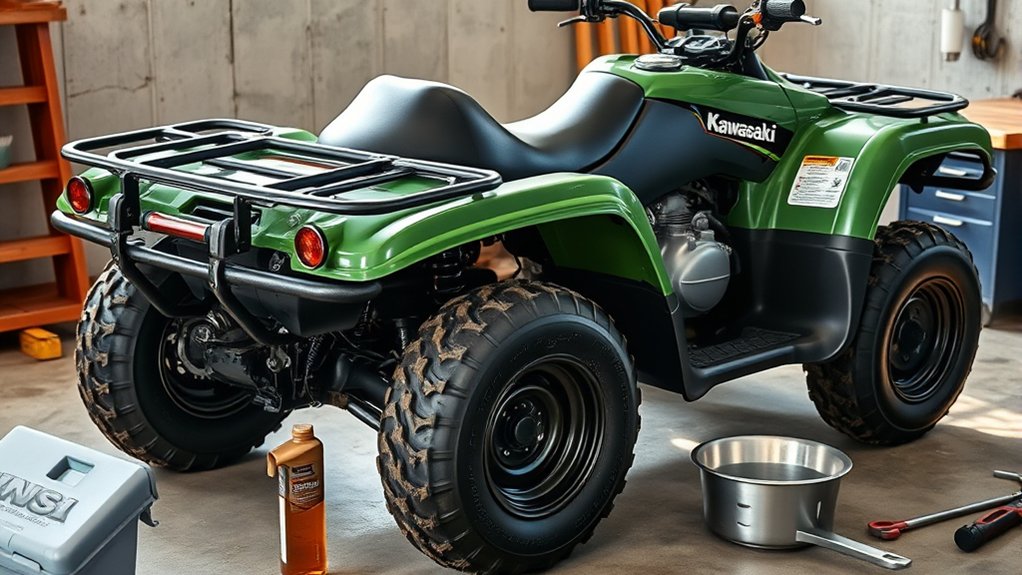
When selecting oil for your Kawasaki Bayou 220, which types should you choose to guarantee peak engine performance? You should use 10W-40 or 10W-30 engine oil, as these viscosity grades are ideal for this ATV model.
Opt for high-quality, multi-viscosity oils that meet or exceed the API Service Classification SG or higher to ensure adequate protection and lubrication under various operating conditions.
Choose multi-viscosity oils meeting API Service Classification SG or higher for reliable protection and lubrication.
For the transmission and differential, Kawasaki recommends 80W-90 gear oil or a similar grade designed for heavy-duty gear protection.
Always verify the specific oil viscosity and type in your owner’s manual to align with manufacturer guidelines. Using the correct oil type not only enhances engine efficiency but also prevents premature wear and extends the Bayou 220’s operational lifespan.
How Often Should You Change the Oil on Your Bayou 220?
You should change the oil in your Kawasaki Bayou 220 every 25 to 50 hours of operation or at least once annually, whichever comes first. During the initial break-in period, aim for more frequent changes, around every 25 hours, to remove contaminants and ensure proper engine seating.
After this phase, a 50-hour interval suits regular maintenance and helps maintain peak engine performance. Regular oil changes prevent dirt and debris buildup that accelerates wear and reduces engine longevity.
Always refer to your owner’s manual for specific recommendations, as your riding conditions or engine use may require adjustments to the schedule.
Sticking to these intervals protects your engine, ensuring consistent power delivery and extending the Bayou 220’s operational life.
How to Choose Between 10W-30 and 10W-40 Engine Oil
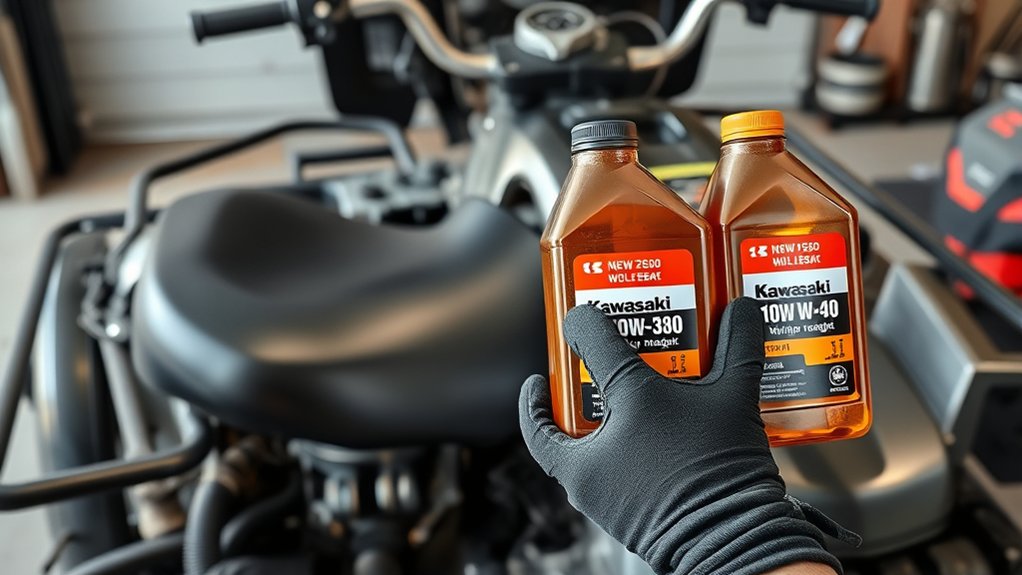
Maintaining the right oil viscosity plays a key role in protecting your Kawasaki Bayou 220’s engine, especially after establishing an effective oil change routine. Choosing between 10W-30 and 10W-40 depends on your riding conditions and environment. Both oils perform well in cold starts, but they differ in thickness at operating temperatures.
Use 10W-30 for moderate temperatures and better fuel efficiency. On the other hand, if you ride in hot climates or under heavy loads, 10W-40 offers increased protection.
| Oil Grade | Best Use Case |
|---|---|
| 10W-30 | Moderate temps, fuel economy |
| 10W-40 | Hot climates, heavy load |
| Both | Suitable for cold starts |
Always follow Kawasaki’s specs to guarantee optimal engine performance and longevity. It’s the best way to keep your Bayou running smoothly.
Why Synthetic Oil Might Be Better for Your Bayou 220
Why choose synthetic oil for your Kawasaki Bayou 220? Synthetic oil delivers superior lubrication, reducing engine wear more effectively than conventional options. It maintains thermal stability under high temperatures, ensuring consistent engine performance even during demanding rides.
You’ll also benefit from fewer impurities, which means less sludge and deposit buildup. This helps protect your engine’s internal components. Synthetic oils typically last longer, so you don’t have to change the oil as often, saving time and maintenance costs.
By using synthetic oil, you enhance your Bayou 220’s efficiency and potentially extend its overall lifespan. This choice supports the best engine operation, especially if you frequently encounter tough conditions or high engine loads.
Synthetic oil is a practical upgrade for your ATV’s health and performance.
Common Oil Change Mistakes to Avoid

Although changing the oil on your Kawasaki Bayou 220 might seem straightforward, common mistakes can compromise engine performance and longevity. First, avoid using the wrong oil viscosity. Stick to the recommended 10W-30 to guarantee proper lubrication.
Always warm up the engine before draining to remove old oil and contaminants fully.
When reinstalling, tighten the drain plug to the correct torque. Over-tightening risks damaging the oil pan, while under-tightening causes leaks.
Don’t skip replacing the oil filter. A clogged filter restricts oil flow and accelerates engine wear.
After refilling, check the oil level carefully to prevent running with insufficient lubrication.
Frequently asked questions
Can I Use Motorcycle Oil in My Kawasaki Bayou 220?
Yes, you can use motorcycle oil in your Kawasaki Bayou 220, but make certain it meets the recommended viscosity, typically 10W-40 or 10W-30.
Choose oil formulated for wet clutch systems to avoid clutch slippage. Always verify the API service classification matches Kawasaki’s specs.
Using oil outside these parameters can harm engine performance and increase wear. Check your owner’s manual before making any substitutions to guarantee peak engine protection and longevity.
It’s always better to be safe than sorry when it comes to your engine’s health.
What’s the Oil Capacity of the Kawasaki Bayou 220?
The Kawasaki Bayou 220 holds about 1.3 liters (1.4 quarts) of oil. This is a critical detail for maintaining ideal engine performance.
When you change the oil, be sure to drain it completely before refilling to this capacity. You don’t want to overfill or run low.
Always use a dipstick to check levels accurately.
Sticking to the recommended amount helps your engine run smoothly and extends its lifespan.
How Do I Check the Oil Level on a Bayou 220?
To check the oil level on your Bayou 220, park it on level ground and turn off the engine.
Remove the oil fill cap and dipstick, then wipe it clean.
After that, reinsert the dipstick without screwing it in.
Now, pull it out again and check the oil mark.
Make sure the level falls between the “Low” and “Full” marks.
If it’s low, add oil gradually.
Then, recheck until the level is correct.
Can Thicker Oil Improve Engine Performance in Cold Weather?
Thicker oil might seem like a good idea for cold weather, but it actually slows oil circulation at startup, increasing engine wear.
You want oil that flows quickly when it’s cold, like 5W-30, to guarantee proper lubrication right away.
Using too thick oil can raise engine resistance, making starts harder and reducing performance.
What Additives Are Safe to Use With Bayou 220 Engine Oil?
You can safely use fuel stabilizers and engine oil conditioners that are compatible with small engines in your Bayou 220. Avoid harsh additives like leaded fuel or high-alkaline products because they can damage engine parts.
Detergent-containing oil supplements help keep your engine clean, but use them sparingly and always follow the manufacturer’s guidelines. It’s a good idea to double-check that any additive you choose is compatible with your engine oil.
This way, you prevent performance issues or oil breakdown. Sticking to approved products will give you the best results and keep your engine running smoothly.
Final Thought
Choosing the right oil for your Kawasaki Bayou 220 is like giving your engine a tailored suit. It guarantees a perfect fit and peak performance. Stick to 10W-30 or 10W-40, depending on your riding conditions.
You might want to consider synthetic oil for smoother, longer-lasting protection. Change your oil regularly to keep your machine humming like a well-oiled clock. Avoid common mistakes, and you’ll keep your Bayou running strong, mile after mile.