How To Transport A Motorcycle Without A Truck – Smart Tips
You can transport a motorcycle without a truck by renting a trailer, hiring a motorcycle shipper, or riding it home if the paperwork, insurance, and plate are ready.
For a trailer, use a level surface, a wheel chock, and at least four ratchet straps set about 45 degrees.
Add a fork saver, check tire pressure and fluids, and remove loose items.
Choose shipping for longer moves or extra protection, and you’ll find smarter ways to do it.
Choose the Best Motorcycle Transport Option

To choose the best motorcycle transport option, match the method to your distance, budget, and how much risk you’re willing to take.
Choose the motorcycle transport method that fits your distance, budget, and comfort with risk.
For short moves, rent a motorcycle trailer for about $20 a day. A swing-down ramp, tie-down rings, and a wheel chock can make loading safer.
If you want the least hassle, Motorcycle Shipping offers door-to-door pickup and professional securing. Optional crate or roll-on service is available, but it costs more.
If you’ve got a pickup, use a ramp, ratchet straps, and a chock. Secure the bike to frame points, ideally with a helper.
If you move bikes often, buy or borrow a utility or enclosed trailer. That gives you better control and protection.
Ride Your Motorcycle Home Safely
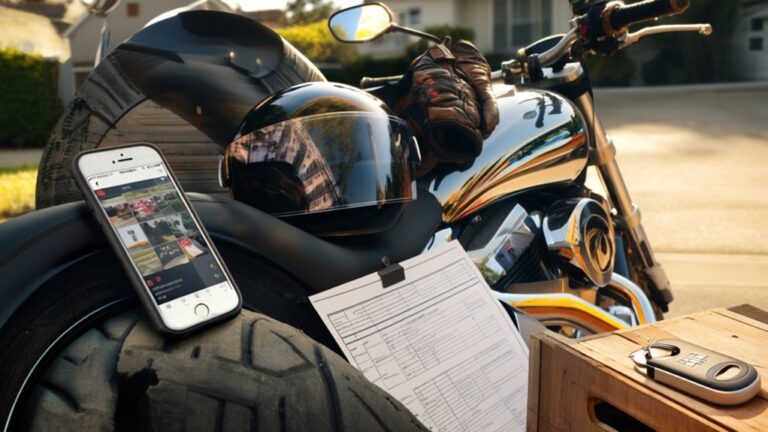
Before you ride it home, make sure the bike is registered, insured, and legal to operate—or grab a temporary plate from the dealer or the DMV.
Next, check the tires, brakes, fluids, lights, mirrors, and fasteners, and clear off any loose items so you know the bike is safe for the trip.
Then plan a low-speed route with planned stops, and pack what you need: tools, a tire kit, a charged phone, and a contact who knows your ETA.
Plan the Return Ride
Once you’ve confirmed the bike is legal to ride, plan the return trip with safety in mind.
Make sure it has current registration or a temporary plate, active insurance, and roadworthy tires, brakes, lights, and fluids.
Secure loose parts and stash valuables.
Carry your bill of sale, phone, charger, and basic tools.
If you’re unsure about handling, take a short nearby test ride before you hit faster roads.
Choose low-traffic routes, ride at a moderate pace, and stop often for fuel and a quick check.
- Breathe easier knowing you’re prepared
- Avoid the panic of roadside failure
- Feel steadier on unfamiliar controls
- Get home with confidence, not stress
Handle Registration First
If you plan to ride the bike home, confirm the paperwork first. You’ll need a valid motorcycle license, active insurance, and either the current plate or a temporary/transferrable plate.
Check the motorcycle’s registration status before you roll out. Many states won’t let you ride it legally without it.
Bring the title or bill of sale, proof of insurance, your driver’s license, and any registration paperwork the seller gives you. If you’re buying from a private seller, meet at the DMV or a nearby spot so you can transfer registration right away.
Dealers may issue a temporary plate for a fee. If you can’t insure or register the bike immediately, don’t risk riding it home.
Use a trailer, pickup, or shipper instead.
Rent a Motorcycle Trailer for the Day

Renting a motorcycle trailer for the day is often a low-cost option—sometimes around $20. It may also come with a swing-down ramp and a wheel chock, which can make loading a lot easier.
Before you head out, take a minute to check that the trailer has strong tie-down rings, working lights, and enough payload capacity for your bike’s weight. Also, ask whether you’ll need a hitch or a wiring adapter, just so there are no surprises.
When it’s time to load and unload, use good ratchet straps and secure the bike properly. If you can, have someone help you as well—it really makes the process smoother and safer.
Trailer Rental Options
A quick trailer rental can be one of the cheapest ways to move a motorcycle for the day. Companies like U-Haul may offer motorcycle trailers with swing-down ramps, built-in wheel chocks, and tie-down rings for around $20 a day. Before you rent, check the load rating and make sure your bike fits comfortably.
Utility trailers often hold two bikes, while enclosed trailers add protection at a higher price. Bring your own quality ratchet straps, soft loops, and a fork saver, since rentals may not include them.
- Relieved when the cost stays low
- Confident with solid anchor points
- Safer with a trailer that fits
- Less stressed when pickup is simple
Inspect tires, ramps, and the logistics before you leave. If you don’t have a hitch vehicle, ask about tow options or delivery.
Day-Use Loading Tips
Once you’ve got the trailer for the day, load the bike with care so it stays stable and upright.
Check the trailer’s capacity against your bike’s weight, then park on level ground and set the ramp securely.
Use the built-in chock if it has one.
Otherwise, bring a heavy-duty wheel chock.
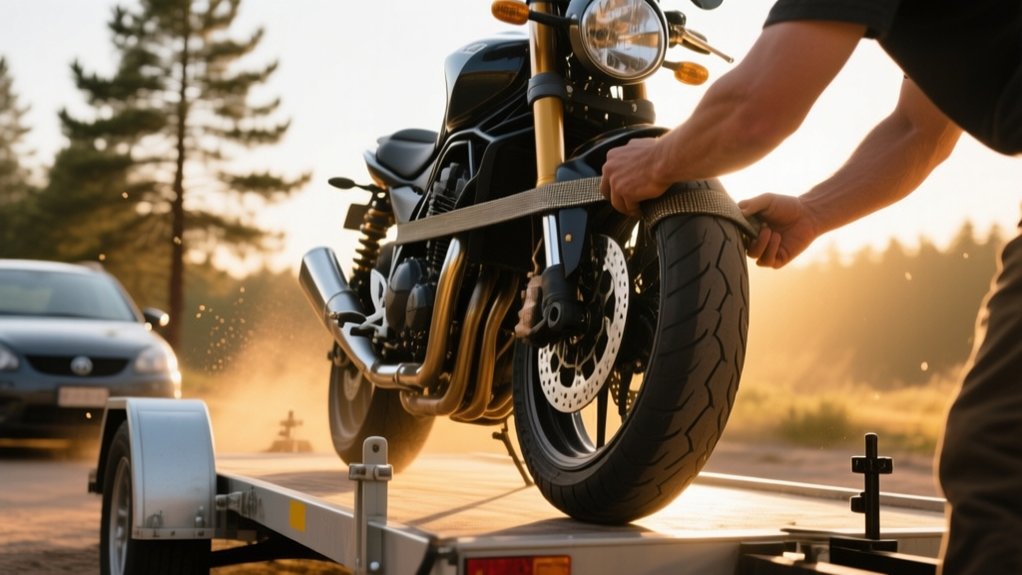
Roll the bike on slowly, then secure it with at least four ratchet straps for a 4-point tie-down.
Attach them to floor rings or frame loops, keeping the front straps near a 45° angle and tension even on both sides.
Make sure the tires hold air, and remove loose items before tightening.
If you’re hauling far or want extra protection, rent an enclosed trailer.
Otherwise, skip covers so wind won’t rub the paint.
Hire a Motorcycle Shipping Company
Hiring a motorcycle shipping company is one of the easiest ways to move your bike without a truck.
It’s especially helpful if you want door-to-door service and less risk of damage.
Choose motorcycle transport companies that specialize in bikes, not general movers. When you request a quote, share your origin and destination ZIP codes, plus cities and states.
Choose motorcycle transport companies that specialize in bikes, and share your ZIP codes, cities, and states when requesting a quote.
Expect higher cost, but you’ll typically get safer handling. You may also get ramp or lift-gate loading and cross-country delivery options.
Most shippers won’t ask you to drain fluids or remove the battery. However, some may want low fuel or a disconnected battery.
Before pickup, inspect and photograph your bike. Secure any loose items and confirm your tires hold air.
- Less stress
- Fewer surprises
- Better protection
- Real peace of mind
Secure Your Bike With Ratchet Straps
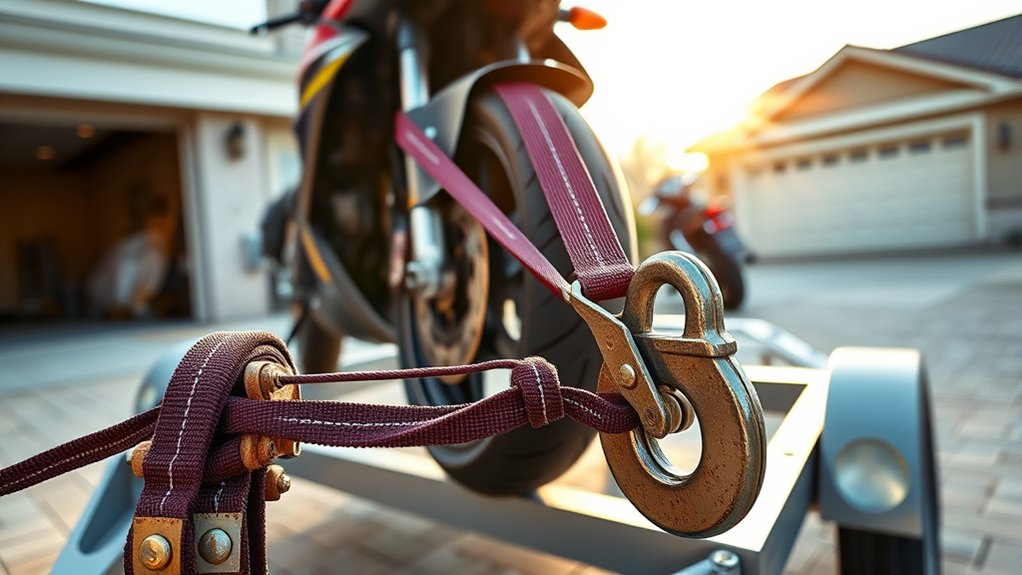
If you’re loading the bike yourself or checking a shipper’s setup, secure it with at least four quality ratchet straps—two up front and two in back.
Set the ratchet straps at about 45° so they spread the load and cut sway. Clip them to solid anchor points on the frame or triple tree.
Then connect to floor anchors, frame loops, or trailer rings. Tighten the front straps first until the bike sits upright with slight compression.
Next, cinch the side and rear straps evenly so it doesn’t lean. Keep steady tension, but don’t over-tighten and stress the suspension, forks, or wheel bearings.
Before you roll, inspect every strap, hook, and anchor point. Then re-check the tension after a few miles to make sure nothing’s loosened.
Add a Fork Saver to Protect the Front End
Slip a fork saver between the lower triple clamp and the axle before you tighten the front straps.
This simple crossbar keeps your forks from diving, so your seals and springs stay safer on the road.
Clamp the fork saver to the triple tree or axle, then snug the tie-downs until the saver carries most of the load.
Feel relief knowing the front end isn’t crushing itself.
Avoid that sickening seal-blow worry.
Keep your bike steadier over bumps and jolts.
Save money with one cheap, easy tool.
On heavier bikes or long hauls, use the fork saver with 4–6 quality ratchet straps.
Angle them about 45 degrees to spread force and cut movement.
This helps your motorcycle arrive without fork damage.
Prep Fuel, Battery, and Loose Parts
Tidy up the fuel, battery, and anything loose before pickup. Keep the tank low, usually under a quarter, to cut the bike’s weight and lower leak risk during transit.
You usually don’t need to drain fuel fully. Still, check for oil, coolant, or brake fluid leaks and fix them first. A carrier may refuse a visibly leaking bike.
Leave the battery installed unless the shipper says otherwise. If you disconnect it, wrap the terminals and secure it so it can’t shift.
Turn off or remove alarms, GPS units, and comms gear to prevent drain. Remove mirrors, luggage, and other loose parts, or fasten them tightly.
Note every item on the inspection form and photograph it.
Avoid Common Motorcycle Transport Mistakes
Avoiding a few setup mistakes can make motorcycle transport much safer.
When transporting motorcycles, secure straps to the base of the handlebars, frame loops, or fork triples. Don’t secure them to the ends or rubber-mounted grips.
Skip rear luggage guards. They can fail under load, so use frame or swingarm brackets instead.
Set your tie-downs at about 45 degrees. Use a 4-point layout, or 6 to 8 points for heavy bikes, to spread force evenly. Keep straps firm, not crushing, and use a fork saver to protect seals.
- Weak anchor points can slip fast.
- Overtightened forks can get damaged.
- Poor angles let the bike sway.
- Loose covers can scuff your paint.
Know When To Use a Trailer or Shipping Service
When your ride is too far, too valuable, or too awkward to move safely yourself, a trailer or shipping service is the better choice.
For short trips, rent a utility trailer. If you need extra weather protection, choose an enclosed model.
Before you load up, check for a swing-down ramp, built-in chocks, sturdy tie-down rings, and enough capacity for your bike.
Use an enclosed trailer for winter or long-distance moves. It blocks debris and road spray better than an open deck.
If you’re moving one bike across the country, professional shipping can save time. It can also lower damage risk with door-to-door service.
It costs more, but roll-on/roll-off or pallet shipping may be worth it.
If you move often, buying can pay off fast.
Frequently Asked Questions
How Do I Measure if My Motorcycle Fits on a Carrier?
Measure your bike’s length, width, wheelbase, and weight. Then compare them to the carrier’s specs.
You’ll want the platform to be at least 6–12 inches longer. Make sure the usable width is wider than the handlebars and mirrors.
Check that the wheelbase lines up with the chock and anchor points. Also confirm the carrier can handle your bike’s weight with a 10–20% safety margin.
What Tools Should I Carry for an Unexpected Roadside Issue?
You should carry a compact ratchet strap kit, a tire repair kit, basic hand tools, and battery gear.
Once, a rider I knew fixed a flat with a plug kit and was rolling again in 20 minutes. That’s why you pack for surprises.
Bring an adjustable wrench, sockets, hex keys, and screwdrivers.
Add jumper cables or a jump starter, plus duct tape, gloves, and a high-visibility vest for safe, quick roadside repairs.
Can I Transport a Motorcycle in Bad Weather Safely?
Yes, you can, but choose the safest method. In heavy rain or strong wind, use an enclosed trailer to protect the bike from spray, corrosion, and cover rub.
If you must ride it home, make sure your registration and insurance are current. Wear waterproof high-vis gear, and only reduce tire pressures as the manufacturer allows.
After transport, dry the bike, lube the chain, and inspect seals.
How Do I Check Local Towing Laws Before Moving My Bike?
Start with your state DMV website, then your city or county code to find towing rules fast.
You should check trailer lighting, registration, speed limits, lane bans, and any permit needs.
Next, confirm your bike, trailer, and tow vehicle weights match legal limits.
If anything’s unclear, call the non-emergency police line or DMV and ask for written guidance.
That paper trail keeps your move safe and lawful.
Should I Remove Mirrors Before Motorcycle Transport?
Yes—remove the mirrors if you can. You’ll reduce wind catch, avoid scratches, and make tie-downs easier around the bars.
If the mirrors are fixed, wrap or tape them. Keep them clear of straps and ramps so they don’t bend.
Pack any removed mirrors separately. After transport, check the throttle and clutch still move freely, then retighten everything to spec.
If you’re shipping the bike, take photos first.
Conclusion
No matter which route you choose, keep your bike secure and your mind steady.
A motorcycle is more than a machine—it’s a compass. Safe transport keeps it pointed home.
Strap it down tight, protect the front end, and clear away anything loose before you move.
If the trip feels too risky, don’t force it. Choose a trailer or shipping service.
Smart planning turns a stressful haul into a safe ride, even without a truck.