What Is A Slipper Clutch On A Motorcycle – Meaning & More
A slipper clutch is a ramp-style motorcycle clutch. It lets the plates partially slip when reverse torque spikes on hard downshifts.
This reduces rear-wheel hop, chatter, and chassis upset. Engine braking isn’t dumped straight into the tyre.
Ramp angle, spring preload, and pack clearance determine how much it slips. They also control when it re-locks.
When set up well, it improves corner-entry stability and confidence. From there, the details get even more interesting.
What Is a Slipper Clutch?

A slipper clutch is a ramp-style motorcycle clutch that lets the clutch pack partly slip when reverse torque spikes during deceleration. This prevents harsh engine braking from dumping into the rear wheel.
A slipper clutch lets the clutch partially slip on deceleration, softening engine braking before it reaches the rear wheel.
You use a slipper clutch to reduce rear-wheel hop, chatter, and instability during aggressive downshifts. It uses angled ramps, often with ball bearings.
When reverse torque builds, the ramps can lift the hub halves and ease plate pressure. In normal drive, it locks up and acts like a conventional clutch.
The setup depends on ramp angle, spring preload, and clutch-pack thickness. These factors set the slip threshold.
When tuned correctly, you can brake later, keep the rear suspension settled, and get back on the throttle sooner. You also avoid over-revving the engine.
How a Slipper Clutch Works
You’ll usually see a slipper clutch use interlocking hub ramps—often with ball bearings—to handle what happens during hard downshifts. Basically, the ramps convert the engine’s reverse torque (engine braking) into axial movement that slightly lifts the clutch pack. That lift gives you a controlled amount of rear-wheel slip, which helps reduce hop and prevents the engine from over-revving too much.
Then, as you ease off the deceleration, the spring preload and ramp angle guide the plates back into full engagement. The clutch smoothly re-locks, so power delivery feels more stable and less abrupt.
Ramp And Ball Mechanism
Inside a ramp-and-ball slipper clutch, the inner hub is split into two pieces. Angled ramps and balls or rollers are trapped between them.
When you close the throttle and the rear wheel drives the engine, reverse torque makes the balls climb the ramps. The hub separates slightly, usually about 1 mm.
That axial movement unloads the clutch pack and cuts the torque reaching the rear wheel. When you accelerate again, the ramps lock up for normal drive.
You can tune how your slipper clutch behaves by changing ramp angle, ball bearings, surface finish, and spring preload. Steeper ramps and stronger springs reduce slip, while shallower ramps increase it.
With adjustment washers, you can set predictable, partial slip. This helps protect the tyre.
Controlled Rear-Wheel Slippage
When reverse torque from engine braking starts to climb higher than the clutch springs can hold, the slipper clutch lets the ramp mechanism lift the center of the hub by about 1 mm and partly separate the clutch plates.
Then you get controlled rear-wheel slippage instead of a hard lock.
The main springs and ramp angle set how much force the clutch resists.
That lets the pack reach a balance where it slips just enough to soften torque spikes.
This controlled slip helps you avoid rear-wheel hop during aggressive downshifts.
It also keeps the suspension calmer.
You can tune the behavior with spring preload, spring stiffness, and clutch-pack thickness.
In normal acceleration, the clutch locks like a standard unit, but under deceleration it limits engine braking and improves mid-corner stability.
Deceleration And Re-Engagement
As the bike slows and reverse torque rises, the slipper clutch’s ramped center lifts slightly. It separates the clutch plates just enough to let the pack partially slip.
You get reduced drive torque back into the engine. Engine braking stays controlled instead of locking the rear tire.
The ramps and springs balance at a point where the clutch pack transmits only the torque needed. That prevents overrun, rear-wheel hop, and sharp drivetrain jerks.
With a typical rise of about 1.0 mm, ramp angle and main-spring stiffness set how early it slips. As engine speed and load match again, the pack re-engages smoothly.
This often comes with small lever clicks. Full lock returns as the clutch fully couples.
Correct clutch-pack thickness and setup matter.
Why Motorcycles Need Engine Braking Control
On high-compression four-stroke motorcycles, closing the throttle can create strong engine braking. This sends torque backward through the clutch, gearbox, and chain, so the rear wheel tries to drive the engine.
That can reduce rear tyre traction. It can also unsettle the chassis when engine braking gets too aggressive.
You need control to keep grip and stability. A slipper clutch limits reverse torque, so the rear wheel stays freer.
The suspension remains composed, too. This makes it easier to trail-brake with more precision.
| Control method | Effect | Benefit |
|---|---|---|
| Slipper clutch | Reduces back torque | Smoother rear wheel |
| Ride-by-wire | Blips or raises idle | Less rev shock |
| Technique | Matches speed on downshift | Better stability |
This matters most on larger twins. Abrupt downshifts can cause hop, skid, or instability, so controlled engine braking helps you brake later.
What Happens If You Keep the OEM Clutch?
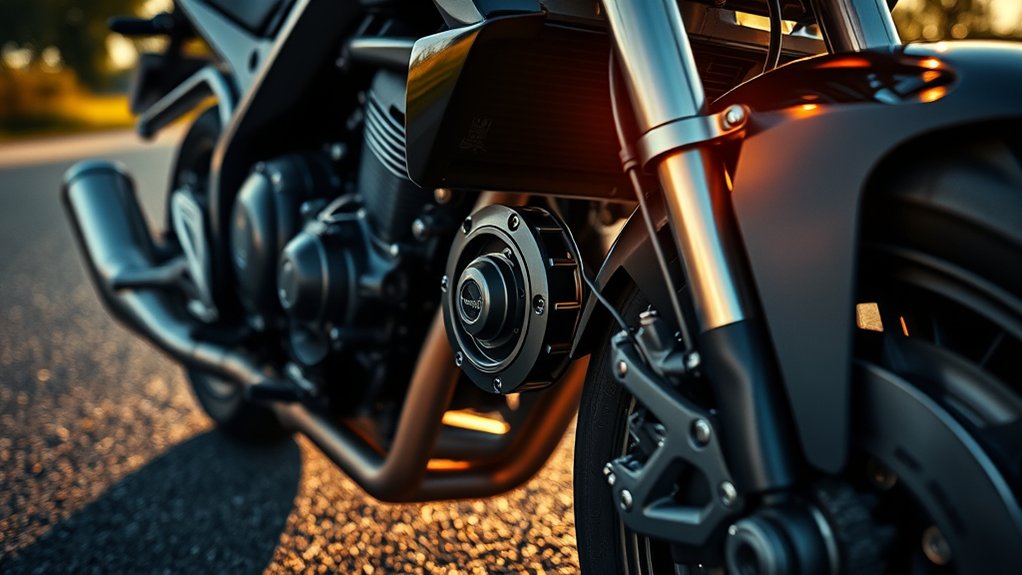
Keep the OEM clutch, and on aggressive downshifts the rear wheel can get full engine braking.
That can cause the tyre to chatter, hop, or even lose grip under hard braking.
You’ll need precise rev-matching or blipping, because there’s no slipper mechanism to soften the spike when the clutch starts to slip.
If you miss the timing, the rear suspension can unload abruptly, and the chassis may feel nervous.
You also won’t get the lap-time or confidence gains a slipper clutch can deliver in testing.
Over time, repeated downshift shocks can add wear to the gearbox and engine.
The tradeoff is simpler maintenance and easier bump-starting.
But you give up controlled slip and a calmer rear tyre during late braking.
Slipper Clutch Benefits on Corner Entry
Corner entry feels much calmer with a slipper clutch because it reduces excessive engine braking as reverse torque rises through the drivetrain. Instead of yanking the rear tyre into lock-up or hop, the clutch pack slips partway.
You can brake later and harder because the back of the bike stays steadier under heavy front braking. That helps you keep more control as you tip in.
By reducing the engine’s drag on downshifts, you free up rear tyre grip. Instead of the tyre fighting the motor, it can use more of that traction for lateral grip, giving tighter lines and higher mid-corner speed.
The clutch also smooths re-engagement, so you feel fewer chassis jerks and less lever shock. Set it correctly though, because ramp angle, springs, and pack thickness all matter, and a poor setup can add heat, wear, or unwanted engine-braking feel.
Types of Slipper Clutches and Ramp Designs

That calmer corner entry comes from specific hardware choices. Slipper clutches use a few ramp designs to create it.
In ramp-style slipper clutches, the inner hub uses angled ramps. They’re usually 8–12 degrees, so reverse torque pushes the pieces apart and lets the plates slip on decel.
You’ll find plain ramp contact units. You may also see ramp-style slipper clutches with ball bearings for smoother movement. Some designs cam the hubs together under acceleration to cut launch slip.
Ramp angle, surface finish, and bearing size set when slip starts and how much you get. Some systems use one-way bearings or separate freewheeling sections.
Steep or shallow profiles trade quicker slip for smoother re-engagement. Race units favor precise, sorted parts. Road units aim for easy feel and low maintenance.
How to Tune a Slipper Clutch for Your Bike
Dial in a slipper clutch by starting with ramp angle or swap-in ramp plates. Small geometry changes have the biggest effect on when it slips and how much it slips. Then set spring stiffness and preload to match your riding style without over-stiffening.
Start with ramp angle: small geometry changes strongly shape when a slipper clutch slips and how much it slips.
A firmer setup can feel more connected on drive. But it also increases heat and wear. Follow this sequence:
- Measure pack thickness and sort plates to spec.
- Set clutch pack clearance to about 1.0 mm using the approved method.
- Recheck after initial track sessions, then fine-tune idle by ±200 rpm.
After that, test on track and adjust until the slipper clutch gives smooth, steady partial slip without chatter. Keep making small changes so it stays predictable.
Common Slipper Clutch Problems and Limits on the Street
Even a well-set slipper clutch can cause problems if the main springs are too soft or the ramp faces are worn.
Excessive slip raises heat, accelerates plate glazing, and cuts engine-braking control.
Check pack height, spring rate, and clearance after your first ride.
A wrong stack can jerk or slip.
| Issue | Symptom | Fix |
|---|---|---|
| Soft springs | Rear hop, weak decel | Fit correct rate |
| Stiff springs | Heat, burnt plates | Reduce preload |
| Poor clearance | Harsh re-engagement | Shim to spec |
On the street, it’s not a cure-all.
Your bike’s suspension, throttle control, and ECU engine-braking map still set stability.
Bump-starting can also be hard.
If your bike lacks a reliable electric starter, use a locking aid or a special procedure.
Frequently Asked Questions
Can a Slipper Clutch Be Installed on Any Motorcycle?
No, you can’t install a slipper clutch on every motorcycle.
You need compatible clutch basket and hub parts, correct splines, and enough internal clearance in the primary case.
Some bikes take direct-fit aftermarket kits, while others require custom machining or conversion parts.
You’ll also need the right spring rate and clutch pack thickness to maintain normal feel and reliable re-engagement.
Check model-specific fitment before you buy or install anything.
Does a Slipper Clutch Affect Clutch Lever Feel?
Yes, you’ll usually notice little change in lever feel during normal riding.
Because the ramps lock, the clutch acts like a standard unit.
During aggressive downshifts, though, you may feel small clicks or pulses as the slipper mechanism engages.
Spring rate, ramp angle, and pack height can make the lever feel slightly lighter or firmer, so setup accuracy matters for consistent feedback and predictable operation.
Are Slipper Clutches Legal for Street Use?
Yes, you can usually run a slipper clutch on the street legally.
You’ll want to keep your bike roadworthy and properly fitted.
It must also meet noise and emissions limits.
If the mod is significant, tell your insurer.
Keep receipts and installation notes in case anyone asks.
Some inspections may flag poor tuning or drivability issues.
Racing rules can still restrict it on track or in competition.
How Often Should a Slipper Clutch Be Serviced?
You should service your slipper clutch every 6–12 months, or every 6–12,000 miles on a road bike.
Service it sooner after track use.
Check clearance after installation, then again after the first session.
During major clutch work, inspect plate thickness, ramp wear, bearings, and springs.
Replace worn plates as soon as you notice slip, chatter, or overheating.
After any adjustment, be sure to retest.
Can a Slipper Clutch Fail Suddenly While Riding?
Yes, it can, but it’s uncommon.
You might lose slipper action if the ramps wear, a spring breaks, or a bearing seizes.
That usually just reverts you to a normal clutch. It can also increase rear-wheel hop on hard downshifts.
Think of it like a weak link in a chain. Sudden drive loss is rarer, but cracked hubs or damaged plates can grab or slip.
Inspect any new lever play, noise, smell, or rough engagement.
Conclusion
In the end, your slipper clutch is your bike’s quiet safety net. It manages engine braking, reduces rear-wheel chatter, and helps keep corner entry smooth when you downshift hard.
Ignore it, and you risk instability. Set it up right, and you gain control where it matters most.
Isn’t that the difference between fighting the bike and flowing with it? For street riding, you still need balance, but a slipper clutch gives you a sharper, safer edge.