How Many Miles Can A Motorcycle Last – Numbers to Know
You can expect a well-maintained motorcycle to last between 50,000 and 100,000 miles, but it varies by type. Sportbikes often hit 20,000–30,000 miles. Cruisers and touring bikes frequently exceed 100,000 miles, while dirt bikes tend to last 10,000–20,000 miles.
Maintenance like regular oil changes, valve adjustments, and proper storage markedly extend engine life. How you ride and care for your bike largely determines its lifespan and value. More detailed insights will clarify these numbers.
What Counts as High Mileage for Motorcycles?

Typically, you’ll see motorcycles labeled as high mileage once their odometer hits between 20,000 and 50,000 miles, but this range varies markedly by type. For sportbikes, typical high mileage begins around 20,000 to 30,000 miles due to their performance-focused design.
Cruisers generally reach high-mileage motorcycle status near 40,000 to 60,000 miles, while touring bikes, built for endurance, can exceed 50,000 to 100,000 miles before being considered high mileage. Dirt bikes and dual-sports hit this threshold much earlier, typically between 10,000 and 20,000 miles, given their demanding off-road use.
When evaluating a high-mileage motorcycle, you must consider maintenance history, riding conditions, and storage practices to accurately assess its condition beyond just odometer readings.
How Long Do Motorcycles Typically Last?
Although motorcycle longevity varies widely by type and usage, most bikes last between 50,000 and 100,000 miles when maintained properly. Touring bikes and cruisers often exceed 100,000 miles, with some well-maintained models surpassing 200,000 to 300,000 miles.
In contrast, sportbikes generally have shorter lifespans around 25,000 to 50,000 miles due to their high-revving nature and aggressive use. Dirt and dual-sport motorcycles tend to wear out sooner, typically lasting 10,000 to 20,000 miles under heavy use.
Key to extending motorcycle lifespan is consistent maintenance like oil changes, valve adjustments, and fluid flushes. It also helps to review the service history carefully. While mileage provides a baseline, you have to consider type, use patterns, and past care to estimate a motorcycle’s remaining life accurately.
How Do Riding Habits and Maintenance Affect Longevity?
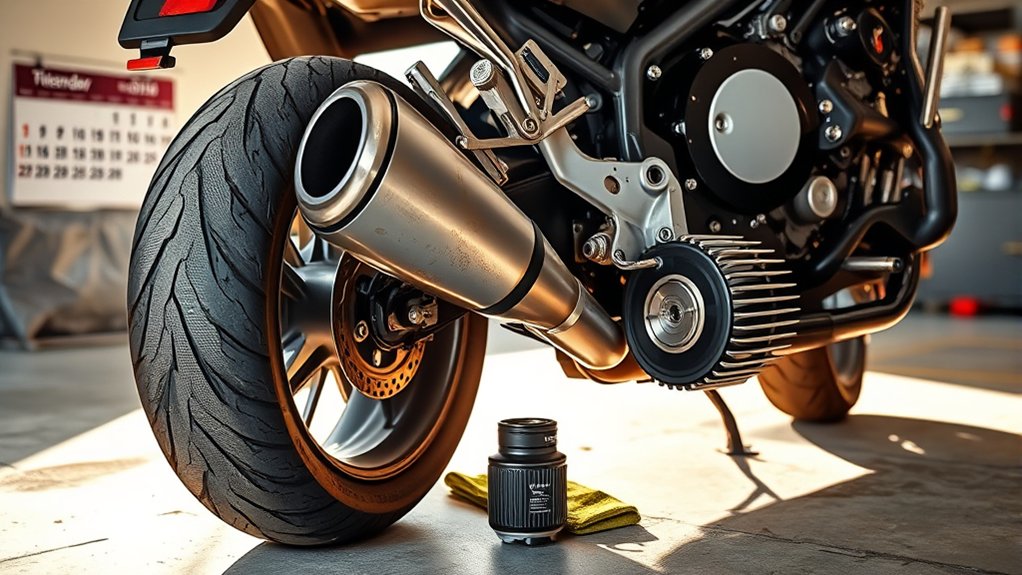
Understanding a motorcycle’s potential lifespan goes beyond its make or model; how you ride and maintain it shapes its durability markedly. You’ll extend engine life considerably with regular oil changes every 3,000 to 5,000 miles, adjusted for your riding style.
Gentle riding, avoiding full-throttle launches and aggressive downshifts, reduces mechanical stress. This lets components reach or even surpass their expected mileage. Performing consistent valve adjustments and chain lubrication every 500 to 1,000 miles prevents premature wear.
Accumulating highway miles is less damaging than stop-and-go or track riding, which helps preserve longevity. Moreover, maintaining a complete service history and ensuring proper storage protect your investment.
Together, these practices prevent costly failures and maximize your motorcycle’s usable life, often pushing it well beyond 50,000 miles depending on the model and care.
Why Are Service History and Storage Important?
You can’t really get a good sense of a motorcycle’s potential lifespan without checking out its service history and how it was stored.
If it has regular maintenance records, that usually means the important parts were looked after properly. Plus, if the bike was kept indoors and in a dry place, it helps prevent rust and electrical issues.
All of these things work together to have a big impact on how long the bike will last and how dependable it will be down the road.
Maintenance Records Matter
Since a motorcycle’s longevity hinges heavily on how well it’s maintained, having a complete service history is crucial for predicting whether it will reach or exceed the typical 50,000 to 100,000 mile lifespan. Regular oil changes, chain lubrication, and documented major services serve as benchmarks in maintenance records.
Indoor storage also helps reduce corrosion, extending component life. Tracking parts replacements like clutch or tires signals addressed wear and anticipates future needs. Missing or inconsistent records increase the risk of hidden damage, making mileage alone unreliable.
| Maintenance Aspect | Importance |
|---|---|
| Service History | Predicts overall longevity |
| Regular Oil Changes | Essential every 3,000–5,000 miles |
| Chain Lubrication | Critical every 500–1,000 miles |
| Documented Repairs | Indicates addressed wear |
| Indoor Storage | Minimizes corrosion risk |
Storage Conditions Impact
When stored indoors in climate-controlled conditions, motorcycles experience markedly less corrosion, preserving critical components like brakes, cables, and electrical connectors far longer than those kept outside. Proper storage conditions, especially indoor storage in a garage kept dry and temperature-stable, greatly reduce rust and prevent seized calipers, issues common in bikes left exposed to moisture.
You’ll find that motorcycles with a thorough service history and consistent indoor storage show extended component life and fewer premature failures. Conversely, exposure to damp or outdoor environments accelerates degradation of rubber parts and metal components, regardless of mileage.
Evaluating a motorcycle’s longevity means weighing storage conditions alongside service history. Garage-kept bikes with documented maintenance almost always outperform those with unknown or poor storage, making these factors critical when judging potential lifespan.
Longevity Through Care
Understanding how service history and storage affect motorcycle longevity builds directly on the impact of storage conditions. When you evaluate a used motorcycle, consistent maintenance documented in the service history is vital. Regular oil changes, valve checks, and chain lubrication extend how long a bike lasts, especially for touring motorcycles and long-distance riders.
Indoor, dry storage further reduces corrosion and electrical wear, preserving components essential for high-mileage performance.
| Maintenance Aspect | Interval | Impact on Longevity |
|---|---|---|
| Oil Changes | Every 3,000–5,000 miles | Prevents engine wear |
| Chain Lubrication | Every 500–1,000 miles | Extends drivetrain life |
| Coolant/Brake Fluid | Every 2 years | Maintains system reliability |
This combined care approach markedly increases the odds a bike lasts 50,000 to 100,000+ miles.
Is Buying a High-Mileage Motorcycle Worth It?
Deciding whether to go for a high-mileage motorcycle means weighing potential savings against increased maintenance risks. When buying a used motorcycle, a high-mileage bike, typically 20,000 to 50,000 miles, can still offer value if it has a thorough service history and consistent upkeep.
Cruisers and touring bikes often have a longer lifespan, tolerating 40,000 to over 100,000 miles, especially if used for steady highway riding rather than aggressive or track use. Your assessment should focus on riding habits and maintenance records rather than mileage alone.
Inspect the bike in person, review accident and modification history, and test-ride it. A well-maintained high-mileage bike can be a cost-effective choice. But anticipate potential wear and factor in possible repairs before buying a used motorcycle at high mileage.
How Does Mileage Affect Motorcycle Resale Value?
Mileage plays a significant role in determining a motorcycle’s resale value, but it’s not the sole factor.
Mileage significantly affects a motorcycle’s resale value, though other factors also play important roles.
When evaluating a used bike, consider these key points:
- Resale depreciation typically accelerates between 20,000 and 50,000 miles. Sportbikes tend to drop faster around 20,000 to 30,000 miles, while touring motorcycles often hold value past 40,000 miles.
- A detailed maintenance history can ease concerns about high mileage. It shows the bike received proper care.
- Usage type matters. Long highway miles usually impact resale value less than aggressive or track riding.
- Market factors and ownership history influence value as much as odometer readings.
What Should You Check When Inspecting High-Mileage Motorcycles?
You’ll want to start by verifying the complete service history to make sure the bike got timely oil changes and major maintenance.
Then, take a close look at wear items, the frame, and suspension components to spot any signs of damage or neglect.
And don’t forget the electrical system—check the battery health, charging output, and wiring quality to avoid any hidden issues.
Service History Importance
When inspecting a high-mileage motorcycle, always start by verifying its complete service history to guarantee consistent maintenance.
A thorough record reveals if regular oil changes occurred every 3,000 to 5,000 miles and if major scheduled maintenance like valve adjustments or clutch work was done on time.
Also, examine consumable replacement history to make certain tires, brakes, and chains were proactively swapped.
Consider accident and repairs documentation to assess frame integrity and whether OEM or quality aftermarket parts were used.
Finally, review storage and usage patterns alongside the number of owners, as highway-ridden, single-owner bikes with full service records generally fare better.
- Confirm regular oil changes and major scheduled maintenance.
- Verify routine consumable replacements.
- Check accident, frame, and major component repair records.
- Assess storage conditions, usage style, and ownership history.
Physical And Electrical Checks
Inspecting a high-mileage motorcycle demands a thorough physical and electrical assessment to uncover hidden issues that service records mightn’t reveal.
Start by checking for oil leaks around the engine, fork seals, and final drive. Fresh drips or heavy residue usually indicate neglect.
Test the charging system and battery voltage at idle and 3,000 rpm, aiming for 13.5–14.8 V. Also, make sure all the lights function properly. Examine wiring for corrosion or brittle insulation, which is common on older bikes.
Assess starter operation, idle stability, and spark quality to detect ignition or fuel delivery wear.
Evaluate brake fluid condition and DOT change intervals.
Finally, inspect chain sprocket wear and fork seals for oil seepage. These components reveal true mileage-related wear beyond what the odometer shows.
Frequently Asked Questions
What Are Common Signs of Engine Wear Unrelated to Mileage?
You’ll notice reduced compression and oil contamination indicating internal wear, even if mileage is low. Valve clatter often signals cam or lifter issues, while overheating episodes point to cooling or gasket problems.
Slow starting and irregular idling despite proper tuning hint at valve seat wear or timing chain stretch. Excessive smoke, especially blue or gray, suggests worn piston rings or valve seals. These signs show engine wear unrelated to mileage.
How Do Different Motorcycle Brands Compare in Durability?
You’ll find brand longevity varies based on engineering updates and build materials. Japanese bikes often excel thanks to robust service networks and consistent warranty comparison.
Harley’s resale durability benefits from loyal owner demographics who value the cruiser style. Sportbikes, on the other hand, may need engine work earlier.
European brands leverage advanced tech but sometimes sacrifice long-term durability. When choosing, weigh warranty terms, maintenance accessibility, and how each brand’s engineering suits your riding style for peak lifespan and value.
Can Aftermarket Parts Affect a Motorcycle’s Lifespan?
Yes, aftermarket parts can affect your motorcycle’s lifespan. Performance upgrades might boost power but increase wear if installation quality or parts sourcing is poor.
Fitment issues and materials compatibility can cause premature failures, especially with aftermarket electronics. You’ll also face warranty concerns if parts aren’t OEM-equivalent.
To protect longevity, guarantee precise installation and choose high-quality components that match your bike’s specs. Poor choices often lead to costly repairs and reduced durability.
What Impact Does Climate Have on Motorcycle Longevity?
Think of your motorcycle like a ship braving harsh seas. Cold climates and road salt act like relentless icebergs, causing frame rust and brake wear.
Coastal corrosion and high humidity attack metal parts, demanding more frequent cleaning.
Extreme heat and altitude effects stress the engine’s cooling system, accelerating oil breakdown.
If you skip seasonal storage prep, battery sulfation and fuel varnish can shorten lifespan. You’ve got to adapt maintenance to your environment for lasting performance.
How Often Should Motorcycles Undergo Professional Inspections?
You should schedule annual inspections and professional tune ups every 3,000 to 5,000 miles, adjusting frequency for high-mileage or aggressive use.
Perform seasonal checkups to catch wear from climate changes.
Always conduct pre-ride inspections before long trips and safety-focused inspections every 100 to 150 miles during extended rides.
After any incident, get post-crash inspections promptly.
Diagnostic inspections during major service intervals guarantee engine and frame health, maintaining reliability and safety.
Conclusion
When it comes to motorcycle mileage, remember that “slow and steady wins the race.” Your bike’s lifespan depends heavily on your riding habits and maintenance routine.
A well-serviced motorcycle with a solid service history and proper storage can easily surpass typical mileage expectations. Before buying high-mileage bikes, inspect key components carefully.
Mileage affects resale value, but a reliable, maintained motorcycle can still offer great performance and longevity, giving you confidence on every ride.