What Is An Enduro Motorcycle – Everything to Know
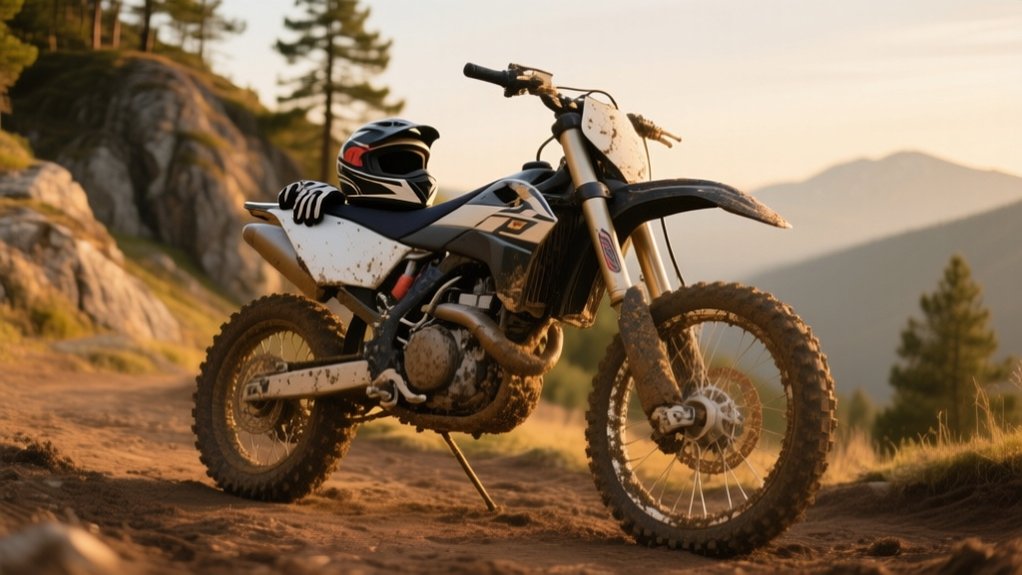
An enduro motorcycle is a dirt-bike-based machine built for long, technical off-road riding.
You get wide-ratio gearing, long-travel suspension, and a larger fuel tank so you can handle rocky trails, climbs, roots, and mixed terrain over multi-hour loops.
Compared with motocross bikes, enduros trade peak speed for control and durability.
Compared with dual-sports, they stay lighter and more off-road focused.
Keep going, and you’ll see how setup, gear, and terrain change the ride.
What Is an Enduro Motorcycle?
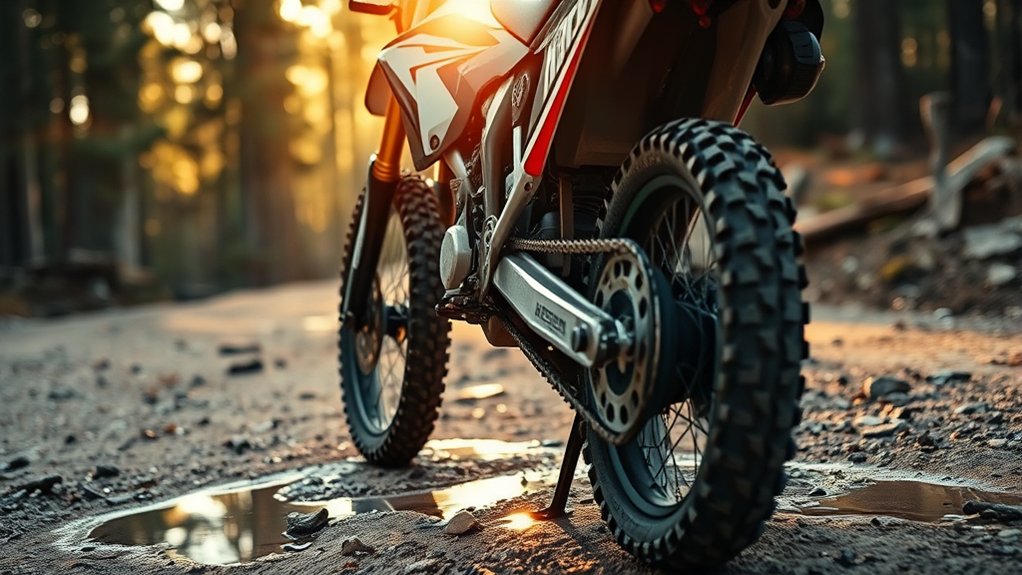
An enduro motorcycle is a dirt-bike–based machine built for long, technical off-road riding. It has a wide-ratio gearbox, a larger fuel tank, and compliant suspension to handle sustained rough terrain.
A dirt-bike–based machine built for long, technical off-road riding, with wide-ratio gearing, a larger tank, and compliant suspension.
Enduro bikes typically use single-cylinder engines. They’re usually 125–350 cc two-strokes or 125–650 cc four-strokes, tuned for tractable torque and precise low-speed control.
You’ll also find skid plates, handguards, radiator guards, narrow handlebars, and durable construction. These help enduro motorcycles survive impacts and abrasion during tough rides.
Compared with dual sport bikes, they focus more on off-road performance than road comfort. Many models add lights and quieter mufflers for street legality, while race versions stay lighter and more focused on traction, protection, and reliability.
These features matter most during multi-hour rides or hard enduro events.
Enduro vs. Motocross vs. Dual-Sport
When you compare enduro, motocross, and dual-sport bikes, enduro usually lands right in the middle—both in how they’re set up and what they’re made to do.
Compared with motocross (MX), enduro bikes typically use wider gearing, have more fuel capacity, and run more durable suspension so you can handle longer, tougher technical rides off-road.
On the other hand, compared with a dual-sport, enduro bikes aren’t built around street legality or road comfort, but they still offer enough range and traction for trail connectors and mixed-terrain riding.
Enduro Bike Positioning
Enduro bikes sit between motocross and dual-sport machines. They blend MX-derived frames and long-travel suspension with wide-ratio gearboxes, larger fuel tanks, and protective hardware for technical off-road loops.
You get an Enduro that’s heavier than a motocross bike. It’s still more agile than most dual-sport motorcycles.
The wide-ratio transmission helps you crawl over obstacles. Then you can cruise connector roads without abusing the engine.
Suspension valving stays plusher for traction and control. The engine tune favors low-end torque instead of peak race power.
Compared with dual-sport machines, you give up highway comfort and long-range convenience. In return, you gain lighter weight and sharper off-road handling.
Some models are street-legal. That adds lights, DOT tires, and quiet mufflers, though it brings modest complexity.
Motocross Comparison
Compared with motocross and dual-sport machines, an enduro bike is built for a broader job.
You get wide-ratio gearing and a larger tank for long loops, while motocross uses close-ratio gears and smaller tanks for short, fast laps.
Enduro bikes also run softer, longer-travel suspension with more compliant valving.
That helps you ride roots, rocks, and chop without the harshness motocross setups can deliver.
You’ll notice tractable low-end and midrange torque, not the peak-hit focus of motocross engines.
Enduro bikes usually carry skidplates, handguards, and radiator guards, plus lower tire pressures for grip and durability.
Dual-sport bikes add street gear, weight, and comfort equipment.
That can reduce off-road agility, while enduro bikes keep a more dirt-focused chassis and response.
Dual-Sport Differences
If you’re weighing an enduro bike against a motocross machine or a dual-sport, it all comes down to purpose.
Enduros sit between the two, with wide-ratio gearing, larger fuel tanks, and plusher suspension for technical off-road loops.
Motocross bikes stay lighter with close-ratio gearing, stiff suspension, and aggressive power for short track sprints.
Enduro motorcycles add skid plates and handguards for natural obstacles, but they still favor low weight over road comfort.
- Choose enduro for long, technical off-road riding.
- Choose MX for groomed-track jumps and sprints.
- Choose dual-sport if you need factory lights, signals, horn, and DOT tires.
- Expect dual-sport bikes to feel heavier on trails, but easier on pavement and commuting.
What Makes an Enduro Motorcycle Work
What makes an enduro motorcycle work is a setup built for traction, control, and durability instead of peak speed. You get broad, usable torque from a single-cylinder engine, so the bike can crawl technical obstacles without stalling.
A wide-ratio gearbox and often a heavier flywheel give you slow-speed control and relaxed road links. Enduro World riders and a Husqvarna TE both rely on long-travel suspension with adjustable preload, compression, and rebound.
This keeps the chassis planted over rocks and roots. You also need protection like skid plates, handguards, radiator guards, exhaust guards, spark arrestors, and reinforced plastics to reduce damage.
Soft-compound tires at lower pressures improve grip. Choose them before chasing power mods.
Classic Enduro vs. Hard Enduro
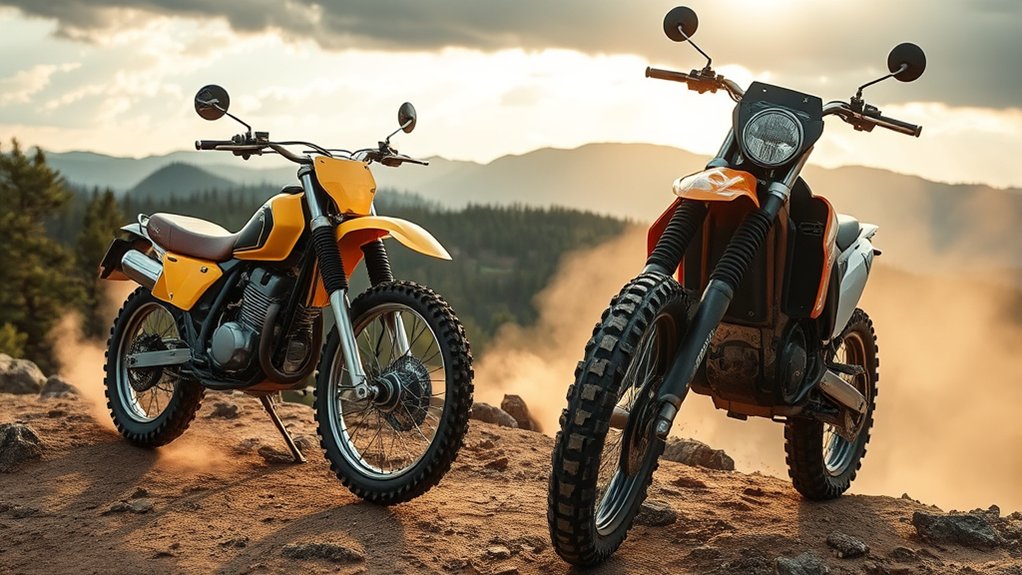
Classic enduro and hard enduro share the same core machine, but they demand different setups and riding skills.
In classic enduro, you ride enduro bikes built for reliability, navigation, and pacing across 200+ km loops with timed tests.
In hard enduro, you face short, brutal stages over rocks, climbs, and riverbeds.
- Choose wider gearing for classic enduro.
- Fit larger fuel capacity and comfort-focused suspension.
- Run lighter hard enduro bikes with strong protection.
- Prioritize control and fitness for obstacles.
Classic enduro rewards time-card accuracy and mechanical sympathy.
Hard enduro rewards burst power, calm decisions, and technical problem-solving.
You’ll notice classic setups feel steadier over long days.
Hard enduro machines stay flickable and protected under severe impact.
2-Stroke or 4-Stroke Enduro Motorcycle?
Picking between a two-stroke and a four-stroke enduro bike comes down to where you ride and how you like the power to hit. A two-stroke is lighter and gives a sharp burst of torque for quick direction changes.
That makes it a good fit for tight, technical terrain. A four-stroke delivers smoother, broader power and easier throttle control.
It helps on long climbs and mixed links.
| Type | Best fit |
|---|---|
| Two-stroke | Hard enduro, steep obstacles |
| Four-stroke | Sustained climbs, connectors |
You’ll trade maintenance too. Two-strokes often need top-end service sooner, while four-strokes need oil and valve checks.
They usually last longer between major rebuilds. Modern fuel injection narrows the gap, so pick the enduro that matches your terrain and service tolerance.
How to Start Riding Enduro

Start by mastering the core controls *off the throttle*. Stand with your weight over the pegs, practice clutch modulation, and get comfortable with smooth braking on easy terrain before you try any technical lines. Once that feels natural, move on to choosing the right bike—pick a wide-ratio enduro setup that fits your loop length, and consider a larger tank if you’ll be doing longer events.
Next, make sure your tires are ready for traction: install fresh soft-compound tires and run them at the correct low pressures for your riding.
Finally, gear up so you can train safely and confidently. Use a DOT-approved helmet, boots, knee braces, chest protection, gloves, and handguards, then build your skills on group rides and short, structured sessions.
Learn Core Controls
Start by getting comfortable with the core controls that make enduro manageable at low speed and over rough terrain. You’ll use the clutch to feather power, find slip points, and crawl over obstacles without stalling.
- Practice in low gear at walking speed until throttle and clutch feel smooth.
- Coordinate light throttle with the rear brake to stabilize steep climbs and technical descents.
- Stand often, keep knees bent, elbows up, and weight over the pegs so your legs absorb impact.
- Refine body position and counter steering by shifting weight forward on climbs and rearward on descents.
You should also learn engine braking and rev matched downshifts to manage speed on loose or rocky surfaces without overusing the front brake.
Choose Gear And Bike
With the core controls coming together, the next step is matching them to the right bike and setup. Choose a light, proven enduro platform such as a KTM, Husqvarna, GASGAS 300 EXC/TE/EC, Beta RR 300, Yamaha WR250F, or Honda CRF450X/CRF450RL.
These dirt bikes give you the gearing, suspension, and reliability you need for technical, long rides. Prioritize protective hardware first: skid plate, radiator guards, handguards, and a sturdy frame guard.
Next, fit proper enduro tires, then lower pressures to improve traction and bump compliance. Wear a quality helmet, CE boots, knee protection, chest protector, and gloves.
Finally, carry water, basic tools, a spare spark plug, and a tube. Ride with faster, experienced riders and build skills gradually.
Essential Gear for Enduro Riding
Before you head into rough terrain, make sure your enduro setup includes the right protective gear and trail-ready equipment.
You should prioritize the essentials before the trail gets technical.
1. Helmet and goggles: use a DOT/ECE-certified off-road or dual-sport helmet with ventilation and a peak.
Add tear-off compatible goggles for clear vision.
2. Body armor: wear CE-rated chest/back protection and an integrated roost jacket.
Include a kidney belt, plus CE knee braces or pads to absorb impacts.
3. Boots and gloves: choose stiff-soled enduro boots with shin protection and replaceable buckles.
Wear gloves with knuckle protection and strong grip.
4. Tires and consumables: run soft-compound tires at lower pressures.
Carry a repair kit, CO2 or a mini-pump, spare levers, and a chain master link.
Best Enduro Bikes to Research
When you’re researching enduro bikes, focus on models that match your terrain, skill level, and maintenance preferences.
Then compare power delivery, weight, and upkeep before you choose your next enduro machine.
The KTM 300 EXC gives you a 293 cc two-stroke, about 104.4 kg kerb, with tractable low-end power and WP tool-free suspension.
The Husqvarna TE 300 offers similar weight and precise low-speed traction for technical off-road riding.
GASGAS EC 300 shares that platform and adds robust factory protection.
If you want a lighter, balanced option, the Beta RR 300 weighs about 103.5 kg and blends durable construction with reliability.
For bigger torque, consider the KTM 500 EXC-F.
Its 511 cc four-stroke suits faster, longer motorcycle-focused loops.
These bikes serve different priorities, so take your time and match the right one to your riding style.
Where Enduro Bikes Perform Best
Enduro bikes perform best on long, technical off-road loops and time-card stages. Wide-ratio gearing, larger fuel tanks, and durable protection let you cover 100+ km days without constant refueling or repairs.
You’ll get the most from them in:
- rocky, rooty, rutted trails
- low-speed climbs and tight switchbacks
- hard enduro sections
- mixed terrain with connector roads
Their plush, long-travel suspension keeps the tire planted and reduces fatigue over sustained chop. Tractable torque and heavy flywheels help you crawl through technical sections better than motocross close-ratio setups.
In riverbeds, boulder fields, and monster climbs, lighter enduro builds with aggressive protection work best. Skid plates, handguards, and radiator guards are key.
Soft-compound, low-pressure tires add grip. Street-legal options also help you link stages while still handling singletrack efficiently.
Frequently Asked Questions
How Often Do Enduro Motorcycles Need Maintenance?
Enduro motorcycles need maintenance very often. Usually, it’s after every ride or every few hours in harsh conditions.
You’ll often change oil every 600–1,800 miles. You should also inspect the air filter, chain, brakes, and suspension regularly. On four-strokes, check valves as well.
Two-strokes may need a top-end rebuild every 40–50 hours. Electric models cut engine service, but you still need battery care and regular chassis maintenance.
Can an Enduro Motorcycle Be Legally Ridden on Roads?
Yes, you can ride an enduro on roads if it’s street-legal or converted to meet local requirements.
You’ll need key equipment like a headlight, tail light, brake light, mirrors, horn, turn signals, DOT tires, and proper emissions and noise compliance.
You’ll also need registration and insurance, and sometimes a safety inspection.
If your bike isn’t legal for road use, you’ll have to trailer it or ride only where unregistered off-road machines are allowed.
What License Is Needed for an Enduro Motorcycle?
You usually need the same license as any motorcycle, but it depends on whether your enduro is street-legal.
If you ride an off-road-only enduro on private land or sanctioned events, you may not need a road license.
For a street-legal or dual-sport enduro, you’ll need your local motorcycle license, like a Class M or Category A.
Don’t leave it to chance—check your DMV, because rules vary by jurisdiction.
How Much Do Enduro Motorcycles Typically Weigh?
Enduro motorcycles typically weigh about 250 lb (113 kg) or less when fully fueled, though exact weight depends on engine type and setup.
You’ll often see two-stroke 300cc hard enduro bikes around 228–238 lb dry or ready to ride.
Meanwhile, 4-stroke 350–450cc models usually land near 250–275 lb ready to ride.
Street-legal versions add a few pounds, and dual-sport bikes usually weigh much more.
Are Enduro Motorcycles Good for Beginners?
Yes, enduro motorcycles can be good for beginners if you focus on trail riding and low-speed control.
You’ll benefit from their tractable torque, wide-ratio gearbox, and compliant suspension, which make technical sections easier to manage.
That said, you’ll need to handle more maintenance than on a street bike.
Start with a 125 to 300cc two-stroke or 250 to 350cc four-stroke, add protection, and practice clutch and brake finesse first.
Conclusion
When you choose an enduro motorcycle, you get a machine built to handle long off-road challenges, technical terrain, and changing conditions better than most dirt bikes.
One striking fact: in competitive enduro events, riders can cover 100 miles or more in a single day.
It tests both skill and endurance.
If you’re ready to ride beyond smooth trails, an enduro bike can give you the control, durability, and versatility you need to keep going.