How To Get A Motorcycle License In Ohio – Full Guide
To get your motorcycle license in Ohio, start by obtaining a temporary permit at 15½ after providing proof of ID, residency, and insurance, then pass a written test. At 16, complete a six-month supervised riding period if you’re a minor.
You can waive the skills test by finishing the Motorcycle Ohio Basic Rider Course. Remember to follow helmet and insurance laws. Keep exploring to fully understand each step and ride with confidence and safety.
Ohio Motorcycle License Eligibility and Documentation Requirements
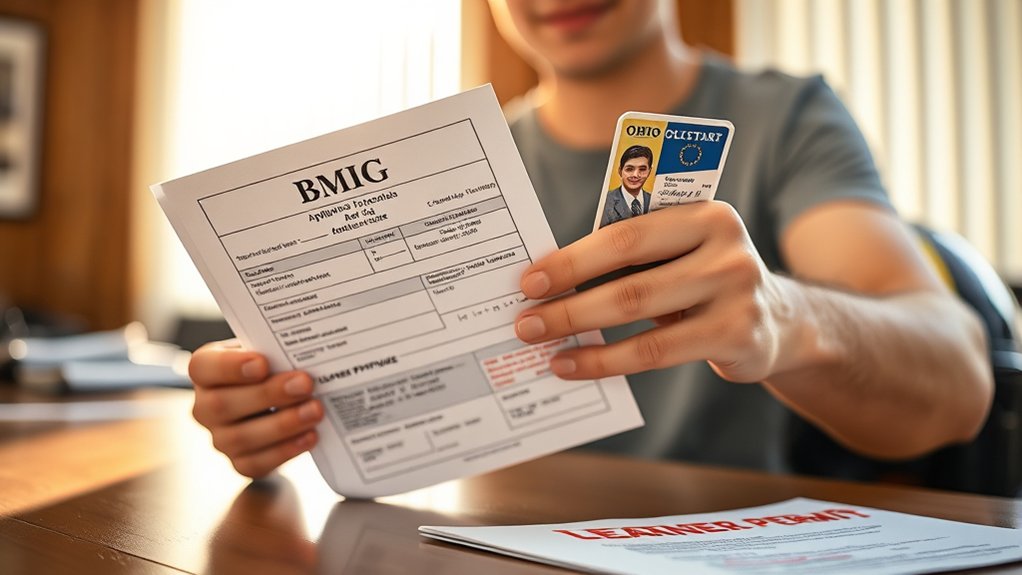
Although you can start the process at 15½ with a temporary permit, you need to be at least 16 to get a full motorcycle license in Ohio.
To qualify for an Ohio Motorcycle License, you must hold a valid Ohio driver’s license or get one first.
When applying at the Ohio BMV, bring proof of Ohio motorcycle insurance, vehicle registration, and documents proving U.S. citizenship or lawful presence, Ohio residency, Social Security number, and a photo ID.
If you’re under 18, you’ll need parental consent and must complete a six-month motorcycle permit period with 50 hours of practice before earning your Motorcycle Endorsement.
This guarantees you’re well-prepared to ride safely once your endorsement is added to your driver’s license.
Getting an Ohio Motorcycle Instruction Permit
Once you meet the eligibility requirements and gather your documents, you can apply for an Ohio motorcycle instruction permit starting at age 15½. This temporary motorcycle permit requires passing a vision and written exam, paying a $22.50 fee, and providing proof of residency, ID, and SSN.
Apply for an Ohio motorcycle instruction permit at 15½ by passing tests and providing proof of residency, ID, and SSN.
Once you have the Ohio motorcycle instruction permit, remember you must carry proof of Ohio motorcycle insurance and follow permit restrictions. Minors must hold the permit for six months and complete 50 hours supervised riding, including 10 hours at night.
If you’re 18 or older, completing the Motorcycle Ohio Basic Course can waive the on-cycle skills test within 60 days.
Key points to keep in mind:
- Pass vision and written tests
- Carry proof of Ohio motorcycle insurance
- Follow permit restrictions (daylight riding, no passengers)
- Minors complete 50 hours supervised riding
- Motorcycle Ohio Basic Course benefits for adults
Ohio Motorcycle Written Test: Tips and Practice

How can you best prepare for the Ohio motorcycle written test? Start by thoroughly studying the Ohio Motorcycle Handbook, focusing on key topics like right-of-way, safety equipment, hand signals, speed limits, and pavement markings.
Then, take advantage of free online practice tests that mirror the handbook content. These practice tests let you make up to five mistakes and provide immediate feedback with detailed explanations, helping reinforce your knowledge.
Remember, the Ohio motorcycle written test has 25 questions, and you need at least 20 correct to pass. If you complete the Motorcycle Ohio Basic Course and show proof within 60 days, you can waive the on-cycle skills test, but passing the written exam is still required.
Also, understanding insurance coverage basics is essential for responsible riding readiness.
How to Complete the Motorcycle Ohio Basic Rider Course
Enroll in the MotorcycleOhio Basic Rider Course (MORC) to gain essential riding skills and fulfill Ohio’s training requirement. Completing this course lets you waive the on-cycle skills test if done within 60 days of application. The MORC combines classroom lessons with practical on-cycle training, focusing on vehicle control, hazard avoidance, and group riding.
To complete the course successfully, remember to bring your valid Ohio driver’s license and proof of motorcycle insurance. Wear a DOT-approved helmet and proper protective gear. Use your own bike only if registered and inspected, or ride course-provided motorcycles.
Complete all required on-range practice hours, including low- and high-speed maneuvers. Finally, submit your completion card to the BMV to waive the on-cycle skills test.
This course sets you up for safe riding and a smoother licensing process.
Taking and Passing the On-Cycle Skills Test in Ohio
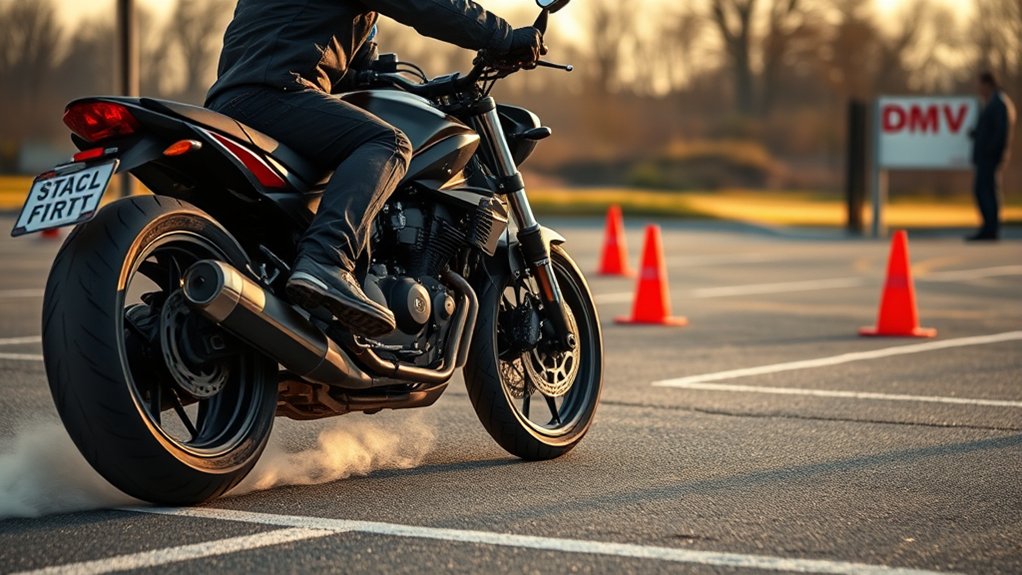
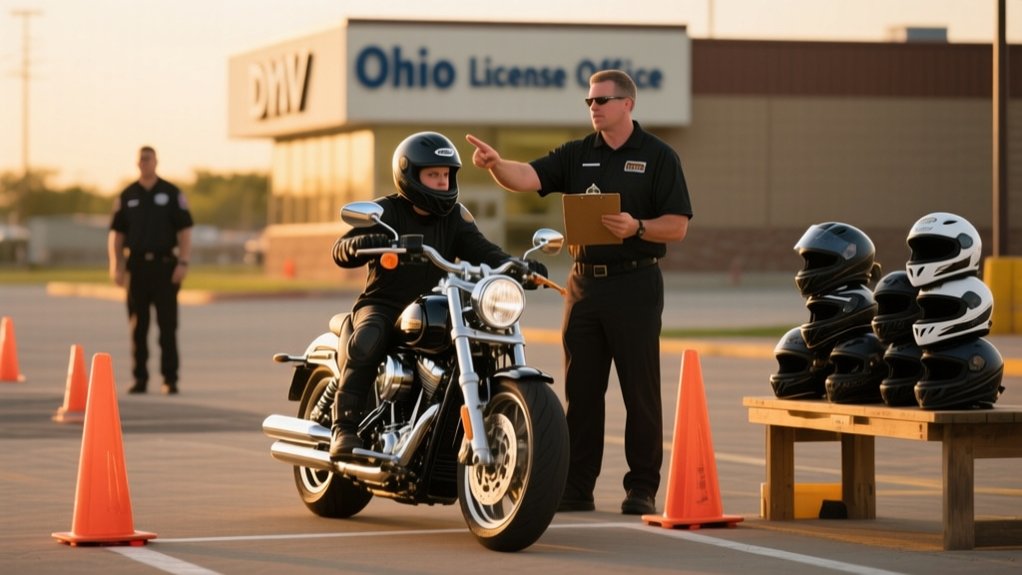
Prepare to demonstrate your riding skills by taking the on-cycle skills test, a vital step toward earning your motorcycle license in Ohio. Before the test, you must hold a temporary motorcycle permit and bring your registered, insured motorcycle with proof of insurance to the test location.
If you’re under 18, you need to complete the Motorcycle Ohio Basic Rider Course and hold the permit for six months. Adults who finish the course within 60 days may skip the skills test.
The test evaluates essential skills like slow-speed control, quick stops, turning, and obstacle swerves. Wearing your required safety gear and practicing these skills test maneuvers boosts your chances of success.
Remember to bring valid ID, paperwork, and make certain your motorcycle is examiner-approved and mechanically sound.
What You Need to Know About Ohio Helmet and Insurance Laws
Although Ohio has specific laws regarding motorcycle helmets and insurance, understanding these requirements will help you stay safe and compliant on the road.
Ohio’s helmet law requires riders under 18, those with less than one year of experience, and temporary motorcycle permit holders to wear a DOT Snell-certified helmet.
Riders under 18, with less than one year experience, or on temporary permits must wear DOT Snell-certified helmets.
Ohio motorcycle insurance mandates minimum liability coverage of $25,000 bodily injury per person, $50,000 per accident, and $25,000 property damage.
You must carry proof of insurance at all times.
Consider adding uninsured motorist coverage for extra protection.
Remember, temporary motorcycle permit riders have extra restrictions like no passengers or night riding.
- Wear a DOT Snell-certified helmet if required
- Carry proof of Ohio motorcycle insurance always
- Meet minimum liability coverage limits
- Follow temporary motorcycle permit restrictions
- Consider uninsured motorist coverage for added safety
Frequently Asked Questions
Can I Transfer My Out-Of-State Motorcycle License to Ohio?
Yes, you can transfer your out of state endorsement to Ohio, thanks to reciprocity agreements.
You’ll need to visit a BMV exam station within 30 days of moving, bringing documentation like your current license, proof of residency, and age verification.
If your out-of-state license is valid, Ohio may waive written and skills tests.
For foreign license validation, you might need extra steps.
Temporary permits aren’t usually necessary if your license is in good standing.
What Is the Cost of Obtaining a Motorcycle License in Ohio?
Getting your motorcycle license in Ohio won’t drain your bank account, but you’ll face some necessary costs. Expect application fees around $22.50 for your permit and endorsement charges of $24.50 to $48.
Training expenses for rider courses can be $150 to $300, plus insurance costs with minimum coverage requirements. Don’t forget gear prices and renewal fees added later.
It’s an investment in safety and freedom, so gear up and ride confidently!
Are There Motorcycle License Restrictions for New Riders in Ohio?
Yes, Ohio has motorcycle license restrictions for new riders. If you’re under 18, you’ll face age restrictions and must hold a learner permit for six months during endorsement probation.
You’re limited to daylight riding, can’t carry passengers, and must obey helmet laws. Speed limitations and passenger rules apply to guarantee safety.
Helmets are mandatory, especially if you have less than a year of experience. Following these helps you ride safely and confidently.
How Long Does It Take to Process a Motorcycle License Application?
Processing times for your motorcycle license application usually happen quickly if you complete all application steps and pass tests at the DMV.
You might face DMV waitlists during busy periods, but if you finish the MotorcycleOhio Basic Course, you can often get your endorsement the same day.
Background checks or missing documents can delay processing.
After approval, mail delivery of your license may take several days.
Expedited services aren’t typically available, so prepare all paperwork to avoid delays.
Can I Use a Scooter or Moped for the Motorcycle License Test?
You might think your scooter engine or moped classification makes you test-ready, but Ohio usually requires a test vehicle with proper weight and motorcycle handling. Most mopeds and low-powered scooters won’t qualify for the motorcycle license test, even if you meet helmet requirements and have insurance proof.
To avoid surprises, check with the BMV or training providers first. Completing the Motorcycle Ohio Basic Course can waive the skills test regardless of your bike.
Conclusion
Getting your motorcycle license in Ohio is like opening a new level of freedom on two wheels. By meeting eligibility requirements, acing the written test, completing the Basic Rider Course, and passing the skills test, you’re well on your way to hitting the road confidently and safely.
Remember to follow helmet and insurance laws to protect yourself. Stay focused, practice regularly, and soon you’ll be riding like a pro!