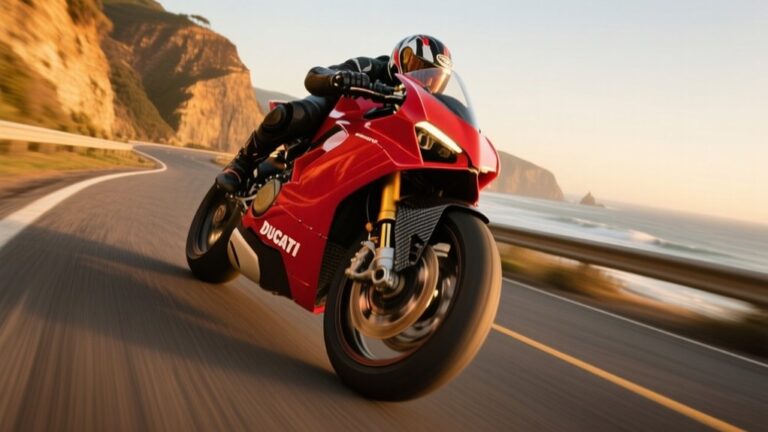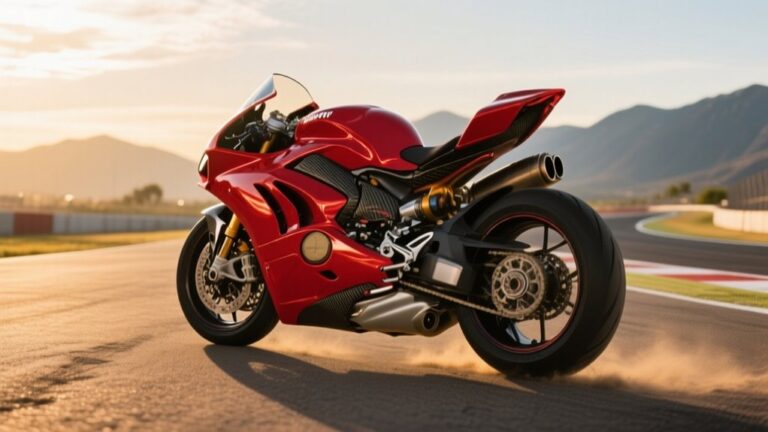
How Much Is A Ducati Motorcycle – Full Breakdown
You’ll usually pay about $11,495 to nearly $39,995 for a new Ducati. Entry-level Scrambler and Desmo models sit at the low end, while Panigale V4 superbikes are at the top.
A base V4 starts around $21,195. V4 S models and special editions climb quickly from there.
Add freight, setup, taxes, and dealer fees, and your out-the-door cost can jump by thousands. Used bikes can help you save money too.
Financing terms can also change your total. If you want the full breakdown, it’s worth comparing your options.
Ducati Motorcycle Price Range
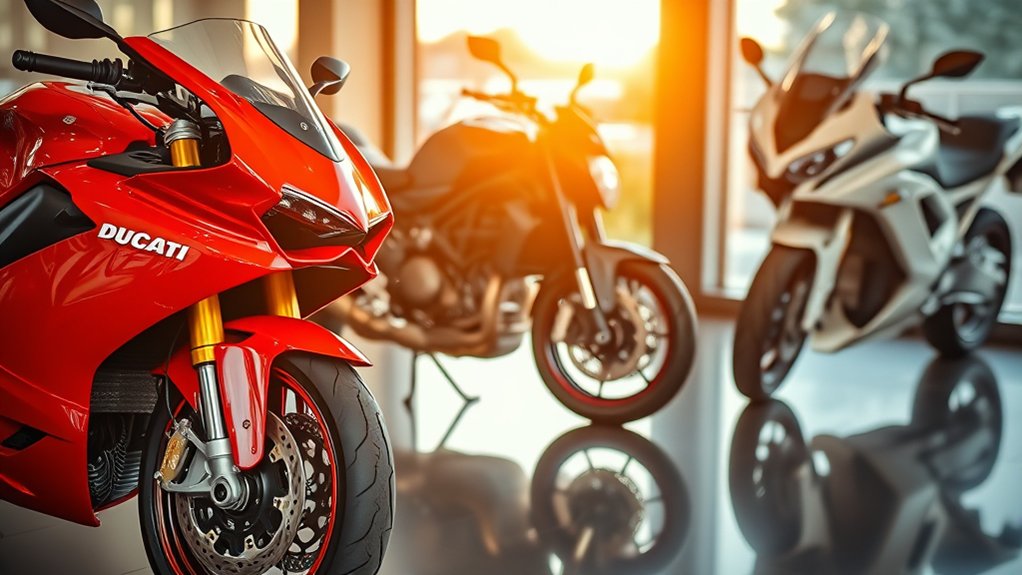
Ducati prices vary widely. If you’re looking at new models, you can generally expect an MSRP range of about $11,500 on the low end to nearly $40,000 at the top.
You’ll usually see entry and midrange bikes clustered in the low-to-mid $10,000s. Performance machines jump fast.
For example, the Ducati Panigale V4 S sits well above standard sport models. Its higher-spec components and electronics push the MSRP up sharply.
Limited editions and factory race variants can add $5,000 to $15,000 or more over base versions.
You should also budget for dealer fees, freight, setup, and taxes. These can lift your out-the-door price by several hundred to several thousand dollars.
In today’s market, sticker price rarely matches final cost.
Ducati Prices by Model
- Entry models: some Scrambler and Desmo variants start around $11,495–$12,995.
- Midsize bikes: many V-twins and naked models land in the mid-$10k to $15k range.
- Superbikes: top trims often jump into the high-$20k and $30k zone.
- Limited editions: rare builds can add premium pricing fast.
Add freight, setup, and taxes, and your out-the-door number rises quickly.
Compare MSRP, trim, and availability before you buy.
Cheapest Ducati Models
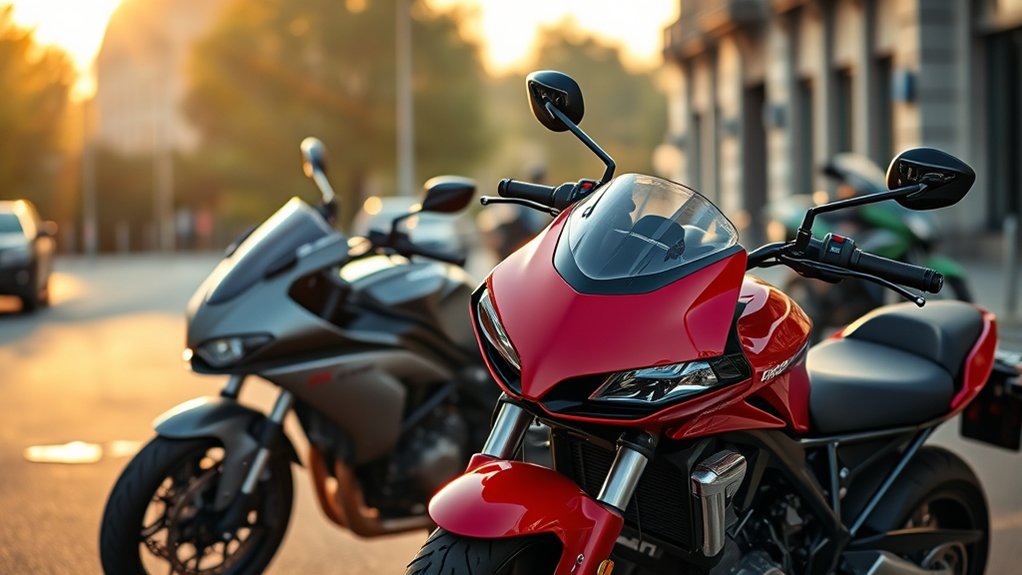
If you’re shopping for the most affordable Ducati, the lowest starting point in the current lineup is the Desmo450 EDX/MX Factory series. The base model is listed at $11,495 MSRP, while the street-legal Desmo450 EDS comes in at $12,995.
That means you can get into Ducati ownership at a relatively low entry point compared to the rest of the brand’s range. If you want something more road-oriented, the Desmo450 EDS gives you a legal, usable platform without jumping far in price.
Historically, Scrambler Icon and other base Scrambler models have also sat near the low end. You may even find demo or press-fleet units discounted below MSRP.
Just remember that dealer fees and taxes can push your out-the-door total up by several hundred to a few thousand dollars.
Why V4 Ducatis Cost More
You’ll pay more for a V4 Ducati because that performance premium shows up right in the MSRP. For example, a base Panigale V4 lists at $21,195, while the V4 S jumps to $27,495. That price gap reflects a more complex Desmosedici-derived four-cylinder engine, plus advanced electronics and a higher-spec chassis than you’ll typically find on Ducati’s twin-cylinder models.
And once you start adding the premium hardware—things like Öhlins suspension, forged wheels, and other track-ready components—that cost only goes up.
In the end, you’re not just buying displacement; you’re paying for a more performance-focused machine where many of the parts are simply more expensive to build and source.
V4 Performance Premium
Ducati’s V4 lineup commands a clear performance premium, and the numbers show it. The 2018 Panigale V4 started at $21,195. The V4 S climbed to $27,495, and the Speciale reached $39,995.
You’re paying for more than a badge. You’re funding pricier components, higher engineering costs, and limited-run exclusivity that market buyers quickly price in.
- Premium parts lift MSRP.
- MotoGP-derived V4 packaging raises R&D.
- Speciale trims spread fixed costs.
- Early demand keeps real-world prices near sticker.
If you compare trims, the gap reflects materials, fabrication, and calibration. It’s not just marketing. In Ducati’s V4 segment, scarcity and spec depth push transaction values higher, so your total buy-in often lands above base-model expectations.
Advanced Electronics And Chassis
That price gap also reflects the hardware and software in V4 Ducatis.
You’re paying for a 6-axis IMU, cornering ABS, traction and wheelie control, ride modes, launch control, and telemetry.
Ducati has to engineer, test, and calibrate these systems.
That work drives up R&D and dealer setup costs, which shows in the final price.
| Model | MSRP | Key Cost Driver |
|---|---|---|
| Panigale V4 | $21,195 | Core electronics |
| V4 S | $27,495 | Öhlins suspension |
| V4 Speciale | $39,995 | Carbon, limited run |
The chassis matters too.
Aluminum monocoque or mixed trellis designs, forged wheels, Brembo Stylema calipers, and electronic suspension all add to parts cost.
Higher-spec V4s also use more premium components.
And because they’re built in lower volumes, you get less economies of scale and a higher resale floor.
Used Ducati Prices vs. New
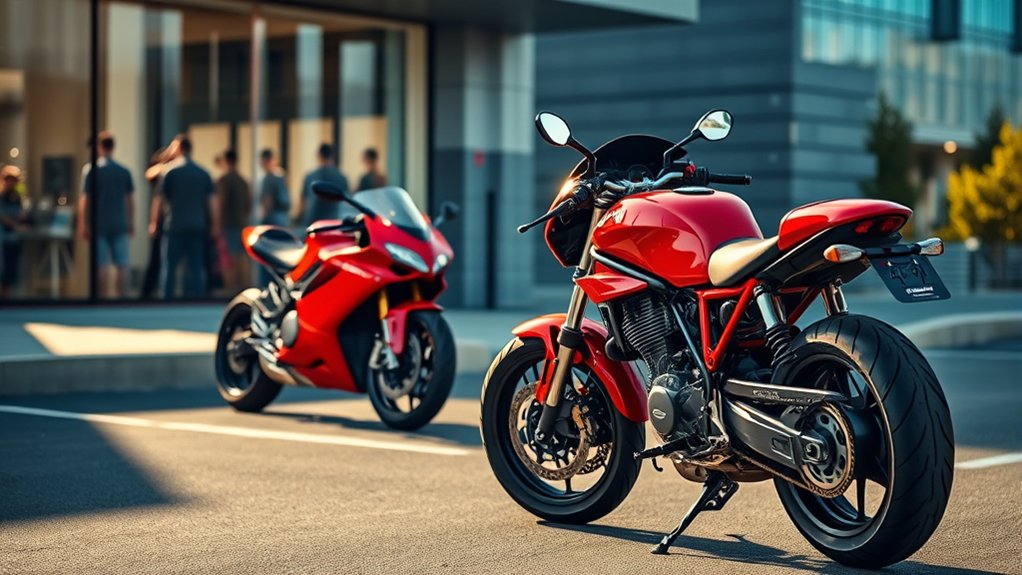
New Ducati prices can swing dramatically by model. That spread creates real opportunities in the used market. When you compare a 2018 Panigale V4 at $21,195 to a V4 S at $27,495 and a Speciale at $39,995, you can see why used pricing gets compelling fast.
You’ll often find late-model bikes priced well below their original MSRPs. Especially when mileage stays low and depreciation does the heavy lifting.
- Look for 18-month-old bikes under 1,000 miles.
- Compare asking price against original MSRP.
- Price mods and mileage, not just model year.
- Watch for balloon-financed bikes entering resale.
Used listings for 2021 Streetfighter V4 S, 2023 Panigale V4, and 2025 Panigale V4 S show how supply, condition, and dealer margins shape value.
Dealer Fees, Taxes, and OTD Costs
When you price a Ducati, you’ll usually see dealer freight and setup fees added on top of the MSRP.
Depending on the deal, those charges can run about $1,200 to $2,000 before taxes. Then sales tax, title, and registration can push your out-the-door total even higher—plus state fees that may add several hundred more.
Dealer Freight Charges
Freight, setup, and taxes can add thousands to a Ducati’s sticker price, so the MSRP rarely tells you the full story.
You’ll often see a freight or delivery charge added before taxes, and that fee can run several hundred dollars on a new model.
Freight charges raise your initial price.
High-demand bikes leave little room for discounts.
OTD pricing is the real benchmark.
Shopping multiple dealers can expose markup gaps.
On a hot release, dealers may protect margin since demand supports it.
That means you should compare the full out-the-door number, not just the sticker, across markets.
If you wait until demand cools, you may negotiate a lower freight charge or better total deal.
That’s especially true when inventory builds and competition increases.
Setup And Prep Fees
Beyond freight charges, setup and prep fees can push a Ducati’s real price much higher than the sticker suggests. You’ll often see a dealer add about $1,000 for assembly, inspection, and prep.
That lands on top of the MSRP and freight. On a $27,495 V4 S, that kind of markup can move the transaction into a much higher bracket before you even think about registration.
Sales tax then compounds the total because it’s usually calculated on the sale price plus fees. One example added roughly $1,650 at 6%.
In strong-demand markets, dealers rarely waive these charges. If you want a better deal, shop late in the model cycle, compare quotes, and build rapport.
The out-the-door number matters most.
Taxes And Title Costs
Even after you account for freight and setup, taxes and title fees can add a meaningful layer to Ducati’s out-the-door price.
You’ll usually pay sales tax on the full selling price, so a 6% rate can add $1,650 to a $27,495 V4 S transaction.
- Title and registration fees vary by state.
- Dealer documentary charges can shift the final quote.
- OTD pricing bundles MSRP, freight, setup, taxes, and fees.
- Early units often carry the least negotiating room.
In tight supply, dealers can hold near-MSRP pricing and keep gross margin above $3,000.
If you wait until later in the model year, you may gain leverage and lower your total cost.
Always compare the written OTD quote, not just MSRP, before you commit.
Ducati Financing and Balloon Payments
Ducati’s balloon-style financing can lower your monthly outlay.
But it does so by pushing a large residual payment to the end of the term.
You’ll need to pay that balloon, refinance it, or cover it by trading the bike.
You’re in an open-ended loan, not a lease, so you absorb resale risk.
Ducati doesn’t guarantee future value.
Forum examples often look like $2,750 down, then $262–$522 for 47 months.
The balloon can add several thousand dollars in interest and finance charges over MSRP.
Rates around 4.7% are common, though credit unions may offer about 1.99% on new bikes.
If trade-in values weaken due to mileage, damage, or oversupply, you can end up underwater.
And if you can’t cover the balloon, unpaid balances can lead to repossession and hurt your credit.
How Much Ducati Ownership Costs
Owning a Ducati usually costs more than the sticker price suggests.
Owning a Ducati often costs far more than the sticker price alone suggests.
A new Panigale V4 starts at $21,195 for the base model, $27,495 for the V4 S, and $39,995 for the V4 Speciale. However, freight, setup, tax, and title can push the out-the-door total much higher.
For example, one $27,495 V4 S reached about $31,700 after a $695 freight charge and a $1,000 setup fee.
You’ll also feel financing costs. Promotional loans can dip near 1.99%, while some programs run around 4.7% to 7%.
- Compare MSRP to dealer OTD pricing.
- Watch balloon balances of $25k to $46k.
- Consider lightly used bikes with low miles.
- Use financing terms to gauge total cost.
Frequently Asked Questions
How Reliable Are Ducati Motorcycles?
Ducati motorcycles are generally reliable if you maintain them on schedule, but you’ll usually face higher upkeep than with many Japanese brands.
You can expect strong engineering. Still, valve adjustments, belts or chains, and premium wear parts often cost more.
If you service it through authorized dealers and avoid neglect or heavy track use, you’ll likely see fewer problems.
You’ll also get better resale value and a more predictable ownership experience overall.
Which Ducati Is Best for Beginners?
You should start with the Ducati Scrambler Icon; it’s the training wheels of Ducati’s lineup.
Its 803 cc engine, about 73 hp, relaxed ergonomics, low seat, and rider aids make it beginner-friendly.
If you want a more modern naked bike, the Monster V2’s A2-compliant 35 kW tune can work in some markets.
For off-road learning, the lighter Desmo450 EDS beats heavier adventure models.
How Often Does Ducati Need Servicing?
You’ll usually service your Ducati every 7,500 km, or about 4,650 miles.
Many models also call for a major Desmo service around 15,000 km, or 9,300 miles.
Some V4s need valve checks at 7,500 km.
You should also change the oil and filter yearly, or at 7,500 km, whichever comes first.
If you ride hard, shorten the intervals.
Sticking to dealer schedules helps protect reliability, resale value, and warranty coverage.
What Warranty Comes With a Ducati?
You get a 24-month Ducati manufacturer warranty from the original in-service date. It covers defects in materials and workmanship.
If you buy from an authorized dealer and register it, you’ll usually have worldwide coverage. Claim rules can vary by country.
You can often add extended warranty protection. Terms and pricing depend on the model and your market.
Wear items, misuse, and unauthorized modifications aren’t covered. You’ll also need authorized service records.
Are Ducati Maintenance Parts Expensive?
Yes—Ducati maintenance parts are expensive, like premium coffee beans versus instant.
You’ll usually pay more than for Japanese-bike equivalents.
OEM brake pads often run $80–$150 a set, air filters $40–$80, and oil changes $80–$200 in parts.
Bigger jobs, like valve service kits, can reach several hundred dollars before labor.
Aftermarket parts can cut costs, but OEM critical components still command a premium.
Conclusion
In the end, your Ducati price depends on more than the sticker.
Model, trim, dealer fees, taxes, and financing all shape the final number.
You might find an entry-level Monster near the low teens.
But a V4 superbike can climb well above $30,000.
Coincidentally, the bike that excites you most often costs the most to own, insure, and maintain.
If you weigh total value, not just asking price, you’ll make a smarter Ducati purchase.