How Fast Does A Ducati Go – Guide
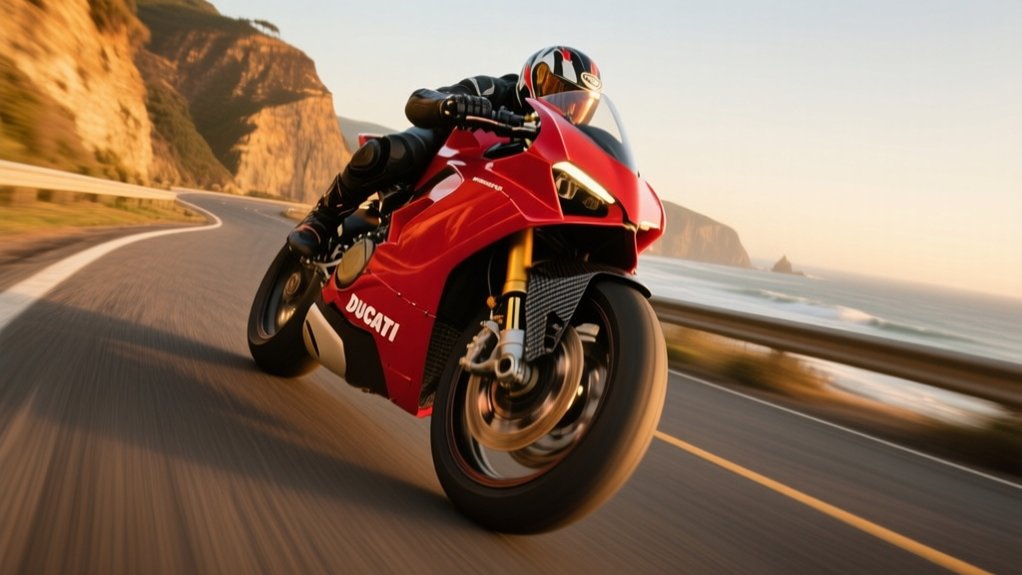
A Ducati can be extremely fast, but the exact top speed depends on the model. You’ll usually see street-focused Ducatis around 150 mph.
A Panigale V4 R can hit about 197 mph in stock form. With track-only exhaust and tuning, it may go beyond 205 mph.
Gearing, rider tuck, wind, altitude, tires, and suspension all change the real number. If you want the details, the differences get even more interesting from here.
How Fast Does a Ducati Go?
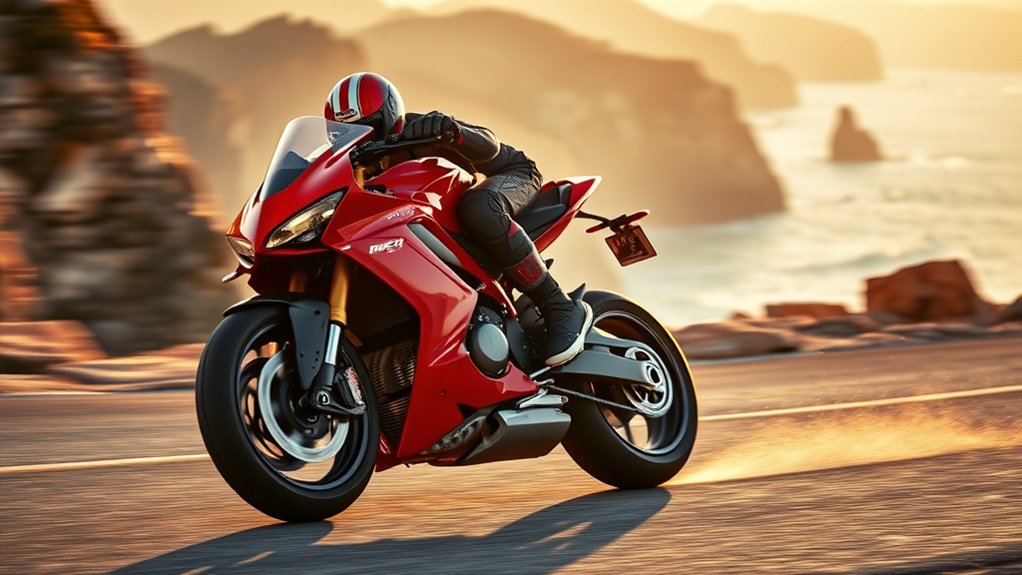
A Ducati can be blisteringly fast, but the exact top speed depends on the model and setup. If you’re riding a Ducati Panigale, you’re usually looking at superbike-level performance, not a single fixed number.
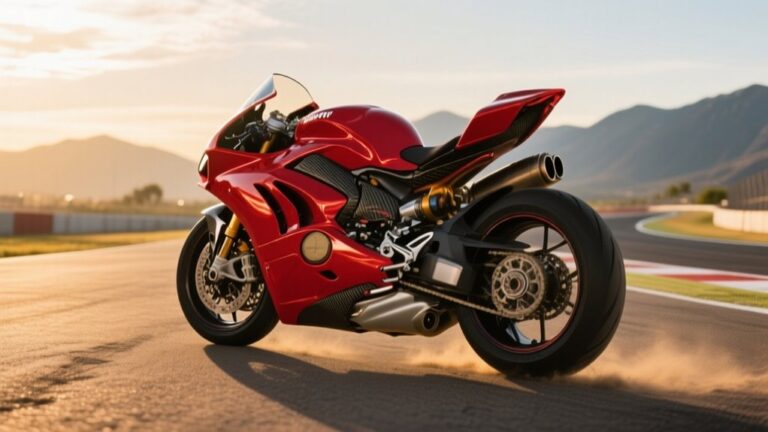
A production Panigale V4 R can hit about 197 mph in stock trim. With a non-approved racing exhaust, it can exceed 205 mph.
In U.S. homologated spec, its 998 cc Desmosedici Stradale R makes 208.4 hp. With track exhausts, output can lift to 235–239 hp.
Calculator estimates can show around 204.7 mph in sixth gear. Your real-world top speed changes with tuck, wind, altitude, road grade, tires, and mechanical health.
Gearing and exhaust tuning affect track speed. Exhaust alone rarely changes per-gear numbers much.
How Fast Is a Ducati Panigale V4?
The Ducati Panigale V4 is brutally quick, with top speed depending on the exact version and setup. If you’re looking at the Panigale V4 R, Ducati’s 998 cc Desmosedici Stradale R delivers 208.4 hp in U.S. homologated form. That figure climbs to 235 hp with a racing exhaust, or 239 hp with Ducati Corse Performance Oil for track use.
In production trim, Ducati lists the V4 R at 197 mph. With non-approved racing exhausts, you can see speeds beyond 205 mph. Theoretical gearing estimates put 6th gear near 204.7 mph, but real runs vary.
Your riding position, wind, air density, road grade, tire grip, mechanical condition, and fuel quality all affect what you actually achieve on the road or track.
How Gearing Changes Ducati Top Speed
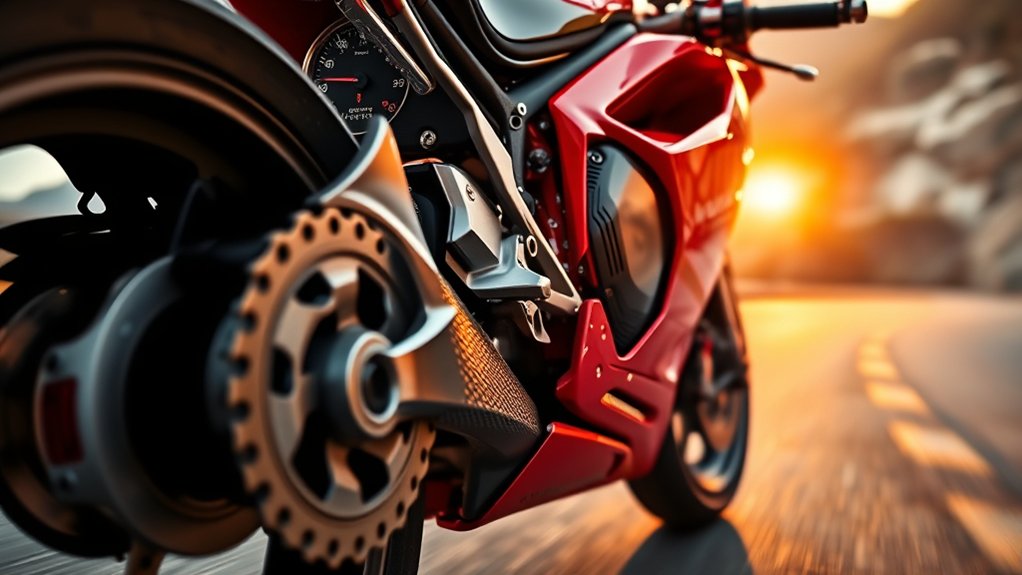
Tuning Ducati gearing changes how quickly the bike reaches its limits and what those limits look like on paper. On a Panigale V4 R, stock gearing can calculate near 204.7 mph in 6th at 15,000 rpm. Ducati quotes 197 mph in production trim and more than 205 mph with a non-approved racing exhaust.
Shorter gearing, like a smaller rear sprocket or a larger front sprocket, boosts drive but trims theoretical top speed. Taller gearing does the opposite.
Use model-specific gear charts since V4 SP and V4 S ratios differ.
Set the correct redline in calculators, not peak horsepower rpm.
Remember drag, wind, altitude, tire grip, and setup can blunt the gains.
Ducati Top Speed by Gear
Map Ducati top speed by gear and you’ll see why the final numbers depend as much on gearing as on power. On a stock Panigale V4 R from Borgo Panigale, 6th gear can theoretically reach about 197–205+ mph. One common calculation lands near 204.7 mph at 15,000 rpm.
Lower gears scale down from there, but exact figures shift when you change the RPM input from 13,000 to 14,500 or 16,500. That’s why Ducati per-gear charts can differ between calculators.
These numbers are theoretical, though. In real riding, aerodynamics, wind, altitude, grade, and grip trim the speed you’ll actually see.
Even with racing exhaust and tuning, you mainly reach each gear’s top speed faster. The ratios stay the same.
Different models can also use different gearing.
What Really Affects Ducati Top Speed?
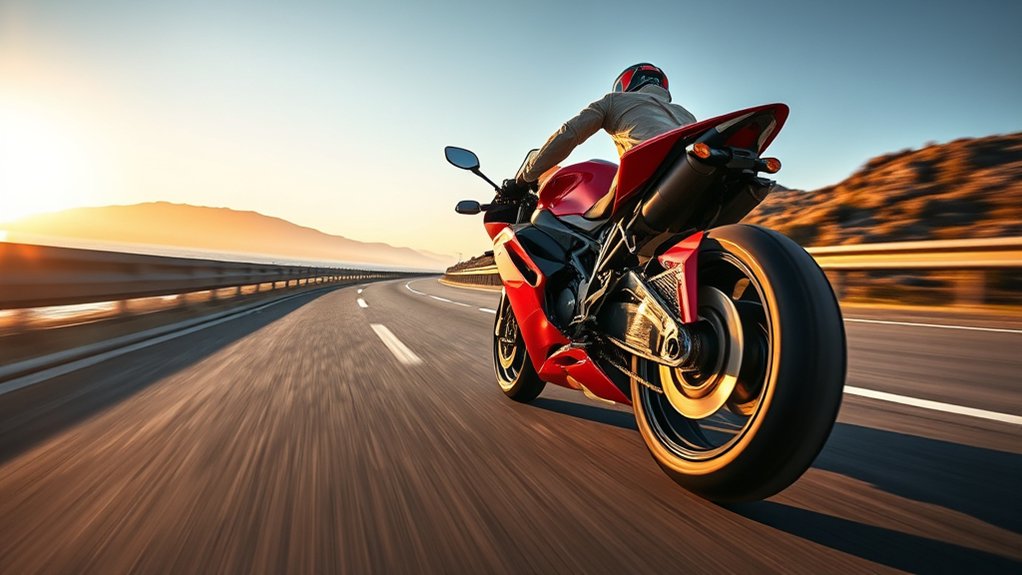
Your Ducati won’t just reach its gearing-limited top speed. In the real world, grip and traction play a huge role—if the rear tire can’t hook up and put the power down cleanly, you’ll lose speed even though the engine still has more to give. On top of that, wind and weather conditions can make a noticeable difference.
And then there’s you. How you tuck, your riding position, and even how aerodynamic you’re can change what the bike can actually deliver. In many cases, having the right position and favorable conditions matters more than people expect.
Grip And Traction
Grip and traction often matter more than gearing when you’re chasing a Ducati’s real top speed. The bike can only accelerate as hard as the rear tire can put power to the pavement. On a V4 R, your tire choice, compound, and air pressure shape how much drive you can actually use.
Stock Pirelli Diablo Supercorsa SP V4 rubber works well. But SBK slicks with SC0, SCX, or SCQ compounds add grip and cut wheelspin, helping you reach higher speeds sooner.
Setup matters too. Suspension, swingarm pivot, and rear ride height keep the tire loaded under hard acceleration.
- Fresh, warm rubber grips better
- Correct air pressure preserves contact
- Stable chassis geometry improves drive
Wind And Rider Position
Even when a Ducati has the gearing and power to keep pulling, wind and rider position often decide whether it actually reaches its true top speed. If you stay tucked, you cut frontal area, and the Panigale V4 R can approach about 197 mph.
If you sit up, aero drag can steal tens of mph.
| Factor | Effect |
|---|---|
| Headwind | Slows you down |
| Tucked rider position | Maximizes speed |
| Crosswind | Hurts stability |
| Higher altitude | Reduces power |
Your aero matters as much as power. The V4 R’s wings add downforce at 167 to 186 mph, helping resist lift in gusts.
Hot air, thin air, and a heavier, less tucked rider all lower top speed. Even if gearing suggests 204 to 205 mph, real roads, slope, and wind usually stop you short.
How Mods Change Ducati Top Speed
When you add a racing exhaust or a fuel/tune upgrade, you usually get more horsepower and the Ducati can pull harder against aerodynamic drag. That helps the bike reach higher speeds faster, but it doesn’t change the gear ratios—those ratios are what largely determine the theoretical top speed you can hit in each gear.
If you switch sprockets or change gearing, though, that’s when you start shifting the speed ceiling directly. Lighter carbon-fiber wheels can also make a noticeable difference, but mostly for acceleration, braking, and overall feel—because they reduce rotating mass. They typically don’t raise absolute top speed by much on their own.
In real-world riding, your actual measured max speed still comes down to traction, rider position (tuck), wind, altitude, tire condition, and how the bike delivers power across the rev range.
Exhaust and Power Gains
Bolt on a racing exhaust and you’ll usually sharpen a Ducati’s acceleration more than its outright gear-limited top speed.
On a Panigale V4 R, a racing exhaust can lift track output from 208.4 hp to about 235 hp.
With Ducati Corse Performance Oil, it can reach about 239 hp too.
So you feel stronger pull at speed.
That extra power helps you reach the top end faster.
It may even nudge real-world runs past calculated figures if drag drops and the engine pulls harder in sixth.
- More peak power
- Stronger midrange thrust
- Less weight, quicker response
Still, the exhaust usually doesn’t change the theoretical top speed for a given gear ratio.
It mainly helps you get there sooner.
And sometimes, it can take you a little farther if conditions let the engine use more revs.
Gearing and Top Speed
Gearing sets the ceiling, so a stock Panigale V4 R’s 6th gear works out to about 204.7 mph at a 15,000 rpm redline input. Ducati quotes 197 mph for the production bike, and says it can exceed 205 mph with a non-approved racing exhaust.
That’s why gearing math matters. It defines the theoretical top speed for each gear. If you fit a racing exhaust, you’re mostly boosting power, not changing ratio, so the bike can pull closer to that limit.
Online calculators can mislead you because they depend on the RPM you enter. 13,000 rpm gives a very different answer than redline. To change true gearing-based top speed, you’d need different ratios, not just more power.
Real-World Speed Factors
Even with the same gearbox, mods can change how fast a Ducati actually runs at the top end. A freer exhaust can add horsepower, so you may hit peak speed sooner, but stock gearing still caps each gear.
If you change final drive or raise usable rpm, you can lift real top speed. Aerodynamic parts matter too: race fairings, wings, and a tighter tuck cut drag and help keep the bike stable.
- Race slicks and tuned Öhlins settings improve grip.
- Wind, altitude, fuel, and road grade can shave mph.
- Details like brake covers, bar ends, and Sale Ducabike cylinder help reduce clutter and refine airflow.
On a closed circuit, those gains stack up. You can use more power and reach a higher, steadier terminal speed.
Frequently Asked Questions
Does Ducati Top Speed Change With Rider Size?
Yes, Ducati top speed can change with your size. If you’re taller or ride more upright, you tend to create more drag, so you’ll usually lose a few mph compared to a compact, tucked-in rider.
At very high speeds, air resistance matters more than weight. A heavier rider can also slightly affect acceleration, but not as much as drag.
On a Panigale V4 R, a tighter tuck can help you get closer to the bike’s gearing-limited top speed.
Which Ducati Model Has the Highest Factory Top Speed?
The Ducati Panigale V4 R has the highest factory top speed. You really don’t get much more “let’s terrify physics” than that.
You’ll see about 197 mph in stock trim. With a racing exhaust, it can edge past 205 mph.
Its 208.4 hp, 16,500 rpm redline, and MotoGP-style aerodynamics help it stay stable. That matters when you’re asking a very expensive question of the horizon.
Can Weather Conditions Reduce Ducati Top Speed?
Yes, weather conditions can reduce your Ducati’s top speed. A strong headwind can cut off several mph, while thin air at altitude reduces power and aerodynamic efficiency.
Hot days lower air density and cooling performance, which makes it harder to hold high speed. Crosswinds can also push you out of a tight tuck, adding drag.
You’ll usually get the best numbers in cool, calm, sea-level conditions with smooth pavement and a tucked riding position.
Does a Ducati Need Premium Fuel for Maximum Speed?
Yes—you do need premium fuel for maximum speed. Ducati’s high-compression sportbikes, like the Panigale V4 R, are tuned for 98 RON or higher (93 AKI) to keep full ignition timing.
At around 16,500 rpm, even slight knock protection changes can reduce power and the top-end pull. If you use lower-octane fuel, the ECU will usually retard timing, so you won’t get the same crisp throttle response or peak performance.
How Accurate Are Ducati Top Speed Calculators?
Ducati top speed calculators give you a useful estimate, but they’re only as accurate as the inputs you choose. If you use the correct redline, gearing, wheel diameter, and power curve, you’ll get a solid theoretical number. If you plug in peak-horsepower RPM instead, you’ll overstate speed.
Real-world drag, rider position, wind, altitude, and traction can still knock you below the calculator’s result. Treat it as a baseline, not a guarantee.
Conclusion
So, how fast does a Ducati go? Faster than you might expect, and usually faster than the rider can comfortably use. You’ve seen how the Panigale V4, gearing, and mods can all shift the numbers.
But the real story is this: top speed isn’t just about horsepower. It’s about balance, aerodynamics, and setup. Push one variable, and the bike’s character changes.
And if you think that’s impressive, the most critical factor is still waiting to surprise you.