What Years Did Harley Make The Panhead – Meaning & More
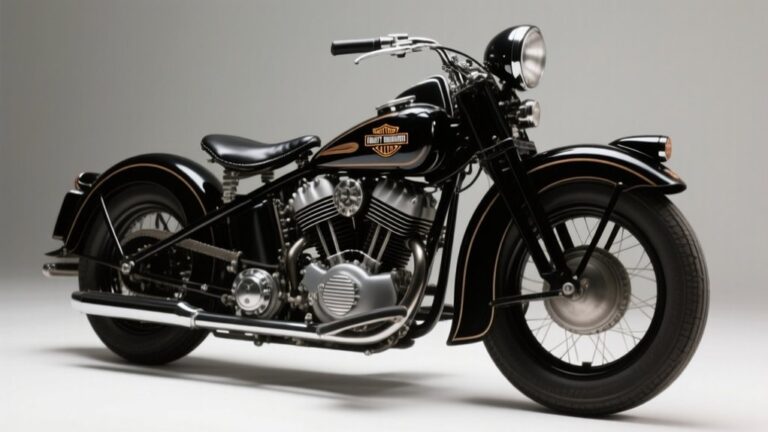
Harley made the Panhead engine from 1948 to 1965, replacing the Knucklehead to improve cooling and reliability. You’ll recognize it by its pan-shaped aluminum rocker covers that help dissipate heat. Early models had 61 or 74 cubic-inch V-twins.
The 1965 version added electric start and a 12-volt system. The Panhead was succeeded by the Shovelhead in 1966 for better performance.
Explore further to understand its innovations and enduring cultural appeal.
When Did Harley Make the Panhead Engine?
Although many Harley enthusiasts know the Panhead engine as a classic symbol of mid-20th century motorcycling, you mightn’t realize it was produced specifically from 1948 to 1965. Harley Davidson introduced the Panhead as a direct successor to the Knucklehead engine, marking a significant evolution in their lineup.
These production years, spanning 18 years, show Harley’s commitment to refining performance and reliability during this era. The Panhead’s production run ended in 1965, when Harley Davidson replaced it with the Shovelhead engine in 1966.
Understanding these production years helps you appreciate the Panhead’s role in the company’s history and its influence on motorcycle engineering during that period. The Panhead remains a defining piece of Harley’s mid-century legacy.
Why Is the Panhead Engine Named ‘Panhead’?
You’ll notice the Panhead engine gets its name from the large, broad rocker covers that look a lot like cooking pans. Because of this unique design, people started calling it the “Panhead.”
That nickname eventually became the official term for Harley’s overhead-valve V-twin engines made between 1948 and 1965. It’s pretty interesting to see how Harley-Davidson often names their engines based on the shape of their covers.
Rocker Cover Design
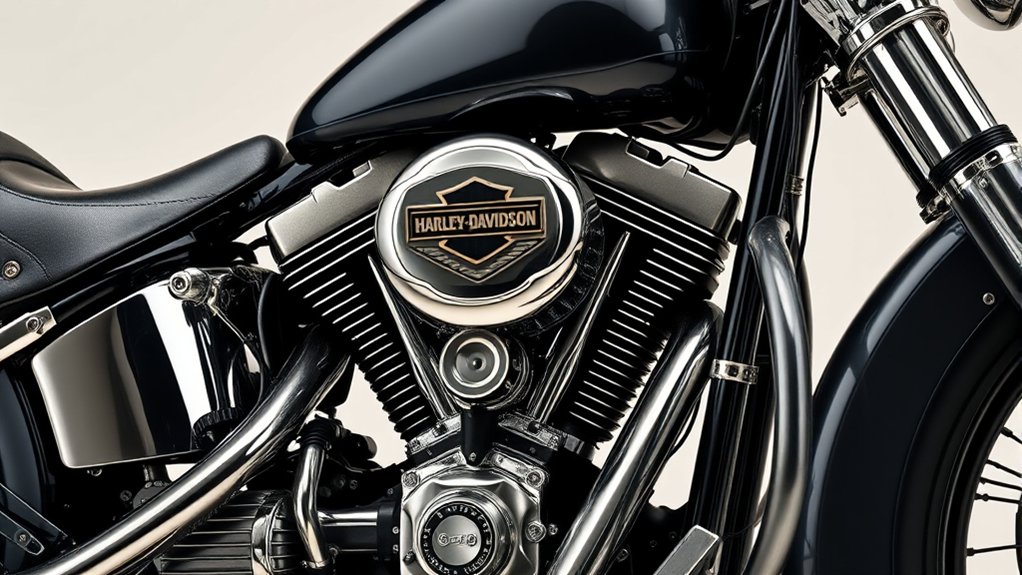
Because the Panhead engine’s rocker covers feature large, rounded shapes that closely resemble cooking pans, Harley-Davidson gave the engine its distinctive nickname. The rocker covers on the Panhead engine are broad and semi-circular, sitting directly over the valve springs.
This unique design isn’t just aesthetic but functional, as the covers were originally cast from aluminum, enhancing cooling efficiency.
You’ll notice these key points about the Panhead rocker cover design:
- Large, pan-shaped rocker covers create the engine’s signature look.
- Positioned atop valve springs, they protect essential components.
- Cast aluminum construction contributes to heat dissipation.
- The “Pan” shape defines both the design and the engine’s identity.
This design aspect firmly distinguishes the Panhead engine among Harley-Davidson’s lineup. It’s what makes this engine stand out from the rest.
Engine Nickname Origin
The Panhead engine’s distinctive rocker covers don’t just serve a mechanical purpose; they also give the engine its memorable nickname. You’ll notice the large, broad aluminum valve covers resemble cooking pans.
It was a design that was both practical and visually striking. These covers enclose the valvetrain components, protecting them while their shape, reminiscent of pie pans, stood out among Harley-Davidson engines.
This visual similarity led enthusiasts and mechanics to informally call it the “Panhead.” Over time, the nickname stuck and became the official name for this Harley engine series.
Understanding this origin helps you appreciate how a functional design element evolved into an iconic identifier. It’s what makes the Panhead one of Harley-Davidson’s most recognizable and enduring engine designs.
How the Panhead Replaced the Knucklehead Engine
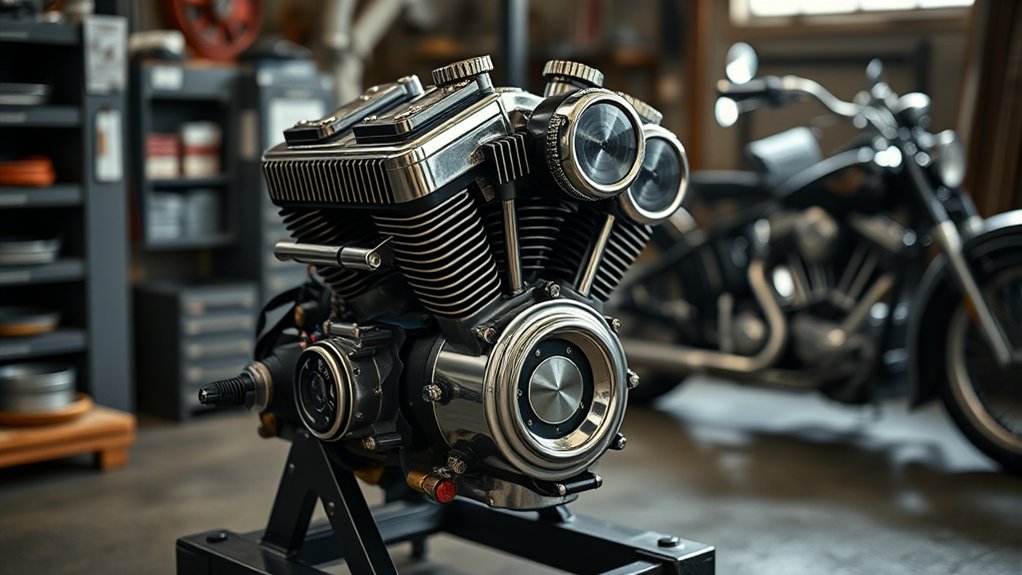
Although the Knucklehead engine established a solid foundation for Harley-Davidson, it struggled with overheating due to its iron cylinder heads. This was a problem that directly affected reliability and rider experience.
The Knucklehead engine laid a strong foundation but faced overheating issues that impacted reliability and rider comfort.
In 1948, Harley replaced the Knucklehead with the Panhead to solve these issues. Here’s how the Panhead improved upon its predecessor:
- Aluminum cylinder heads replaced iron ones, which helped with heat dissipation and reduced overheating.
- Hydraulic valve lifters were introduced, cutting down on maintenance and making the engine run smoother.
- Enclosed rocker covers protected internal parts from dirt and wear, which boosted durability.
- Overall, the Panhead marked a shift toward modern engine technology, increasing power and rider comfort.
Key Features of Early Panhead Models (1948–1952)
You’ll notice that the early Panhead models introduced aluminum cylinder heads, which helped improve heat dissipation.
At the same time, they kept the classic overhead-valve V-twin layout with pushrod valves.
These bikes came with either 61 or 74 cubic-inch engines.
They were paired with rigid frames and springer front suspension, which focused more on durability than on comfort.
When you look at these design choices, you can see how Harley balanced innovation with tradition during this period.
Engine Design Innovations
Five key innovations defined the early Panhead engine models produced between 1948 and 1952, setting them apart in Harley-Davidson’s lineup. You’ll notice these Panhead engines featured cast aluminum cylinder heads with large cooling fins, which markedly improved heat dissipation over previous designs.
They also had hydraulic tappets that automatically adjusted valve clearance. This reduced maintenance and made the engine more reliable.
Plus, they kept the Knucklehead bottom-end design, so you still got proven durability while upgrading performance.
The Panhead engines used Linkert carburetors and offered options for 61 or 74 cubic-inch displacement. This gave riders varied power outputs to choose from.
All these innovations made the Panhead engines stand out by combining improved cooling, less upkeep, and reliable power. It was a clear evolution in Harley-Davidson’s engine design during that era.
Early Suspension Characteristics
While the early Panhead models from 1948 to 1952 showcased significant engine advancements, their suspension systems remained pretty basic compared to what we’ve today. The Panhead’s front suspension started with a springer design before switching to a simple telescopic fork that had limited damping. This setup offered minimal shock absorption.
Sure, the front suspension was durable, but it came at the cost of ride comfort and handling precision. More importantly, there was no rear suspension at all. These Panhead models had a rigid frame without shock absorbers, which meant the ride was stiff and unforgiving over bumpy roads.
How the 1952 Hydra-Glide Front Suspension Improved Ride
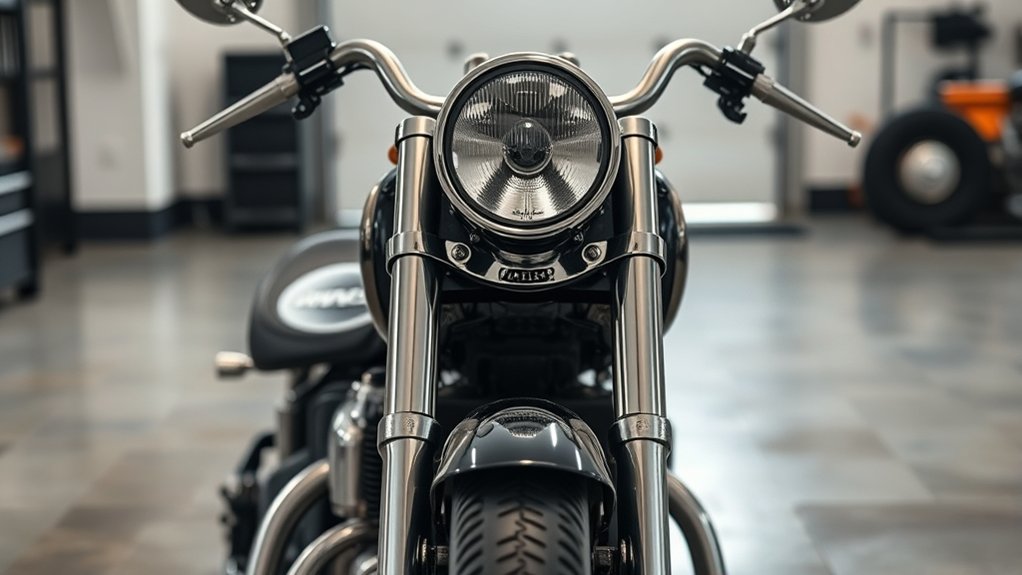
Because Harley-Davidson replaced the traditional springer suspension with the 1952 Hydra-Glide’s telescopic front forks, riders experienced a much smoother ride. This innovation brought a big improvement in several ways.
First, the telescopic fork design absorbed shocks better than the springer setup, cutting down rough impacts. Plus, hydraulic damping controlled fork movement, which stopped excessive bouncing and made the ride more stable. Handling got better at higher speeds and on uneven roads, giving you more control and confidence.
Rider comfort increased a lot, especially on long tours, helping reduce fatigue and stress. The Hydra-Glide front suspension set a new industry standard and became a key feature for Harley-Davidson’s touring models.
You could really feel how this upgrade transformed the ride, making every journey smoother and more controlled.
How 1958 Duo-Glide Rear Suspension Improved Comfort
Building on the smoother experience brought by the Hydra-Glide’s front suspension, the 1958 Duo-Glide took comfort a step further by adding rear suspension to the mix. This innovation replaced the previous rigid frame with twin shock absorbers, markedly enhancing ride quality.
You’ll notice that the rear suspension absorbs road bumps much more effectively, reducing the fatigue riders faced on long tours.
The 1958 Duo-Glide’s suspension upgrade improved handling, making the motorcycle easier to control and more stable over uneven terrain.
By introducing rear suspension, Harley-Davidson advanced its chassis technology, setting a new standard for touring comfort.
When you ride a 1958 Duo-Glide, you experience a level of comfort and practicality that rigid-frame models simply couldn’t match.
Key Features of the 1965 Final Panhead Model
You’ll notice the 1965 Panhead packs a 74 cubic-inch air-cooled V-twin with aluminum heads that help manage heat better.
What’s really cool is that this model introduced electric start to the Electra Glide, which was a big step up in usability.
On top of that, it combines classic styling with touring features like windshields and saddlebags, making rides more comfortable and practical.
Engine Specifications Breakdown
When examining the 1965 Panhead engine, you’ll notice it packs a 74 cubic-inch (1207cc), air-cooled V-twin with a 45-degree overhead-valve design that balances power and reliability. Harley-Davidson’s engine specifications for this final Panhead model emphasize durability and performance enhancements.
Key features include aluminum cylinder heads with finned cooling fins to optimize heat dissipation. Hydraulic tappets, relocated in 1953, reduce maintenance issues and improve valve operation.
Power delivery comes through a four-speed transmission paired with chain primary and final drives.
Another big upgrade is the integration of electric start, which marked a significant improvement from the previous kickstarter-only models. These detailed specs really highlight Harley-Davidson’s commitment to refining the Panhead’s engine.
It’s what makes the 1965 model a true pinnacle in its production run.
Electric Start Innovation
Although Harley-Davidson had relied on kickstarters for decades, the 1965 Panhead broke new ground by introducing an electric start system, revolutionizing rider convenience and operational ease. This innovation marked a pivotal moment in the Panhead Era, as it replaced the traditional, physically demanding kickstarter with a more user-friendly electric start.
The 1965 model featured a 12-volt electrical system upgrade, enabling reliable and consistent engine ignition at the push of a button. Harley-Davidson’s move to incorporate electric start reflected broader efforts to modernize its touring motorcycles, enhancing both functionality and rider experience.
This advancement not only eased starting procedures but also cemented the 1965 Panhead’s place in history as a technologically advanced and milestone model within the iconic Panhead lineage. It really set the stage for the future of motorcycle design.
Touring Features Overview
The 1965 Panhead didn’t just innovate with its electric start. It also packed a range of touring-specific features tailored for long-distance comfort and practicality. If you’re exploring Harley-Davidson’s touring models, understanding these features clarifies why the final Panhead became a favorite among riders seeking reliability and comfort.
A large, comfortable touring seat ensures extended rides feel less taxing. Full instrumentation and accessories like windshields and saddlebags enhance functionality.
The 74 cubic-inch engine delivers improved performance suited for long-distance touring.
Upgraded suspension with hydraulic telescopic forks and twin rear shocks improves ride comfort on varied roads. These Panhead touring features show Harley’s commitment to blending classic design with practical advances. It’s a great example of how they balanced style and function.
Why Harley Switched From Panhead to Shovelhead in 1966
Since Harley-Davidson needed to resolve persistent cooling and reliability problems with the Panhead engine, they introduced the Shovelhead in 1966. You’ll notice the Shovelhead featured redesigned, shovel-shaped rocker covers and improved aluminum cylinder heads, which enhanced cooling markedly.
This design change helped dissipate heat more efficiently, addressing the Panhead’s tendency to overheat.
Harley also raised compression ratios, boosting power and overall performance to meet evolving rider demands.
The Shovelhead’s improvements didn’t just enhance cooling and reliability; they also made maintenance easier and increased engine durability.
Why Panhead Engines Remain Popular in Custom Bikes
When you build or customize a motorcycle, choosing a Panhead engine instantly connects your bike to a rich heritage of American motorcycling. Panheads remain popular in custom bikes because of their iconic rocker cover shape, delivering unmistakable classic styling.
They also have a robust design, which allows for extensive performance upgrades.
Plus, their historical significance attracts builders who want that authentic vintage appeal. Another big plus is the wide availability of aftermarket parts, making customization easier and more accessible.
This mix of visual identity, modifiability, and cultural symbolism makes Panhead engines a top pick for riders aiming to preserve or recreate the spirit of classic American motorcycles. Their lasting presence in the custom scene reflects not just functionality but also a deep respect for tradition and chopper culture.
That’s why these engines continue to inspire custom bike enthusiasts all around the world.
Where to Find Panhead Parts and Replicas Today
Finding authentic Panhead parts or high-quality replicas is key to maintaining the true character of your custom build or restoration project. You can source genuine Panhead parts through Harley-Davidson’s vintage parts catalog and authorized dealerships specializing in classic models.
Moreover, many third-party manufacturers produce replica components like rocker covers and engine cases that preserve vintage Harley-Davidson styling. Online marketplaces such as eBay and dedicated vintage motorcycle parts websites frequently offer both original and reproduction Panhead components.
Specialty shops and Harley-Davidson clubs often provide restored or NOS engine parts, which are ideal for restoration projects. For all-inclusive needs, some companies supply complete Panhead engine rebuild kits, including pistons, gaskets, and hardware.
This makes it easier for you to restore or customize your bike authentically and efficiently.
Frequently asked questions
What Is the Typical Fuel Efficiency of a Panhead Motorcycle?
You can expect a Panhead motorcycle to get around 40 to 50 miles per gallon, depending on how you ride and maintain it.
Since it’s a vintage bike with a larger engine and carburetor, it usually averages closer to 40 mpg.
If you keep your tires properly inflated, tune the engine well, and ride steadily, you’ll maximize fuel efficiency.
Remember, your riding style and load also play a big role in fuel consumption.
How Difficult Is It to Restore a Panhead Engine Today?
Restoring a Panhead engine today is like piecing together a vintage puzzle, requiring patience and precision. You’ll face challenges sourcing original parts, especially aluminum heads and hydraulic tappets. Often, you’ll need custom fabrication to get things just right.
Aftermarket suppliers have improved availability, but matching factory specs still takes some serious expertise. Expect to tackle wear and corrosion with skilled machining.
What Are Common Maintenance Issues With Panhead Engines?
You’ll often face valve and rocker arm wear on Panhead engines due to their age and mileage. Overheating can happen if cooling fins get clogged or aluminum heads aren’t maintained well.
You’ll need to watch for hydraulic tappet leaks or sticking, especially if oil quality drops.
Cracks in cast-iron cylinders or heads may form over time.
Loose primary chain tension can cause noise and drivetrain problems if unchecked.
Are There Any Famous Riders Known for Using Panhead Motorcycles?
If you want to ride in the footsteps of legends, you’ll find Peter Fonda and Dennis Hopper etched into Panhead history. They didn’t just ride motorcycles; they rode symbols of freedom in “Easy Rider.”
You’ll also admire customizer Arlen Ness, who shaped Panhead bikes into art. These riders embraced the engine’s roar, making it a heartbeat of 1960s motorcycle culture.
It’s a timeless icon on the open road that still captures the spirit of adventure and rebellion today.
How Does the Panhead Engine Sound Compared to Other Harley Engines?
You’ll notice the Panhead engine sounds deeper and rawer than other Harley engines. Compared to the Flathead, it’s louder with a metallic, resonant tone thanks to its overhead valves.
Unlike the smoother Shovelhead, the Panhead has a distinctive uneven cadence and pronounced valve train chatter. This gives it a visceral edge that really stands out.
If you customize the exhaust, expect the sound to get even more aggressive and throaty. It just enhances that iconic presence even more.
Final Thought
You’ve seen how the Panhead engine, made from 1948 to 1965, marked a pivotal shift in Harley’s design with its distinctive rocker covers and improved hydraulics. Isn’t it fascinating how this engine not only replaced the Knucklehead but also set the stage for the Shovelhead?
Its enduring popularity in custom builds shows its timeless appeal. If you’re restoring or customizing, finding authentic parts today keeps that legacy alive and roaring on the road.