What Years Did Harley Make The Evo Engine – Meaning & More
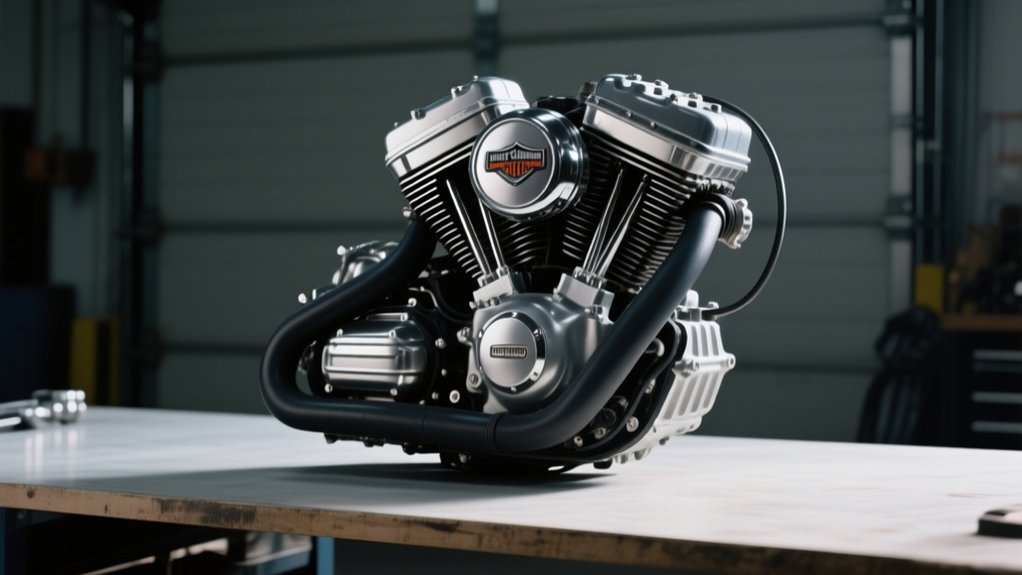
Harley-Davidson made the Evo engine from 1984 through 2000, revolutionizing their lineup with aluminum heads and cylinders that boosted reliability and performance. You’ll find it powered Big Twins until 2000, Softails until 1999, and Sportsters from 1986 all the way to 2021.
Its design improvements reduced maintenance and enhanced durability compared to earlier engines. Understanding its differences, upgrades, and eventual replacement by Twin Cams reveals why the Evo remains a key part of Harley’s history and appeal.
What Years Did Harley-Davidson Produce the Evo Engine?
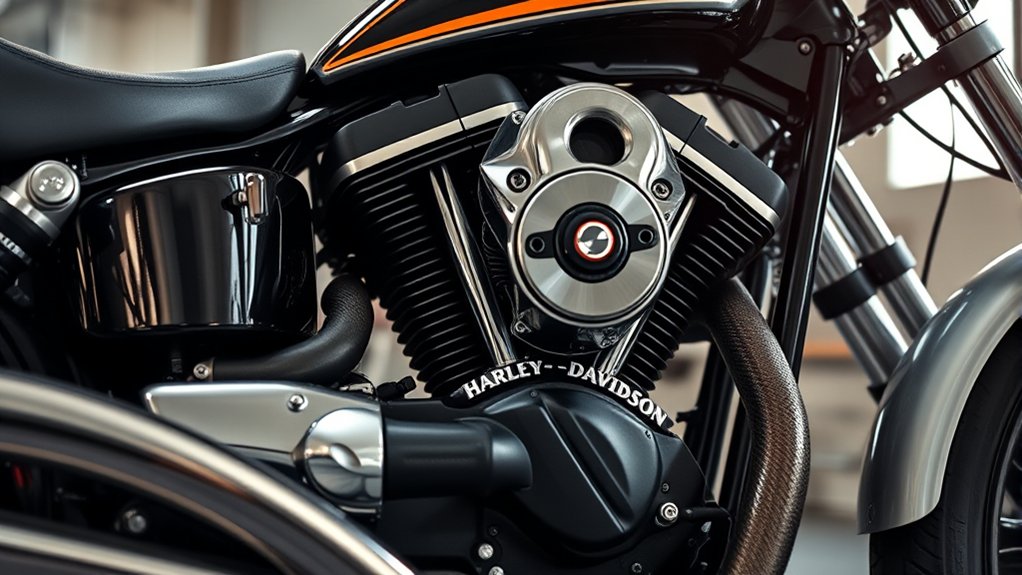
Although Harley-Davidson began producing the Evolution (Evo) engine in 1984, its usage varied across different models over time. You’ll find the Evo engine powering Big Twin models from 1984 through 2000, while Softail models used it until 1999.
Harley-Davidson’s Evolution engine powered Big Twins from 1984-2000 and Softails until 1999.
Sportsters featured the Evo engine from 1986 all the way to 2021, initially with 883cc and 1200cc displacements.
Touring and Dyna models phased out the Evo engine by 1998, marking the beginning of Harley’s shift to the Twin Cam engine.
This gradual changeover, spanning roughly 1998 to 2000, reflects Harley-Davidson’s strategic move in production years as they introduced the Twin Cam to replace the Evo engine for improved performance and compliance.
You can clearly see how the Evo’s production years differed by model before the Twin Cam fully took over.
What Is the Evo Engine and Why Was Its 1984 Launch a Game Changer?
Why did the 1984 launch of the Evo engine become such a landmark event for Harley-Davidson? The Evo engine introduced aluminum heads and cylinders, replacing the aging Shovelhead in the Big Twin lineup. This shift dramatically improved reliability and cooling, addressing long-standing mechanical issues.
Harley-Davidson designed the Evo engine to deliver better performance with lower maintenance. This helped its motorcycles compete with Japanese brands.
The engine’s durability stabilized Harley’s finances and restored its reputation after years of decline.
Used extensively in Softails, Dyna, Touring, and Sportster models, the Evo engine became the foundation for Harley’s modernization. Its 1984 debut didn’t just enhance engine technology. It revitalized the entire company, marking a pivotal moment that saved Harley-Davidson and set the stage for future innovation.
How Did the Evo Engine Evolve in Harley’s Sportster Models?
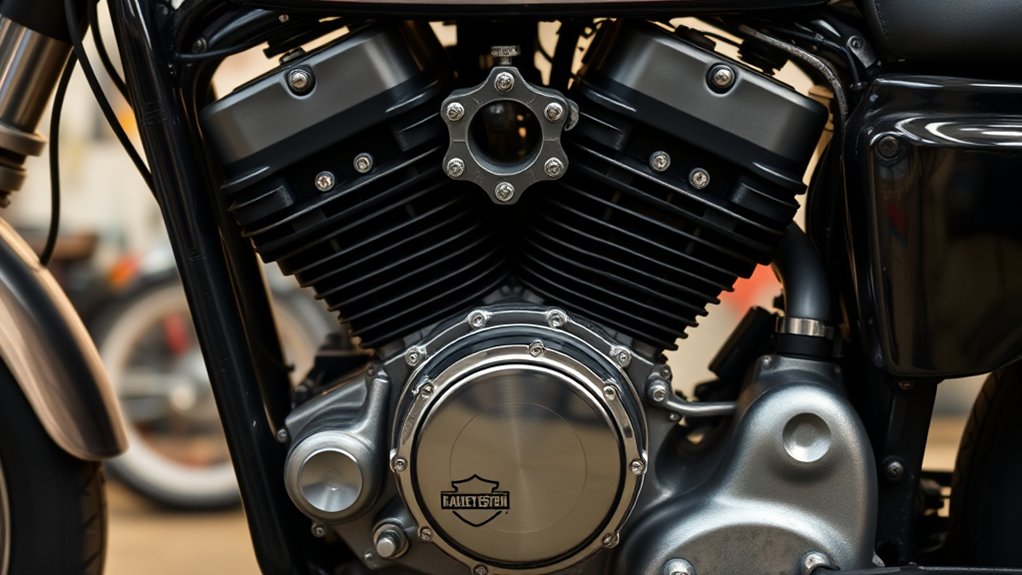
You’ll notice that Harley’s Sportster Evo engine kicked off with two distinct sizes: 883cc and 1200cc. Each one came with its own unique parts and performance vibes.
Over the years, a lot of riders chose to upgrade their 883cc engines to the bigger 1200cc for that extra punch of power. It’s like a timeline of steady improvements.
When you look at these differences, it really shows how the Evo engine managed to keep its classic feel while also adapting to what riders wanted as time went on.
Sportster Engine Upgrades
When Harley-Davidson introduced the Evolution engine to the Sportster line in 1986, it marked a significant upgrade from the Ironhead. This new engine provided enhanced reliability and performance.
The Sportster Evolution engine initially came in a robust 1100cc displacement. Later, it diversified into 883cc and 1200cc variants to suit different rider preferences. Its semi-unit construction featured one cam per overhead valve, driven by four gear-driven camshafts. This setup maintained mechanical simplicity and durability.
While the core design saw minimal changes over its production life, the Sportster Evolution engine offered a wide range of aftermarket upgrades. Popular conversions from 883cc to 1200cc became common. These enhancements allowed riders to tailor power output without compromising reliability.
All in all, the Sportster’s Evolution engine became one of Harley’s most versatile and enduring powerplants until production ended in 2021. It’s easy to see why so many riders still swear by it.
Displacement Variations Timeline
How did the Evolution engine’s displacement change throughout the Sportster’s production run? When Harley-Davidson introduced the Evo engine in 1986, the Sportster came with an 883cc displacement, replacing the Ironhead.
By 1991, Harley expanded the Evo engine lineup with the 1200cc variant, creating the popular 1200 Sportster.
Both the 883cc and 1200cc models were sold at the same time for years, giving riders distinct power options without changing the Evo engine’s core design. This displacement evolution shows Harley’s strategy to boost performance while keeping the Sportster’s signature feel.
Despite minor updates, the Evo engine’s displacement stayed stable after the 1200cc introduction. It maintained consistency all the way until the Sportster was discontinued in 2021.
Understanding this timeline helps you appreciate how Harley balanced innovation and tradition in their Evo-powered Sportsters.
How Do Evo Big Twin and Sportster Engines Differ?
Although both the Evo Big Twin and Sportster engines share Harley-Davidson’s signature V-twin configuration, they differ markedly in displacement, design complexity, and intended application. The Evo Big Twin displaces 1340cc and features a gear-driven four-lobe camshaft positioned above the crankshaft.
Meanwhile, the Sportster Evo typically comes in 883cc or 1200cc variants with a single cam per overhead valve.
You’ll notice the Big Twin’s offset lifter assemblies and intricate valve train, employing pushrods and tappets for durability in touring and heavy-use models like Dyna and Softail.
On the other hand, the Sportster’s simpler, more compact design prioritizes lighter weight and agility. This reflects its role in smaller bikes.
Because of differences in bore size and internal configuration, you can’t interchange parts between these engines despite their shared Evo lineage.
How Did Harley Improve the Evo Engine Through the 1990s?
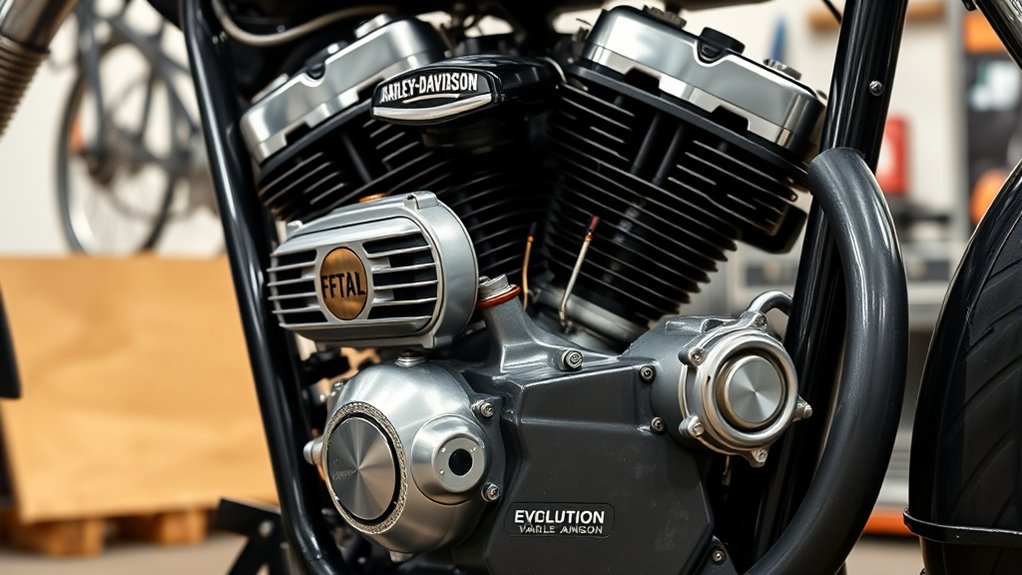
Understanding the differences between the Evo Big Twin and Sportster engines sets the stage to appreciate the technological strides Harley-Davidson made throughout the 1990s. During this decade, Harley focused on key improvements to the Evo engine that enhanced performance and reliability.
In 1990, they upgraded from 38mm to 40mm Keihin carburetors, optimizing fuel delivery. They also refined the combustion chamber design to improve airflow and flame spread, boosting efficiency.
Electrical systems saw a major upgrade in 1996 with Deutsch connectors for better wiring reliability and easier maintenance. Plus, the introduction of a 32-amp alternator supported growing accessory demands.
Harley-Davidson also improved gasket materials to reduce oil leaks and increase durability. These 1990s improvements collectively advanced the Evo engine’s performance and longevity.
All in all, these changes helped make the Evo engine a more reliable and efficient powerplant throughout the decade.
Why Did Harley-Davidson Stop Making the Evo Engine After 2000?
You’ll notice that Harley-Davidson switched from the Evo engine to the Twin Cam to increase displacement and keep up with changing performance needs. Sure, the early Twin Cam models had some issues, but Harley worked through those with engineering updates.
They made sure the engines stayed reliable and met new emission standards. Basically, this change shows how advancing technology and rider expectations pushed Harley to modernize their powertrains beyond what the Evo could offer.
Transition To Twin Cam
When Harley-Davidson stopped producing the Evo engine after 2000, it was to fully embrace the newer Twin Cam design. This new design brought significant performance and reliability improvements.
The transition reflected the need to meet stricter emissions standards, incorporate fuel injection, and improve engine cooling. The Twin Cam engines, introduced in 1999, offered increased displacement and better low-end torque. This helped address some of the Evo’s shortcomings.
The end of Evo production marked Harley-Davidson’s move toward modernizing its powertrains.
| Aspect | Evo Engine | Twin Cam Engine |
|---|---|---|
| Production End | 2000 | Began 1999 |
| Displacement | Moderate | Increased |
| Performance | Reliable but limited | Improved torque and smoothness |
| Technology | Carbureted, basic cooling | Fuel injection, advanced cooling |
Addressing Early Twin Cam Issues
While the Twin Cam engine marked a significant step forward from the Evo, it wasn’t without its problems in the early years. You’ll find that early Twin Cam models, produced between 1999 and 2006, suffered notable reliability issues mainly due to plastic cam chain tensioners.
These components frequently failed, causing cam timing problems that affected engine performance and durability.
Harley-Davidson discontinued the Evo engine after 2000 partly to address these challenges and to align with stricter emissions and performance standards. The shift also enabled Harley to incorporate fuel injection systems, which enhanced fuel efficiency and reduced maintenance demands compared to the carbureted Evo engines.
Evolving Performance And Technology
Because Harley-Davidson faced tightening emissions regulations and rising demands for fuel efficiency, it stopped producing the Evo engine after 2000. This decision reflected the ongoing shift in motorcycle technology, especially for the Big Twin lineup.
While the Evo engine was praised for its reliability and simplicity, it couldn’t meet the stricter federal standards or consumer expectations for performance and emissions.
Harley introduced the Twin Cam engine in 1999, which incorporated electronic fuel injection and advanced design improvements. These changes enhanced cold-start performance, fuel efficiency, and emissions compliance, areas where the carbureted Evo fell short.
By moving into more modern powertrains, Harley-Davidson made sure its Big Twin models stayed competitive without giving up the brand’s signature performance and durability.
This evolution marked a pivotal technological shift for Harley’s future. It was clear that embracing new tech was necessary to keep up with both regulations and rider expectations.
And Harley managed to do that while still holding onto what makes their bikes unique.
What Are Popular Big Bore and Performance Upgrades for Evo Engines?
If you want to *considerably* boost your Evo engine’s performance, popular big bore upgrades like 88ci, 95ci, and 100ci kits are a great place to start. They increase displacement and torque, giving your bike more grunt.
Aftermarket suppliers such as S&S Cycle and RevTech offer high-performance piston and cylinder kits tailored for these upgrades.
To handle the added power, reinforcing the stock bottom end is often necessary. This helps keep everything reliable when you’re pushing your engine harder.
Beyond big bore kits, performance upgrades like ported heads, higher compression pistons, and aftermarket cams *substantially* enhance horsepower and low-end torque.
Plus, proper tuning and fuel system adjustments make sure you get the most out of these gains.
How Does Evo Engine Reliability Compare to Twin Cam Engines?
When comparing the Evo engine to early Twin Cam models, you’ll find the Evo stands out for its reliability because of a simpler design and fewer failure-prone components like plastic cam chain tensioners. Early Twin Cams (1999–2006) often faced cam chain tensioner issues, which reduced their dependability. The Evo engine’s robust construction and straightforward design mean easier maintenance and lower repair costs.
Although later Twin Cams improved reliability, the Evo still maintains a strong reputation for long-term durability, especially in high-mileage scenarios. It’s a solid choice if you want something that can go the distance without too many headaches.
| Feature | Evo Engine |
|---|---|
| Design Complexity | Simpler |
| Cam Chain Tensioner | Metal, more reliable |
| Maintenance | Easier, less costly |
| Long-Term Reliability | Superior in high mileage |
What Should You Look For When Buying a Used Harley With an Evo Engine?
Although the Evo engine earned a reputation for durability, buying a used Harley with one still requires careful scrutiny. You need to verify the VIN to guarantee the bike was made between 1984 and 2000, the Evo engine’s production years.
Reviewing documented service history is critical, especially for engine rebuilds, cam bearing replacements, and gasket maintenance.
Inspect thoroughly for common oil leaks around the primary cover and cylinder heads.
Finally, assess engine performance, noting any abnormal noises or irregular power delivery.
Key points to check include:
- Confirming the Evo engine’s manufacturing year via VIN
- Reviewing service records for engine rebuilds and gasket updates
- Inspecting for oil leaks around critical seals
- Testing for smooth running and consistent power delivery on the used Harley
Frequently asked questions
What Type of Oil Is Best for Maintaining an Evo Engine?
You should use 20W50 motor oil that’s specifically designed for air-cooled engines to maintain an Evo engine effectively.
Synthetic oils work best because they provide better temperature stability and reduce friction, helping your engine last longer.
Make sure the oil has API SN or SM certification for compatibility.
Change your oil every 3,000 miles or as recommended.
And it’s a good idea to switch to full-synthetic oil during high heat or extended rides to reduce wear and improve cooling.
Can Evo Engines Run on Modern Ethanol-Blended Fuels?
Think of your Evo engine like a seasoned dancer adapting to new music. It can handle modern ethanol-blended fuels like E10, but you’ll need to fine-tune the carburetor for the best rhythm.
Higher ethanol blends, like E15 or E85, can throw off its groove. They might cause corrosion and evaporation issues that you want to avoid.
Regular maintenance, proper jetting, and possibly fuel additives will keep your engine running smoothly on ethanol blends designed for standard gas.
Just a little extra care goes a long way.
How Often Should the Valve Clearances Be Checked on an Evo Engine?
You should check valve clearances on your Evo engine every 10,000 to 15,000 miles to guarantee peak performance. Use a feeler gauge to measure and adjust them according to Harley-Davidson’s specifications.
If you’ve heavily modified your engine or notice rough running, check more often. Regular maintenance prevents misfires, poor performance, and damage.
Doing this ultimately extends your engine’s lifespan and keeps it running smoothly and efficiently.
Are There Any Common Electrical Issues With Evo Engine Wiring?
You’d think an engine named “Evolution” wouldn’t have wiring that “evolves” into corrosion, but Evo engine wiring often suffers from cracking and corrosion.
Faulty ignition switch and coil connections cause starting headaches and misfires. Those early, fragile connectors don’t help, either.
You’ll notice flickering lights or intermittent electrical failures. To avoid these issues, you should upgrade to sealed connectors and inspect wiring regularly.
This helps ensure reliable electrical flow and smoother rides.
What Are the Recommended Torque Specs for Evo Engine Components?
You should torque the Evo engine’s cylinder head bolts to 65-70 ft-lb, depending on the model and year.
Camshaft cover bolts need about 12-15 ft-lb to avoid leaks or damage.
For primary cover bolts, aim for 10-12 ft-lb.
Crankcase and engine mounting bolts generally require 25-30 ft-lb.
Always use a calibrated torque wrench and check the factory service manual for your specific year to guarantee precise settings.
Taking these steps helps ensure your engine stays in great shape.
It’s always better to double-check than risk over-tightening or under-tightening parts.
Final Thought
If you’re considering an Evo engine Harley, you’re looking at a classic blend of innovation and reliability that laid the groundwork for modern powerplants. While Harley moved on after 2000, the Evo’s engineering finesse still offers a smooth, dependable ride.
Keep an eye out for well-maintained examples with thoughtful upgrades. You’ll find these engines aging gracefully, like a fine vintage. They’re ready to deliver a satisfying, spirited experience on the road ahead.