When Did Harley Start Making Trikes – Timeline & Facts
You’ve been riding Harley-Davidson trikes since 1913, starting with early cargo-focused models like the Forecar and Package Truck. Through the 1920s and ’30s, Harley experimented with prototypes aimed at utility and stability. This all led to the Servi-Car, a commercial three-wheeler produced from 1931 to 1973.
After decades of development, Harley reentered the market with the 2009 Tri Glide Ultra Classic. This marked the start of a diverse trike lineup designed for touring and rider ease. The story continues with evolving designs and rider needs.
Early Harley-Davidson Trikes: Forecar and Package Truck
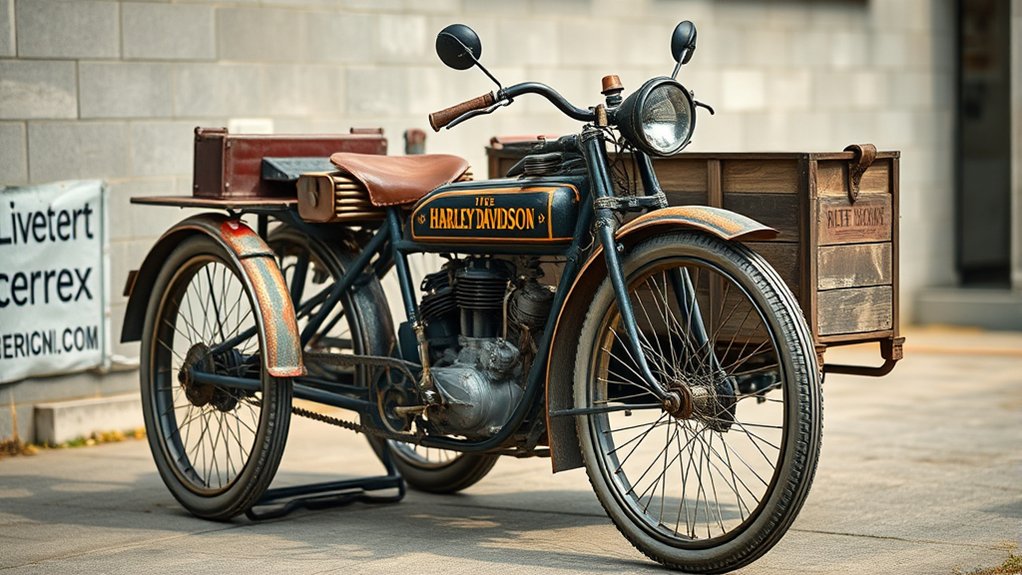
How did Harley-Davidson begin its journey into three-wheeled motorcycle design? It all started in 1913 with the Forecar, an innovative two-front-wheel motorcycle featuring a storage compartment ahead of the engine. This design aimed to improve stability and cargo capacity.
Building on this, Harley introduced the Package Truck in 1915, converting sidecars into enclosed cargo boxes to meet commercial delivery demands. Harley positioned the Package Truck as a cost-effective alternative to horse-drawn delivery, highlighting its utility and economy.
These models marked Harley-Davidson’s first practical experiments with three-wheeled motorcycles focused on cargo and stability. The Forecar and Package Truck laid the foundation for Harley’s exploration of utility-oriented trikes, blending innovative design with functional purpose in the early 20th century.
Harley-Davidson Trike Prototypes in the 1920s and 1930s
You’ll find that Harley-Davidson started experimenting with trike prototypes back in the late 1920s. It all began with the Cycletow, which had retractable rear wheels designed to improve stability on single-cylinder bikes. Pretty clever, right?
Then, by the early 1930s, they rolled out the Courtesy Car trike. This was a three-wheeled vehicle made more for practical, utility purposes. These early models really show how Harley was focused on making motorcycles more stable and trying out useful three-wheel designs.
Even though none of these made it to mass production, they were definitely important steps in their development process.
Early Stability Experiments
Although trikes weren’t mainstream in the 1920s and 1930s, Harley-Davidson actively explored stability improvements through several early prototypes. You’ll find that these early trike prototypes focused on enhancing balance and handling, addressing motorcycle stability challenges of the era.
Particularly, the Cycletow featured retractable rear wheels, acting like training wheels for better control. The Courtesy Car trike, a single-cylinder three-wheeler, further demonstrated Harley’s commitment to stability experimentation. These efforts, however, proved short-lived due to limited practicality and market appeal.
Key features of Harley’s early trike prototypes include:
- Retractable rear wheels on the Cycletow model for added stability
- Single-cylinder engine design in the Courtesy Car trike
- Exploration of alternative configurations to improve balance and handling
Utility-Focused Three-Wheelers
When Harley-Davidson pursued three-wheeled designs in the late 1920s and early 1930s, they focused on creating utility-focused machines that enhanced motorcycle stability and cargo capacity. During this period, you’d see prototypes like the Cycletow, which featured retractable rear wheels resembling training wheels, aimed at improving balance.
These early trikes weren’t meant for casual riding; instead, Harley designed them primarily for cargo and utility purposes.
In the 1930s, the trikes often ran on simple single-cylinder engines, emphasizing functionality over complexity. However, by the late 1930s and into the 1940s, production of these utility trikes largely ceased as Harley shifted focus to other motorcycle developments.
If you’re exploring Harley’s trike history, this era highlights their commitment to practical, utility-driven innovation.
Meet the Servi-Car: Harley’s Classic Three-Wheeler
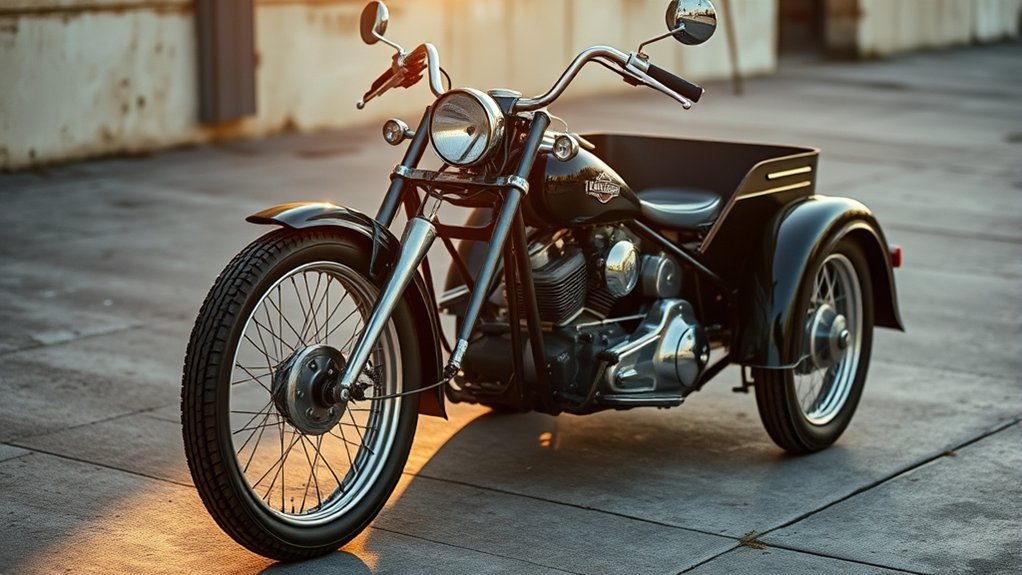
How did Harley-Davidson create a three-wheeler that lasted over four decades? The Servi-Car, introduced in 1931, combined utility and innovation, serving commercial needs with a sturdy cargo box and optional tow bar. It was the first Harley to feature an electric starter, decades before the Electra Glide.
Over the years, the Servi-Car kept its core design but evolved with fiberglass trunks and Hydra-Glide front ends. You’ll appreciate these key Servi-Car features: durable design tailored for deliveries and towing, early adoption of electric start technology, and popularity among car dealerships and small businesses for utility and advertising.
This classic three-wheeler remained relevant until 1973, proving its lasting appeal in Harley’s lineup. It’s pretty impressive how something designed so long ago stayed useful for so many years, don’t you think?
Harley-Davidson Trike Prototypes Before Official Production
Following the long-lasting success of the Servi-Car, Harley-Davidson explored new three-wheeled designs to meet evolving rider interests.
Building on the Servi-Car’s legacy, Harley-Davidson pursued innovative three-wheeled motorcycle designs for modern riders.
In the 1980s, they developed trike prototypes like the Trihawk, but these never reached commercial release. During the 1990s and early 2000s, Harley supported custom trike conversions through aftermarket companies, though no official factory models emerged.
Then, in 2006, Harley introduced the Penster, a trike concept based on their Softail line, which remained a prototype as well. Throughout this period, the company internally experimented with various trike designs, showcasing early engineering efforts to refine the three-wheeled experience.
These trike prototypes laid the groundwork for Harley’s eventual shift from experimentation to production models. They set the stage for the official launch of the Tri Glide Ultra in 2009.
Launching the Tri Glide Ultra Classic in 2009
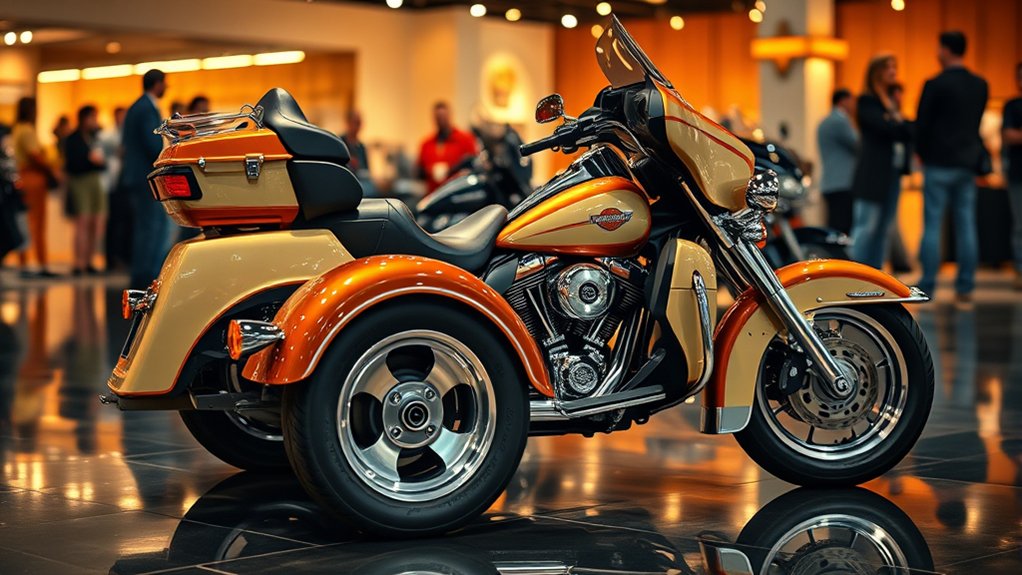
When Harley-Davidson launched the Tri Glide Ultra Classic in 2009, it was clear they’d something special for serious touring riders. You could tell right away it was designed with stability and comfort in mind.
It was built on the trusted Electra Glide Ultra Classic platform, so you knew it came with the quality and performance riders expected. Plus, it featured a powerful 114 cubic inch engine that packed quite a punch.
And safety wasn’t overlooked either—advanced systems were part of the package, making it a dependable choice on the road.
This model really marked a step forward from the old Servi-Car days. It was made for riders who wanted a modern, reliable three-wheeled bike that could handle the long haul with ease.
Key Features Unveiled
Although Harley-Davidson had long been synonymous with two-wheeled motorcycles, the 2009 launch of the Tri Glide Ultra Classic marked its bold entry into the three-wheeled touring market.
This model featured a powerful 114 cubic inch V-twin engine delivering 120 ft-lbs of torque and 93 horsepower. It came paired with electronic fuel injection and a six-speed transmission for smooth riding.
You’d also find advanced conveniences like electronic cruise control and a standard reverse gear, which made parking and maneuvering easier than ever.
Key features of the Tri Glide Ultra Classic include:
- Stability and touring comfort tailored for everyday riders
- Advanced safety enhancements
- User-friendly electronic systems and reverse gear
These innovations made the Tri Glide Ultra Classic a standout in Harley’s trike lineup. It really showed Harley-Davidson wasn’t just sticking to two wheels anymore.
Target Audience Focus
Because Harley-Davidson recognized a growing demand for stable, comfortable rides among older motorcyclists and those facing health challenges, they launched the Tri Glide Ultra Classic in 2009. This model targeted riders seeking greater stability without sacrificing the classic Harley touring experience.
Built on the Electra Glide Ultra Classic platform, it featured touring amenities for long-distance comfort.
Harley designed the Tri Glide Ultra Classic to offer an accessible, stable alternative for riders evolving from two wheels or looking for easier handling. The company marketed it toward those valuing safety and convenience, emphasizing three-wheel stability combined with traditional Harley style.
Evolution From Servi-Car
Harley-Davidson answered the demand for stable, comfortable rides by reintroducing a factory-produced three-wheeler with the launch of the Tri Glide Ultra Classic in 2009. This marked a significant evolution from the Servi-Car era, moving Harley’s trike offerings from utility vehicles to full touring machines.
Based on the Electra Glide Ultra Classic, the Tri Glide added a third wheel to enhance stability and comfort.
They developed it with Lehman Trikes, and the initial assembly took place at Lehman’s facility before production shifted to Harley’s York plant.
Key features included a powerful 114 cubic inch V-twin engine with electronic fuel injection, a reverse gear for easier maneuvering, and modern touring amenities for long-distance comfort.
This launch really showed Harley’s commitment to mainstream, factory-built trikes beyond just experimental or aftermarket conversions. It was a clear step forward for riders looking for something stable and comfortable straight from the factory.
Growing Harley’s Trike Family: Freewheeler, Street Glide, and More
Two key models that expanded Harley’s trike lineup are the Street Glide Trike, introduced in 2009, and the Freewheeler, which arrived in 2014. The Street Glide Trike offered riders a full touring experience, transforming Harley’s popular touring motorcycle into a stable three-wheeled ride. It catered to those wanting touring comfort combined with trike stability.
Five years later, Harley added the Freewheeler, featuring a bobtail rear fender and a cruiser-inspired design. This model appealed to riders seeking a stylish, easy-to-handle trike with a custom cruiser aesthetic.
Alongside the Tri Glide Ultra, these models now form a diverse trike family. They provide options that range from touring capabilities to sleek cruiser looks, letting you pick a trike tailored to your preferences.
Who Rides Harley Trikes? Target Markets and Features
Although many riders enjoy the thrill of two wheels, those who prioritize stability and ease of handling often turn to Harley trikes. Harley-Davidson’s HARLEY-DAVIDSON® TRIKE lineup, including the Tri Glide Ultra and Street Glide Trike, targets older riders, those with health concerns, and female riders seeking comfort.
These models feature three wheels and a low-slung design with a sturdy front fork, enhancing stability.
Harley briefly offered versions with additional rear trunks for storage convenience. You’ll appreciate features like electronic cruise control and a powerful V-twin engine that make long rides easier and safer.
The trikes appeal especially to riders shifting from two wheels due to aging or injury, touring enthusiasts wanting comfort and stability, and those valuing convenience and confidence on the road.
Frequently asked questions
How Much Does a Harley-Davidson Trike Cost?
A Harley-Davidson trike typically costs between $29,000 and $32,000 for new base models like the Tri Glide Ultra. If you want limited editions or custom features, expect to pay over $40,000.
Buying used can save you money, with prices usually ranging from $15,000 to $25,000 depending on condition and mileage.
You can also choose optional add-ons.
Harley offers financing and trade-in options to make your purchase easier. So, there are plenty of ways to get on the road with a trike that fits your budget.
What Engine Options Are Available for Harley Trikes?
Like a roaring thunderstorm, Harley trikes pack power with their engine options. You’ll find the Milwaukee-Eight V-twin engines in recent models, offering up to 114 cubic inches and 120 ft-lbs of torque.
Early trikes used flathead engines, while today’s models feature fuel injection and six-speed transmissions for smooth rides.
Some, like the Freewheeler, keep the classic air-cooled system, blending tradition with modern performance. It’s a great mix of old-school charm and new technology that riders appreciate.
Are Harley Trikes Suitable for Long-Distance Touring?
Yes, Harley trikes are perfect for long-distance touring. You’ll appreciate their powerful engines and advanced features like cruise control and adjustable suspension, which keep your ride smooth over hours.
The ergonomic seats and fairings reduce fatigue. While three wheels offer stability and confidence on varied roads. With ample storage and comfort-focused design, these trikes let you enjoy extended trips without compromise.
They make your touring experience both safe and enjoyable. So, if you’re planning a long ride, a Harley trike is definitely worth considering.
How Does Harley Ensure Safety on Their Trikes?
You’ll appreciate that Harley-Davidson trikes use front-to-rear linked braking with ABS. This system reduces wheel lockup by up to 50%, which is pretty impressive.
They’ve also added electronic cruise control and an optional reverse gear. These features make controlling the trike easier and help cut down rider fatigue.
The design is low and stable, with wide rear tires and a low center of gravity. This setup really improves balance on the road.
Plus, the durable chassis and advanced rider assistance systems keep you safe in all kinds of road conditions. They’re continuously updated to provide even better protection.
Can Harley Trikes Be Customized or Accessorized?
Yes, you can customize and accessorize Harley trikes extensively. Harley offers official accessories like upgraded seats, storage compartments, and handlebar styles to boost comfort and style.
Aftermarket parts let you add custom wheels, exhausts, advanced audio, and personalized lighting. Over time, you’ll find options to improve handling and tailor your trike for touring or personal expression.
This way, your ride truly reflects your unique preferences and needs. It’s all about making your trike as comfortable and stylish as you want it to be.
Final Thought
You’ve seen how Harley-Davidson’s trike timeline twists through time, from early experiments like the Forecar to the classic Servi-Car, and finally to the modern marvels like the Tri Glide Ultra Classic launched in 2009. Harley’s trike tale teems with tenacity, transforming prototypes into prized rides.
Whether you’re cruising comfortably or conquering corners, Harley’s trikes deliver distinctive design and dependable durability. They drive a diverse demographic to discover the dynamic delight of three wheels.