How Wide Is A Harley Trike – Full Story
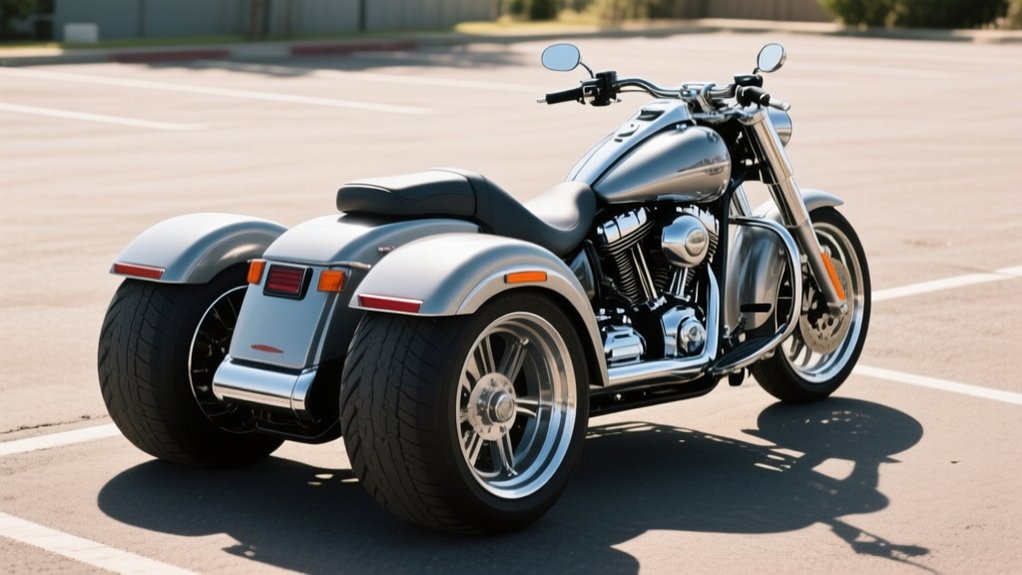
A Harley Trike, like the Tri Glide Ultra Classic, measures about 56 inches wide at the rear tire edges. This gives you a stable and confident ride. Tire size and model year can shift the width slightly between 55 and 56 inches.
This wider stance really helps with handling and balance. But it also means you need to be extra careful when parking or maneuvering in tight spaces.
Knowing these measurements helps you anticipate road dynamics and storage needs. Keep exploring to get the full picture on managing your trike’s width.
Harley Tri Glide Ultra Classic Width: How Wide Is It?
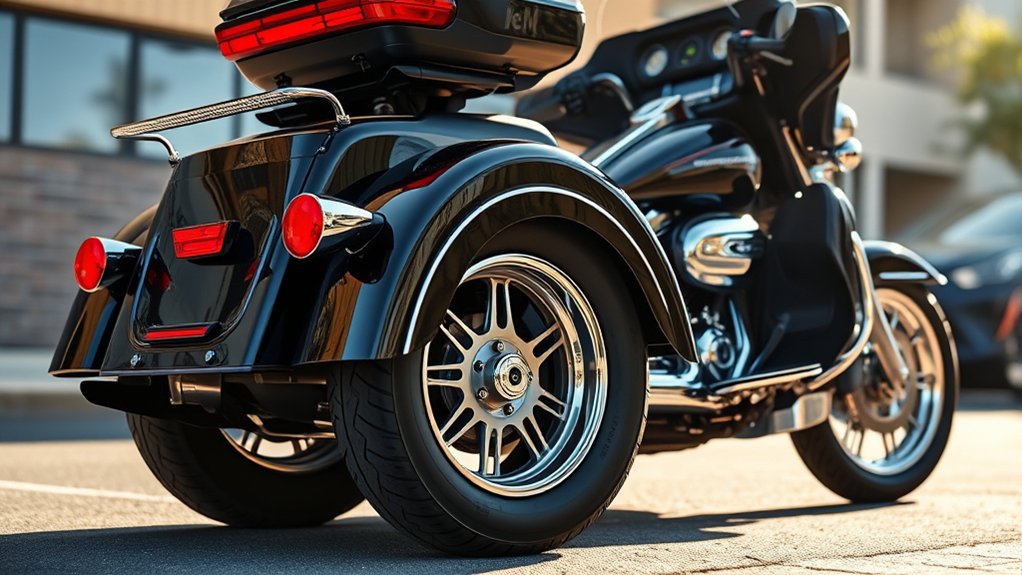
The Harley Tri Glide Ultra Classic measures about 56 inches wide at the rear, spanning from the outer edges of its rear tires. This overall width is typical for the Harley-Davidson Tri Glide lineup, offering a stable and confident ride.
The Harley Tri Glide Ultra Classic spans about 56 inches wide at the rear, ensuring stability and confidence on the road.
You’ll find that the width can vary slightly by model year, usually between 55 and 56 inches, but most specifications and owner reports confirm this range.
This broad stance really helps with balance, especially at lower speeds or when you’re taking turns.
Just keep in mind, you’ll need to be careful when maneuvering through tight spots or parking.
Knowing the Tri Glide Ultra’s overall width makes it easier to anticipate space requirements.
That way, you can navigate comfortably without any surprises in narrow environments.
Understanding Total Width vs. Track Width on a Harley Trike
While total width gives you the full measurement from the outer edges of the tires, understanding the track width is just as important for grasping how a Harley Trike handles. Total width typically ranges from 50 to 56 inches, depending on the model.
However, track width focuses on the distance between the centers of the rear tires. It is usually about 43.88 inches on many Harley Trikes.
To estimate track width, you subtract the width of each tire from the total width. This emphasizes the space between tire centers rather than outer edges.
This measurement directly impacts stability and cornering. So, when considering a Harley Trike’s size and performance, keep in mind both total width and track width for a complete picture.
Why Measurement Methods Cause Different Width Figures
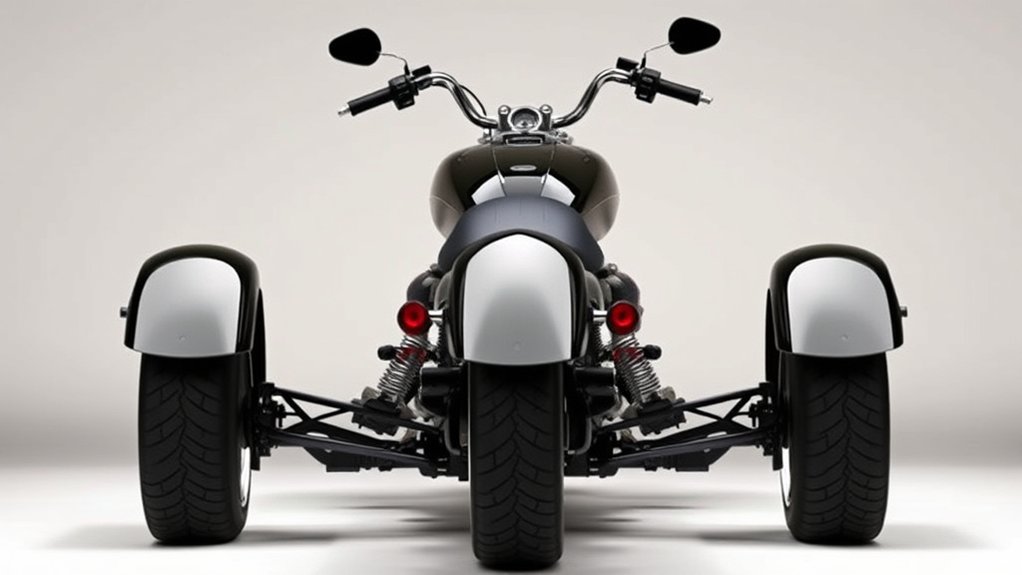
You’ll notice that measuring from the tire center to center gives a different width than measuring from the outer edges of the tires. It’s kind of like looking at the same thing from two different angles.
Tire size and width also play a big role in these differences. That’s why factory specs often don’t match up with what users measure themselves.
Measurement Points Explained
Because measurement points can vary widely, you might see different width figures for the same Harley trike depending on the method used. Measurement points typically focus on either the full width of the tires or the track width, which is measured between tire centers.
Manufacturers usually specify track width from tire centers, resulting in a narrower figure compared to measurements taken from the outer edges of the tires.
This distinction is important because measuring from the outside tire edges includes the full tire width, while track width ignores that extra span. Also, some measurements might include mirrors or fenders, which can further affect the reported width.
Tire Width Impact
Understanding the differences in measurement points naturally leads to examining how tire width itself affects the overall width of a Harley trike. When you look at tire width, larger tires increase the distance measured from outside-to-outside measurement, making the trike appear wider.
However, the tire center-to-center measurement remains relatively stable regardless of tire size changes. This means factory specs, which usually use tire center-to-center figures, often report a narrower width than measurements taken from the outer edges of the tires.
The choice between these two methods can cause several inches of discrepancy in width figures. So, when comparing Harley trike widths, you need to confirm whether the measurement is from tire centers or outside edges to understand the actual impact of tire width on overall size.
Factory Versus User Methods
While measuring the width of a Harley trike might seem straightforward, the method you choose can drastically change the numbers you get. Factory measurements typically use the center of each tire, resulting in narrower, standardized width figures.
However, when you measure from the outside edges of the tires, as many users do, you add about 3 inches per side. This difference creates noticeable measurement discrepancies between factory specs and owner-reported widths.
When you conduct a width comparison, it’s essential to know whether the measurement references tire centers or outer edges.
Understanding these distinct approaches helps you interpret width data accurately, avoiding confusion and ensuring you get a true sense of your Harley trike’s actual size.
How to Measure Your Harley Trike’s Width Accurately
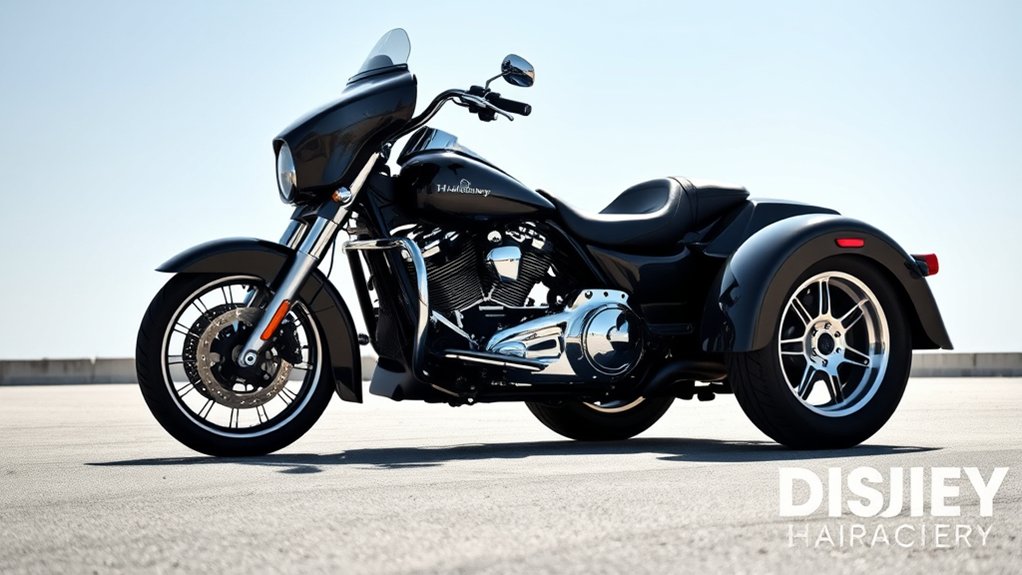
To measure your Harley Trike’s width accurately, start by focusing on key points like measuring from tire center to tire center.
It’s also important to note the tire’s widest part since that can affect your overall measurement.
Keep in mind how the tire width impacts the total width, so you get a true sense of your trike’s size.
Make sure to use a flat surface when measuring—this helps avoid any errors that might throw off your results.
With a few practical tips and the right tools in hand, you’ll be able to get precise measurements that match the manufacturer’s specs without any hassle.
It’s easier than you might think!
Measurement Points Explained
Because accurate measurements depend on where you measure, knowing the correct points on your Harley trike is essential.
When determining your trike’s width, focus on key measurement points: the outside edges of the tires and the tire centers.
Measuring from the outer edges of the tires at their widest point gives you the overall width, but this can vary depending on tire size and inflation.
In contrast, track width refers specifically to the distance between the centers of the tires across the rear axle, which manufacturers typically use for specifications.
To get precise results, always measure on a flat, level surface with properly inflated tires.
Understanding these differences helps you accurately assess your Harley trike’s width and avoid confusion caused by varying measurement methods.
Tire Width Impact
How exactly does tire width affect the measurement of your Harley trike’s overall width? Since most Harley trike tires are about 3 inches wide, their combined width adds roughly 6 inches to the total outside-to-outside measurement.
To get an accurate track width, the distance between the centers of the tires, you’ll need to subtract this combined tire width from your total measurement.
Proper measurement techniques involve placing your trike on a flat surface and using a tape measure or calipers to record the widest point between the outer edges of the tires.
Then, subtract the tire width to find the true track width.
Practical Measuring Tips
Although measuring your Harley trike’s width might seem straightforward, taking accurate and consistent measurements requires careful attention to detail. Start by placing your trike on a flat, level surface to prevent skewed results caused by uneven ground.
Use a tape measure to gauge the width from the outside edges of the rear tires, capturing the broadest point.
For a more precise measurement, measure from the center of one rear tire to the center of the opposite tire. Keep the tape measure aligned horizontally using a straight edge or level for accuracy.
Finally, cross-check your measurements with the manufacturer’s specifications to guarantee your data matches official figures.
Following these practical measuring tips helps you get reliable, precise measurements every time. It’s easier than you might think once you know the right steps!
How Tire Size Affects Harley Trike Width and Track
When you choose wider tires for your Harley Trike, you’ll notice a direct impact on both its overall width and track measurement. Tire size affects the track width, which is the distance between the centers of the two tires. This changes how wide your trike sits on the road.
For example, changing from P205/65R15 to P225/70R15 tires increases width by several inches. This affects storage and clearance, so it’s something to keep in mind.
| Tire Size | Approx. Width Increase | Effect on Track Width | Notes |
|---|---|---|---|
| P205/65R15 | +3 inches per side | Moderate | Standard width |
| P225/70R15 | +5 inches per side | Significant | Wider track, more grip |
| Larger Tires | +6+ inches per side | High | Requires clearance check |
| Smaller Tires | – | Narrower track | Less stable width |
Knowing your tire size helps you manage your Harley Trike’s track width precisely. It’s a simple way to make sure your ride handles just the way you want.
How Width Impacts Stability and Handling on Harley Trikes
Choosing the right tire size not only changes your Harley Trike’s width but also directly affects its stability and handling.
A wider rear track, typically between 54 and 56 inches, gives you a broader base. This greatly boosts stability by reducing the chance of tipping in sharp turns or uneven terrain.
This enhanced width improves balance, especially at low speeds. So, you’ll feel more confident during parking and slow maneuvers.
However, the increased width can affect handling by requiring more space for turns and parking, particularly in tight urban settings.
Manufacturers carefully design track widths, such as the 43.88-inch option, to strike a balance that optimizes both stability and handling.
This ensures your Harley Trike performs safely and predictably on the road.
Tips From Riders: Handling the Trike’s Width on the Road
Since a Harley Trike’s width can catch you off guard, riders emphasize the importance of becoming familiar with its dimensions before hitting busy roads. Knowing the trike’s overall width, around 56 inches at the rear, helps you anticipate its footprint.
When handling the width, pay close attention to the rear track, usually about 43.88 inches, especially in tight spots.
Practice maneuvering in open areas to build confidence with the wider stance. Use your side mirrors effectively to monitor your surroundings and avoid surprises, particularly when changing lanes or steering through narrow lanes.
How Width Affects Parking and Maneuvering in Tight Spaces
You’ll notice that a Harley trike’s wider dimensions—often around 56 inches—make parking in tight spots a bit trickier than on a standard motorcycle.
Because it’s wider, you’ll need to tweak how you turn and maneuver, especially when you’re in crowded or narrow areas.
Knowing these challenges ahead of time helps you choose the right spots and get around smoothly without scraping or getting stuck.
Challenges In Tight Areas
Although a Harley Trike’s width of about 56 inches offers stability, it can make parking and maneuvering in tight spaces more challenging than on a narrower motorcycle. You’ll find that this increased width requires extra care when steering through narrow lanes or fitting into standard parking spots.
Agility suffers as you need more space to avoid obstacles and curbs, especially at low speeds. Being mindful of the trike’s width helps prevent side-swiping and guarantees safer handling in congested areas.
| Aspect | Challenge | Impact on Rider |
|---|---|---|
| Width | Limits fitting in tight spots | Requires wider parking space |
| Maneuverability | Reduced in narrow lanes | Demands slower, precise turns |
| Parking | Harder in standard spots | Need extra caution and space |
Impact Of Width Dimensions
When parking or maneuvering a Harley trike, the vehicle’s width plays a crucial role in your ability to navigate tight spaces smoothly. The wider rear track, typically between 54 and 60 inches, demands more room than standard two-wheeled motorcycles.
This increased width often leads to parking constraints, especially in standard spots designed for cars or narrower bikes.
You’ll need to be mindful of the rear track’s measurement, usually around 55-56 inches, as it directly affects your trike’s fit in confined spaces.
Maneuvering through narrow streets or crowded lots requires extra caution to avoid scraping or collisions.
Understanding these width-related limitations helps you anticipate challenges and plan your movements carefully.
This way, you can avoid trouble when dealing with tight parking or restricted areas.
Maneuvering Strategies For Trikes
Managing tight spaces with a Harley trike demands more than just awareness of its width; it calls for specific maneuvering strategies tailored to its size. Since the trike’s track width ranges between 50 and 56 inches, you need to account for this when parking or turning in narrow spots.
Maneuvering requires slow, deliberate steering inputs due to the wider turning radius and larger footprint. When parking, always look for spacious or wider spots to comfortably fit your trike.
Adjust your mirrors to get a better sense of your rear track width, helping you avoid obstacles.
Practicing slow-speed turns and parking techniques designed for larger vehicles will boost your confidence and control during tight maneuvers. This way, every ride becomes safer and smoother.
Comparing Harley Trike Widths by Model Year and Variant
Since the width of a Harley Trike influences everything from parking options to trailer compatibility, it’s important to understand how measurements vary across model years and variants. The Harley Trike width, especially in the popular Tri Glide model, typically ranges from about 55 to 56 inches at the rear wheel dimensions.
For example, the 2015 Tri Glide measures roughly 55 inches wide, while other years may push closer to 56 inches. These slight changes stem from minor design tweaks or aftermarket modifications.
Although the variations are minimal, knowing the exact width helps you plan for storage and transport. Measuring at the widest point, usually across the rear wheels, gives you the most relevant dimension for fitting into tight spaces or attaching trailers safely.
What to Know Before Buying: Width and Everyday Use
Because the width of a Harley trike directly affects how you navigate tight spots and park daily, you’ll want to understand its dimensions before buying. The Harley-Davidson Tri Glide typically measures between 54 and 56 inches wide, depending on the model year and any modifications.
This width influences your maneuverability, especially in narrow lanes, busy parking lots, and garages. When evaluating the Tri Glide’s width, consider the measurement between the outer edges of the tires, as this impacts your ability to fit through tight spaces.
Before committing, check specific manufacturer specs for your model year to account for any variations. Keeping the trike’s width in mind assures safer lane positioning and easier everyday use.
That way, you can enjoy your ride without unexpected challenges.
Frequently asked questions
What Maintenance Challenges Arise From a Harley Trike’s Wider Rear End?
You’ll face more frequent tire inspections since the wider rear end causes uneven wear.
You’ll need to check suspension components regularly because the extra width adds stress.
Maintaining proper alignment becomes trickier but it’s essential to avoid handling issues.
You’ll also need to lubricate and replace axle bearings more often due to increased strain.
Plus, accessing rear brakes or the axle might require special tools or lifts, which can make repairs more challenging.
Just keep in mind that these things are part of owning a trike with a wider rear end.
How Does a Harley Trike’s Width Affect Fuel Efficiency?
The wider profile of your Harley trike increases aerodynamic drag and rolling resistance, which can lower fuel efficiency, especially at higher speeds. You’ll notice more wind resistance in crosswinds, causing your engine to work harder.
However, efficient engine design and proper maintenance, like keeping your tires inflated and riding smoothly, can help you offset some of these effects. This way, you keep your fuel consumption more manageable despite the extra width.
Are There Custom Options to Narrow a Harley Trike’s Width?
Yes, you can customize your Harley Trike’s width by swapping the rear axle or wheel hubs for narrower ones.
Aftermarket parts designed to slim the rear track are available, and trimming fenders helps a bit.
Keep in mind, these changes affect stability and handling, so you should definitely consult professionals.
Also, replacing wheels with smaller or offset options can bring your trike closer to a standard bike’s width while maintaining safety.
How Does Width Influence the Trike’s Weight Distribution?
Width influences your trike’s weight distribution like a giant’s arms balancing a delicate scale. A wider frame spreads your weight evenly across all three wheels, boosting stability and reducing the chance of tipping during sharp turns.
This balance improves handling and tire wear, giving you a smoother, safer ride. So, when you choose a wider trike, you’re ensuring better weight transfer and a more confident ride every time you hit the road.
What Safety Gear Is Recommended for Riding Wider Trikes?
You should wear a high-visibility helmet and reflective clothing to stand out given the trike’s wider profile.
Don’t forget sturdy, reinforced gloves and boots for better control on the broader platform.
Eye protection like goggles or sunglasses shields you from debris.
A properly fitting motorcycle helmet guarantees safety in falls.
Adding a protective riding jacket with armor helps guard against injuries during wider turns or off-road rides.
It’s all about staying safe and comfortable out there.
Final Thought
You might worry a Harley trike’s width feels bulky, but once you understand its measurements and how tire size affects handling, you’ll see it’s manageable. With proper measuring and rider tips, you’ll confidently navigate tight spots and parking.
Remember, the trike’s width guarantees stability and comfort, making your ride safer and more enjoyable. So don’t let size concerns hold you back. Embrace the full experience of owning a Harley trike.