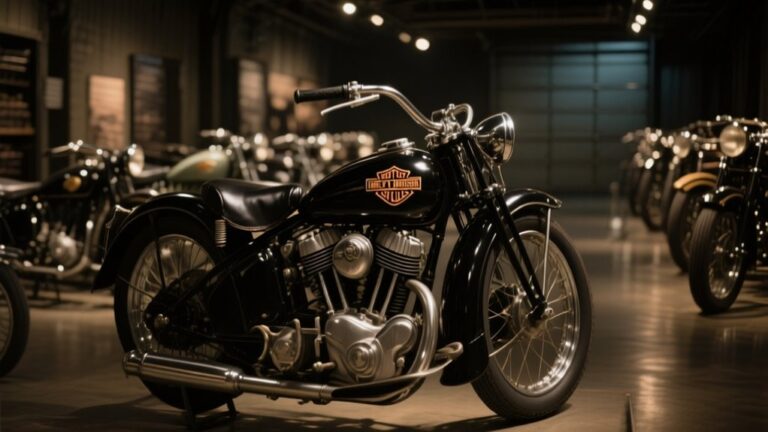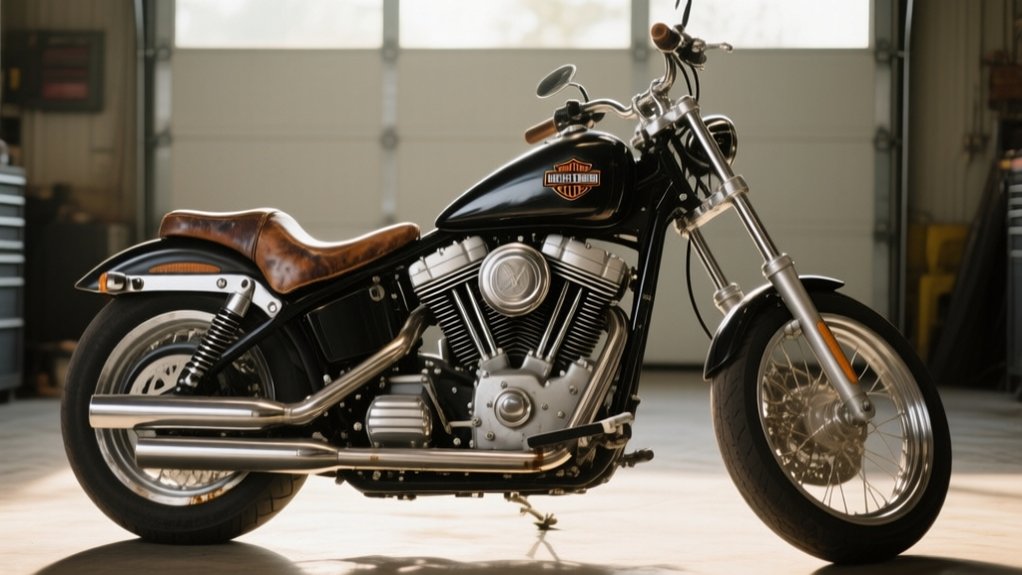
What Years Did Harley Make The Shovelhead – What to Know
Harley-Davidson made the Shovelhead engine from 1966 to 1984, starting with a 74ci engine before upgrading to an 80ci variant in 1978 for better power and cooling. During AMF ownership, mechanical updates improved reliability despite ongoing challenges like overheating and oil leaks.
The Shovelhead defined Harley’s classic style and performance before evolving into the more modern Evolution engine. If you want to understand its mechanical changes, cultural impact, and legacy, there’s much more to uncover.
What Is the Harley-Davidson Shovelhead Engine?
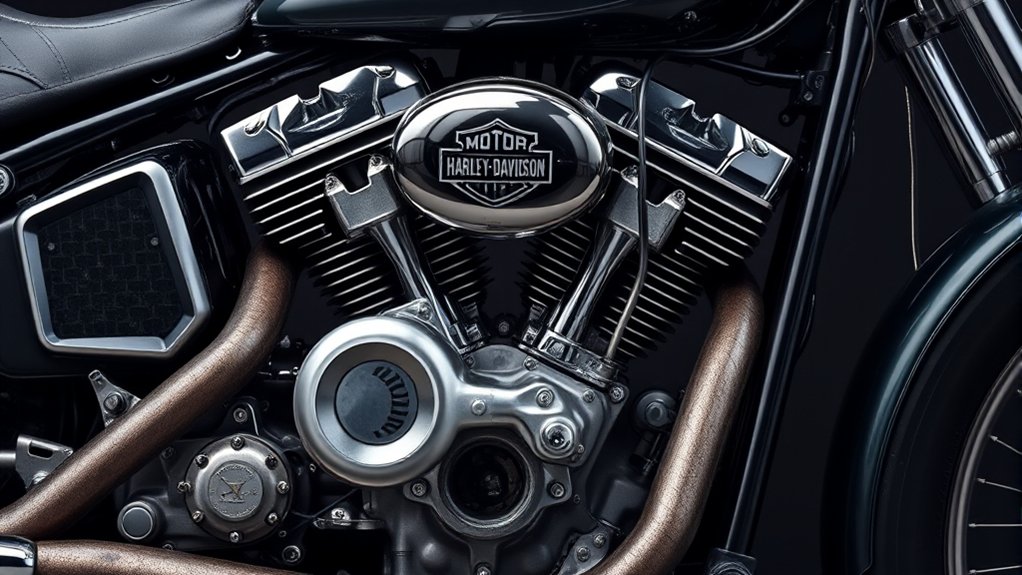
What makes the Harley-Davidson Shovelhead engine stand out in motorcycle history? The Shovelhead, produced from 1966 to 1984, marked the third evolution in Harley-Davidson’s OHV V-twin lineup. Its nickname comes from the distinctive aluminum heads with rocker covers shaped like upside-down coal shovels.
These aluminum heads featured shallower combustion chambers and larger valves, boosting performance by about 10 horsepower compared to earlier models.
Aluminum heads with shallower chambers and larger valves increased power by roughly 10 horsepower over previous designs.
Over its production years, the engine’s displacement increased from 74 to 80 cubic inches, enhancing power and torque.
The Shovelhead’s combination of durability, distinctive sound, and mechanical improvements helped cement its status as a classic motorcycle engine.
If you appreciate Harley-Davidson’s engineering heritage, this engine really shows a critical step in the brand’s performance and custom culture evolution.
Harley-Davidson Shovelhead: Production Timeline and History
You’ll find that the Shovelhead engine was produced from 1966 to 1984, marking a critical period in Harley-Davidson’s evolution. It really was a defining era for the company.
One of the key milestones was the 1978 introduction of the 80 cubic inch model. This update showed how Harley was making technical advancements to keep up with changing market demands.
It’s also important to understand how the AMF acquisition influenced production and quality during this time. That period brought a lot of challenges and changes, and knowing about them gives you essential context for the engine’s legacy.
Production Years Overview
When did the iconic Shovelhead engine leave its mark on Harley-Davidson’s legacy? The Shovelhead engine ran from 1966 to 1984, defining a pivotal era in Harley-Davidson’s production years. It was initially introduced with aluminum heads, which offered increased power and a fresh approach to engine displacement.
Over nearly two decades, Harley-Davidson made several model updates, refining both performance and design. The Shovelhead represents the third major evolution of their OHV V-twin engines before the Evolution engine replaced it in 1984.
Here are some key points to understand about its production years:
- The Shovelhead’s debut in 1966 marked a significant technical leap with improved heads.
- Various increases in engine displacement came along with ongoing chassis and design updates.
- Production concluded in 1984, paving the way for the next generation with the Evolution engine.
Key Model Milestones
How did Harley-Davidson’s Shovelhead engine evolve throughout its production to become a defining feature of its motorcycles? Introduced in 1966 as the brand’s third major engine evolution, the Shovelhead started with a 74 cubic inch (1208cc) engine design.
Over its production years, key model milestones marked its refinement.
In 1970, Harley switched from a generator to a more reliable alternator, which improved electrical performance.
By 1978, an 80 cubic inch (1340cc) variant appeared, offering enhanced power.
Then, in 1980, a significant upgrade arrived with the addition of a five-speed transmission, boosting rideability.
The Shovelhead’s production ended in 1984, making way for the aluminum-head Evolution engine.
These milestones highlight the Shovelhead’s pivotal role in Harley-Davidson’s motorcycle history. It really left an enduring legacy in engine evolution.
AMF Acquisition Impact
Although Harley-Davidson introduced the Shovelhead engine in 1966, the company’s acquisition by AMF in 1969 considerably shaped its production trajectory and public perception.
AMF’s ownership led to a significant production increase but also triggered quality issues that hurt the Shovelhead’s reliability reputation.
You should note three key impacts of the AMF era:
- Introduction of technical updates like the 1970 alternator and the 1978 engine size boost to 80 cubic inches.
- A decline in build quality and reliability, which frustrated riders and dealers alike.
- The 1981 Harley buyback from AMF, marking a strategic effort to regain control and restore quality standards.
This buyback revived focus on improving the Shovelhead until its phase-out in 1984. It was a turning point that helped Harley-Davidson get back on track.
74ci vs. 80ci Shovelhead Model Differences
You’ll notice the 80ci Shovelhead bumps up displacement by increasing both the bore and stroke. This change gives it more torque and better overall performance compared to the 74ci.
Because of this, some mechanical tweaks were necessary—like improving cooling and switching fuel types from leaded to unleaded.
Knowing these differences makes it easier to see how Harley-Davidson boosted power while keeping the engine reliable.
Displacement And Performance
What sets the 74ci and 80ci Shovelhead engines apart goes beyond mere displacement figures. The 80ci Shovelhead engine, introduced in 1978, boosts performance by increasing displacement from 74ci (1208cc) to 80ci (1340cc) through a larger bore and stroke.
This upgrade delivers roughly 10 extra horsepower, enhancing overall engine power and responsiveness. You can distinguish these models by their cylinder fins: the 74ci has 10 fins, while the 80ci sports 9.
Key differences include:
- Displacement increase via 3.50-inch bore and 4.25-inch stroke in the 80ci
- Higher compression ratios in the 80ci, optimized for unleaded fuel
- Approximately 10 horsepower boost, improving throttle response and torque
This displacement and performance evolution marks a significant step in Shovelhead engine development. It really changed the game for riders looking for more power and smoother throttle response.
Mechanical And Cooling Changes
Beyond the increase in displacement and power, the mechanical and cooling differences between the 74ci and 80ci Shovelhead models reveal how Harley addressed longstanding performance challenges. The 74ci Shovelhead featured shallower combustion chambers and iron cylinders with poor heat conductivity, which limited cooling efficiency and often caused overheating.
In contrast, the 80ci model, introduced in 1978, increased engine displacement and redesigned cooling characteristics by enlarging cylinder fins to nine from ten, optimizing heat dissipation. These larger fins, combined with a refined combustion chamber design, improved cooling and allowed the engine to handle higher power output reliably.
You’ll notice the 80ci Shovelhead also adapted to unleaded fuel, marking a mechanical evolution that balanced increased displacement with enhanced cooling, addressing prior thermal management issues effectively. It’s a solid example of how Harley evolved the engine to meet both performance and regulatory demands.
Key Design Changes and Mechanical Updates Over Time
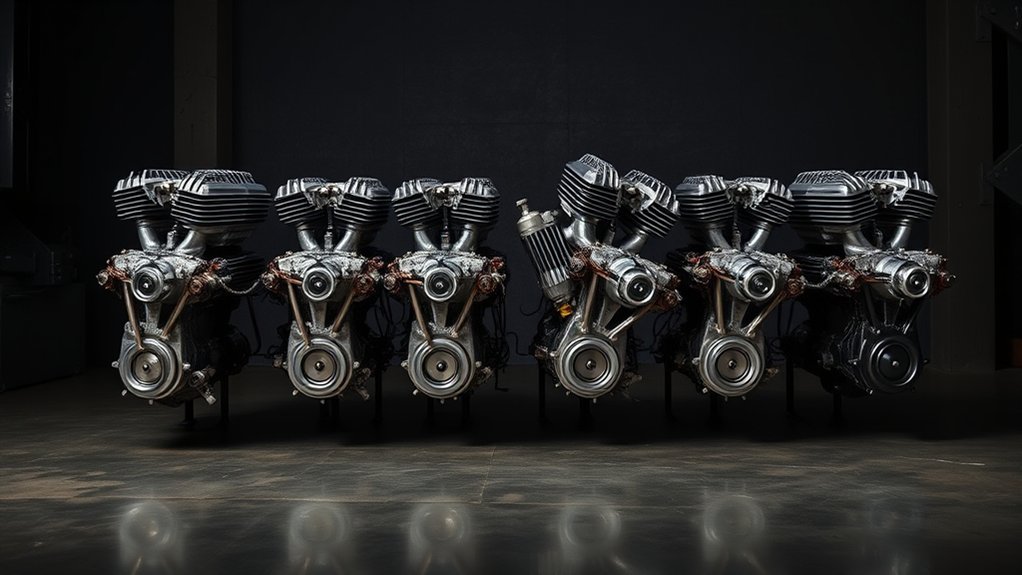
Although the Harley-Davidson Shovelhead maintained its iconic silhouette from 1966 to 1984, it underwent several key design and mechanical updates that considerably improved its performance and reliability. Notable model revisions during the production years included:
The 1970 update introduced an alternator charging system, cone-shaped cases, and new primary covers, replacing the older generator setup.
Then, in the late 1970s, engine displacement increased from 74 to 80 cubic inches, coupled with steel pistons and visual fin count changes.
Mechanical updates like the switch to Tillotson carburetors, electronic ignition in 1978, and rubber-mounted engines in 1980 enhanced overall performance and reduced vibrations.
These design changes and mechanical updates reflect Harley’s ongoing commitment to improving the Shovelhead’s reliability and ride quality throughout its production span.
Common Challenges and Fixes for Shovelhead Engines
The mechanical updates made throughout the Shovelhead’s production helped address many performance issues, but certain engine challenges persisted. Overheating remained common due to shallow combustion chambers and limited cooling fins, especially at low speeds. You’ll need to monitor oil leaks closely, as oil pooling in the heads and crankcase often caused wet-sumping and burnt oil problems.
Valve wear, particularly on the seats, combined with piston expansion from heat, led to poor compression and smoking. So, upgrading valves and tuning are essential fixes. Improvements like steel pistons and better oil seals in the late 1970s enhanced engine longevity by reducing heat-related damage.
To maintain performance, regularly check for air leaks around carburetors and seals. Also, keep oil levels ideal to prevent further complications. Staying on top of these details will help your Shovelhead run smoother and last longer.
The Shovelhead’s Role in Harley-Davidson Models
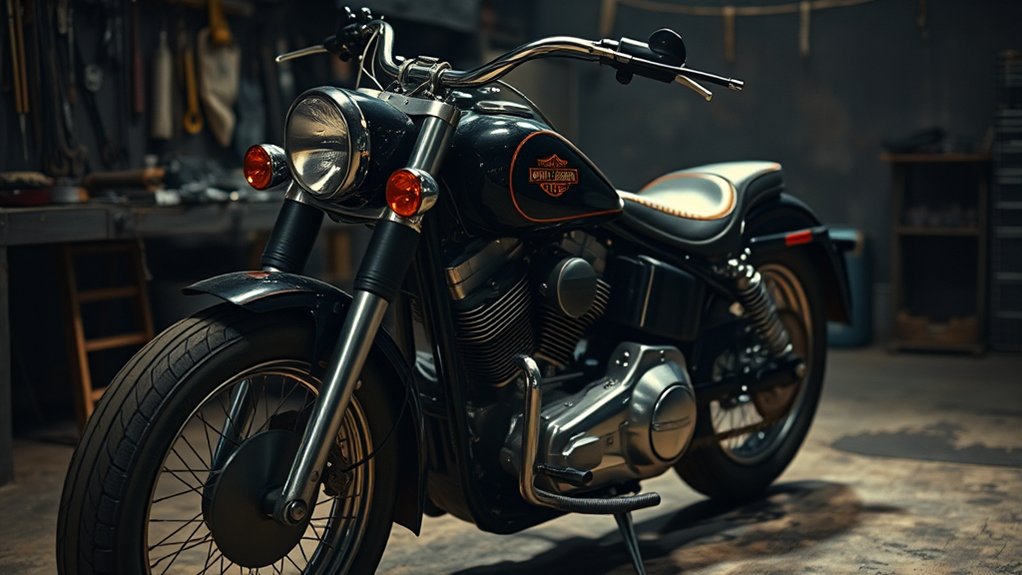
When you look at Harley-Davidson’s lineup from 1966 to 1984, you’ll see the Shovelhead engine powering the core big twin models, including Touring, Softail, and Custom series. This V-Twin engine replaced the Panhead and marked a significant evolution in Harley’s production years.
Its role was pivotal in three key ways:
First, it served as the primary powerplant across iconic models like the FLH, FX Super Glide, and Low Rider. It also defined Harley-Davidson’s sound and performance identity during its production years.
On top of that, it bridged the gap between earlier engines and the later Evolution engine introduced in 1984.
Understanding the Shovelhead’s role helps you appreciate Harley’s engineering focus on durability and style within its big twin models. It’s more than just an engine; it’s a key piece of Harley history that shaped the bikes we know today.
AMF Ownership Impact on Shovelhead Development
Since AMF took ownership of Harley-Davidson in 1969, the Shovelhead engine underwent several incremental updates aimed at boosting displacement and reliability.
During the AMF ownership from 1969 to 1981, Shovelhead development focused on engine updates that increased power output and addressed some mechanical weaknesses.
However, you’ll notice that these production years also saw significant quality issues, as AMF’s factory management often compromised build standards.
This decline in reliability affected the Shovelhead’s reputation negatively, making many riders wary of long-term durability.
Still, despite these setbacks, AMF ownership laid essential groundwork for future improvements by keeping the Shovelhead in continuous production and evolving it incrementally.
Understanding this period helps you appreciate how Harley-Davidson navigated challenges to refine engine quality post-AMF era.
Why the Shovelhead Remains Popular and Its Transition to the Evolution Engine
Although the Shovelhead faced criticism for reliability during its production from 1966 to 1984, you’ll find its enduring popularity stems from its distinctive design, strong torque delivery, and deep cultural resonance among Harley enthusiasts.
You appreciate the Shovelhead for its vintage appeal and broad scope for customization, which keeps it relevant despite mechanical limitations.
The shift to the Evolution engine in 1984 marked a pivotal moment, as Harley-Davidson improved reliability and efficiency with a lighter, more modern powerplant.
This change addressed three key aspects:
- Enhanced reliability, reducing maintenance issues.
- Improved performance and fuel efficiency.
- Continued respect for Harley-Davidson’s heritage while modernizing its lineup.
Understanding this evolution helps you value both the nostalgic charm of the Shovelhead and the practical advancements of the Evolution engine.
Frequently asked questions
How Can I Verify the Authenticity of a Vintage Shovelhead Motorcycle?
You can verify a vintage Shovelhead’s authenticity by checking the VIN stamped on the engine case. Make sure it matches the frame number if you have that available. This is one of the first steps to confirming the bike’s originality.
Next, look for original factory features like the “Power-Pac” aluminum heads and the correct fin count for the engine size. These details can tell you a lot about whether the parts are genuine or swapped out.
It’s also a good idea to confirm the displacement and year through production records.
Don’t forget to inspect for consistent engine and frame numbers. Avoid bikes with heavy modifications that stray from factory specs if you want to maintain authenticity.
Sticking close to original is key when verifying a vintage Shovelhead.
What Aftermarket Parts Are Best for Upgrading Shovelhead Engines?
For formidable fuel flow and fierce firing, choose performance parts like S&S Super E carburetors and Mikuni electronic ignition systems.
You’ll boost breathing with heavy-duty valve springs and pushrods, enhancing valve control and durability.
Don’t forget Andrews or S&S camshafts for powerful piston performance, paired with Wiseco or S&S pistons and rings to increase compression and reliability.
These upgrades sharpen acceleration and sustain strength for your Shovelhead’s spirited stamina.
How Does Fuel Type Affect Shovelhead Engine Performance?
Fuel type directly impacts your Shovelhead’s performance and longevity. Originally, these engines were designed to run on leaded gasoline. Using unleaded fuel without making any modifications can cause valve seat wear and knocking.
Lower octane unleaded gas tends to reduce power and puts more stress on the engine. If you’re running unleaded, it’s a good idea to consider lowering compression ratios or installing hardened valve seats to protect your engine.
Choosing the right octane and adding fuel additives can help keep your Shovelhead running smoothly. This approach also helps prevent costly damage down the road.
What Are the Best Riding Gear Choices for Shovelhead Owners?
When you hit the road on your Shovelhead, gear up like a well-oiled machine. Leather jackets and chaps offer durable protection while matching that vintage vibe.
A full-face helmet with retro styling keeps you safe without losing classic flair.
Don’t skimp on leather gloves for grip and reinforced boots for stability.
Finish with polarized sunglasses or vintage goggles to cut glare, making sure your ride is as smooth as a well-tuned engine.
It’s all about blending safety with style for the perfect Shovelhead experience.
Are There Any Notable Shovelhead-Themed Motorcycle Clubs or Events?
Yes, you’ll find several notable Shovelhead-themed clubs like the “Shovelhead Riders” and the “Harley Shovelheads Club” that celebrate this classic engine.
You can join events such as the “Shovelhead Rally” and various Harley Antique Bike Shows, where Shovelhead motorcycles take center stage.
These gatherings attract enthusiasts who restore, ride, and showcase these vintage machines. They provide you with a rich community and great opportunities to connect with fellow Shovelhead fans.
Final Thought
You might’ve heard the theory that Harley made the Shovelhead just to bridge the gap before the Evolution engine, but that’s not entirely true. Harley-Davidson crafted the Shovelhead from 1966 to 1984, refining it to meet rider demands despite challenges.
Its evolution wasn’t just a stopgap. It was a critical chapter in Harley’s engineering story. Understanding this helps you appreciate why the Shovelhead remains a beloved icon, not just a forgotten relic.