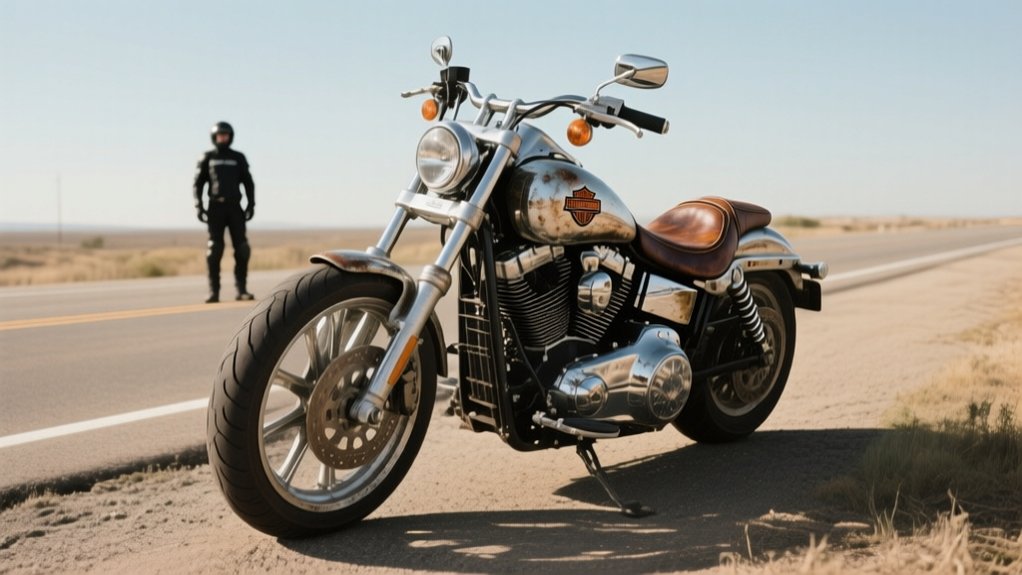
Are Harley Davidsons Reliable – Myth or Fact
Harley-Davidsons are reliable when you maintain them properly, combining modern engineering and rigorous quality control. Upgraded cooling systems, advanced materials, and ongoing R&D have reduced common issues like oil leaks and electrical faults. Different models vary in dependability, but newer bikes often match other brands in durability.
Your riding habits matter less than consistent upkeep to keep performance smooth. If you want to understand how maintenance and design improvements shape their reliability, there’s more to explore.
What Does “Reliability” Mean for Harley-Davidson?
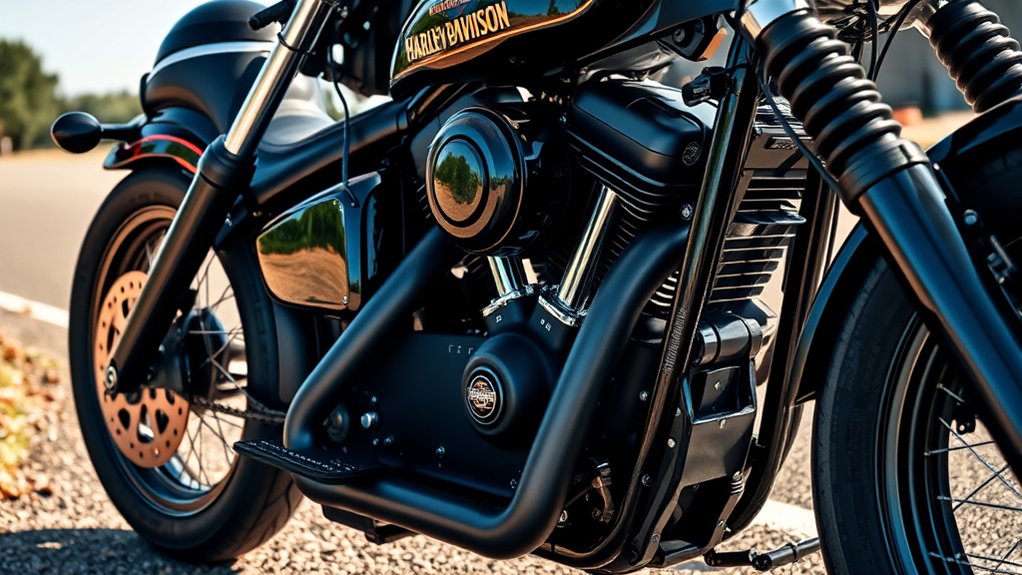
What exactly does “reliability” mean when it comes to Harley-Davidson motorcycles? For Harley, reliability primarily refers to consistent performance, minimal breakdowns, and long-term durability.
When you own a Harley-Davidson motorcycle, you expect it to start easily and run smoothly, especially during daily commuting.
Achieving this level of reliability depends heavily on regular maintenance, including timely oil changes and thorough inspections.
Modern Harley-Davidson motorcycles benefit from rigorous quality control and engineering improvements, which have enhanced their dependability.
Consumer reports and owner feedback consistently highlight that newer models tend to be more reliable for extended use.
How Has Harley-Davidson’s Engineering Improved?
Although Harley-Davidson has long been known for its iconic design and powerful engines, the company has considerably improved its engineering to boost reliability and performance. You’ll notice these enhancements not only increase durability but also contribute to Harley-Davidson’s strong resale value.
Investments in R&D, advanced materials, and stricter quality control have made recent models more dependable. Improvements like upgraded cooling systems and reinforced components reduce mechanical failures and maintenance needs.
| Engineering Improvement | Benefit |
|---|---|
| Advanced materials | Longevity, fewer breakdowns |
| Stricter quality control | Consistent manufacturing quality |
| Upgraded cooling systems | Better engine performance |
| Reinforced components | Enhanced reliability |
These ongoing innovations assure you get a bike that performs better and retains value over time.
What Are the Most Common Harley-Davidson Mechanical Issues?
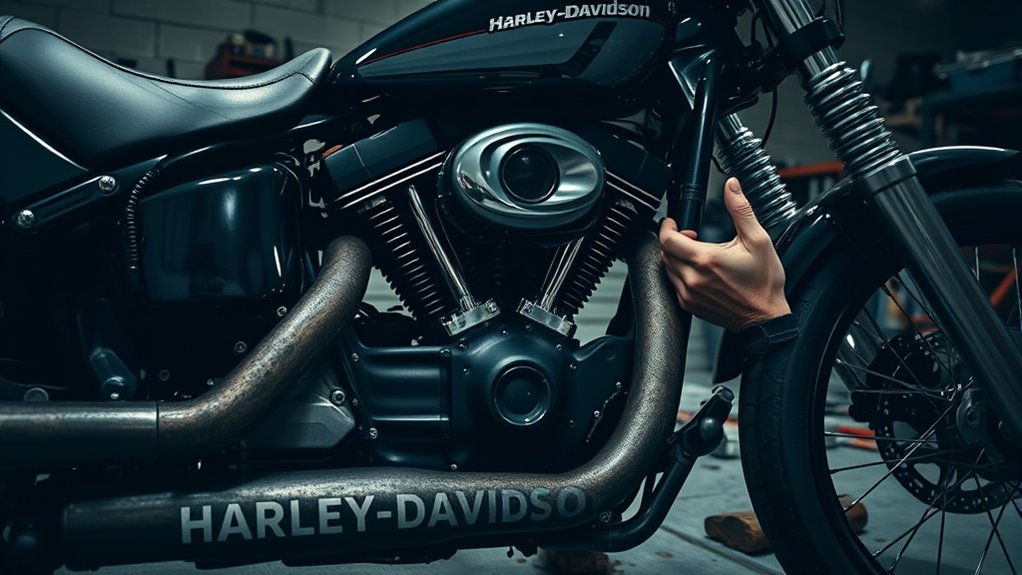
You might start to notice some engine performance issues over time, like oil leaks or clutch wear on your Harley-Davidson. These are pretty common as the bike gets older.
On top of that, electrical system problems can pop up too—things like faulty wiring or charging failures tend to affect a lot of riders.
And don’t forget about the usual wear and tear on parts like drive belts and shafts, especially if you’re riding touring or cruiser models.
All of these issues can add up, but knowing what to watch for can help keep your bike running smoothly.
Engine Performance Concerns
When you examine Harley-Davidson engines, you’ll notice certain mechanical issues that appear more frequently than others. Oil leaks commonly stem from the primary drive or cam cover gaskets, which can affect engine cleanliness and performance.
Some earlier models or those with high mileage have faced crankshaft and connecting rod problems. These issues can lead to potential engine failure if left unaddressed. You might also experience higher oil consumption, often caused by worn piston rings or valve seals, which means more frequent oil top-ups.
Overheating tends to be an issue in air-cooled models. This can degrade engine components and reduce longevity.
To avoid these problems, regular maintenance like timely oil changes and valve adjustments is essential.
Staying proactive helps ensure your Harley’s engine runs smoothly and reliably over time. It’s all about keeping an eye on things before they become bigger issues.
Electrical System Problems
Since Harley-Davidson motorcycles rely heavily on their electrical systems for essential functions, any faults in components like alternators, batteries, or wiring can quickly disrupt performance. You’ll often encounter issues such as dead batteries, faulty alternators, or failing wiring connections that cause starting problems or unexpected engine stalls.
Electronic control modules (ECMs) may malfunction, further complicating diagnostics.
Some models also face ABS sensor and wiring faults, which can trigger brake warnings or failures. Corrosion and moisture infiltration, especially in older or neglected bikes, frequently lead to shorts and unreliable electrical operation.
To minimize these risks, you should regularly inspect and maintain all electrical components, making sure connections stay clean and secure. Staying proactive like this helps preserve your Harley’s reliability and prevents costly breakdowns linked to electrical system problems.
Common Wear And Tear
Although Harley-Davidson motorcycles are built for durability, certain mechanical components commonly experience wear over time, especially with high mileage. You may encounter camshaft and rocker box failures, which happen quite often because of prolonged use.
Clutch plate slippage and early brake pad wear are also typical wear-and-tear issues that can affect performance and safety.
Plus, vibration-related problems like handlebar and seat rattles tend to increase as your bike gets older. Electrical faults, such as charging system or ignition switch problems, are common too, but the good news is they’re manageable with routine maintenance.
To keep these issues at bay, make sure you perform regular oil changes and check key components on time. Staying proactive really helps reduce mechanical wear and keeps your Harley-Davidson running smoothly for the long haul.
How Does Regular Maintenance Impact Harley Reliability?
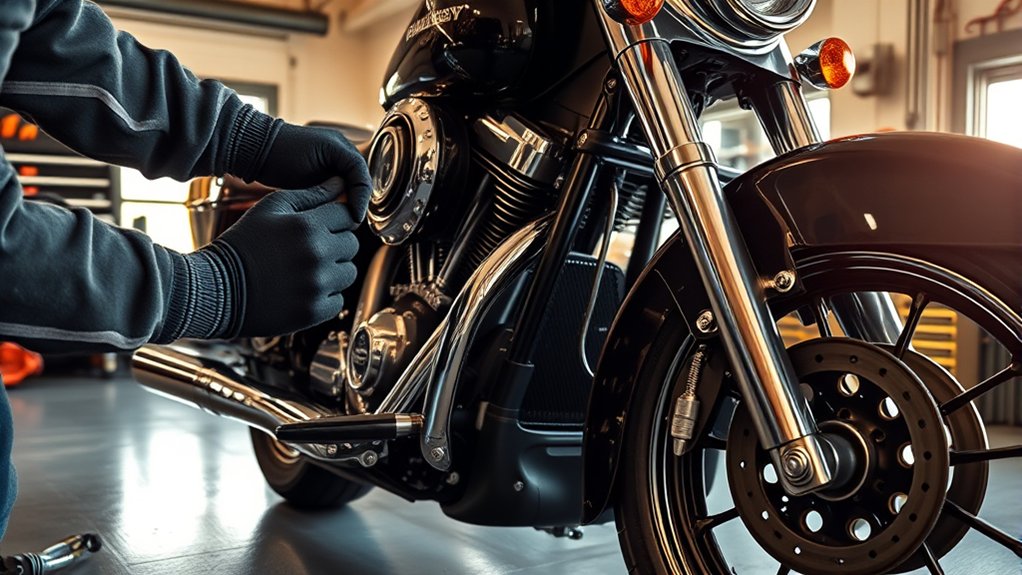
Because regular maintenance addresses critical components like oil, brakes, tires, transmission, clutch, and electrical systems, it considerably impacts Harley-Davidson reliability. When you keep up with oil changes, brake checks, and tire inspections, you prevent mechanical failures and extend your bike’s lifespan.
Regular maintenance on oil, brakes, tires, transmission, clutch, and electrical systems greatly enhances Harley-Davidson reliability.
Consistent servicing guarantees your transmission, clutch, and electrical systems stay in prime condition, reducing breakdown risks. By following the manufacturer’s maintenance schedule, you catch potential issues early, avoiding costly repairs and downtime.
A well-maintained Harley typically delivers better fuel efficiency and dependable performance during daily rides. This routine care also boosts your confidence, knowing your motorcycle operates safely and reliably, especially if you use it for daily transportation.
In short, regular maintenance is key to maximizing your Harley’s reliability and longevity.
Which Harley Models Are Most Reliable?
When choosing a Harley-Davidson that suits your reliability needs, you’ll find certain models stand out for their consistent performance and durability. The Sportster line is praised for its simplicity and toughness, often needing fewer repairs, which makes it a reliable choice.
Touring models like the Electra Glide and Road King feature high-quality components designed for long-distance dependability.
The Softail series benefits from modern engineering, improving overall reliability with updated materials and design.
If you want a lightweight, dependable bike for daily use, the Street series offers fewer mechanical issues and good reliability.
How Do Harley-Davidson Bikes Compare for Reliability?
Several recent studies and rider surveys show that Harley-Davidson motorcycles now offer reliability on par with other major cruiser and touring brands. Thanks to advancements in engineering, manufacturing, and quality control, modern Harleys perform dependably over time.
You’ll find that Harley-Davidson’s significant investment in research and development has enhanced durability, directly boosting long-term reliability.
While older models sometimes faced criticism, current bikes match competitors in reliability ratings. However, regular maintenance and servicing remain essential to keeping your Harley running smoothly.
If you prioritize upkeep, you can expect consistent performance whether you ride daily or set out on long-distance trips.
What Harley Owners Say About Daily Reliability?
Though Harley-Davidson motorcycles have historically faced mixed reviews on reliability, many owners now report that with consistent maintenance, their bikes hold up well for daily commuting.
Harley-Davidson bikes, once mixed in reliability, now excel for daily rides with proper maintenance.
You’ll find that modern Harley models benefit from improved engineering and quality control, which enhances their dependability.
Many riders share experiences of trouble-free use over several years, provided they perform routine upkeep like regular oil changes and inspections.
Community feedback suggests reliability varies by model, with newer bikes generally outperforming older ones in daily reliability.
If you commit to proper care, your Harley can serve as a reliable daily rider without frequent breakdowns.
This perspective reflects a growing consensus among Harley owners who emphasize maintenance as the key factor in ensuring consistent, everyday performance.
Does Rider Age or Experience Affect Harley Reliability?
You might think that your age or riding experience affects how reliable your Harley-Davidson is. But actually, reliability depends more on how well you take care of your bike.
Whether you’re new to riding or have been at it for years, skipping regular maintenance can cause the same kinds of mechanical problems.
Harley’s engineering is designed to hold up well no matter your skill level, as long as you keep up with the upkeep.
Rider Skill And Maintenance
While rider age and experience can influence how well you maintain a Harley-Davidson, they don’t directly determine the bike’s inherent reliability. Proper upkeep and timely service are essential for your Harley’s longevity, no matter your skill level.
Younger or less experienced riders might need more guidance on Harley-specific maintenance to avoid mechanical issues. Skilled riders can spot early signs of problems, which helps preserve reliability.
At the end of the day, manufacturing quality and consistent maintenance routines matter most.
| Rider Skill Level | Maintenance Impact |
|---|---|
| Beginner | Needs guidance, higher risk of neglect |
| Intermediate | Performs routine maintenance reliably |
| Advanced | Detects issues early, improves upkeep |
Experience Impact On Durability
Because Harley-Davidson motorcycles are engineered with high manufacturing standards, rider age or experience doesn’t directly affect their mechanical reliability. The durability of your Harley depends more on consistent maintenance and the quality of its engineering than on who’s riding it.
However, if you’re a younger or less experienced rider, you might be more likely to make maintenance mistakes that could reduce your bike’s longevity. Your riding style and upkeep habits, shaped by your experience level, indirectly influence how well the motorcycle holds up over time.
To guarantee your Harley remains reliable, you should focus on regular servicing and adopting proper riding techniques.
In short, your care routine matters more than your age or experience when it comes to preserving Harley-Davidson durability.
How Does Harley-Davidson’s R&D Improve Reliability?
Although Harley-Davidson has long been known for its iconic motorcycles, it’s their ongoing investment in research and development that truly enhances reliability. You’ll find that Harley-Davidson focuses on advanced engineering and materials to boost durability, while continuously refining engine performance and reducing mechanical wear.
Their R&D teams develop technologies like electronic fuel injection and advanced cooling systems, ensuring consistent performance under various conditions. By integrating rider feedback and extensive testing data, Harley-Davidson proactively addresses potential reliability issues in new models.
Furthermore, improvements in manufacturing processes and stricter quality control have strengthened long-term dependability. When you consider these efforts, it’s clear that Harley-Davidson’s R&D plays a vital role in making their motorcycles more reliable over time.
Frequently asked questions
What Is the Average Cost of Harley-Davidson Repairs?
You can expect the average cost of Harley-Davidson repairs to range between $200 and $600, depending on the model and service type.
Routine maintenance like oil changes and brake replacements usually costs $100 to $300.
For major repairs, such as engine overhauls or transmission work, costs can rise markedly, often reaching $1,000 to $3,000.
Keep in mind, genuine Harley parts tend to be 20-50% pricier than generic ones.
How Does Weather Affect Harley-Davidson Motorcycle Reliability?
Weather affects your Harley-Davidson’s reliability by exposing it to moisture, temperature extremes, and corrosion risks. Rain and humidity can cause rust if you don’t clean and protect metal parts regularly.
Extreme heat or cold impacts the engine and electrical systems, so you’ll need seasonal adjustments. Using sealed electrical components and corrosion-resistant coatings helps preserve performance.
Proper storage and covers are essential to protect your bike and make sure it runs smoothly in harsh conditions. Taking these steps can really make a difference in keeping your Harley in top shape.
Are Used Harley-Davidsons Less Reliable Than New Ones?
Used Harley-Davidsons aren’t inherently less reliable than new ones. They’re less reliable if they’re poorly maintained, neglected, or have high mileage.
You’ll find that a well-maintained used Harley with a documented service history performs just as dependably as a new model.
To guarantee reliability, you need to inspect the bike thoroughly, verify maintenance records, and consider its age and condition.
In short, care and upkeep determine reliability more than age. So, it’s really about how the bike has been treated over time.
What Are Common Non-Mechanical Issues Harley Owners Face?
You’ll often face non-mechanical issues like electrical problems, including faulty wiring or battery troubles, especially on older Harleys.
Cosmetic concerns such as paint chipping and chrome flaking can affect your bike’s appearance.
Vibrations might cause loose bolts or rattling noises, requiring regular checks.
Handlebars or footpegs can loosen over time, which can impact comfort.
Also, electrical accessories like GPS or audio systems may malfunction. These need attention to keep everything functioning smoothly.
Just a little upkeep goes a long way!
How Does Harley-Davidson Warranty Coverage Impact Reliability Perception?
Harley-Davidson’s warranty coverage directly boosts your perception of their reliability by showing the company’s confidence in their motorcycles. When you see extensive and extended warranties covering parts and labor, you’re reassured that potential issues won’t leave you stranded or facing costly repairs alone.
This kind of support makes you trust Harley more. You know they stand behind their bikes long-term, which positively shapes how dependable you believe their motorcycles really are.
Final Thought
When you consider Harley-Davidson’s ongoing engineering advances, regular maintenance, and owner feedback, it’s clear reliability isn’t just a myth. It’s actually a fact for many models.
While some mechanical issues persist, your riding habits and experience play a key role in keeping your bike dependable. Just like a trusty pocket watch in the digital age, your Harley can offer consistent performance when cared for properly.
This proves that classic muscle and modern reliability can truly coexist.