
Top 12 Best Bike for People with Back Pain You Must Try!
Struggling with back pain can turn what should be a simple bike ride into an uncomfortable ordeal. The best bike for people with back pain helps prevent stiffness and aggravation by supporting a more neutral spine position and reducing pressure on sensitive areas. Cheap or ill-fitting bikes often force riders into a hunched posture, which intensifies discomfort and muscle strain over time.
Key factors that separate a good bike from a poor one for back pain sufferers include frame design, seat and handlebar placement, and suspension. Bikes that offer an upright seating position keep the back aligned and reduce forward bending.
A well-padded, adjustable seat and handlebars at or slightly above seat height minimize reaching and slouching. Suspension systems, especially front forks with 50-100 mm travel, absorb shocks on rough terrain, preventing jarring impacts on the spine.
Need a Quick Check?
| Image | Product | Price |
|---|---|---|
Our Top Picks 1  | X-bike Foldable Bike | Check Price |
Our Top Picks 2  | Home Recumbent Bike | Check Price |
Our Top Picks 3  | YOSUDA Recumbent Bike | Check Price |
Our Selected Top 12 Bike for People with Back Pain for Different Needs
This list features carefully chosen bikes designed to support those experiencing back pain, each suited for different needs and preferences. For every bike, you’ll find clear insights on performance, ideal users, and its advantages and disadvantages to help you make an informed choice.
1. X-Bike Foldable Stationary Exercise Bike
Compact and foldable, the X-bike Foldable Stationary Exercise Bike suits people dealing with back pain by offering gentle, low-impact cardio that’s easy on the spine. Its biggest strength lies in the versatile 5-in-1 workout modes that let you vary your sessions without aggravating discomfort.
Setting up the bike at home is straightforward, and its foldable design means it can be tucked away when not in use, saving space. The adjustable workout modes make it easy to shift from light pedal sessions to more intense exercises gradually, a key factor when managing back pain and avoiding strain.
Solidly constructed for indoor use, it holds up well under regular cycling sessions while remaining stable and quiet. It handles different workout intensities effectively, helping keep pressure off the back. A common complaint is that the seat might not be as cushioned as some prefer, which could be uncomfortable for longer rides without added padding.
Many appreciate the bike’s quiet, stable ride and variety of workout modes, making it a good fit for back pain management. The most common drawback is discomfort caused by the firm seat during extended exercise sessions.
People looking for a space-saving, versatile exercise bike that won’t worsen back pain will find this appealing. Those needing extra seat cushioning or longer ride comfort might want to look for a model with more padding or ergonomic design features.
Pros
- Compact foldable design saves space easily
- Five workout modes for variety
- Quiet and stable for indoor training
- Useful for cardio and strength training
Cons
- Seat cushion may feel too firm
- Limited padding for long rides
| Specification | Details |
|---|---|
| Brand Name | Goimu |
| Model Name | G0605 |
| Number of Workout Modes | 5 |
| Recommended Uses | Indoor |
| Model Number | G0605 |
2. Recumbent Exercise Bike for Home
Best for folks needing a gentle way to exercise without straining their back, this recumbent exercise bike offers a padded seat and ergonomic backrest to keep comfort front and center. Its biggest draw is the adjustable seat that fits different heights, making it easy to find the right position that eases back pain while working out.
Setup is straightforward with a simple lever-based seat adjustment system. Using it day to day is quiet thanks to the magnetic resistance, so early morning rides won’t disturb the household.
The padded seat and supportive backrest make long sessions doable, and the attached pulse sensors keep track of heart rate without extra gadgets.
Built with commercial-grade steel, the bike feels solid and stable underfoot, supporting up to 400 lbs with no wobble. Magnetic resistance with 16 levels gives good control over workout intensity.
Common praise highlights the quiet ride, but some mention that the seat adjustment could be a little smoother during use.
Quiet operation and a sturdy build make this bike easy on the back and reliable for home workouts. The most frequent complaint involves the seat adjustment mechanism, which some find less smooth than expected. Despite this, it holds up very well under repeated use and various user sizes.
Great for anyone wanting a stable, comfortable ride focused on back support and quiet exercise. Those looking for advanced tech features like app connectivity or faster seat adjustments might want to explore other options.
Pros
- Padded seat and ergonomic backrest for comfort
- Quiet magnetic resistance system
- Supports up to 400 lbs
- Adjustable seat fits different heights
Cons
- Seat adjustment can feel stiff at times
- No wireless connectivity features
| Specification | Details |
|---|---|
| Brand Name | XVGVSV |
| Model Number | W239 |
| Resistance Levels | 16-Level Resistance |
| Weight Capacity | Supports 400LB |
| Seat Adjustment | Lever-based system |
| Pulse Monitoring | Pulse Sensors & LCD Display |
3. YOSUDA Recumbent Exercise Bike
Back pain can make staying active feel impossible, but a bike that supports your lower back can change that. A recumbent exercise bike suits those needing gentle, joint-friendly workouts.
Its biggest strength lies in offering a comfortable, low-impact cycling position perfect for anyone with back or knee issues.
Setup requires adjusting the seat using a knob that rotates and pulls out, allowing precise customization to fit heights from 4’9 to 6’2. Day-to-day, the bike runs silently, meaning you can exercise anytime without disturbing others.
The seat provides ample legroom, and the 16 resistance levels let you tailor workouts to your fitness and comfort level comfortably.
Performance focuses on delivering a safe, low-stress workout while protecting joints and back. The bike handles all ranges of motion smoothly, supporting weights up to 350LB. Construction feels solid and stable, though some users might find the seat adjustments take a moment to get used to.
The quiet operation draws strong approval, while minimal complaints mention the seat padding could be softer.
Strongest praise centers on the bike’s quiet operation and comfortable back support that suits users with joint and waist issues. Common complaints focus on the firmness of the seat padding and the slight awkwardness of the adjustment mechanism before becoming familiar.
Anyone needing a low-impact workout to protect their back or knees will find comfort in this bike’s seat and resistance options. People looking for a softer seat or quicker setup might want to explore other adjustable recumbent bikes instead.
Pros
- Quiet operation ideal for any time of day
- Seat adjusts to fit users 4’9″ to 6’2″
- Supports up to 350LB for sturdy use
- Protects joints during low-impact workouts
Cons
- Seat padding may feel too firm for some
- Seat adjustment can feel fiddly at first
| Specification | Details |
|---|---|
| Brand Name | YOSUDA |
| Model Number | lrc-01 |
| Capacity | 350LB |
| Resistance Levels | 16-level Resistance |
| Seat Adjustability | Infinitely Adjustable Seat |
| Recommended Uses | Indoor |
4. Recumbent Magnetic Exercise Bike

Quiet operation stands out with under 25dB noise, ideal for those with back pain needing gentle, low-impact exercise at home. The recumbent design supports your back, making long sessions comfortable while adjustable resistance adapts to different fitness levels.
Setup is straightforward, fitting well in indoor spaces. Day-to-day, the magnetic resistance offers 16 levels ranging from warm-up to muscle building, letting you adjust intensity without jarring your back. The LCD display and heart rate handles help track progress, and the supportive seat keeps you stable during workouts.
It performs well at providing smooth, low-impact motion that eases strain on the spine. Built solidly with a 350LB weight support, it feels durable.
Most praise its quiet running, while some note the seat adjustment could be easier to manage, especially for mobility challenges.
Quietness rates highest as customers appreciate exercising without disturbing others. Complaints often point to seat adjustment being less user-friendly, which may affect quick setup times or comfort changes mid-workout. The bike meets expectations for gentle low-impact activity and back support.
Those dealing with back pain and wanting a quiet, stable bike for indoor use will find this a suitable option. Anyone needing easy seat adjustments or outdoor capability should explore alternatives better geared for those needs.
Pros
- Very quiet operation for shared living spaces
- 16 resistance levels suit all workout stages
- Supportive seat eases back discomfort
- Sturdy build supports heavier users
Cons
- Seat adjustment can be tricky for some
- Limited to indoor use only
| Specification | Details |
|---|---|
| Resistance Levels | 16 Adjustable Magnetic |
| Noise Level | Below 25dB |
| Weight Capacity | Supports 350LB |
| Model Number | CBX20 |
| Display | LCD with Heart Rate Handle |
5. MERACH Recumbent Exercise Bike

People dealing with back pain often need a bike that supports posture without aggravating discomfort. This recumbent design suits adults and seniors by offering a wide range of seat adjustments and a thick, breathable seat.
Its biggest strength lies in prioritizing ergonomic comfort to reduce strain during workouts.
Setup involves choosing from eight seat positions to fit your inseam and comfort needs, which can make a big difference when sitting for long periods. Adjusting resistance is straightforward with the car-style lever, letting you control workout intensity easily. The breathable mesh backrest helps keep you cool, making daily use more comfortable whether the session is light or intense.
In terms of performance, the bike handles its main goal of low-impact cardio well and feels sturdy enough for regular indoor use. It’s built with a magnetic resistance system that provides smooth transitions between levels. Most praise mentions the comfortable seat and backrest, while the main complaint highlights the limited advanced features for tech-savvy users.
The most appreciated feature is the comfortable thicker seat paired with a breathable backrest, making longer rides easy on the back. A common downside is the absence of advanced tech features, which some users notice when wanting more interactive workouts.
People prioritizing comfort and ease of use will find this bike meets their needs well. Those wanting more high-tech tracking or compact designs might want to explore other options better suited for those preferences.
Pros
- Thicker seat cushions for lasting comfort
- Breathable backrest prevents heat buildup
- Simple lever adjusts resistance quickly
- Eight seat positions ensure proper fit
Cons
- Lacks advanced digital workout options
- May feel bulky in smaller spaces
| Specification | Details |
|---|---|
| Model Name | S19 |
| Resistance Levels | 8-Level Car-Style Adjustment |
| Seat Adjustment | 8 Positions |
| Backrest | Breathable Mesh |
| Item Highlight | Heart Rate Handle, Adjustable Seat |
6. Recumbent Exercise Bike with Magnetic Resistance

Designed for those dealing with back pain, this Recumbent Exercise Bike focuses on comfort without sacrificing workout quality. The standout feature is the supportive, padded seat paired with smooth magnetic resistance, making it a solid choice for low-impact exercise at home or rehab settings.
Setup is straightforward, with clear instructions and manageable parts for assembly. During daily use, the 16 resistance levels allow gradual intensity adjustments from warm-ups to cardio.
The seat’s cushioning offers consistent comfort over longer sessions, and the heavy-duty frame feels steady underfoot, providing needed stability especially for heavier users.
Performance excels with quiet operation and consistent resistance changes, which help keep workouts controlled and gentle on the back. Built on a thickened steel frame, it supports users up to 400 lbs securely.
Reviews highlight the comfort of the padded seat as the bike’s best feature. Some mention the console or LCD monitor could offer more detailed feedback.
The bike’s comfort, especially the padded seat, receives praise for helping reduce back strain during workouts. The most frequent complaint involves the LCD monitor offering only basic feedback, which might not satisfy those wanting detailed performance data. Stability during use and smooth resistance show the design focuses on gentle exercise.
This bike suits anyone needing low-impact cardio with extra back support and who values stability up to 400 pounds. Those seeking advanced tracking features or a lighter frame might look for alternatives better tailored to those preferences.
Pros
- Supports users up to 400 lbs safely
- Soft padded seat for long-term comfort
- Quiet magnetic resistance system
- Stable and heavy-duty steel frame
Cons
- LCD monitor lacks detailed workout metrics
- Assembly may take moderate time without tools
| Specification | Details |
|---|---|
| Resistance Levels | 16 Levels Magnetic Resistance System |
| Weight Capacity | 400 LBS |
| Frame | Thickened Steel |
| Item Count | 1 Count |
| Model Number | W356 |
7. Pooboo Folding Magnetic Upright Exercise Bike

pooboo Folding Magnetic Upright Exercise Bike offers both upright and semi-recumbent modes for versatile workouts that suit people with back pain. Its biggest strength lies in the supportive back cushion and adjustable resistance levels, making it a practical choice for gentle exercise at home without aggravating discomfort.
Setting up the bike is straightforward, and folding it away takes little time, which fits well in small living spaces. The adjustable arm resistance bands provide some variety beyond cycling, giving a light upper-body workout without extra equipment. Having a bottle holder close by helps keep you hydrated, and the folding design allows easy movement and storage.
The bike performs steadily at 8 resistance levels, handling workouts from light to moderate intensity without issue. Its build includes a 6.6 lbs flywheel and a supportive back pad that keeps the lower back comfortable during rides.
Most people praise the back support for easing discomfort, while the common downside is that the flywheel feels a bit light for those seeking very intense training.
The back support cushion consistently receives positive notes for minimizing discomfort during rides, making it a good fit for those with back pain. On the downside, the relatively light 6.6 lbs flywheel seems less suited for users wanting intense resistance or heavy training.
People looking for a low-impact, comfortable option that fits small spaces will appreciate this bike. Those who want higher resistance or more powerful workouts might want to explore models with heavier flywheels or additional features focused on performance.
Pros
- Back support cushion relieves lower back strain
- 8 resistance levels for workout variety
- Compact folding design saves space
- Arm resistance bands add upper-body work
Cons
- Flywheel weight feels light for advanced workouts
- Limited to indoor use only
| Specification | Details |
|---|---|
| Foldable Design | Yes |
| Resistance Levels | 8-Level |
| Flywheel Weight | 6.6 LBS |
| Max User Weight | 300 LB |
| Back Support Cushion | Included |
| Arm Resistance Bands | Attachable front or rear |
8. Sunny Health & Fitness Smart Recumbent Bike
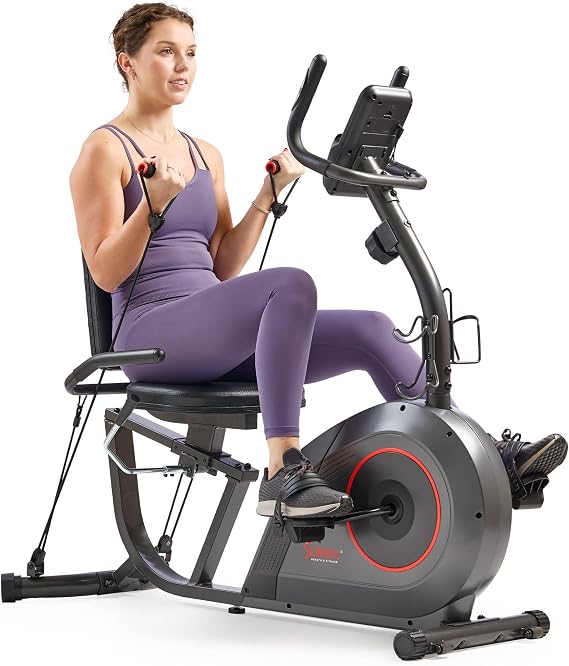
Quiet and easy on the joints, this recumbent bike suits anyone dealing with back pain who wants gentle, low-impact workouts. The biggest strength is its wide, cushioned seat and back support, making it comfortable for longer sessions without putting strain on the spine.
Setting it up at home doesn’t take much time, and the adjustable seat fits inseams from 27.2 to 35.8 inches, which helps find the right posture. The pulse sensors give basic heart rate feedback, and resistance can be manually adjusted through 16 levels to match your fitness needs.
Built-in resistance bands also let you work your upper body without standing up.
The bike holds up well for indoor, low-impact exercise, keeping you stable with a weight capacity of 300 pounds. Many appreciate how soft and wide the seat is, reducing pressure on the lower back. A few have noted that even with the adjustable settings, it might not fit very tall users perfectly.
The free SunnyFit app connection expands workout options, though using the app is optional.
Most praise focuses on the comfortable, supportive seat that helps reduce back pain during exercise. Users commonly mention that the bike’s size and seat adjustment don’t always accommodate taller individuals well, which can be limiting.
People with back pain looking for a gentle, seated exercise option will be pleased with this model. Those who are very tall or want more advanced tracking features might want to explore other bikes with greater adjustability or technical specs.
Pros
- Wide cushioned seat and back for comfort
- 16 levels of resistance for workout variety
- Includes upper body resistance bands
- Free connection to SunnyFit app workouts
Cons
- May not fit very tall users well
- Some find seat adjustment limited
| Specification | Details |
|---|---|
| Weight Capacity | 300LB |
| Inseam Fit | 27.2–35.8in |
| Resistance Levels | 16-Level |
| Pulse Sensors | Yes |
| Fitness App | SunnyFit App, Free Access |
9. Recumbent Exercise Bike with Arm Exerciser

Ideal for those dealing with back pain, this recumbent bike combines cycling with arm exercises to offer a full-body, low-impact workout. Its greatest strength lies in supporting joint-friendly movements that ease strain while still providing effective cardio and muscle engagement.
Setup is straightforward, with clear instructions that get it ready for daily rides without much hassle. The 16 magnetic resistance levels allow smooth adjustments depending on how intense you want your workout, making it flexible for light recovery sessions or more challenging cardio.
The built-in LCD monitor keeps track of your progress, while the Bluetooth app lets you stay connected and motivated.
Performance-wise, it delivers gentle resistance that protects knees and joints, essential for long-term use with back pain. Construction feels solid and stable, supporting up to 450 pounds comfortably. Many users appreciate how quiet the ride is during workouts, while some note that the arm exerciser might feel less natural compared to traditional movements.
The quiet magnetic resistance offers comfortable rides that protect knees while the full-body movement supports coordinated workouts. Many find the arm exerciser less intuitive compared to cycling alone but appreciate how stable and sturdy the bike feels during use.
Those with back pain seeking gentle cardio and joint care will likely benefit from this bike’s design. People wanting a more traditional cycling experience or needing outdoor equipment might want to look elsewhere.
Pros
- Supports full-body low-impact motion
- 16 resistance levels for varied intensity
- Strong build with 450 pounds capacity
- Bluetooth app integration for tracking
Cons
- Arm exerciser feels awkward to some
- Designed mainly for indoor use, not outdoor
| Specification | Details |
|---|---|
| Resistance Levels | 16-Level Magnetic Resistance |
| Weight Capacity | 450LBS |
| Monitor Features | LCD Monitor, Heart Rate |
| App Connectivity | Bluetooth App |
| Brand Name | LFEYYD |
| Model Number | W215 |
10. Kawnina Recumbent Exercise Bike

Reinforced steel forms the backbone of a bike designed to support heavier users up to 420 lbs, making it suitable for people with back pain who need stable, gentle support. Its big advantage lies in the ergonomic backrest and extra-wide cushion, which make sitting much more comfortable for longer workout sessions.
Setup involves finding a spot indoors and adjusting the rail to fit your leg length comfortably. The backrest’s breathable material helps avoid discomfort during use.
You can fine-tune the resistance across 16 levels, so pedaling doesn’t strain your back while still offering a good cardio workout. The wide seat lets you settle into a relaxed position without feeling cramped.
Performance focuses on steady, low-impact pedaling that protects your back while still building endurance. Its steel frame gives the bike solid stability, so it doesn’t wobble during use. Most praise highlights the comfy seat and strong back support.
However, some mention that the bike takes up a fair bit of space, which could matter in small rooms.
The best feature mentioned is the extra-wide cushion combined with ergonomic back support, making longer rides comfortable for those with back pain. The most frequent downside noted is the bike’s size, which makes it less ideal for cramped spaces.
People wanting a supportive, stable exercise experience for their back will find this bike helpful. Those with very limited room or needing a compact design may want to look at smaller alternatives that don’t take up as much floor space.
Pros
- Strong 420 lb weight limit
- Comfortable extra-wide seat
- Ergonomic, breathable back support
- Adjustable resistance for all fitness levels
Cons
- Requires significant floor space
- May feel bulky in smaller rooms
| Specification | Details |
|---|---|
| Weight Capacity | 420 lbs |
| Resistance Levels | 16-Level Resistance |
| Frame Material | Reinforced Steel |
| Back Support | Ergonomic Breathable Backrest |
| Seat | Extra-Wide Cushion |
11. Niceday Recumbent Exercise Bike

Comfort stands out immediately, making it one of the better recumbent bikes for anyone dealing with back pain. Its design specifically aims to reduce strain on the lower back and joints, which suits people recovering from surgeries or those with arthritis.
The seat and back support create a gentle experience for those wary of aggravating their pain.
Setting it up is straightforward with the included manual, and adjusting the seat to find the right posture is key for comfort during your workout. The backrest and 16 resistance levels help with endurance building while keeping stress on the body low. Tracking your progress with the LCD display and heart rate handles adds useful feedback for daily sessions.
Performance focuses on gentle rehab efforts and cardio training, handling a maximum weight capacity of 400 lbs without feeling flimsy. The build is solid for indoor use, providing steady support even with increased resistance.
Praise highlights its effective relief on the back and knees, though some mention the seat adjustment could benefit from smoother movement.
Many find the bike significantly reduces pressure on the lower back and knees during exercise, which helps with mobility and arthritis relief. Some users note the seat adjustment mechanism isn’t very smooth, occasionally making position changes a bit frustrating.
Good fit for those recovering from knee or back surgery and anyone needing low-impact cardio options. People looking for outdoor bikes or who want very quick and easy seat adjustments may want to consider other models.
Pros
- Reduces strain on back and joints
- Adjustable seat for personalized comfort
- Supports up to 400 lbs weight
- 16 levels of resistance for variety
Cons
- Seat adjustment could be smoother
- Limited to indoor use only
| Specification | Details |
|---|---|
| Model Name | RC88 |
| Weight Capacity | 400 lb |
| Resistance Levels | 16 |
| Recommended Uses | Cardio training, Fat Burning & Weight Loss, Indoor, Low-Impact Cardio & Endurance Building, Rehab treatment |
| Heart Rate Monitoring | Heart Rate Handle |
| Display | LCD |
12. Sunny Health & Fitness Smart Magnetic Recumbent Bike
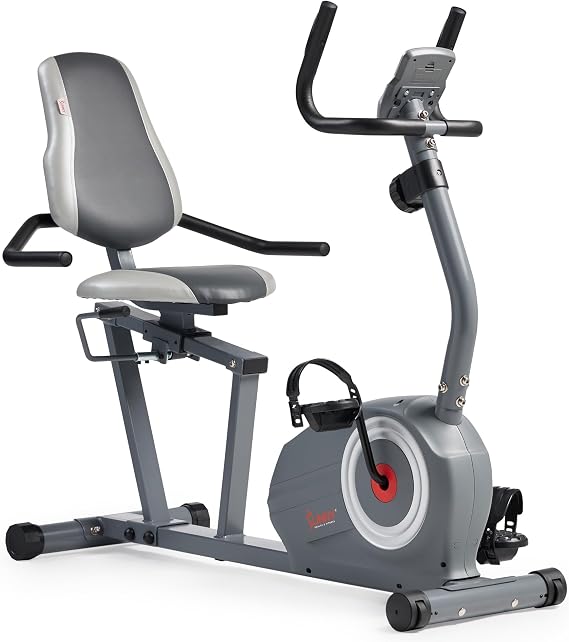
Quiet and smooth operation makes this recumbent bike ideal for people with back pain seeking a comfortable, low-impact workout at home. Its extra-wide padded seat provides excellent support, reducing strain and helping maintain proper posture throughout exercise sessions.
Assembly involves using the included hardware and tools, and once set up, daily use is straightforward. The eight levels of magnetic resistance can be adjusted easily with a dial to control workout intensity.
Integrated pulse sensors track heart rate, and the free SunnyFit app lets you access numerous workouts and scenic rides, keeping you motivated and engaged without additional fees.
Performance-wise, it delivers a gentle yet effective cardio workout that minimizes stress on the back. The wide seat and belt drive system contribute to its comfort and quiet operation.
Most users find the bike sturdy and dependable, while some mention that the seat could be firmer for longer rides.
Many appreciate the quiet and smooth ride paired with the supportive wide seat that helps relieve back pain. Common feedback points to the seat cushioning being too soft for extended sessions.
This bike suits individuals looking for low-impact cardio with solid support and app-guided workouts. Those needing a higher weight limit or firmer seating may want to explore alternatives.
Pros
- Extra-wide padded seat for comfort
- Quiet magnetic resistance system
- Free SunnyFit app with workouts and scenic rides
- Built-in pulse sensors for heart rate tracking
Cons
- Seat may feel soft for longer use
- Weight limit of 220LB may be restrictive
| Specification | Details |
|---|---|
| Model Name | Smart Magnetic Recumbent Bike |
| Resistance Levels | 8-Lvl Magnetic Resistance |
| Seat Size | 17 x 12 x 2” padded seat |
| Recommended Inseam | 25.2–34.3in |
| Maximum Weight Capacity | 220LB |
| Included Components | 2 AAA Battery, Assembly Hardware & Tools, User Manual |
Comparison of Best Bikes for Back Pain
| Product | Recommended Uses | Resistance Levels | Weight Capacity | Seat/Back Support |
|---|---|---|---|---|
| X-bike Foldable Bike | Indoor | – | – | Foldable |
| Home Recumbent Bike | Indoor | 16-Level | 400LB | Adjustable Seat |
| YOSUDA Recumbent Bike | Indoor | 16-Level | 350LB | Adjustable Seat |
| Magnetic Recumbent Bike | Indoor | 16-Level | 350LB | Heart Rate Handle |
| MERACH Recumbent Bike | Indoor | – | – | Adjustable Seat |
| Magnetic Resistance Bike | Indoor | 16-Level | 400LB | Padded Seat |
| pooboo Folding Upright | Indoor | 8-Level | 300LB | Back Support Cushion |
| Sunny Health Recumbent | Indoor | – | – | Wide Cushioned Seat & Back |
| Arm Exerciser Bike | Outdoor | 16-Level | 450LB | – |
| Kawnina Recumbent Bike | Indoor | 16-Level | 420LB | Ergonomic Back Support |
| Niceday Recumbent Bike | Indoor | – | – | – |
| Sunny Health Magnetic Bike | Indoor | – | – | Cushion-Comfort Seat |
- Recommended UsesIndoor
- Resistance Levels–
- Weight Capacity–
- Seat/Back SupportFoldable
- Recommended UsesIndoor
- Resistance Levels16-Level
- Weight Capacity400LB
- Seat/Back SupportAdjustable Seat
- Recommended UsesIndoor
- Resistance Levels16-Level
- Weight Capacity350LB
- Seat/Back SupportAdjustable Seat
- Recommended UsesIndoor
- Resistance Levels16-Level
- Weight Capacity350LB
- Seat/Back SupportHeart Rate Handle
- Recommended UsesIndoor
- Resistance Levels–
- Weight Capacity–
- Seat/Back SupportAdjustable Seat
- Recommended UsesIndoor
- Resistance Levels16-Level
- Weight Capacity400LB
- Seat/Back SupportPadded Seat
- Recommended UsesIndoor
- Resistance Levels8-Level
- Weight Capacity300LB
- Seat/Back SupportBack Support Cushion
- Recommended UsesIndoor
- Resistance Levels–
- Weight Capacity–
- Seat/Back SupportWide Cushioned Seat & Back
- Recommended UsesOutdoor
- Resistance Levels16-Level
- Weight Capacity450LB
- Seat/Back Support–
- Recommended UsesIndoor
- Resistance Levels16-Level
- Weight Capacity420LB
- Seat/Back SupportErgonomic Back Support
- Recommended UsesIndoor
- Resistance Levels–
- Weight Capacity–
- Seat/Back Support–
- Recommended UsesIndoor
- Resistance Levels–
- Weight Capacity–
- Seat/Back SupportCushion-Comfort Seat
How to Choose the Best Bike for Back Pain
Comfort, proper support, and adjustability are key factors when selecting a bike for back pain, as they help reduce strain and promote better posture. Choosing the right features ensures long-term use without discomfort, preventing potential medical issues and saving money on replacements or treatments.
Ergonomic Design and Fit
Many cyclists have felt discomfort from a poor riding position before realizing the impact of an adjustable seat and handlebars. Not being able to fine-tune these parts often leads to slouched posture or overreaching, which strains the lower back over time.
A frame geometry that naturally encourages a neutral spine helps prevent these issues by positioning the rider with hips, knees, and shoulders aligned properly.
Daily riding becomes noticeably easier when the bike’s adjustable seat and handlebars allow small but critical changes to height and angle. Suspension systems and cushioned seats further reduce jarring forces traveling up the spine.
Look for frames with clear adjustment ranges, like seat height stepping at least 5 cm increments and handlebars that move both vertically and horizontally. Suspension travel of 50–100 mm can make a meaningful difference in smoothing bumps.
Comfort Features
Saddle quality and its padding make up a large part of how long a ride feels comfortable. Thin or hard saddles create pressure points that irritate and worsen back pain. A saddle with multiple layers of foam or gel helps spread your weight evenly and lessen pressure on sensitive areas.
Handlebar grips that provide enough cushion and a non-slip texture reduce hand and wrist strain, which can affect upper back muscles. Positioning grips slightly upright rather than flat also keeps shoulders relaxed.
Suspension forks or seat posts absorb shocks on uneven surfaces, preventing constant vibrations that intensify spinal discomfort. Materials like high-density foam and rubber in grips, paired with a front fork suspension travel of around 80 mm, support longer, pain-reduced rides.
Weight and Maneuverability
Lifting and maneuvering a bike repeatedly feels easier when the frame is lightweight, especially for riders with back issues. Heavy frames increase the effort needed to swing the leg over or to balance the bike, adding unnecessary strain. A lighter bike also responds more smoothly to steering inputs, reducing the likelihood of jerks that can jar the spine.
Carbon fiber and aluminum are popular choices because they keep the weight down without sacrificing strength. Bikes that weigh under 12 kg tend to be easier for everyday handling. The difference shows up in tight turns and slow-speed navigation, where control translates directly to less upper body tension and steadier movements.
Ride Stability and Safety
Riding stability depends heavily on a well-designed frame. A stable frame supports balance and builds rider confidence, which prevents sudden shifts or wobbling that stress the back.
Brake systems must provide predictable and gentle stopping power to avoid abrupt halts that can cause jarring.
Tires with the right tread pattern improve traction on common surfaces, helping to smooth out vibrations rather than amplifying shocks. Consider tires around 35-45 mm wide with semi-slick tread for a good compromise between grip and roll efficiency.
Mechanical or hydraulic disc brakes with responsive lever feel give better modulation for safer, controlled stops.
Adjustability and Customization
Bikes that offer multiple points of adjustment allow riders to fine-tune fit as their needs evolve. Adjustable seat posts, handlebar stems, and even reach-length handlebars ensure the bike adapts rather than forcing the rider to adjust their posture unnaturally.
This means less ongoing strain on the back and more comfortable rides over time.
Compatibility with ergonomic accessories such as lumbar back supports or padded seat covers adds another layer of customization. Easy modifications, like swapping grips or seat types without special tools, make it practical to upgrade comfort.
Bikes designed with user-friendly adjustment mechanisms encourage consistent fine-tuning to suit different terrains and physical conditions.
Proper Riding Techniques to Minimize Back Pain
Keeping your back comfortable during rides depends heavily on your position and pedaling style. Sit upright with a slight bend in your elbows to reduce strain on the lower back. Adjust the saddle height so your leg extends almost fully at the bottom of the pedal stroke without locking the knee.
This helps distribute the effort evenly and prevents excessive pressure on the spine.
Key riding techniques include:
- Engaging your core muscles for added support and stability.
- Using smooth, even pedal strokes rather than mashing down hard on the pedals.
- Taking frequent short breaks on longer rides to relieve muscle tension.
- Maintaining a neutral spine, avoiding slouching or leaning too far forward.
These simple adjustments reduce the risk of aggravating existing back issues and help you enjoy cycling with less discomfort.
Maintenance Tips to Prolong the Life of Your Back-Friendly Bike
Regular care is essential to keep your bike comfortable and reliable, especially if you rely on it to support a sensitive back. Check the saddle and handlebar adjustments before every ride; even slight shifts can cause misalignment leading to pain. Lubricate the chain weekly to ensure smooth pedaling and reduce strain on your body.
Additional maintenance tips:
- Inspect tires for proper inflation, underinflated tires increase vibration transmitted to your spine.
- Tighten all bolts and clamps to prevent unwanted movement or rattling.
- Replace worn brake pads and cables for safe stopping without sudden jolts.
- Clean the bike regularly to avoid debris buildup that can impair smooth operation.
Consistent upkeep maintains the bike’s ergonomic benefits and helps prevent back pain caused by mechanical issues.
Comparing Recumbent Bikes and Upright Bikes for Back Support
Recumbent bikes place the rider in a reclined position with back support, distributing weight across a larger area. This posture typically reduces pressure on the lumbar spine, making it a popular choice for those prone to back pain. The pedals are positioned ahead of the body, allowing the legs to move without twisting the hips or lower back.
Upright bikes mimic traditional bicycle seating, requiring more core engagement and placing weight directly on the saddle. They offer more natural body positioning for those without back issues but can exacerbate discomfort if proper adjustments are not made.
Considerations when choosing between the two:
- Recumbent bikes usually provide better support but take up more space and may feel less natural to some riders.
- Upright bikes are more compact and versatile but demand better posture control to avoid back strain.
- Try both styles to assess comfort level and how your back responds during use.
People Also Asked
How to Choose a Bike That Reduces Back Pain Effectively?
Choose a bike with an upright riding position to reduce strain on your back. Bikes like hybrids or cruisers tend to keep your spine in a more natural alignment, lowering the risk of pain during rides.
What Bike Seat Height Is Best for People with Back Pain?
Seat height should allow your knees to have a slight bend at the bottom of the pedal stroke. This prevents excessive stretching that can aggravate your lower back.
Are Certain Bike Types Safer for People with Back Pain?
Recumbent bikes are often safer for people with back pain because they provide back support and reduce pressure on the spine. They keep your back reclined, limiting forward bending.
How Long Do Bikes Designed for Back Pain Usually Last?
Bikes designed for back pain generally last as long as regular bikes if properly maintained. Focus on quality frame materials and check components like brakes and gears regularly to ensure safety and comfort.
What Common Problems Should I Watch for Using Bikes with Back Pain?
Watch for poor bike fit that causes slouching or overextension. Also, pay attention to uncomfortable saddle shape, which can lead to bad posture and worsen back pain over time.
Conclusion
Comfort, proper support, and adjustability stand out as the most important factors for a bike that helps with back pain. A model with the right frame geometry combined with a cushioned seat and handlebars positioned to reduce strain can make a big difference.
Being able to customize the fit ensures you avoid aggravating your back during rides.
Consider how much space you have and how often you’ll use the bike before making a choice. Staying within your budget is helpful but do not compromise on features that protect your back.
Revisit the comparison table and the detailed sections above to pick the bike that best fits your needs and living situation.