
Top 12 Best Bike Pump with Gauge for Accurate Riding
A flat tire at the start of a ride is always frustrating, especially when the pump barely moves air or the gauge is wildly inaccurate. A best bike pump with gauge prevents this by delivering the right pressure every time, avoiding overinflation or underinflation.
Many cheap pumps either have flimsy dials that stop working or no gauge at all, making it tough to know if your tire is properly inflated before you head out.
What really sets a good pump apart is a precise, easy-to-read gauge calibrated in PSI or bar, usually accurate within 1-2%. The pump should have a sturdy barrel made from metal or reinforced plastic for durability and handle typical pressures up to at least 120 PSI for road bikes.
A comfortable handle and a valve head compatible with both Presta and Schrader valves also make inflation straightforward and faster. Some pumps include features for easy cleaning to keep dirt out of the gauge mechanism.
Need a Quick Check?
| Image | Product | Price |
|---|---|---|
Our Top Picks 1  | BV Floor Pump | Check Price |
Our Top Picks 2  | Full Size Floor Pump | Check Price |
Our Top Picks 3  | Park Tool PFP-10 | Check Price |
Our Selected Top 12 Bike Pump with Gauge for Every Budget
This list includes a variety of bike pumps with built-in gauges, suitable for different budgets and riding needs. Each review describes how well the pump works, who it fits best, and points out its main advantages and drawbacks. This helps pick the right pump for your bike inflation needs.
1. BV Bicycle Floor Pump
Flat tires demand a reliable pump that can quickly reach high pressure without fuss. Designed for cyclists who want to manage both Presta and Schrader valves with one tool, this floor pump offers a maximum pressure of 160 PSI. Its standout feature is the twin valve head that switches easily between valve types, making it suitable for most bikes and sports balls.
Setup involves simply attaching the valve head to the tire’s valve stem, which works both ways by flipping the internal components. The 16.25-inch height makes it compact enough to carry along for trips or store in a garage with ease.
The handle is shaped ergonomically, allowing comfortable pumping sessions that don’t strain your hands even as you reach higher pressures.
This pump performs well under demanding conditions, able to achieve pressures up to 160 PSI manually. The metal components feel sturdy and built to last, with an emphasis on simplicity over extra features.
The primary praise focuses on the easy valve-switching mechanism, while the most frequent downside concerns occasional minor leaks at the valve head connection.
The twin valve design receives strong appreciation for its versatility, as it adapts quickly to different valve types without needing extra adapters. However, slight leaks occasionally happen around the valve head, requiring careful attachment to avoid air loss while pumping. The handle makes long pumping bursts surprisingly comfortable given the high pressure it can reach.
Cyclists with multiple bikes or the need to inflate balls will find this pump convenient and solid. Those who need a fully leak-proof connection or easy inflation at very high pressures may want to consider a pump with a more advanced sealing system or powered operation.
Pros
- Switches easily between Presta and Schrader valves
- Comfortable ergonomic handle design
- Compact and portable size
- High pressure capability for bikes and balls
Cons
- Some valve head connections can leak slightly
- Manual pumping requires physical effort at high pressures
| Specification | Details |
|---|---|
| Maximum Pressure | 160 psi |
| Operation Mode | Manual |
| Power Source | Handheld |
| Length | 16.25 inches |
| Valve Compatibility | Presta and Schrader |
2. Full Size Bicycle Floor Pump
160 PSI maximum pressure makes this floor pump a solid choice for cyclists who need reliable inflation at home or on the go. It suits people riding a variety of bikes thanks to dual valve compatibility. Its biggest strength lies in handling both Presta and Schrader valves without extra adapters.
Setup is straightforward with a durable alloy steel body standing 25 inches tall, giving comfortable leverage. The T-shaped handle fits well in your hand and makes pumping easier. Switching between valves requires no tools, so you can inflate bike tires, balls, or even motorcycle tires quickly.
Its rubber base keeps it steady on most surfaces during use.
The pump reaches the advertised 160 PSI without much effort and provides clear pressure readings thanks to the built-in gauge. Its metal construction feels sturdy and long-lasting, but some mention the gauge could be more accurate. The dual valve head works smoothly, though a few find it fiddly locking on certain valve types.
The pressure gauge provides easy-to-read measurements but lacks precision for fine adjustments. The valve head’s dual function increases versatility but can take a bit of patience threading onto tighter valves. The build quality reassures users for frequent use, while its size offers solid stability during pumping operations.
Anyone needing a versatile pump for various valve types and high PSI limits will appreciate this. People requiring very precise pressure readings or quick, one-handed operation may find better options elsewhere. It works well for users inflating bicycles, balls, or small inflatables with a focus on durability and capacity rather than speed or extreme accuracy.
Pros
- Handles both Presta and Schrader valves
- Durable alloy steel construction
- High pressure capacity of 160 PSI
- Ergonomic T-handle improves pumping comfort
Cons
- Pressure gauge accuracy sometimes questioned
- Valve head can be tricky to secure
| Specification | Details |
|---|---|
| Maximum Pressure | 160 psi |
| Height | 25 inches |
| Valves Supported | Presta and Schrader |
| Material | Alloy Steel and rubber |
| Operation Mode | manual, handheld |
3. Park Tool PFP-10 Bicycle Floor Pump
People who prefer a sturdy floor pump for home, workshop, or trail use will find the Park Tool PFP-10 a solid choice. Its biggest strength lies in the giant, easy-to-read gauge that makes checking pressure quick and accurate.
Suited for cyclists needing reliable inflation up to high pressure levels.
Setting up the pump is straightforward with its universal head that locks onto both Presta and Schrader valves automatically, removing the need for adapter swaps. The long hose provides flexibility when pumping, preventing awkward bike positioning.
Extra-large foot pads offer stable footing during use, which helps maintain steady pressure and control throughout the process.
Pressures reach up to 160 PSI, sufficient for most road and mountain bike tires. The steel construction feels durable and solid.
A common highlight is how easy the valve head clamps onto different valves, but some report the manual operation can require effort for higher pressures. The gauge is clear, large enough for reading without bending over.
The giant gauge receives praise for making precise pressure checks simple, even outdoors or in poor light. The automatic valve head saves time by fitting both valve types without changing heads. Manual pumping effort can become noticeable during frequent pressure increases toward the 160 psi max, making some sessions tiring.
Those who want a heavy-duty floor pump with clear pressure readings and compatibility with all common valves will be satisfied. Cyclists needing consistent high-volume pumping or electronic assistance might prefer a different model. Garage and workshop users appreciate its stable and sturdy construction, but travelers should be aware of the manual pumping effort involved.
Pros
- Large, easy-to-read pressure gauge
- Long hose for flexible use
- Automatically adjusts to Presta and Schrader valves
- Extra-large foot pads for stability
Cons
- Manual pumping can require effort at high pressures
- Battery-powered aspect unclear in daily use
| Specification | Details |
|---|---|
| Maximum Pressure | 160 psi |
| Valve Compatibility | Presta and Schrader |
| Power Source | Battery Powered |
| Operation Mode | Manual |
| Voltage | 1 volts |
4. Bicycle Floor Pump with Gauge

A manual bike floor pump with a mechanical gauge that targets people needing precise pressure control on high-pressure road bike tires. The biggest strength lies in its easy inflation system combined with an accurate, durable gauge for pressures up to 140 PSI.
It suits anyone focused on reliable tire inflation without dealing with complicated adapters or electric devices.
Using the pump daily is straightforward thanks to its foldable foot pedals and a well-designed pressurization system making each stroke effective. The 12.9-inch hose gives flexibility without bending and holds up to heat and cold. Switching between Schrader, Presta, and Dunlop valves is simple with the T-shape dual valve head, so no extra attachments slow you down.
The compact size and included storage bag add convenience for taking it outdoors.
It reliably reaches pressures up to 220 PSI with up to 80CC air per intake stroke, making it efficient for road bike tires needing high pressure. Its aluminum alloy body and CNC craftsmanship provide durability that matches its mechanical gauge’s stability and accuracy.
The main praise highlights it as easier to use than other pumps for similar tires, while the common complaint points to the maximum gauge reading of 140 PSI, which may require cautious estimation above that.
Ease of use stands out as the pump inflates tires faster and with less effort due to the single-intake volume and foot pedals. The mechanical gauge holds accuracy well under everyday conditions but stops showing readings beyond 140 PSI, which may not cover all scenarios for high-pressure tires. The solid build assures it lasts despite repeated use, and the hose.
Those who prioritize precise pressure control and compatibility with various valve types will appreciate this pump. Cyclists handling road bikes or sports balls benefit from its features and portability. People needing a gauge covering higher pressures or less manual effort might consider other models offering electronic assistance or wider gauge ranges.
Pros
- Accurate mechanical gauge with stable spring steel
- Works with Schrader, Presta, and Dunlop valves
- Foldable foot pedals for easier pumping
- Compact and lightweight for travel
Cons
- Gauge only measures pressure up to 140 PSI
- Manual operation requires physical effort
| Specification | Details |
|---|---|
| Maximum Pressure | 220 PSI |
| Air Flow Capacity | 80 cubic centimeters per minute |
| Operation Mode | Manual |
| Gauge Type | Mechanical, 0-140 PSI |
| Hose Length | 12.9 inches |
| Material | Aluminum alloy |
5. Topeak JoeBlow Sport III Floor Pump

Topeak JoeBlow Sport III Floor Pump is designed for cyclists who need a reliable pump with accurate pressure measurement. Its strongest feature is delivering controlled inflation up to 160 psi with a large, easy-to-read gauge suitable for road, gravel, and mountain bike tires.
Setting up involves attaching the TwinHead DX5 valve head, which fits Presta, Schrader, and Dunlop valves without extra adapters. The hose extends 360 degrees, allowing easy access to valves at any angle.
Pumping feels steady thanks to the oversized handle with padding, reducing hand strain during extended use. The steel barrel and base keep it stable on any surface during inflation. Extra needles for sports balls come handy for inflating other gear.
The pump reaches the maximum 160 psi without struggling, making tire inflation quick and precise on various bike types. Its steel construction provides durability and a solid feel. The biggest praise highlights clear gauge readings thanks to the enlarged dial.
A common issue is the pump’s weight being on the heavier side compared to plastic models, which some find less portable.
Clear gauge visibility stands out in daily riding, allowing precise pressure checks. Weight is noticeably higher than smaller pumps, which can be inconvenient for those needing a travel-friendly option. The hose length and valve head versatility make inflation quick and easy on various bike types.
Cyclists who value durability and accurate pressure reading will appreciate this pump at home or in a workshop. Those requiring something lightweight and easily portable might look at smaller hand pumps or compact CO2 inflators instead. This pump performs best as a stable, reliable floor model for regular use.
Pros
- Fits multiple valve types without adapters
- Large, clear analog pressure gauge
- Durable steel construction for stability
- Extra accessories for sports balls included
Cons
- Heavier than some portable pumps
- Analog gauge may need calibration occasionally
| Specification | Details |
|---|---|
| Maximum Pressure | 160 psi |
| Air Flow Capacity | 318 cubic centimeters per second |
| Valve Compatibility | Presta, Schrader, Dunlop |
| Material | Steel barrel and base |
| Gauge Type | 3″ analog mid-mount |
| Operation Mode | manual, handheld |
6. Schwinn Air Center Series Floor Pump

Pumping up tires with confidence suits riders who want clear pressure readings and a stable base. The Schwinn Air Center Series Floor Pump handles both Schrader and Presta valves, making it versatile.
Its standout feature is the color-coded indicator on the gauge that signals when to start inflating.
Setting it up involves placing it on a solid surface, supported by a steel base that won’t wobble while pumping. The dual head snaps onto different valve types quickly, while the soft grip handle makes repeated strokes comfortable.
For everyday use, the gauge stays visible and easy to read, helping maintain the right tire pressure every ride.
The pump delivers up to 120 PSI without excessive effort and feels sturdy thanks to its steel construction. It inflates quickly and holds pressure well once sealed on the valve.
The gauge’s red/green indicator provides a practical guide. Common drawbacks include the pump head sometimes requiring a firm press to seal correctly and occasional difficulty switching between valve types.
The red/green indicator helps prevent over- or under-inflation, a feature praised for reducing guesswork. Some find the pump head seals inconsistently unless pressed firmly, which can slow the filling process. The wide base and solid build receive frequent positive remarks for stability and durability during use.
Those who want a reliable floor pump for multiple valve types with a clear pressure guide will find this pump suitable. Users needing very quick switching between valve types or a more ergonomic head might consider other models. It works well for home use and recreational riders who value stability and clear pressure feedback.
Pros
- Dual head fits both Schrader and Presta valves
- Red/green color indicator on gauge for pressure status
- The wide steel base provides solid stability during pumping
- Includes needle and cone attachments for various inflatables
Cons
- Pump head may need firm pressure to seal properly
- Switching between valve types can be somewhat awkward
| Specification | Details |
|---|---|
| Power Source | manual |
| Maximum Pressure | 120 psi |
| Operation Mode | manual |
| Valve Compatibility | Schrader and Presta dual head |
| Additional Attachments | Needle and cone for balls and inflatables |
| Base Material | Wide, durable steel |
7. Blackburn Telescoping Frame Pump

Compact and practical, the Blackburn Telescoping Frame Pump suits cyclists needing reliable inflation on the go. Its biggest strength lies in handling both Presta and Schrader valves without an adaptor, saving time and fuss during rides.
Setting it up is simple with the included mounting bracket that keeps the pump secure on your frame. The telescoping barrel adjusts easily to match tire requirements, stretching out for mountain bike tires or staying compact for road tires. The pivoting T-handle ensures a solid grip while pumping, which makes reaching the necessary pressure less tiring.
Built-in gauge shows target ranges, so you can check your progress clearly.
Inflating tires up to 120 PSI works steadily. The build feels durable with the metal barrel, and the pump head seals well on valves to avoid leaks. Positive feedback focuses on the gauge’s usefulness for hitting correct pressure levels.
A common issue involves the handle’s pivot mechanism feeling a bit stiff at first, requiring some breaking in.
The pressure gauge clearly shows when the right tire pressure is reached, which riders appreciate for accuracy. The stiffness in the handle’s pivot joints means it takes some effort to get comfortable pumping the first few times. Checking pressure feels straightforward, though pumping can demand more effort until the mechanism loosens.
Riders carrying this pump for regular road or mountain use will find it reliable and handy without extra adapters. Those who want faster pumping with less handle resistance might want to look at bigger floor pumps or electric alternatives. The solar power source may be inconvenient in low-light environments or indoor settings.
Pros
- Works with Presta and Schrader valves directly
- Adjustable barrel suits road or mountain tires
- Built-in pressure gauge with target ranges
- Pivoting T-handle for stable grip
Cons
- T-handle pivot is stiff initially
- Solar power source may limit use indoors
| Specification | Details |
|---|---|
| Power Source | Solar Powered |
| Maximum Pressure | 120 psi |
| Valve Compatibility | Presta and Schrader (no adaptor needed) |
| Barrel Type | Adjustable, telescoping 2-stage |
| Included Accessory | Mounting bracket |
8. High Pressure Bicycle Floor Pump

Metal construction and a one-piece barrel give this pump durability and solidity. It suits riders who need a stable floor pump capable of high pressure for various bikes, including road and mountain models.
Its secure storage box for accessories is a standout feature, keeping parts organized and easy to find.
Setup involves attaching the pump head securely to either Presta or Schrader valves, thanks to its dual compatibility. The handle includes a built-in box to keep the valve adapters safe during transport and use.
Pumping is stable thanks to a wider, thicker base that holds firm on uneven surfaces, useful on trails or rough roads. The pressure gauge clearly shows air levels up to 160 PSI, helping to hit target pressure without guesswork.
The pump inflates tires efficiently, reaching up to 160 PSI without needing excessive effort. Its metal barrel and base provide solid durability through frequent use.
The grip on the ergonomic handle offers comfort during pumping. Some have found the gauge highly reliable, but there are notes about the electric corded power source listed, which seems contradictory since the operation is manual. The storage box for parts is secure, preventing loss even during bumpy rides.
The pressure gauge is praised for accuracy and ease of reading during inflation, helping users avoid both over and under-inflating tires. The integrated accessory box is convenient and keeps all necessary parts in one place but some find the pump heavier than simpler models. The mix-up on power source causes uncertainty about how the pump actually operates.
Anyone needing a dependable, strong floor pump for road, mountain, or kids’ bikes will find its design practical and durable. Those who want a lightweight or fully portable pump might prefer a simpler model without metal parts or accessory storage. Users who prioritize clear pressure readouts and secure valve compatibility will appreciate this pump’s features.
Pros
- Sturdy metal barrel resists wear over time
- Wider base adds stability on rough ground
- Accessory box in handle prevents losing parts
- Accurate pressure gauge up to 160 PSI
Cons
- Confusing mention of electric power despite manual use
- Heavier due to metal parts, less portable
| Specification | Details |
|---|---|
| Maximum Pressure | 160 PSI |
| Operation Mode | Manual |
| Power Source | Corded Electric |
| Valve Compatibility | Presta and Schrader |
| Material | Metal barrel and base |
9. Hycline Bicycle Floor Pump with Gauge

Compact size and dual valve compatibility set this pump apart for cyclists needing practical portability and flexibility. It suits riders who carry their pump along on rides or keep it stored in tight spaces. Its strongest point is fitting both Presta and Schrader valves without adapters, making inflation straightforward and quick.
Setting up takes only a moment since the 17.9-inch pump extends to 27.8 inches for better leverage. The foldable pedals and removable handle shrink the size for storage. An extended hose adds convenience by reaching tough spots on tires without bending over too much.
The T-handle grips well and includes hidden compartments to keep needles and small accessories handy.
It presses up to 160 PSI with above-average accuracy on its gauge. Construction uses steel and rubber, ensuring stability and durability.
Praise often highlights the dual valve design easing inflation. A common complaint notes the need to manually rotate and install the T-handle, which can trip up first-time users. The foldable parts reduce space but require careful handling.
Accuracy on the high-pressure gauge and valve compatibility often receive positive mention, making inflation easier across tire types. The manual setup of the T-handle and the foldable pedals needing cautious handling are common points of difficulty during initial use.
Cyclists who prioritize portability and need a versatile pump for different valves will find this design well suited. Those looking for a pump with a straightforward, no-assembly setup might consider alternatives without foldable components or manual installation steps.
Pros
- Compact size with foldable pedals for easy transport
- Dual valve head fits Presta and Schrader without adapters
- Accurate gauge up to 160 PSI
- Hidden compartments for storing needles and accessories
Cons
- T-handle requires manual setup and rotation
- Foldable parts need careful handling to avoid damage
| Specification | Details |
|---|---|
| Maximum Pressure | 160 PSI |
| Operation Mode | Manual |
| Height (collapsed to extended) | 17.9 to 27.8 inches |
| Valve Compatibility | Presta and Schrader |
| Power Source | Handheld |
10. Beto Portable Bicycle Pump

Accurate tire pressure matters more than just getting air in your tires, and the Beto Portable Bicycle Pump delivers with a large 2.5-inch gauge that’s easy to read. It fits cyclists who appreciate precision and convenience without extra hassle. The standout feature here is the automatic valve head that works on both Presta and Schrader valves without any adjustment.
Attaching the pump head is simple and fast, pushing down and locking lever secures it instantly. The 47.2-inch hose length allows for reaching tire valves whether your bike is on the ground or a stand. Pumping feels stable due to the wide base and the anti-skid handle.
There’s even a button integrated for slowly releasing air if you overinflate, which makes fine-tuning pressure straightforward.
Pressures up to 160 psi can be reached, enough for road or mountain bike tires. The steel barrel and solid base make it sturdy enough for daily use without wobbling.
The clear industrial gauge is reliable for accurate readings. Some note the lever lock can be stiff to use at first, but it holds tight after breaking in. Ball needles stored in the handle add extra functionality for inflatables.
The gauge stands out for accuracy and clarity, helping avoid overinflation, thanks to the included red air release button. A few find the locking lever a bit tough to handle until it breaks in but once settled it holds firmly. The pump’s length and build quality make it simple to use on any bike setup.
Cyclists who want precise pressure control and an easy-to-use valve head will be satisfied with this pump. Those who want a lightweight pump for easy carrying might consider smaller or less heavy-duty options instead. Durability and pressure precision make it well suited for regular home use or at the workshop.
Pros
- Automatically fits Presta and Schrader valves
- Large, clear gauge ensures accurate pressure reading
- Long hose reaches tire valves with ease
- Sturdy steel construction and wide base for stability
Cons
- Locking lever can feel stiff initially
- Relatively heavy compared to compact pumps
| Specification | Details |
|---|---|
| Maximum Pressure | 160 psi |
| Gauge Size | 2.5 inches, top-mounted |
| Hose Length | 47.2 inches |
| Valve Compatibility | Presta & Schrader (Automatic Head) |
| Material | Steel barrel and base |
| Power Source | Handheld |
11. PRO BIKE TOOL Floor Pump with Gauge

Flat tires demand a reliable pump that works fast and holds up to regular use. The PRO BIKE TOOL Floor Pump with Gauge is ideal for cyclists wanting quick inflation and clear pressure readings. Its fast pumping ability combined with a sturdy design suits those who need a practical, long-lasting pump at home or on the go.
Setting up the pump involves attaching the solid clamp-on valve to the tire, which ensures no air leaks during inflation. The long 43-inch hose makes it easy to reach any bike without awkward bends.
The wooden T-handle feels sturdy in your hands, and the base stays stable on the ground, so pumping is straightforward and requires less effort than smaller pumps.
The pump reaches pressures over 140psi, suited for high-volume tires. It’s built from CNC machined aluminum alloy and has a steel base that resists wear.
The tight valve connection prevents air leaks. A common praise is its strong build and reliable seal. One noted drawback is the manual operation can tire some users during frequent high-pressure pumping.
Strongest praise highlights the pump’s reliable seal and durable construction. The secure clamp-on connection avoids leaks during inflation, and the aluminum build withstands regular use. The most frequent complaint concerns the effort needed to manually reach high pressures, which can be tiring after many pumps.
Cyclists needing a sturdy, long-lasting floor pump with accurate gauge reading will be satisfied. Those seeking a less physically demanding solution may want to consider electric or smaller hand pumps. It suits users who prefer smooth, fast inflation and solid materials over lightweight portability.
Pros
- High volume inflation up to 160 psi
- Long 43-inch hose reaches all tire valves easily
- Strong clamp-on valve prevents air leaks
- Durable aluminum and steel build
Cons
- Manual pumping can be tiring for frequent use
- Wooden handle may require care to avoid wear
| Specification | Details |
|---|---|
| Maximum Pressure | 160 psi |
| Hose Length | 1100mm / 43 inches |
| Operation | Manual |
| Materials | CNC machined aluminum alloy, steel base, wooden handle |
| Power Source | Adapter |
12. Bell Air Glide Bicycle Floor Pump
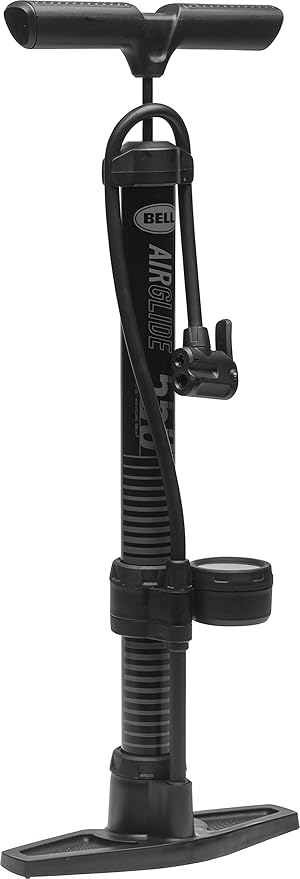
Reaching up to 120 PSI, the Bell Air Glide Bicycle Floor Pump is designed for riders needing precise inflation for both road and commuter bike tires. Its thin barrel fits tight spaces and the side-mount gauge offers quick pressure checks.
It suits someone looking for a manual pump that handles higher pressure without bulky design.
Setting it up is straightforward thanks to its dual Schrader/Presta head, covering most valve types without extra adapters. The manual hand operation provides control over air delivery at 430 cubic centimeters per minute.
The side gauge stays visible while pumping. The lack of additional nozzles like ball needles means it stays simple but limits use on other inflatables. It stands steady during use because it sits firmly on the floor.
Inflation performance meets expectations in reaching high PSI quickly, suitable for thinner tires. The build is solid with durable materials focused on function over frills. The side-mount gauge is easy to read but can get less accurate over extended use.
The dual valve head makes switching valves easy but can be slightly stiff initially.
Pressure reaches high PSI quickly without much effort, making it good for quick top-ups. The most noted issue is the gauge’s accuracy fading over time, which can require careful monitoring. The dual valve head is a strong point but can feel stiff during the first pumps.
This pump works well for anyone needing a compact manual floor pump that covers major valve types and high pressure. Those requiring multi-purpose inflation beyond bike tires, like balls or inflatable toys, will want a model with included needle and cone adapters.
Pros
- Dual valve head fits Schrader and Presta valves
- Thin barrel easily fits narrow spaces
- Side-mounted gauge for clear pressure reading
- Maximum pressure of 120 PSI suitable for road tires
Cons
- Does not include ball needle or inflation cone
- Gauge can lose accuracy over prolonged use
| Specification | Details |
|---|---|
| Maximum Pressure | 120 PSI |
| Air Flow Capacity | 430 cubic_centimeters_per_minute |
| Valve Compatibility | Dual Schrader/Presta |
| Operation Mode | Manual |
| Power Source | Handheld |
| Gauge Placement | Side-mount |
Best Bike Pumps with Gauge Comparison Table
| Product | Power Source | Max Pressure | Operation Mode | Air Flow Capacity |
|---|---|---|---|---|
| BV Floor Pump | Handheld | 160 psi | Manual | – |
| Full Size Floor Pump | Handheld | 160 psi | Manual | – |
| Park Tool PFP-10 | Battery Powered | 160 psi | Manual | – |
| Floor Pump with Gauge | Handheld | 220 psi | Manual | 80 cc/min |
| Topeak JoeBlow Sport III | Handheld | 160 psi | Manual | 318 cc/sec |
| Schwinn Air Center | Manual | 120 psi | Manual | – |
| Blackburn Frame Pump | Solar Powered | 120 psi | – | – |
| High Pressure Floor Pump | Corded Electric | 160 psi | Manual | – |
| Hycline Floor Pump Gauge | Handheld | 160 psi | Manual | – |
| Beto Portable Pump | Handheld | 160 psi | Automatic | – |
| PRO BIKE TOOL Gauge Pump | Adapter | 160 psi | Manual | – |
| Bell Air Glide Pump | Handheld | 120 psi | Manual | 430 cc/min |
- Power SourceHandheld
- Max Pressure160 psi
- Operation ModeManual
- Air Flow Capacity–
- Power SourceHandheld
- Max Pressure160 psi
- Operation ModeManual
- Air Flow Capacity–
- Power SourceBattery Powered
- Max Pressure160 psi
- Operation ModeManual
- Air Flow Capacity–
- Power SourceHandheld
- Max Pressure220 psi
- Operation ModeManual
- Air Flow Capacity80 cc/min
- Power SourceHandheld
- Max Pressure160 psi
- Operation ModeManual
- Air Flow Capacity318 cc/sec
- Power SourceManual
- Max Pressure120 psi
- Operation ModeManual
- Air Flow Capacity–
- Power SourceSolar Powered
- Max Pressure120 psi
- Operation Mode–
- Air Flow Capacity–
- Power SourceCorded Electric
- Max Pressure160 psi
- Operation ModeManual
- Air Flow Capacity–
- Power SourceHandheld
- Max Pressure160 psi
- Operation ModeManual
- Air Flow Capacity–
- Power SourceHandheld
- Max Pressure160 psi
- Operation ModeAutomatic
- Air Flow Capacity–
- Power SourceAdapter
- Max Pressure160 psi
- Operation ModeManual
- Air Flow Capacity–
- Power SourceHandheld
- Max Pressure120 psi
- Operation ModeManual
- Air Flow Capacity430 cc/min
How to Choose the Right Bike Pump with Gauge
Choosing a bike pump with a clear, accurate gauge and durable materials helps maintain proper tire pressure, avoiding flats or damage. A good fit for your valve type and easy handling saves time and effort during inflation, preventing unnecessary replacements or repairs.
Accuracy of the Pressure Gauge
A clear, easy-to-read gauge makes filling tires much simpler, especially in low light or at dusk on the trail. Analog dials with large, contrasting numbers often work better outdoors than tiny digital displays that require strong light or close inspection.
Some gauges come with built-in light reflectors or backlit options to help in dim conditions. A gauge that’s hard to read can lead to overinflated or underinflated tires, affecting ride quality and safety.
Precision and calibration are crucial for reliable pressure readings over time. Pumps with a metal gauge housing tend to hold calibration longer than plastic ones, which can shift after bumps or drops.
Look for pressure ranges that cover a broad spectrum, usually from 0 to 120 PSI, to handle everything from thick mountain bike tires to skinny road bike ones. Calibration often needs checking annually, because an uncalibrated gauge can be off by several PSI, which matters a lot in practice.
Pump Type and Efficiency
A pump that doesn’t fit your bike’s valve can turn a simple tire fill into a frustrating mess. Presta, Schrader, and Dunlop valves each need different attachments or heads.
Some pumps come with a dual head or reversible design, saving the need for extra tools. Forgetting this detail means wasted time adapting or even damaging delicate valve stems. A reliable model easily switches between valve types, making it convenient for riders with multiple bikes or guests.
Stroke length and air volume per push decide how fast tires get full. Shorter strokes deliver less air, leading to many more pumps and tiring legs.
A stroke length around 6 to 8 inches usually balances speed and control well. Delivery of around 2 to 4 liters of air per stroke feels efficient for typical road and mountain bike tires. Pumps powered by a motor inflate faster but rely on batteries or outlets, cutting down manual effort.
Manual models offer better portability and no power worries but need more work, especially for high-pressure road tires. Choose based on how often convenience beats compactness.
Durability and Build Quality
Many bike pumps fail quickly because the barrel or handle uses cheap plastic that cracks or warps after just a few months. Pumps with barrels made from aluminum or thick, reinforced plastic hold up much better, especially if stored outdoors or in a damp garage.
The handle should feel solid and not flex under pressure. Metal or heavy-duty rubber grips last longer and stand up better to sweat, rain, and rough handling. The hose also makes a big difference; thin rubber hoses crack or leak after repeated bending, while flexible but sturdy rubber or reinforced PVC hoses tend to last through regular use and rough folds.
A secure valve connection prevents that frustrating slow leak where you lose air right after pumping. Valves designed with firm clamps or tight locking levers keep the seal tight under pressure and avoid wasting effort. Look for those with easy-to-use locking heads and replaceable parts for longer life.
Durability means fewer replacements and less frustration on the road, especially if you ride often in wet or rough conditions.
Portability and Size
Carrying a pump that feels like a brick can turn a simple ride into a tiring trek. Pumps that weigh around 200-300 grams and measure under 25 centimeters long fit neatly into most backpack pockets or frame mounts without adding noticeable bulk. A compact model saves space whether you stash it in a saddlebag or strap it along the down tube.
Struggling to fit a bulky design into tight storage compartments quickly becomes frustrating on longer trips.
Comfort during use also depends on handle shape and grip material. Pumps with ergonomic T-shaped handles offer better leverage for quick air delivery without hand cramps, especially on the road or trail.
Hard plastic handles can feel slippery, whereas rubberized grips provide reliable control even when sweaty or muddy. Small touches like fold-out feet for floor stability can make portable pumps much easier to use away from home.
Userfriendly Features
Reading the pressure gauge clearly can save a lot of frustration. Cheap versions often have tiny, cramped numbers or gauges that glare in sunlight, making it tough to get the pressure just right. A good model features a large dial around 2.5 to 3 inches in diameter, with clear markings that show PSI and bar measurements distinctly.
This means less guesswork and fewer trips to the pump. Adjusting the pressure is smoother on models that have a marked pressure release valve, allowing small pressure tweaks without detaching the hose or risking over-inflation.
Hose flexibility also plays a big role in ease of use. A stiff or short hose can make it hard to connect to the valve, especially on bikes with tight spots near the wheel. Look for a hose around 18 to 24 inches long made from flexible rubber or reinforced synthetic material.
The connection fitting should attach firmly yet detach smoothly; some pumps use a locking lever mechanism that prevents air leaks but can get stuck if cheaply made. Bonus features like integrated valve adapters or built-in pressure release buttons add convenience during inflation sessions.
Proper Calibration and Accuracy of Bike Pump Gauges
Accurate tire pressure is crucial for a smooth and safe ride, and that hinges on the bike pump’s gauge. Quality pumps often use reliable analog or digital gauges that measure in PSI or bar units with minimal error margin. A gauge that drifts over time can lead to underinflated tires, increasing rolling resistance and wear, or overinflated ones that risk blowouts.
Some pumps include a calibration mechanism or can be reset by the manufacturer, but this isn’t standard. Check if the gauge needle returns to zero after depressurizing.
Also, test the gauge by comparing readings with a trusted standalone pressure gauge periodically.
Key points to consider:
- Look for clear, readable markings on the gauge dial or screen.
- Gauges behind glass or plastic covers resist damage and environmental wear better than exposed ones.
- Digital gauges often provide quicker, more precise readings but depend on battery power.
- Ensure the pump head creates a firm seal to avoid pressure loss during measurement.
Maintenance Tips to Prolong the Life of Your Bike Pump
Keeping the bike pump clean is essential to ensure accurate pressure readings and smooth operation of the gauge. After each use, wipe down the nozzle and hose to remove dirt and debris that can cause blockages or wear.
Lubricate moving parts periodically with a light oil to prevent stiffness in the pump handle. This also helps maintain a firm seal between the pump head and the valve, reducing air leaks during inflation.
- Store the pump in a dry place away from extreme temperatures to avoid damage to the gauge mechanism and rubber hoses.
- Check the pump head for cracks or wear and replace seals if you notice air escaping while pumping.
- Test the gauge accuracy every few months by comparing it to a reliable pressure gauge to catch calibration issues early.
Regular attention to these details not only extends the life of the pump but also ensures consistent performance when you need it on the road or trail.
Comparing Floor Pumps and Hand Pumps with Built-In Gauges
Floor pumps with built-in gauges typically provide a more stable and accurate inflation experience. Their larger size and base allow for better leverage, making it easier to reach high pressures quickly, especially useful for road bike tires that often need 80 psi or more.
These pumps usually have a sizeable gauge, often 2-3 inches in diameter, making it easy to read while pumping.
Hand pumps with gauges offer portability but sacrifice some stability and speed. Most hand pump gauges are smaller and less precise, which can make it challenging to achieve the exact pressure needed.
However, they fit easily in a backpack or bike frame mount, making them convenient for rides where carrying a floor pump isn’t practical.
Consider the following:
- Floor pumps are better for home use due to their size and ease of use.
- Hand pumps work well as emergency tools during rides but require more effort.
- Gauge accuracy tends to be higher on floor pumps, important for sensitive tire pressures.
- Portability is a major plus for hand pumps, especially models designed to attach to the bike frame.
People Also Asked
How Do I Properly Use a Bike Pump with Gauge?
Attach the pump head firmly to the bike tire valve, making sure it fits snugly to prevent air leaks. Use the gauge to monitor pressure as you pump, stopping once you reach the recommended psi for your tire. Holding the pump steady and checking the gauge incrementally helps avoid overinflation.
What Size Valve Adapters Fit Most Bike Pumps with Gauges?
Most bike pumps with gauges come with Presta and Schrader valve adapters, which cover the vast majority of bike tires. Switching between these adapters is usually straightforward, either by flipping the pump head or changing a small piece. Carrying both adapters on rides proves handy when adjusting tire pressure on different bikes.
How Do I Maintain a Bike Pump to Ensure Long Life?
Regularly cleaning the pump head and lubricating the piston with silicone oil helps maintain smooth operation and accuracy. Avoid letting dirt or moisture get inside the gauge, as that can damage it over time. Store the pump in a dry place to prevent rust and keep seals in good condition.
Are There Safety Tips for Using a Bike Pump with Gauge?
Keep fingers clear of moving parts to avoid pinching and always check the gauge before pumping to ensure it’s not cracked or damaged. Use steady, moderate force rather than excessive pressure to prevent broken valves or pump damage. It’s wise to wear glasses if there’s a risk of valve bursts.
What Common Problems Occur with Bike Pumps That Have Gauges?
Common issues include inaccurate gauge readings from damage or dust, air leaks due to worn seals or loose connections, and worn-out pump handles or hose cracks. Sometimes the valve adapter slips off during use, which causes slow inflation. Regular checks and proper storage minimize these problems.
Conclusion
Accuracy of the gauge, ease of use, and durability are the key points when choosing a bike pump with a gauge. A clear, reliable pressure reading helps avoid over- or under-inflation. Pumps that stand up to regular use and have a comfortable handle make the process quicker.
Consider how the pump attaches to your bike valve as well, to keep things straightforward during inflation.
Think about where you’ll store the pump and how often you’ll need it. A compact model fits small spaces but might take longer to inflate a tire.
Larger pumps work faster but need more room. Check the comparison table and earlier picks to find the one that fits your setup and budget best. This way, you won’t waste time or money on a pump that doesn’t match your needs.