
Top 12 Best Speed Sensor for Road Bike That Will Shock You
Slowing down unexpectedly or getting inconsistent speed readings can happen with a cheap or improperly installed best speed sensor for road bike. Riders often find their data jumping around or cutting out, making it hard to track performance or plan training.
A poor sensor might also drain batteries quickly or add unnecessary bulk that gets in the way during rides.
Good speed sensors for road bikes combine accurate magnet-based or GPS measurement with compact, lightweight design, usually around 15 to 20 grams. Battery life often ranges from 6 months to a year on a single coin cell, so changing power sources isn’t frequent.
Secure attachment to the frame and ease of calibration matter, too, since a sensor that shifts position will give wrong readings. Materials that resist moisture and dirt help maintain accuracy over time without constant cleaning.
Need a Quick Check?
| Image | Product | Price |
|---|---|---|
Our Top Picks 1  | Magene Speed Cadence Sensor | Check Price |
Our Top Picks 2  | iGPSPORT Speed Cadence Sensor | Check Price |
Our Top Picks 3  | COOSPO BK467 Sensor | Check Price |
Our Selected Top 12 Speed Sensor for Road Bike for Different Needs
This list features a variety of speed sensors designed for road bikes, highlighting their performance, target users, and key advantages and disadvantages. Each review provides clear insights to help you understand which sensor best matches your specific cycling needs and preferences.
1. Magene Speed and Cadence Sensor
Offering both speed and cadence measurement with a single sensor, this device suits cyclists wanting reliable data without juggling multiple gadgets. Its standout feature is the ability to switch modes simply by re-installing the battery, simplifying what can be a complicated setup.
Setting up involves removing an insulating sheet from the pre-installed battery to activate the sensor, then choosing your mode by reinstalling the battery accordingly. Day-to-day, you’ll connect to your preferred device using Bluetooth or ANT+. ANT+ supports multiple connections simultaneously, whereas Bluetooth pairs with only one app or device at a time.
The sensor mounts neatly on the stem or handlebar and uses buttons for easy interaction during rides.
It accurately tracks either speed or cadence depending on the selected mode, although one sensor can’t do both at once. The build feels sturdy with a clear LCD display. People appreciate its dependable readings and versatility, though many mention needing to purchase two sensors for both speed and cadence monitoring as a downside.
Strong praise focuses on reliable speed or cadence data and versatile mounting options. Most common complaint involves needing two sensors to monitor both metrics simultaneously since one sensor supports only one mode at a time. Some also find Bluetooth connection limits frustrating when using multiple devices.
Those wanting straightforward, dedicated speed or cadence tracking will find this sensor a good fit. Cyclists aiming to monitor both simultaneously or connect to multiple apps via Bluetooth might want to consider alternatives or purchasing two units.
Pros
- Single sensor can switch between speed and cadence
- Connects to multiple devices using ANT+
- Easy mounting on stem or handlebar
- Clear LCD display for data readout
Cons
- One sensor supports only speed or cadence at a time
- Bluetooth connection limits to one app or device
| Specification | Details |
|---|---|
| Battery Type | Lithium Manganese Dioxide |
| Connectivity Technology | Bluetooth |
| Mounting Type | Stem Mount, Handlebar Mount |
| Sensor Type | Cadence Sensor, Speed Sensor |
| Human Interface Input | Buttons |
2. iGPSPORT Speed and Cadence Sensor
Road cyclists looking for an accurate and reliable speed and cadence sensor will appreciate the iGPSPORT Speed and Cadence Sensor. It suits riders who want precise data without fuss and offers strong compatibility with most bike computers and spin bikes.
Its biggest strength lies in consistent, accurate measurement thanks to independent algorithms.
Setting up the sensor is straightforward as it comes with everything needed in the bundle. Connecting via Bluetooth 5.0 or ANT+ works smoothly and pairs easily with your cycling devices.
Daily use is simple, with a button interface and a flange mount that holds the sensor securely on the bike frame. Battery replacement is quick, supported by the sensor’s clean design and long 300-hour lithium-ion battery life.
The sensor excels in delivering accurate speed and cadence readings, making training sessions more effective. Constructed with straightforward components, it feels solid on the bike and doesn’t add noticeable weight.
Most praise highlights its long battery life and precise tracking, while some find the button interface less intuitive than touchscreen alternatives.
Strongest praise focuses on the sensor’s precise, reliable tracking and extended battery life, allowing for uninterrupted rides. Common complaint revolves around the button interface, which some find less user-friendly compared to more modern controls.
Cyclists who want accurate data and long battery endurance without complex setup will find it a solid choice. Riders preferring multifunction sensors or a touchscreen interface may want to explore other options.
Pros
- Works with most bike computers and spin bikes
- Highly accurate speed and cadence measurements
- Long 300-hour battery life
- Easy battery replacement with simple design
Cons
- Button input less intuitive than touchscreen
- Limited to cadence sensor type only
| Specification | Details |
|---|---|
| Connectivity Technology | ANT, Bluetooth |
| Battery Average Life | 300 hours |
| Sensor Type | Cadence Sensor |
| Battery Type | Lithium Ion |
| Mounting Type | Flange Mount |
| Human Interface Input | Buttons |
3. COOSPO BK467 Speed and Cadence Sensor
COOSPO BK467 stands out with its dual Bluetooth and ANT+ connectivity, ideal for cyclists wanting flexible real-time speed and cadence tracking on popular apps. It fits those seeking a reliable and versatile sensor for both indoor and outdoor rides.
Setting up the sensor is straightforward, mounting easily on either the handlebar or stem. Daily use involves syncing the device to your smartphone or bike computer via Bluetooth for single connections or ANT+ when linking to multiple devices at once. Monitoring speed or cadence data happens smoothly on apps like Zwift or Peloton, making training sessions more informed.
Accuracy in tracking speed and cadence meets expectations, providing real-time data without noticeable lag. The plastic construction keeps it light, though some find it less durable over time compared to metal alternatives.
The main praise focuses on consistent connectivity, while the most common downside relates to occasional mounting stability issues reported by some users.
Consistent connection to apps like Zwift or Peloton is a strong point, allowing reliable tracking for training. Some users experience the mount shifting, which can affect measurement accuracy during bumpy rides. The distinction between 1-piece and 2-piece options requires careful attention before purchase.
Cyclists who want flexible device connectivity and broad app compatibility will appreciate this sensor. Those prioritizing a metal construction or a more secure mount for rugged use might consider alternative models better suited to harsher conditions.
Pros
- Tracks speed and cadence in real time
- Dual connectivity with Bluetooth and ANT+
- Compatible with multiple popular cycling apps
- Easy mounting on handlebar or stem
Cons
- Plastic build feels less durable over time
- Mounting can feel unstable during rough rides
| Specification | Details |
|---|---|
| Sensor Type | cycling cadence sensor / cycling speed sensor |
| Battery Type | Lithium Ion |
| Connectivity Technology | ANT, Bluetooth |
| Mounting Type | Handlebar Mount, Stem Mount |
| Human Interface Input | Buttons |
4. Garmin Speed Sensor 2 and Cadence Sensor 2 Bundle

Garmin Speed Sensor 2 and Cadence Sensor 2 Bundle offers precise speed and cadence tracking for road cyclists aiming to improve their training. It suits those who want easy setup and reliable data without fuss over magnets or complex alignment.
Its biggest strength is how easily it installs on multiple bikes.
Installation involves attaching the speed sensor to the wheel hub and the cadence sensor to any crank arm size. Both sensors connect wirelessly to Garmin devices, self-calibrating for accurate readings right from the start. Daily use requires no adjustments, and switching between bikes is quick since there are no exposed magnets or parts to worry about.
Performance-wise, the sensors provide accurate speed and distance tracking even without a head unit. The build feels solid and lightweight, designed to stay put without interfering with your ride. Users commonly praise the straightforward installation, while some mention occasional syncing delays when moving the sensors between bikes.
Most users appreciate how simple it is to install and transfer these sensors between bikes without magnets or exposed parts. The common issue mentioned is occasional syncing delays when moving them to different bikes, which can disrupt immediate data tracking.
Cyclists who already use Garmin devices and want easy setup will be satisfied with this bundle. Those without compatible Garmin gear or looking for instant plug-and-play across various brands might want to explore alternatives.
Pros
- Easy wireless installation with no magnets
- Works with any crank arm size
- Self-calibrates with Garmin devices
- Accurate speed and cadence data
Cons
- Can experience syncing delays when switching bikes
- Requires compatible Garmin device for best results
| Specification | Details |
|---|---|
| Sensor Type | Speed Sensor, Cadence Sensor |
| Battery Type | Lithium Metal |
| Connectivity Technology | USB |
| Mounting Type | Handlebar Mount |
| Human Interface Input | Buttons |
5. CYCPLUS G1 GPS Bike Computer
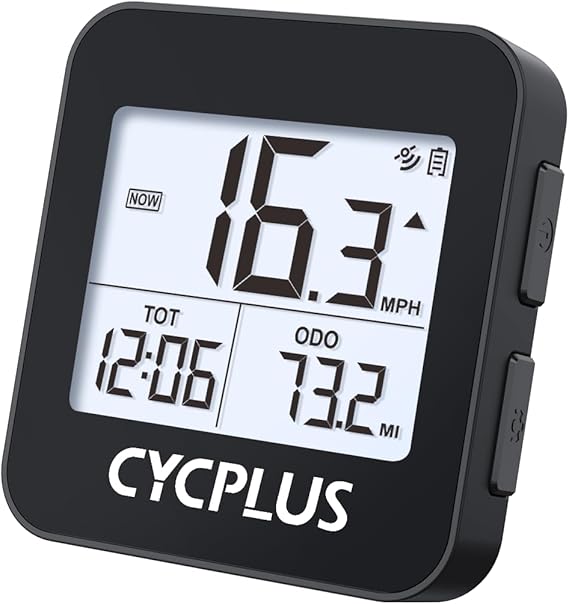
Tracking rides with this bike computer feels reliable and straightforward, great for road cyclists who want accurate GPS data without fuss. Its standout feature is the dynamic GPS positioning, giving precise route tracking and detailed ride stats right on the handlebar. It’s especially suited for those who ride in varied light conditions thanks to its clear and backlit display.
Setup involves mounting the device on the handlebar, which is simple and keeps wires out of the way due to its wireless design. Day-to-day use benefits from the automatic backlight that adjusts for glare, making it easy to read during bright daylight and at night.
Button controls are intuitive, and the screen’s tempered glass holds up well against scratches from nails or contact.
GPS accuracy is consistently high thanks to sensitive positioning, making route tracking dependable. The IPX6 waterproof rating means it holds up well in rainy rides without any worry.
The battery life lasts up to 50 hours on a single charge, enough for extended trips. A common drawback is the relatively small 2-inch LED screen, which some might find a bit compact for quick glances while riding.
The GPS positioning is highly accurate and reliable, providing detailed route data every ride. Many appreciate the clarity of the backlit LED screen, but a frequent complaint is the small size of the display, which can make it tricky to read at a glance while cycling.
Riders who want solid GPS performance in a lightweight, wireless package with long battery life will find this a good fit. Those preferring larger screens or touchscreen controls might want to explore other options for easier data visibility on the move.
Pros
- Accurate GPS tracking with high sensitivity
- Automatic backlight easy to read day and night
- Long battery life up to 50 hours
- Tempered glass screen resists scratches
Cons
- Small 2-inch display may be hard to see quickly
- No touchscreen controls, relies on buttons
| Specification | Details |
|---|---|
| Display Size | 2 inches |
| Display | LED |
| Battery Average Life | 50 hours |
| Battery Type | Lithium Polymer |
| Connectivity Technology | Wireless |
| Waterproof Rating | IPX6 |
6. CYCPLUS M1 GPS Bike Computer

Great for riders wanting precise route tracking, this GPS bike computer shines with accurate positioning and clear data visibility. Its biggest asset is the dynamic GPS sensor backed by a Swiss chip, perfect for those who prioritize reliable speed and cadence monitoring on the road.
Setting up involves a straightforward handlebar mount and connecting via Bluetooth to sync rides directly with an app on your phone. The 2.9-inch glare-free backlit LCD screen automatically adjusts brightness based on sunrise and sunset, making it easy to read stats any time of day. Buttons provide simple navigation through functions, while compatibility with both ANT and Bluetooth sensors keeps connectivity flexible.
Accuracy in speed and cadence tracking remains consistently impressive, delivering data that matches the road conditions closely. The tempered glass screen resists scratches well, adding durability. A long-lasting lithium polymer battery supports around 60 hours between charges.
A common downside is the button-based interface, sometimes less intuitive compared to touchscreens, but the overall build and GPS reliability are strong points.
The GPS sensor offers precise and fast positioning, while many find the button controls a bit fiddly compared to more modern input methods. The screen’s visibility in sunlight stands out positively and the battery life suits long rides without frequent charging.
Those who value dependable GPS tracking and battery longevity will appreciate this bike computer. Riders wanting a larger display or touchscreen controls might want to look at other options more tailored to those preferences.
Pros
- Highly accurate GPS positioning chip
- Clear 2.9-inch glare-free backlit screen
- Long battery life of 60 hours
- Durable tempered glass screen
Cons
- Button interface less intuitive than touchscreens
- Screen size smaller than some competitors
| Specification | Details |
|---|---|
| Display Size | 2.9 inches |
| Display | LCD |
| Battery Average Life | 60 hours |
| Sensor Type | Speed/cadence Sensor; Gps sensor |
| Connectivity Technology | ANT, Bluetooth |
| Mounting Type | Handlebar Mount |
7. Garmin Speed Sensor 2

Lightweight and compact, the Garmin Speed Sensor 2 clips onto the wheel hub, making it great for riders wanting precise speed and distance tracking without fuss. Its main strength lies in providing accurate data during rides without needing a head unit constantly attached.
Setting up involves attaching the sensor to either wheel hub and entering your wheel size in Garmin Connect or letting a compatible Garmin device self-calibrate. Day-to-day use is simple; it connects via ANT+ and Bluetooth to Garmin devices or apps, keeping your speed and distance logged indoors or outdoors without delay.
The odometer keeps track of total distance, handy for planning service intervals.
Speed readings come out accurate and consistent during rides, contributing well to better training data collection. Construction feels sturdy yet minimal, and mounting is straightforward. Most praise comes from its reliable data syncing and setup options, while some highlight the need for compatible Garmin gear to unlock full features as a minor downside.
Most users appreciate the precise speed and distance reports it provides, especially when paired with Garmin devices or training apps. The main limitation noted is the reliance on Garmin gear for some setup features, which may slow initial configuration for others.
Those who already own Garmin cycling computers or fitness devices will find this sensor fits smoothly into their setup. Riders without Garmin equipment or who want a standalone display might consider alternatives that offer built-in readouts or broader brand compatibility.
Pros
- Accurate speed and distance tracking
- Easy wheel size setup via Garmin Connect
- Works without a head unit active
- Syncs with numerous training apps and devices
Cons
- Requires compatible Garmin device for self-calibration
- No built-in display for instant feedback
| Specification | Details |
|---|---|
| Mounting Type | Wheel Mount |
| Output Type | Digital |
| Specific Uses For Product | Cycling, indoor training |
| Connectivity | ANT+ and Bluetooth Low Energy |
8. CYCPLUS Speed and Cadence Sensor

Compact size and dual-function ability grab attention first, making it ideal for road cyclists wanting both speed and cadence data in one device. Its biggest strength lies in quickly toggling between modes, so tracking different metrics doesn’t require multiple sensors.
Mounting the sensor onto the hub or crank is straightforward, and pairing it via Bluetooth or ANT+ works with most major cycling apps and devices. The switch makes toggling between speed and cadence simple without fuss. Its ultra-small design keeps it out of sight and barely adds any weight, meaning it won’t affect bike handling or appearance during rides.
The sensor reliably tracks speed and cadence, providing consistent data for training or casual cycling. Weighing only 9.2g, it’s lightweight enough not to interfere with the bike’s balance. The standout for many is its impressive 300 hours of battery life, but some find the need to manually toggle modes a bit inconvenient during rides.
Build quality feels solid, built to last without adding clutter.
The sensor draws praise for its long battery life and unnoticeable size on the bike, making it reliable over extended use. The most common complaint involves the need to manually switch between speed and cadence, which some find inconvenient when riding.
Cyclists looking for a dual-function sensor that integrates smoothly with their setup will appreciate its features. Those looking for automatic mode switching or alternative mounting options may prefer different sensors better suited to those needs.
Pros
- Small and lightweight design
- Supports Bluetooth and ANT+ connectivity
- Simple switch for cadence or speed mode
- Long 300-hour battery life
Cons
- Manual toggling between sensor modes
- Limited to hub or crank mount only
| Specification | Details |
|---|---|
| Battery Average Life | 300 hours |
| Sensor Type | Cadence Sensor, Speed Sensor |
| Connectivity Technology | ANT, Bluetooth |
| Mounting Type | Hub/Crank Mount |
| Size | 38mm×29.5mm×9.5mm |
| Weight | 9.2g |
9. GEOID CS600 Cadence and Speed Sensor

Designed for road cyclists who want reliable data tracking, the GEOID CS600 Cadence and Speed Sensor delivers solid connectivity and dual-data recording. A key advantage is its ability to connect with a wide range of apps and devices, making it versatile for anyone serious about monitoring cadence and speed on different platforms.
Getting started involves mounting it easily on the handlebar or stem. Once connected via ANT+ or Bluetooth, it works smoothly with popular apps like Zwift, Peloton, and TrainerRoad.
The sensor automatically goes to sleep after a minute of inactivity to save battery, waking up only when it starts moving again, which keeps power use efficient without any manual intervention.
Accuracy in speed and cadence tracking is where the sensor shines, doing its job without fuss. The compact lithium polymer battery supports long-term use between charges.
Durability seems solid given the materials and mounting options. A notable downside is that when using the Wahoo app, it cannot track data from two sensors simultaneously, limiting multi-sensor setups for some users.
Reliable dual data tracking is often praised, especially for how easily it pairs with multiple apps. The most often mentioned downside is the Wahoo app’s inability to handle two sensors at once, which limits multi-sensor users. The automatic sleep mode keeps battery use low but means the sensor only starts broadcasting after waking from inactivity.
Cyclists who use a variety of apps and want dependable cadence and speed data will find it a good fit. Those relying heavily on the Wahoo app for dual-sensor setups may want to look elsewhere due to its single-sensor limitation. Everyday riders focused on straightforward sensor data will appreciate its consistent performance and power saving.
Pros
- Supports ANT+ and Bluetooth for broad compatibility
- Automatic sleep mode to save battery power
- Works with many popular cycling apps
- Includes both cadence and speed sensing
Cons
- Cannot track two sensors simultaneously on Wahoo app
- Requires proper wake-up to start sending broadcasts
| Specification | Details |
|---|---|
| Sensor Type | Cadence Sensor, Speed Sensor |
| Battery Type | Lithium Polymer |
| Connectivity Technology | ANT+, Bluetooth |
| Mounting Type | Handlebar Mount, Stem Mount |
| Human Interface Input | Buttons |
10. Wahoo TRACKR Speed Sensor

Tracking your speed on a road bike can be tricky without the right sensor, especially when you want quick and accurate data paired with your devices. Ideal for riders who use smartphones or bike computers, this sensor stands out for its dual band connectivity, making it simple to connect and reliable while out on the road.
Setting it up involves attaching the sensor directly to the wheel hub with the included mounts, which makes installation quick and avoids the awkward magnet alignments found on older models. In daily riding, the visible blue and red LEDs signal when it’s connected and detecting motion, so you know it’s working correctly without needing to check your device constantly. The sensor’s universal fit means it fits most bikes without fuss.
Measuring speed digitally with about a 2-second response time, this sensor delivers steady and reliable data. The build feels solid around the wheel hub area. Users appreciate how easy it is to connect to their devices through ANT+ or Bluetooth.
Some mention a downside in the sensor’s response time, which can feel a bit slow during quick stops and starts.
The sensor is praised for its reliable device connections and ease of installation without magnets. A common complaint revolves around the 2-second response time, which can result in a slight delay in speed updates during quick acceleration or braking.
Riders looking for a straightforward, dependable speed sensor that pairs easily with multiple devices will appreciate this model. Those needing immediate speed response might want to explore alternatives with faster update rates.
Pros
- Dual band ANT+ and Bluetooth Smart support
- Easy wheel hub attachment, no magnets involved
- LED lights clearly show connection and motion status
- Fits most bike frames universally
Cons
- 2-second response time can feel slow for some rides
- Sensing distance limited to 0.5 meters maximum
| Specification | Details |
|---|---|
| Mounting Type | Wheel Hub Mount |
| Output Type | Digital |
| Response Time | 2 seconds |
| Sensing Distance | 0.5 meters |
11. Garmin Speed Sensor 2 and Cadence Sensor 2

Accurate speed and cadence tracking through Bluetooth and ANT+ connectivity makes this sensor pair perfect for road cyclists who want detailed data from every ride. It connects effortlessly with Garmin Edge computers and other compatible devices, providing reliable speed, distance, and pedal stroke information whether you’re training or just cruising.
Setup involves attaching the speed sensor to your wheel hub and the cadence sensor around the crank arm, both of which fit securely. The speed sensor automatically calibrates with your device so you won’t need to fiddle with settings each time.
Data streams live through Bluetooth Low Energy and ANT+, letting you check speed, distance, and cadence on your device or training app while cycling.
Speed measurement stays consistent and accurate without needing a head unit, which is very convenient. The sensors are compact and lightweight, making them unobtrusive on your bike.
The most frequent praise highlights how well the speed sensor’s odometer tracks total distance for planning maintenance. Complaints sometimes mention challenges with mounting on non-standard crank sizes or wheel hubs.
The odometer feature is highly valued for keeping track of overall distance, helping schedule bike maintenance. Some riders find the sensor mounting less straightforward on crank arms that don’t match the usual sizes, which can cause fitting headaches.
Riders who own Garmin Edge computers or compatible Bluetooth devices will find this sensor pair reliable and easy to use. Those with uncommon crank sizes or using non-compatible cycling computers might want to explore alternatives better suited to their setup.
Pros
- Self-calibrates with Garmin devices
- Measures cadence and speed simultaneously
- Tracks distance with odometer feature
- Supports Bluetooth and ANT+ connectivity
Cons
- Can be tricky to mount on unusual crank arms
- Only compatible with specific Garmin and Bluetooth devices
| Specification | Details |
|---|---|
| Display Size | 2 centimeters |
| Display | LCD, LED |
| Battery Type | Lithium Manganese Dioxide |
| Connectivity Technology | Bluetooth, Wireless |
| Mounting Type | Handlebar Mount, Stem Mount |
12. CATEYE ISC-12 Speed and Cadence Sensor

Anyone serious about tracking speed and cadence on a road bike will find this sensor a solid option. Its standout feature is highly accurate speed measurement through Bluetooth, fitting most bike types with a simple wheel mount setup.
Getting it mounted is straightforward since it comes with all mounting hardware needed. It fits tires from 1000 mm up to 3999 mm, so it works on road, gravel, or mountain bikes. Once paired with any Bluetooth Smart cycling device, speed and cadence data start showing up with reliable precision during every ride.
Accuracy is the core strength, consistently capturing speed from 0 to 64 km/h and cadence up to 120 RPM without noticeable dropouts. The digital output keeps data clean and easy to read. The build feels sturdy enough for daily outdoor use, though some mention the wheel mount could be a bit more secure in tough terrain.
The strongest praise lies in its precise speed and cadence tracking that works reliably with most Bluetooth cycling devices. The most common complaint revolves around the mounting system, which some find could grip better during bumpy rides.
Anyone wanting to track speed and cadence with an easy-to-install sensor on a range of bikes will appreciate this. Riders seeking extremely rugged mounts or measuring speeds above 64 km/h might want to explore other options.
Pros
- High accuracy speed measurement via Bluetooth
- Works on various bike types and tire sizes
- Easy setup with included mounting hardware
- Supports both speed and cadence tracking
Cons
- Wheel mount may feel less secure on rough terrain
- Speed maxes out at 64 km/h, not suited for very high speeds
| Specification | Details |
|---|---|
| Measuring Range (Speed) | 0 – 64 km/h |
| Measuring Range (Cadence) | 0 – 120 RPM |
| Mounting Type | Wheel Mount |
| Output Type | Digital |
| Compatibility | All Bluetooth Smart cycle computers and devices |
Comparison of Best Road Bike Speed Sensors
| Product | Sensor Type | Battery Life | Connectivity | Mounting Type |
|---|---|---|---|---|
| Magene Speed Cadence Sensor | Cadence, Speed | – | Bluetooth | Stem, Handlebar |
| iGPSPORT Speed Cadence Sensor | Cadence | 300 hours | ANT, Bluetooth | Flange Mount |
| COOSPO BK467 Sensor | Cadence, Speed | – | ANT, Bluetooth | Handlebar, Stem |
| Garmin Speed Cadence Bundle | Speed, Cadence | – | USB | Handlebar |
| CYCPLUS G1 GPS Computer | – | 50 hours | Wireless | Handlebar |
| CYCPLUS M1 GPS Computer | Speed, Cadence | 60 hours | ANT, Bluetooth | Handlebar |
| Garmin Speed Sensor 2 | Speed | – | – | Wheel Mount |
| CYCPLUS Speed Cadence Sensor | Cadence, Speed | 300 hours | ANT, Bluetooth | Hub, Crank |
| GEOID CS600 Sensor | Cadence, Speed | – | ANT+, Bluetooth | Handlebar, Stem |
| Wahoo TRACKR Speed Sensor | Speed | – | – | Wheel Hub |
| Garmin Speed Cadence Combo | Cadence, Speed | – | Bluetooth, Wireless | Handlebar, Stem |
| CATEYE ISC-12 Sensor | Speed, Cadence | – | – | Wheel Mount |
- Sensor TypeCadence, Speed
- Battery Life–
- ConnectivityBluetooth
- Mounting TypeStem, Handlebar
- Sensor TypeCadence
- Battery Life300 hours
- ConnectivityANT, Bluetooth
- Mounting TypeFlange Mount
- Sensor TypeCadence, Speed
- Battery Life–
- ConnectivityANT, Bluetooth
- Mounting TypeHandlebar, Stem
- Sensor TypeSpeed, Cadence
- Battery Life–
- ConnectivityUSB
- Mounting TypeHandlebar
- Sensor Type–
- Battery Life50 hours
- ConnectivityWireless
- Mounting TypeHandlebar
- Sensor TypeSpeed, Cadence
- Battery Life60 hours
- ConnectivityANT, Bluetooth
- Mounting TypeHandlebar
- Sensor TypeSpeed
- Battery Life–
- Connectivity–
- Mounting TypeWheel Mount
- Sensor TypeCadence, Speed
- Battery Life300 hours
- ConnectivityANT, Bluetooth
- Mounting TypeHub, Crank
- Sensor TypeCadence, Speed
- Battery Life–
- ConnectivityANT+, Bluetooth
- Mounting TypeHandlebar, Stem
- Sensor TypeSpeed
- Battery Life–
- Connectivity–
- Mounting TypeWheel Hub
- Sensor TypeCadence, Speed
- Battery Life–
- ConnectivityBluetooth, Wireless
- Mounting TypeHandlebar, Stem
- Sensor TypeSpeed, Cadence
- Battery Life–
- Connectivity–
- Mounting TypeWheel Mount
How to Choose the Right Speed Sensor for Your Road Bike
Choosing the right speed sensor involves considering accuracy, compatibility with your bike, and ease of installation. A reliable sensor ensures precise data for training and navigation while avoiding frequent replacements or errors that can lead to unnecessary expenses and frustration on your rides.
Compatibility with Bike and Devices
Mounting a sensor on a bike introduces the first hurdle: fitting it properly to your specific setup. Every wheel size affects calibration, and pairing a sensor designed for a 700c rim with a 650b wheel, for example, leads to inaccurate speed readings. Bikes with full suspension or unconventional frames may also limit where you can place the unit.
Compatibility with your device also matters a lot. Many sensors use ANT+ or Bluetooth, and not every bike computer supports both.
Some smartphone apps only work with Bluetooth sensors. Ensuring your sensor communicates properly avoids frustration and dropped signals during rides. Look for a sensor that clearly lists compatible wheel sizes and confirms it can connect to your bike computer or phone app.
Installation and Mounting
The sensor and magnet assembly should feel solid once installed. Some models clip on easily without tools, slipping onto a spoke or the fork, but these can shift position with vibrations or rough terrain.
Models that use zip ties or rubber bands might need tightening after a few rides to prevent movement.
Low-profile sensors reduce the chance of strikes from debris or interfering with brakes and cables. Bulkier units may get in the way during maintenance or when stowing the bike.
Pay attention to the recommended mounting spots in the instruction manual and choose a compact sensor that hugs the frame closely without adding extra weight or bulk.
Battery Life and Power Source
Battery life varies widely; some sensors can last six months or more on a single coin cell battery, while others require recharging after a few weeks of regular use. Coin cells are easy to replace on the go if you carry spares, but sensors with rechargeable batteries eliminate waste and frequent replacements.
It’s frustrating to lose speed data mid-ride because the battery died unexpectedly. Models that show battery status within the companion app or have an LED warning on the unit give an early heads-up. Prioritize sensors with clear battery indicators or alerts so you can plan replacements before setting out.
Accuracy and Responsiveness
Accuracy relies on correct calibration and signal clarity. Sensors that update speed readings once every second or faster provide more responsive data, especially during intervals or variable terrain.
Slower update rates create lag that makes it hard to gauge your real-time effort.
Signal dropouts can occur if the sensor mounts too far from the receiver or if interference from other electronics is present. Some sensors use stronger transmitters or dual protocols to minimize lost connections. Consistent readings depend on secure attachment and a good wireless link that doesn’t skip or freeze during the ride.
Durability and Weather Resistance
Riders encounter muddy roads, unexpected rain, and the constant vibration of asphalt. Sensors with a water resistance rating of IPX5 or higher stand up to heavy showers without failing. Dust protection prevents grit from jamming internal components over time.
Materials such as anodized aluminum or reinforced plastic stand up well against corrosion from sweat and sunlight exposure. Cheaper sensors with fragile plastic can crack or degrade after a season, forcing replacement.
A well-built unit feels solid and maintains function despite the shocks and knocks common in cycling.
Proper Installation Techniques for Optimal Speed Sensor Accuracy
Speed sensors work best when mounted correctly, ensuring consistent contact with the wheel’s rotating parts. Position the sensor aligned with the magnet on the spoke, typically on the fork or chainstay, making sure the gap between them is within the manufacturer’s recommended distance, often just a few millimeters. Too large a gap causes missed signals, while contact can damage the sensor and magnet.
Use zip ties or the supplied mounting hardware to secure both sensor and magnet firmly. Loose attachments may shift during rides, leading to inaccurate readings or dropouts. Calibrate the sensor by entering your wheel circumference into the bike computer or app after installation.
This step is crucial because accuracy depends largely on the correct wheel size input.
- Check sensor alignment regularly, especially after rough rides.
- Keep the sensor and magnet clean from mud and debris.
- Test the sensor’s signal before each ride to confirm proper function.
Regular Maintenance Tips to Extend Your Speed Sensor’s Lifespan
Keeping your speed sensor in good condition is simple but important. Regularly wipe the sensor and magnet with a damp cloth to remove dirt buildup, which can interfere with signal transmission.
Avoid using harsh chemicals or high-pressure water jets around the sensor, as these may cause damage.
Periodically inspect the sensor housing for cracks or water ingress, which can occur over time or after heavy rides. Replace the sensor if water appears inside or if the device becomes unresponsive.
Battery life is another key factor; check and replace batteries before rides to avoid unexpected failures.
- Store the bike indoors or under cover to protect the electronics.
- Remove the sensor before long-term storage or transport to prevent accidental damage.
- Perform software or firmware updates if available, keeping the sensor compatible with your devices.
Comparing Magnet-Based and Magnetless Speed Sensors: Pros and Cons
Both magnet-based and magnetless speed sensors offer accurate speed tracking, but each has trade-offs. Magnet-based sensors require a physical magnet on a wheel spoke paired with a sensor on the frame. This setup delivers reliable, consistent data but demands precise installation and periodic checking to keep the magnet properly aligned.
Magnetless sensors use accelerometers or GPS signals to estimate speed. Their installation is usually simpler, as there is no need for a magnet on the wheel.
However, they can be less accurate in certain conditions, especially indoors or in areas with poor GPS reception.
- Magnet-based sensors are less expensive and offer consistent accuracy when installed correctly.
- Magnetless sensors reduce maintenance but may depend on external signals like GPS.
- Choosing between them depends on your riding environment and how much setup effort you prefer.
People Also Asked
How Do I Install a Speed Sensor on My Road Bike?
Attach the speed sensor to the fork or chainstay near the wheel with the included zip ties or mount. Make sure it aligns with the magnet on the spoke so it passes close by, usually within a few millimeters, to register each wheel rotation accurately. Check that the magnet and sensor don’t touch as the wheel spins.
What Size Speed Sensor Is Compatible with My Bike Wheel?
Speed sensors are generally designed to work with standard wheel sizes, measuring the circumference in millimeters to calculate speed. Use the circumference listed on your tire sidewall or measure your wheel directly to input into the sensor or paired app for accurate speed and distance readings.
How Long Does a Typical Road Bike Speed Sensor Last?
A bike speed sensor typically lasts a couple of years depending on battery type and usage. Sensors with replaceable batteries usually last longer if you change batteries promptly when power fades. Regularly check sensor response to avoid sudden loss of data on rides.
Are Speed Sensors Safe to Use in Wet Weather Conditions?
Most road bike speed sensors are water-resistant and can function adequately in rain. However, prolonged exposure to heavy rain or mud might eventually impact performance or battery life. Wiping sensors dry after rides in wet conditions helps maintain reliability.
What Common Problems Occur with Bike Speed Sensors and Fixes?
Common problems include weak sensor signals and misalignment with the magnet. Repositioning them for closer proximity or cleaning the magnet can resolve missed readings. Dead batteries are another frequent issue; replacing batteries usually restores normal function quickly.
Conclusion
Accuracy and ease of installation are the most important factors when choosing a speed sensor for a road bike. Look for sensors that provide consistent data without requiring frequent calibration.
Battery life matters too, especially if you ride long distances or regularly. Choose one that fits your bike’s setup and your typical riding conditions.
Consider how often you plan to use the sensor and your budget before making a final choice. Some models might save you money upfront but require more maintenance over time. Check the comparison table and product details above to find an option that suits both your cycling habits and your bike’s design.