Did Harley Go Woke – Straight Answer
You might hear claims that Harley-Davidson “went woke,” but the reality is more complex. While they once visibly supported LGBTQ+ and diversity initiatives, recent leadership has dialed back those efforts. Now, they’re focusing more on reshoring RevMax production to reinforce traditional American values and craftsmanship.
Critics, rivals, and social media often exaggerate based on outdated messaging. So if you want to understand how Harley balances these pressures and shapes its identity today, there’s more to take into account beyond the headlines.
Is Harley-Davidson Really “Going Woke”?
How seriously should you take claims that Harley-Davidson is “going woke”? The truth is, recent evidence doesn’t support that narrative. Harley-Davidson hasn’t actively implemented or promoted new DEI policies lately, and their focus seems to be more on manufacturing and economic strategy than social agendas.
While the company showed some support for LGBTQ+ initiatives around 2021, those efforts have since become less visible or possibly scaled back. Social media attacks and campaigns, often fueled by competitors like Indian Motorcycle or influencers such as Robby Starbuck, tend to recycle outdated statements rather than reflect Harley’s current stance.
In reality, the brand’s recent moves, like reshoring production to North America, stem from economic and patriotic motives, not from any push to “go woke.” So, it’s worth looking beyond the noise before jumping to conclusions.
Harley’s Past and Present Diversity Efforts Compared
Although Harley-Davidson once actively supported diversity initiatives, joining industry peers like Polaris and Honda in celebrating pride and backing rider groups, the company has since pulled back from publicly endorsing such efforts under new leadership.
Harley-Davidson, once a diversity advocate, has retreated from public support under new leadership.
You might notice that while the industry continues to embrace diversity, Harley’s recent silence signals a retreat rather than progress.
It’s not just a shift in messaging but a subtle repositioning that leaves you wondering about the company’s true commitment to inclusion.
Social media debates exaggerate past support, but the facts show a clear decrease or pause in active promotion.
Harley’s Return of RevMax Production to America
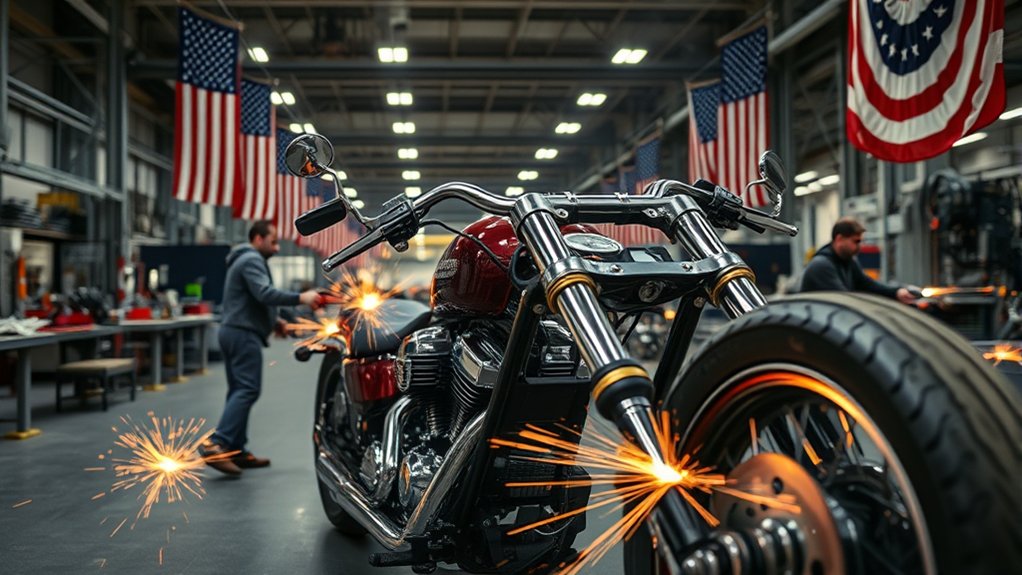
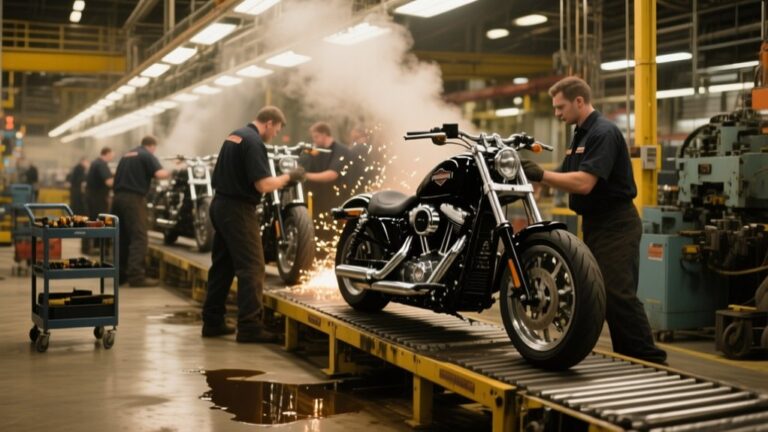
When Harley-Davidson moves RevMax production back to its York plant by late 2023 or early 2024, it won’t just be about manufacturing logistics. You’ll see a clear nod to American jobs and domestic industry pride.
This shift, targeting 2027 and 2028 models, reclaims space from previous expansions and signals a strategic pivot after earlier offshoring moves.
While it addresses criticism and bolsters U.S. manufacturing, it’s also a calculated effort to balance global production realities with Harley’s traditional image.
You might question whether this return is driven more by genuine commitment to American labor or by market pressures demanding a patriotic narrative.
Either way, Harley’s re-shoring reflects a nuanced response to economic and cultural factors, not just a simple “woke” gesture.
How Critics and Social Media Shape Harley’s Image
Why does Harley-Davidson’s image spark such heated debate online? You’ll find it’s largely due to critics and social media influencers who accuse Harley of adopting “woke” policies. Often, these claims are based on outdated DEI statements rather than current actions. This fuels a pretty polarized perception.
Here’s how the narrative unfolds: Social media campaigns, including those by rival Indian Motorcycle and figures like Robby Starbuck, frame Harley as overly focused on social issues. These narratives lean on historical remarks and tend to ignore recent business decisions and support initiatives.
As a result, public opinion splits. Some see Harley as politically correct, while others dismiss these claims as mischaracterizations. You’ll notice that criticism and social media chatter shape Harley’s image considerably, sometimes overshadowing the brand’s real direction.
Indian Motorcycle’s Campaigns Targeting Harley
You’ve probably noticed how Indian Motorcycle’s recent social media campaigns don’t just promote their brand—they actually take aim at Harley’s diversity efforts with pretty sharp criticism. It’s interesting because these tactics kind of blur the line between marketing and smear campaigns.
They’re using cultural debates as a battleground. It feels like a calculated move that makes you stop and wonder: is the focus really on heritage, or is it just about trying to undermine a competitor?
Indian’s Marketing Tactics
Indian Motorcycle has launched a pointed campaign that takes direct aim at Harley-Davidson by accusing it of “wokeness” and questionable practices. They position themselves as the true American brand, highlighting their heritage despite a 45-year production gap.
You should note how their marketing tactics work:
They emphasize their “oldest” American motorcycle legacy, even though it’s historically discontinuous. They frame Harley’s recent manufacturing changes as a betrayal of traditional American values. They exploit cultural and political divides to attract customers skeptical of Harley’s perceived social stances.
This approach is sharp but calculated. By stirring controversy and leaning into tradition, Indian is trying to redefine what authenticity means in the motorcycle market.
Though critics see it as opportunistic posturing rather than genuine heritage pride.
Social Media Smear Campaigns
How far will a brand go to protect or attack its image in today’s polarized landscape? Indian Motorcycle’s social media campaigns target Harley-Davidson, accusing it of “wokeness” and shifting values. You’ll notice influencers like Robby Starbuck amplify these attacks, often referencing Harley’s past leadership statements.
Critics see these as politically charged smear campaigns rather than honest critiques. Social media reactions are mixed: some find the attacks exaggerated or in poor taste, while others see strategic moves to undermine Harley’s reputation. It’s a tricky balance between brand defense and offensive strategy.
| Aspect | Details |
|---|---|
| Target | Harley-Davidson’s DEI policies |
| Tactics | Social media smear campaigns |
| Key Amplifiers | Influencers like Robby Starbuck |
| Public Reaction | Mixed; from support to criticism |
| Underlying Motive? | Political or strategic attack? |
Industry DEI Trends and Their Impact on Harley
While many motorcycle companies like Polaris and Honda embraced LGBTQ+ support and broader DEI initiatives around 2021, Harley-Davidson’s approach has been particularly inconsistent. You’ll notice three key points that highlight this contrast:
- Harley claimed to move away from DEI policies before new leadership arrived, showing a lack of clear commitment.
- Industry peers integrated diversity efforts into sustainability reports, signaling long-term strategy. Harley’s efforts remain unclear or symbolic at best.
- Critics suggest DEI in the industry sometimes serves marketing or political agendas, raising questions about Harley’s true intentions.
How Harley Responds to Social Media and Competitor Attacks
Although Harley-Davidson has kept its DEI policies intact, recent leadership changes hint that the company might be pulling back from its previous diversity commitments.
When social media figures like Robby Starbuck attack Harley, they often reference outdated statements and ignore the company’s current stance.
Meanwhile, Indian Motorcycle exploits these controversies to chip away at Harley’s image by highlighting alleged corporate missteps and cultural tensions.
You’ll notice Harley responds cautiously, focusing on tangible actions like re-shoring production rather than diving into online spats.
This measured approach signals a strategic pivot, emphasizing American manufacturing and traditional values as a buffer against “wokeness” critiques circulating online.
However, this subdued stance risks appearing evasive, leaving you wondering whether Harley’s commitment to diversity is genuine or just sidelined for market positioning.
What Riders Think About Harley’s New Direction
You might appreciate Harley’s move to bring RevMax production back to the U.S. It feels like a nod to traditional values, right? But at the same time, you can’t ignore the mixed feelings about their branding and social campaigns.
Some riders think these efforts come off as more political than authentic.
In the end, most folks focus on the tangible stuff, like reshoring jobs. They’re really weighing whether these steps truly honor the brand’s heritage or if they’re just reshaping it in a new way.
Rider Reactions To Reshoring
Because Harley’s decision to reshore production signals a return to American manufacturing roots, many riders see it as a welcome shift that honors the brand’s heritage. You might appreciate that this move creates jobs and revitalizes domestic industry, reinforcing Harley’s identity beyond marketing spin.
Still, some riders worry about price hikes on RevMax models made in the U.S. Here’s what you should consider:
- Most riders prioritize tangible actions like reshoring over social media or political narratives.
- Skepticism remains about how much reshoring alone can offset broader brand image challenges.
- The community largely supports reshoring but remains watchful of potential cost impacts.
In short, you’ll find that while riders embrace reshoring, they critically weigh its practical effects on loyalty and value.
Community Views On Branding
How do riders really feel about Harley’s new direction? Opinions are split.
You might appreciate Harley bringing RevMax production back to the U.S., seeing it as a nod to traditional American manufacturing values.
Yet, some in the community find Harley’s stance on diversity initiatives unclear, leaving brand perception murky.
You could also notice how social media attacks and political narratives seem to distract from what once defined Harley: quality and heritage.
While some enthusiasts applaud the reshoring effort, others worry about price hikes that threaten affordability.
Overall, you’ll find that many riders prioritize tangible actions and respect for tradition over marketing spin or social controversies.
It really reflects a community that demands substance, not just slogans.
Harley’s Focus on Traditional American Values
Why does Harley-Davidson continue to emphasize traditional American values in its branding and operations? You see, Harley isn’t just selling motorcycles; it’s selling an identity rooted in patriotism and American craftsmanship. Here’s why this focus persists:
First, Harley’s move to bring RevMax production back to North America shows its commitment to domestic manufacturing and American jobs. This isn’t just about business; it’s about supporting the economy and local communities.
The brand often contrasts itself with overseas competitors, highlighting its unique American heritage. It’s a way to stand out and connect with customers who value that authenticity.
Even with social media debates suggesting “wokeness,” Harley’s core messaging stays true to traditional values. They’re reaffirming what they’ve always stood for, not shifting toward progressive ideologies. It’s about keeping their identity consistent in a changing world.
Frequently asked questions
How Has Harley-Davidson’s Stock Price Reacted to Recent Company Changes?
You’ve likely noticed Harley-Davidson’s stock price dipped initially after they announced moving RevMax production back to North America. This drop reflected investor uncertainty at first.
But then it stabilized as the market started recognizing the strategic value of reshoring manufacturing and supporting American jobs.
You probably shouldn’t expect social controversies around “wokeness” to impact the stock much. Investors tend to focus more on concrete operational moves than on political or social narratives when valuing Harley.
What Are Harley’s Plans for Electric Motorcycles Moving Forward?
Harley’s plans for electric motorcycles are ambitious but come with challenges. You’ll see them roll out multiple new electric models by 2025, focusing on advanced batteries and fast charging.
They’re trying to attract younger, eco-conscious riders while keeping their traditional image intact.
But you should question if this shift truly aligns with their core audience. Or if it risks alienating long-time fans who value Harley’s classic identity.
It’s a tricky balance for sure.
How Does Harley-Davidson’s Pricing Compare to Competitors?
You’ll find Harley-Davidson’s pricing generally higher than competitors like Indian Motorcycle, mainly because Harley emphasizes American-made quality and heritage. This boosts domestic jobs and brand prestige, but it also means you’ll pay more due to increased manufacturing costs.
Indian’s competitive pricing comes from overseas production, which gives you cheaper options. So, if you value U.S. manufacturing and legacy, expect to pay a premium.
Otherwise, competitors might offer better deals.
Are There New Harley Models Targeting Younger Riders?
Yes, Harley’s launched new models like the Street series and Sportster S specifically to grab younger riders’ attention. You’ll notice they’ve modernized styling, added tech features, and lowered prices to make them more accessible.
But don’t mistake this for just chasing trends. They’re strategically evolving to stay relevant in a shifting market.
If you want a bike that fits a fresh lifestyle without losing Harley’s core identity, these models aim right at you.
What Partnerships or Sponsorships Is Harley Currently Involved In?
You’ll find Harley currently partners with veteran groups, racing teams like the XR750 flat track squad, and LGBTQ+ Pride events.
They co-brand with apparel lines promoting inclusivity, and support mental health, rider safety, and environmental causes.
These choices reflect a broader strategy. They’re trying to stay relevant and appeal to diverse, younger audiences while honoring tradition.
It’s a balancing act that not everyone agrees with, but it’s undeniably deliberate.
Final Thought
You might expect Harley-Davidson to fully embrace “woke” culture, but the reality’s more complex. Take their RevMax production shift back to America. It’s a clear nod to traditional values, not just diversity buzzwords.
While they’ve made strides in inclusivity, Harley balances that with honoring their roots. So, before you judge them as “going woke,” consider how they’re maneuvering modern pressures without abandoning what made them iconic.
It’s a nuanced dance, not a radical turn.