How Long Is Motorcycle School – Quick Answer
Most motorcycle school basic rider courses take two days.
They usually include 6 to 8 hours of range riding, plus classroom time.
You’ll often complete an eCourse before class.
Then you’ll spend full days on braking, cornering, clutch control, slow-speed maneuvers, and emergency stops.
One-day and three-wheel options exist, but they’re less common.
Weather, coaching, and retests can add extra time.
Bring approved gear and show up early.
You’ll know what to expect when you go deeper.
How Long Is Motorcycle School?
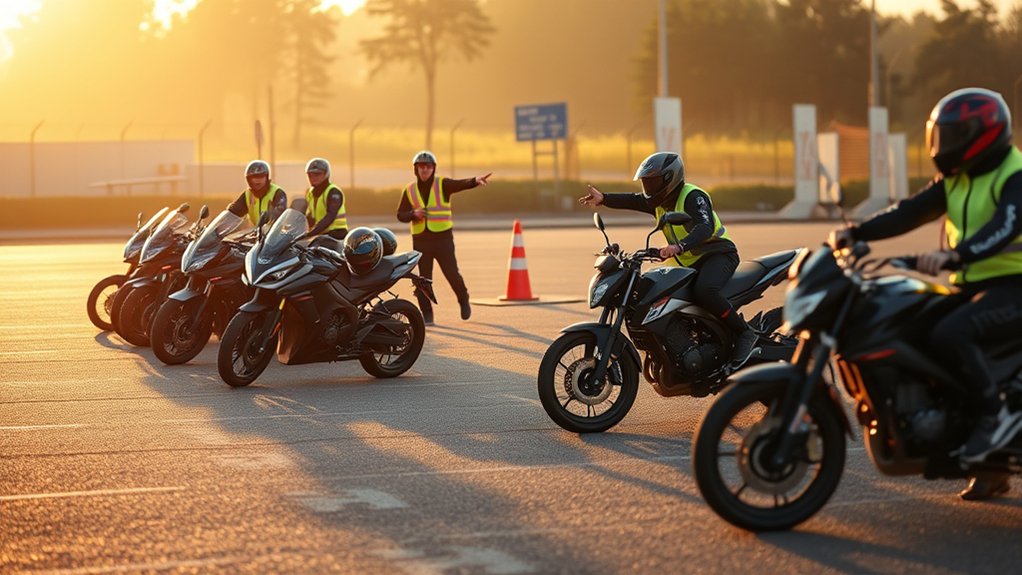
Most basic motorcycle rider courses are typically two days long. They include classroom instruction and on-cycle riding exercises.
If you take a Basic Rider Course from the Motorcycle Safety Foundation, you’ll usually spend one day learning in class. Then you’ll spend one day riding on the bike. Some providers split it into evening classes and a weekend ride.
You may also find condensed one-day formats. They’re less common, though.
Plan for each range day to last several hours with breaks. Also, complete any required eCourse first.
If you’re riding a 3-wheel course, expect a similar length. Before you go, check what you need to bring, since you’ll need proper gear.
You must pass both the written exam and riding assessment.
What a Basic Rider Course Covers
You’ll take the Basic Rider Course over two days, with a mix of classroom instruction and on-bike practice using MSF materials.
You’ll ride on a closed-course range and work on key skills like braking, cornering, clutch and throttle control, slow-speed maneuvers, and emergency stops.
You’ll also complete workbook assignments, take progressive assessments, pass a written exam, and finish with an on-cycle riding test to earn your endorsement.
Course Format
A Basic Rider Course usually runs as a two-day program.
It blends classroom instruction with on-cycle practice.
You’ll start with an online eCourse before class.
Expect an email about a week ahead with access.
In person, you’ll use MSF materials in the classroom.
Then you’ll move to closed-course range sessions on campus.
On the range, you’ll ride MNTC-supplied motorcycles or 3-wheel bikes.
You’ll practice basic controls and street-riding strategies.
As a Rider, you’ll work through slow-speed maneuvers.
You’ll also practice braking, turning, obstacle avoidance, and traffic readiness.
The ranges can feel physically demanding.
But you’ll get repeated drills and coaching from experienced MSF RiderCoaches.
Even if you’re an experienced rider, you may need this course.
It can be required for a drivers license endorsement.
The class ends with a riding assessment and written exam.
Skills And Assessment
During the Basic Rider Course, you’ll start with simple handling drills.
Then you’ll move to more advanced on-cycle exercises on a closed-course range.
You’ll test your balance, clutch and throttle control, and shifting.
You’ll also practice braking, swerving, and obstacle avoidance.
You’ll complete classroom modules and a required online eCourse too.
It covers road rules, risk management, and street-riding strategies before or during your sessions.
Instructors will coach you through progressive drills.
They’ll build your skills step by step as you practice.
You’ll get corrective feedback as you ride on MSF-approved motorcycles or 3-wheel bikes.
To earn endorsement credit, you must pass both the written knowledge test and the riding assessment.
The range work is physically demanding.
It measures whether you can combine skills safely and consistently under supervision.
How Long Each Course Type Takes

The Basic Rider Course usually takes two days total. In that time, you’ll get classroom instruction and on-cycle practice woven into both sessions, so you’re learning and riding throughout.
If you’re taking the 3-Wheel Basic Rider Course, it’s also typically two days. You’ll still spend that same amount of time training, and the school provides on-the-road practice for riders at all experience levels.
Some courses may also require an online eCourse before you come in. Even if that applies, you’ll still need to pass the written test and the riding assessment to successfully complete the course.
Basic Rider Course Length
Most riders complete the Motorcycle Basic Rider Course in two days.
The schedule includes classroom lessons and on-cycle practice.
You’ll usually finish the required eCourse before you arrive in person.
Expect email instructions about a week ahead.
Plan to spend the full class days at the range and in the classroom.
The riding drills are physically demanding, so don’t expect to leave early.
You’ll need to pass both the written exam and the riding assessment to complete the class.
If you don’t pass, you can’t retest in the same session.
You’ll have to reenroll and finish another full course.
Three-Wheel Course Time
If you’re considering the 3-Wheel Basic Rider Course, expect a two-day class. It usually runs about 12–16 hours total.
You’ll spend each day in several range sessions. Plan for roughly 6–8 hours of instruction and practice per day.
The course combines classroom learning with on-cycle exercises on a closed riding range. This lets you build skills in a controlled setting.
You’ll train on MNTC-supplied 3-wheel bikes. MSF RiderCoaches will guide you throughout the course.
In some cases, you may need to finish an online eCourse before you show up for the in-person range days. To complete the class, you must pass both the riding assessment and the written exam.
If you don’t pass, you’ll need to re-enroll and retake the full course.
Scheduling And Requirements
When you schedule either course, plan for a two-day commitment.
This includes both classroom work and on-cycle practice.
The Motorcycle Basic Rider Course usually runs over two days.
The 3-Wheel Basic Rider Course follows the same timeline for all experience levels.
For the motorcycle course, you’ll complete an online eCourse before class.
Watch for an email about it about a week ahead.
Classes may meet on weekends or weekdays, so check your start time carefully.
Arrive early in case you need time to get settled.
If you’re late, you can lose your seat and need to re-enroll.
You must pass both the riding assessment and the written exam during the scheduled days.
If you fail either one, you’ll need to take the full class again later.
One-Day vs. Two-Day Schedules
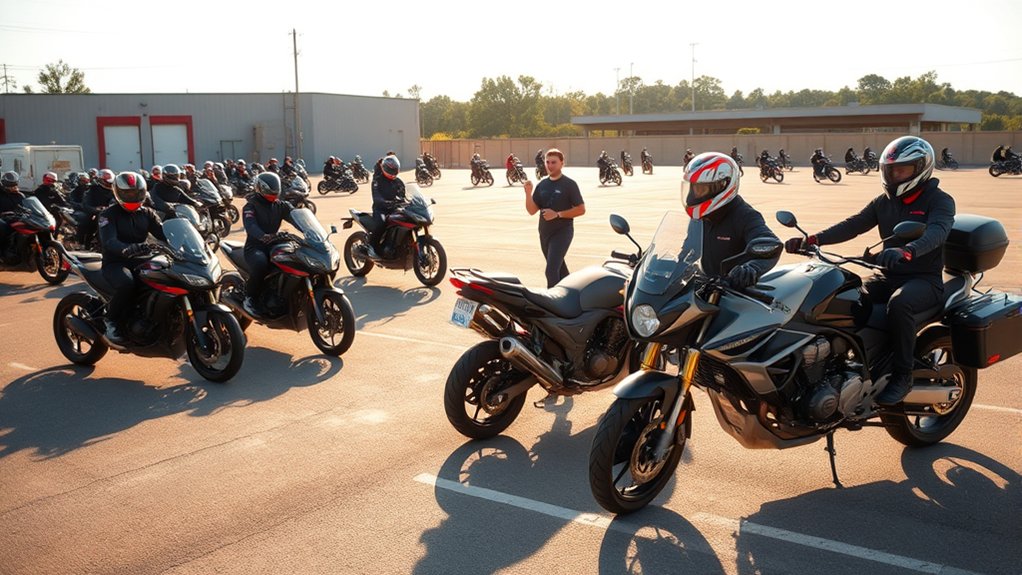
Motorcycle school usually comes in two formats: a two-day Basic Rider Course or a condensed one-day class for experienced riders.
If you choose the two-day option, you’ll split instruction between classroom work and on-cycle practice.
That way, you get more time to absorb basic controls and street-riding strategies.
A one-day schedule packs the same closed-course riding range into a longer session.
You’ll move faster, but you’ll also work harder and get less practice time.
Either way, you must pass both the written and riding tests to earn your endorsement.
If you don’t pass, you’ll need to re-enroll.
You’ll also need approved gear: a DOT or Snell helmet, eye protection, full-finger gloves, long sleeves, jeans, and sturdy ankle-covering shoes.
MNTC supplies the motorcycles for the course.
How the eCourse and Classroom Time Work
You’ll usually get your eCourse login about a week before class, and you’ll need to finish it before you come in.
Once you’re in the classroom, you’ll cover MSF-based lessons that prepare you for the riding drills.
After that, you’ll head to the closed-course range for on-cycle practice and assessments.
eCourse Timing
Before class starts, complete the required online eCourse. You’ll receive it by email about a week in advance.
Plan on several hours of work, though your pace may be faster or slower than someone else’s. Finish every module before you arrive for the closed-course range sessions.
The online work builds the basics you’ll need for the hands-on portion. In a two-day Motorcycle Basic Rider Course, this prep is built into the overall schedule.
That way, you can spend your in-person time riding and applying the skills. Don’t wait until the last minute.
If you skip the eCourse, you may not be allowed to take the riding assessment. You could also have to re-enroll.
Check your email, log in early, and complete it on time.
Classroom Instruction
Once you’ve completed the required eCourse, the classroom portion of the Motorcycle Basic Rider Course brings the lessons to life.
You’ll receive MSF-based instruction from experienced RiderCoaches.
You’ll review core concepts before you head to the range.
The classroom helps you connect what you learned online with what you’ll do in person.
Instruction covers basic motorcycle operations.
It also covers street-riding strategies and the details you need for the written exam and riding assessment.
In the standard two-day format, classroom time is paired with range sessions.
That way, your training stays coordinated.
- Complete the eCourse before day one
- Expect guided, MSF-based teaching
- Focus on test and assessment prep
- Follow the scheduled weekend or weekday class time
Range Practice
After the classroom wraps up, the course moves to the closed-course range for on-cycle practice.
You’ll finish the eCourse before this point, so class time can focus on skills, strategy, and test prep.
At South Penn Campus, you ride MSF-approved motorcycles supplied by MNTC.
Progressive drills are led by MSF RiderCoaches.
| What you do | Why it matters |
|---|---|
| Complete eCourse | Frees classroom time |
| Attend instruction | Builds riding knowledge |
| Ride range drills | Develops control |
| Prepare gear | Keeps you ready |
Bring your DOT/Snell helmet, eye protection, gloves, long sleeves, jeans, and sturdy shoes.
The range is active and outdoors, so pack water and snacks.
These sessions can feel physically demanding, but they help you build basic motorcycle operation and street-riding habits.
They’re also key for passing the riding assessment.
How Much Range Riding to Expect
Most Basic Motorcycle Rider Courses include about 6–8 hours of range riding, spread across the two-day class.
You’ll spend that time on a closed course, not on the street.
You’ll repeat short drills with instructor coaching throughout the session.
Expect slow-speed balance work as a big focus.
You’ll also practice clutch and throttle control, plus braking techniques.
That includes quick stops and swerving.
You’ll work on basic turns and obstacle avoidance too.
Keep practicing until you can perform them smoothly.
The 3-Wheel Basic Rider Course uses a similar range format.
So you should expect steady, hands-on practice there as well.
Since the range is outside and physical, bring water and sunscreen.
Wear proper gear, too, for comfort and safety.
Breaks usually happen between drills.
They help you reset, stay focused, and build skills safely.
What Makes Motorcycle School Take Longer
Motorcycle school can take longer when the online eCourse must be finished before class. Instructors may need to wait for everyone to complete it.
You can also lose time if your class needs repeated riding drills. Extra coaching may be required to pass the skills evaluation.
Weather can slow everything down too. Rain or extreme heat can force pauses on an outdoor range.
Administrative checks and equipment setup also add minutes before training starts.
| Factor | Effect |
|---|---|
| eCourse | Delays class start |
| Skills retakes | Adds practice time |
| Weather | Forces pauses |
| Admin checks | Slows kickoff |
| Large class | Reduces coaching time |
If your group is large or the instructor ratio is tight, you’ll spend longer on each exercise.
What to Bring on Class Day
On class day, come prepared with the right gear and paperwork so you can focus on riding.
Bring a DOT- or Snell-certified helmet and shatter-resistant eye protection.
If you don’t have a helmet, the school may provide one.
Wear a long-sleeve shirt or jacket, long jeans or pants without holes,
plus full-finger gloves, and sturdy ankle-covering shoes or boots.
Also carry your valid driver’s license or permit.
If you’re under 18 and unlicensed, bring a birth certificate and parent/guardian waiver.
Bring water, snacks, sunscreen, and a rain suit for outdoor sessions.
Also bring your course confirmation, required materials, and any eCourse completion info.
Check your email about a week before class for instructions.
Being ready helps you start smoothly and stay comfortable all day.
How Testing Affects Course Length
Although the Motorcycle Basic Rider Course usually takes two days, testing can affect how long you’re actually in class.
You’ll finish with a written exam and a riding assessment, and you must pass both to complete the course.
The time for these tests is already built into the closed-course schedule.
Your day two session may run longer if you need extra riding exercises or if assessments take more time.
If you fail either test, the instructor won’t give you a retest.
Instead, you’ll have to re-enroll and pay for another full class, which delays certification.
If your course requires an online eCourse, finish it before class.
Otherwise, you may not start on time.
Passing both tests gets you the completion document for your endorsement.
How to Choose the Right Course Length
Most basic Motorcycle Rider Courses run for two days. Choose that full schedule if you want the standard MSF-based class with classroom instruction and on-cycle range practice.
Most basic Motorcycle Rider Courses run for two days, combining classroom instruction with on-cycle range practice.
If you need a simpler option, consider three-wheel basic rider courses. They usually take one to two days and suit all skill levels.
Check whether your class includes an eCourse. You’ll need to finish it before day one, often within a few hours.
Plan for the full time block. Late arrivals aren’t admitted, so attend every scheduled session.
Choose carefully, because if you fail the written or riding test, you must retake the entire course.
- Two-day class: standard choice
- One- to two-day trike course
- Complete eCourse early
- Attend every scheduled session
Frequently Asked Questions
Do I Need My Own Motorcycle for Class?
No, you usually don’t need your own motorcycle for class. Most Basic Rider Courses and 3-Wheel Basic Rider Courses provide school-owned, MSF-approved bikes or trikes for you to use.
You should bring required gear like eye protection, gloves, long sleeves, long pants, and sturdy shoes. Check with your school if you want to ride your own bike, since it must meet their safety and insurance rules.
Are Helmets Provided by the School?
Yes—most motorcycle schools provide helmets if you don’t bring one.
Many programs issue DOT-approved lids and sanitize them between riders, so you can usually show up prepared but unarmed.
You should still bring your own if possible.
You’ll also need eye protection, gloves, long sleeves, and sturdy shoes.
If you’re under 18, bring the required ID and waiver too, before they’ll issue school gear.
Is Motorcycle School Available at Night?
Yes, sometimes you can take motorcycle school at night, but it depends on the provider.
You’ll often find evening or night classes for the classroom portion, while riding exercises usually happen during daylight for safety.
If the course includes an online eCourse, you can finish that anytime.
Call or check the school’s website to confirm availability, since schedules vary by location, instructor, and season.
Can Weather Delay My Motorcycle Course?
Yes, weather can delay your motorcycle course, so keep your eye on the ball.
If heavy rain, thunderstorms, or strong winds make the outdoor range unsafe, instructors may postpone or cancel class.
Check your email, including spam, for updates.
If you miss a weather-related session, contact the office right away to discuss rescheduling.
Bring water, Gatorade, and sunscreen.
Hot, sunny days can also affect the schedule.
Do I Get a Certificate After Finishing?
Yes, you’ll get a completion card or certificate after you pass the Basic Motorcycle Rider Course.
You must successfully finish both the written test and the on-cycle riding assessment.
Many state DMVs accept it instead of the skills test for an M endorsement, but you still need to take it to the DMV. You may also need a written exam.
If you fail, you won’t retest that day, so keep your original card safe.
Conclusion
Motorcycle school usually wraps up faster than you’d expect.
But it can still feel like a full weekend adventure.
Depending on the course, you might finish in a day.
Or it could stretch across two or more.
If you’ve got your gear, complete the eCourse, and pass the tests, you’ll be riding sooner than you can say “brake check.”
Pick the schedule that fits your life and get on two wheels before the dust settles.