How Many Questions Are On The Motorcycle Permit Test – Tips
Most motorcycle permit tests have 20 to 30 multiple-choice questions,
and many states use 20 or 25.
You’ll usually need about 80% correct to pass, so missing just a few
can matter.
Focus on road signs, lane rules, safety, and basic bike handling.
Study your state handbook, then take timed practice tests.
This helps you spot weak areas fast. Keep going, and you’ll also
learn state-specific rules and what happens after you pass.
What Is a Motorcycle Permit Test?
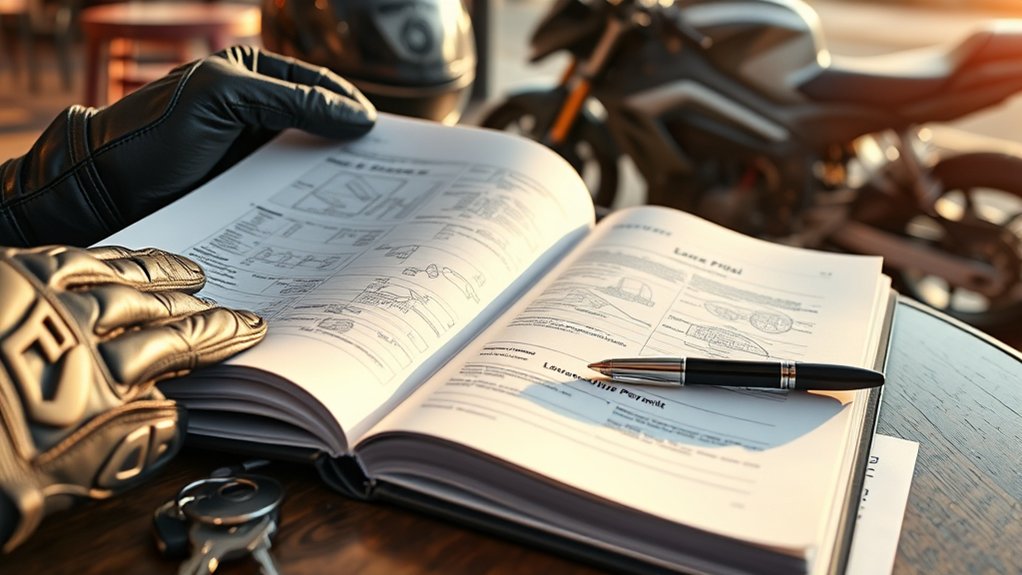
Before you can get on the road, you usually need to pass a motorcycle permit test.
It’s a written, multiple-choice exam that checks your knowledge of motorcycle operation, safety practices, road rules, and traffic signs.
You’ll usually take this written exam at a DMV motorcycle permit office or a similar agency. Some states charge a small fee.
The test often includes 20 to 30 questions. Many questions focus on road signs, signals, and lane markings.
To pass, you need to reach your state’s passing score, often around 80%. Once you pass, you can get a learner permit and move on to the next steps, like a skills test or a rider education course.
How Hard Is the Motorcycle Permit Test?
You’ll usually take a short multiple-choice test, and honestly, it’s pretty manageable if you study the handbook and do a few practice exams.
The questions that tend to feel hardest are often the ones about road signs, lane markings, and general safety rules. So, if you spend a little extra time reviewing those areas, you’ll be in a much better spot.
And if you use good study habits—or complete a rider education course—you’ll feel more confident and less stressed going into test day.
What To Expect
How hard is the motorcycle permit test? For you, it’s usually manageable if you know what the DMV expects.
Most states give you 20–30 multiple-choice questions, and you’ll often need at least an 80% score to pass.
The Motorcycle Written exam covers road rules, motorcycle operation, motorcycle safety, signs, signals, and lane markings.
So don’t overlook those details.
You can judge your readiness with motorcycle permit practice tests.
Also try a practice permit test that mirrors the real format.
Look for practice tests that simulate the exam and give instant feedback.
Those explanations help you spot mistakes fast.
If you score well on several sets, you’re probably on track.
Some rider-education courses may waive the skills test, but you’ll still need the written DMV permit test in most states.
Preparation Makes It Easier
Preparation makes the motorcycle permit test much easier.
The exam usually has 20–30 multiple-choice questions. Most states require about an 80% score to pass.
If you study the handbook and use a Motorcycle Permit Practice Test, you can spot weak areas quickly. Focus on road rules, signs, and safety habits.
Then review missed practice questions until the answers stick.
- Learn the state permit handbook
- Take timed quizzes
- Check every explanation
- Join a Basic Rider Course
- Aim for a Motorcycle License
A good rider education class can build confidence. It may even waive your skills test in some states.
When you keep scoring well, you’re less likely to retake the permit exam. That helps you save time and fees.
How Many Questions Are on the Motorcycle Permit Test?

Most state motorcycle permit written tests include about 20 to 30 multiple-choice questions.
Most state motorcycle permit written tests include about 20 to 30 multiple-choice questions.
With 20 or 25 questions, you’ll see especially often.
When you study, plan for a short DMV written test that still demands accuracy.
Many states set the passing score at about 80%, so missing only a few questions can matter.
Check your state DMV or licensing agency.
The exact number of questions and the passing score aren’t the same everywhere.
Practice tests help because they usually match the real format.
That gives you a feel for pacing and wording.
You’ll also see road signs and markings often.
So get comfortable spotting them quickly.
Focus on answering each question carefully.
You’ll walk in more confident and prepared.
Which Motorcycle Test Topics Matter Most?
Once you know how many questions to expect, the next step is focusing on the topics that show up most often. On the motorcycle test, you’ll see lots of road signs, rules of the road, and safety questions.
The permit test often emphasizes:
- warning, regulatory, and guide road signs
- right-of-way, intersections, and lane use
- speed limits and traffic laws
- braking and cornering skills
- hazard perception and risk management
You should also expect questions on following distance, lane positioning, gear and helmet use, and handling emergencies. Some tests include vehicle dynamics, like countersteering and weight transfer.
These areas matter because they reflect real riding decisions, not just memorizing facts. If you focus on these core topics, you’ll cover the biggest share of what the exam asks and feel more confident on test day.
How Do You Study for the Motorcycle Permit Test?

Start with your state’s motorcycle handbook, because the permit test usually pulls its questions straight from the rules and safety basics. After that, take a bunch of timed practice tests. Keep going until you can consistently score at least 80%, since that’s a good sign you’re ready for the real thing.
As you study, pay close attention to road signs, signals, and lane markings. They show up often, and getting them right can make a big difference in your score.
Study The Handbook
Knowledge gives you a clear edge on the motorcycle permit test, and your state’s handbook should be your main study tool.
Read your state’s motorcycle handbook cover-to-cover.
Then narrow your focus to the sections that show up most often on the exam.
- road signs
- signals and lane markings
- flashcards for key terms
- state-specific rules
- timed practice
Use flashcards to lock in protective gear, stopping distances, and scanning habits.
Pay special attention to local laws on permit lengths, passengers, and riding hours.
Those details change by state.
As you study, mark anything you miss and reread those pages until they feel familiar.
This approach helps you build confidence fast.
It also keeps your preparation efficient without wasting time on guesswork or outdated advice.
Take Practice Tests
Take timed practice tests with 20 to 30 multiple-choice questions.
This helps you match the real permit exam’s pace and pressure.
Use practice tests often, and choose timed sets that give instant feedback.
After each answer, you can see why you missed it and fix it fast.
Keep working until you score at least 90 on most quizzes.
Even though many states only require about 80 to pass, aim higher.
Focus extra time on road signs, signals, and lane markings.
They show up often, so they can make a big difference.
Then move to full-length practice sessions.
Repeat them until you pass several in a row without notes.
Finish with one untimed run to check that you still know the material.
Do this when the pressure drops.
Review Road Signs
Road signs are a big part of the motorcycle permit test.
So study the signs chapter in your state handbook closely.
Focus on sign recognition.
It can make up a large share of the 20–30 questions you’ll face.
Learn shapes and colors fast.
Use flashcards daily.
Run visual drills with sign images.
Include less-common signs.
Pair study with practice tests.
Remember: octagon means stop, triangle means yield, diamond warns, rectangle guides, and pennant means no-passing.
Take 20–30 question road signs quizzes until you’re scoring 80% or better.
When practice tests explain each answer, you’ll remember why it’s right and spot the same clues on the road.
That mix helps you answer permit test questions with confidence.
How Can Practice Tests Improve Your Score?
Practice tests can sharply improve your score. They show you exactly how the motorcycle permit exam is structured. You’ll get used to the usual 20–30 multiple-choice format and the time pressure before test day.
Use practice questions to spot weak areas fast. Then drill those topics until you can score at least 80% consistently. Instant feedback helps you see why each answer is right or wrong. That speeds up learning and strengthens your memory of traffic laws and safe riding rules.
Timed practice also builds stamina. It helps you stay calm and focused during the real test. Choose state-specific practice tests whenever possible. They match your DMV’s rules, permit restrictions, and sign content. That way, you study what’s most likely to appear and raise your chances of passing on the first try.
What Do California Riders Need to Know?
For California riders, clarity matters.
For California riders, clarity matters.
The motorcycle permit written test usually has 25 multiple-choice questions, and you need at least 20 correct to pass.
In California, focus on road rules, signs, lane markings, and safe riding habits.
If you’re under 21, you must follow permit restrictions and the six-month progression rule before a full license.
Even if you complete an approved Motorcycle Safety Program, you still have to pass the written test.
To prepare, use practice questions and the California Motorcycle Handbook.
Review every missed answer.
Study realistic 20–30 question quizzes, and keep checking lane-sharing and turning rules.
Learn motorcycle-specific road signs.
Track your score until it’s consistent.
What Do Pennsylvania Riders Need to Know?
Pennsylvania’s motorcycle permit test is straightforward, but you’ll want to study the right material. Your motorcycle permit test usually has 20 multiple-choice questions on vehicle operation, traffic laws, and safety practices.
To earn your Class M permit, you need at least 16 correct answers. Spend extra time on road sign recognition and traffic signal questions, since they take up a large part of the exam.
Review the Pennsylvania Motorcycle Operator’s Manual carefully, and use practice tests to spot weak areas before test day. If you’re under 18, remember the Pennsylvania Motorcycle Safety Program Basic Rider Course and supervised riding requirements apply after you pass.
Keep drilling 20-question quizzes until you’re consistently scoring 80% or better.
What Happens After You Pass?
Once you pass the written motorcycle permit test, the DMV will issue your learner’s permit.
Then you can start riding under your state’s restrictions, like no passengers and daylight-only travel, plus limits on where you can ride.
Next, check your DMV requirements.
Gather your ID, proof of residency, and your Social Security number before you pick up your permit.
- Review your permit restrictions carefully
- Enroll in an approved rider education course
- Save your certificate of completion
- Track how long you must hold the permit
- Schedule your skills test when you’re eligible
If your state waives the road exam, submit the certificate on time.
Keep practicing under supervision, because your learner’s permit is only the first step toward your full motorcycle license and endorsement, and deadlines matter.
Frequently Asked Questions
Do Motorcycle Permit Tests Include Images of Road Signs?
Yes, motorcycle permit tests often include road sign images.
You’ll usually see signs, signals, and pavement markings in multiple-choice questions.
You’ll need to identify their meanings or the right rider response.
Practice quizzes often use the same sign shapes and symbols you’ll face on test day.
Study your state’s handbook section on signs.
Then quiz yourself with image-based practice to boost recall and confidence.
Can You Retake the Motorcycle Permit Test if You Fail?
Yes, you can usually retake the motorcycle permit test if you fail.
Most states let you try again after a short waiting period, often 1 to 7 days.
You may also need to pay a retest fee, and some DMVs limit how many attempts you get.
If you keep missing it, you might need a rider course before trying again, so check your local DMV rules first.
Are Motorcycle Permit Test Questions the Same in Every State?
No, you won’t see the same motorcycle permit test questions in every state.
You’ll face a state-specific question pool based on local traffic laws, road conditions, and motorcycle rules.
Most states give you 20–30 multiple-choice questions.
The number of questions and passing score can vary, though.
DMVs update their banks often.
How Long Does the Motorcycle Permit Test Usually Take?
You’ll usually spend about 15 to 30 minutes on the motorcycle permit test itself.
It’s often similar to doing a short crossing before your ride begins.
Then add about 10 to 20 minutes for check-in, vision screening, and DMV paperwork.
So your visit typically takes 30 to 50 minutes total.
If your state uses a longer exam, plan for up to 45 to 60 minutes.
Arrive early and bring your documents.
Is the Motorcycle Permit Test Written or Computer-Based?
It’s usually computer-based, though some states still use paper versions.
You’ll answer multiple-choice questions on a screen at the DMV or motor vehicle office.
You’ll submit them electronically for instant scoring.
In a few places, you must test in person, not online.
If you’ve taken a rider course, you may waive the skills test.
You’ll still need to pass the written knowledge exam unless your state says otherwise.
Conclusion
You’re ready to ride into the permit test with confidence.
Now that you know the question count, key topics, and state-specific steps, you can study smarter and score stronger.
Keep your focus on safety signs, traffic rules, and test-taking tips.
Use practice tests to sharpen your skills and spot what to improve.
With steady study and smart strategy, you’ll feel prepared.
You’ll pass with poise and get one step closer to hitting the road.