How Often To Clean Motorcycle Chain – Overview
Clean and relube your motorcycle chain about every 500 miles as a baseline. Shorten that interval after rain, mud, dust, or off-road use. Service it sooner if you hear squeaks, see rust, or feel stiff links.
Clean the chain and sprockets before relubing, then wipe off excess lube so it penetrates pins and rollers. Keep going and you’ll spot damage early and choose the right lube for each condition.
How Often Should You Clean Your Motorcycle Chain?

A good baseline is to clean and lube your motorcycle chain every 500 miles. This helps keep grit from building up and prevents rust.
The clean and lube interval gives you a consistent maintenance cycle without overdoing it. If you ride in wet weather, shorten the schedule afterward.
Wet rides strip lubrication and encourage corrosion. After wet rides, check the chain sooner and service it as needed.
If you ride in dust, mud, or off-road conditions, inspect and service the chain more often. Abrasive grit accelerates wear in these environments.
Don’t wait for the next interval if you notice squeaks, rust, stiff links, or a dry feel. Clean it right away.
For sealed O-ring or X-ring chains, keep the every-500-miles routine. Still, check the chain more frequently in harsh conditions to protect the seals and preserve lubrication.
Why Chain Cleaning Prevents Wear
When you leave dirt and old lubricant on the chain, that grit turns into an abrasive paste.
Over time, it grinds down the sprockets, rollers, and side plates.
But if you clean your chain regularly, you remove the contaminants that cause corrosion.
Then fresh lubricant can actually reach the pins and rollers, which helps slow wear and chain stretch.
Plus, that lubrication also protects the seals and internal surfaces.
As a result, your chain lasts longer and runs more smoothly and efficiently.
Dirt Causes Abrasive Wear
Dirty lubricant turns chain contamination into an abrasive paste. That paste grinds on pins, rollers, and sprocket teeth every mile you ride.
Fine dust, grit, and muck don’t just sit there. They cut metal and speed up abrasive wear.
After wet rides, water strips lube and leaves contamination embedded. Clean the chain right away.
In dry, dusty conditions, particles keep working between moving parts. They cause stretch and tooth profiling over time.
- Clean before relubing.
- Clean immediately after wet or gritty rides.
- Use about 500 miles as a baseline.
If you skip this, an unclean chain can wear 3–4 times faster than a maintained one. Regular cleaning limits wear and keeps the drivetrain operating within spec.
Clean Chains Last Longer
Keeping your chain clean prevents abrasive grit and old lube from acting like sandpaper on the pins, rollers, and sprockets.
You remove contamination before it grinds metal away, so you slow wear and help the chain’s dimensions stay stable.
Dirt and moisture also drive rust and corrosion.
They roughen surfaces and weaken links over time.
When you clean regularly, fresh chain lube reaches moving parts more evenly.
That helps your drivetrain stay smooth and efficient.
If you skip cleaning, gunk hardens between links.
It raises friction and can speed chain stretch and sprocket wear.
Clean and lube about every 500 miles, or sooner after wet or dusty rides.
That extends chain life and helps cut replacement costs.
Lubrication Protects Seals
Clean chain care helps protect O-ring and X-ring seals. It keeps them pliable and helps their internal grease stay sealed in. When you clean an O-ring chain every ~500 miles, you strip away grit and degraded lube that can cut seal lips like grinding paste. That keeps wear down and helps the chain stay near its typical ~20,000-mile life.
- Remove dirt before it dries hard.
- Dry the chain, especially after wet rides.
- Re-lube your motorcycle chain with O-ring-safe lube immediately after cleaning.
If you use kerosene or WD-40 as a degreaser, don’t stop there. Always lube your motorcycle again. Clean until links and rollers look shiny, then apply a thin penetrating film. That routine preserves seal flexibility and slows corrosion, so you delay chain and sprocket replacement.
How Dirt and Water Damage Chains
Rain, mud, grit, and dust attack a motorcycle chain in different ways, but they all accelerate wear.
Water strips lubricant from the links during wet rides, so bare metal can rust fast.
If you ride through mud or road spray, contaminants mix with old lube and become an abrasive paste.
That paste grinds rollers, pins, and sprocket teeth.
In dry conditions, fine dust and sand act like micro-grit between moving surfaces.
They quietly increase wear even when the chain looks only lightly dirty.
Repeated water exposure can also swell or degrade O-ring and X-ring seals.
That reduces internal lubrication and shortens chain life.
If you leave the chain uncleaned after wet or gritty rides, expect stiff links and louder squeaks.
You’ll also see visible rust and face earlier chain-and-sprocket replacement.
How to Clean a Motorcycle Chain Properly
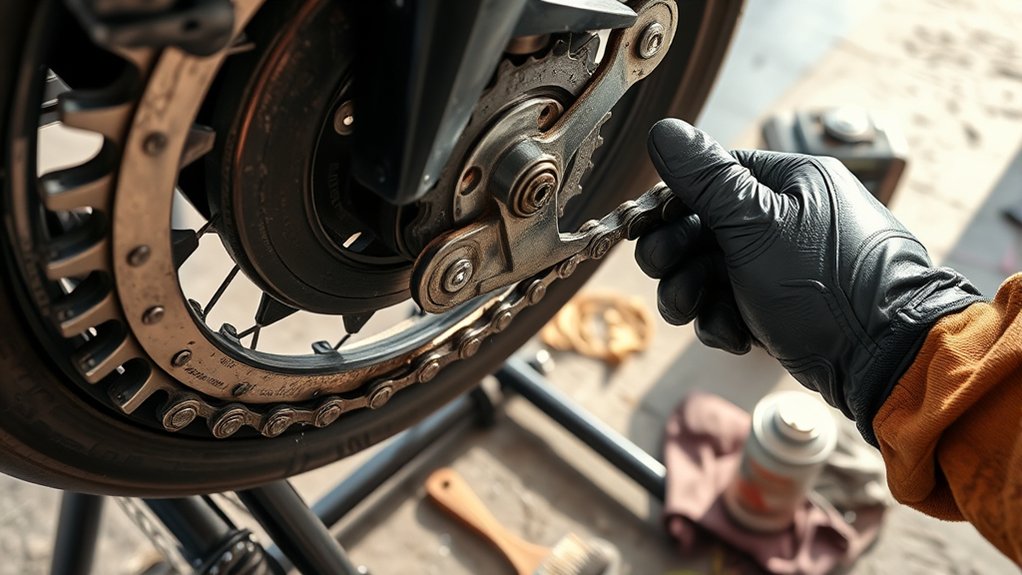
Raise the rear wheel on a stand, or work the chain in sections if you don’t have one.
Raise the rear wheel on a stand, or clean the chain in sections if you don’t.
Then rotate the wheel as you clean so you can reach every link and scrub from the back of the rear sprocket to reduce chain squirm.
Spray Chain Cleaner liberally and let it soak.
Use a brush to clean all four sides of each link until the rollers and sideplates shine.
Place cardboard behind the chain to catch overspray and protect the bike and brakes.
Repeat passes if grit remains.
Wipe the chain with clean rags.
Wipe the sprockets too.
Clean until no abrasive paste remains.
Do this after wet rides, and always before you lube so fresh lubricant won’t trap dirt or moisture.
Which Lube Works Best for Your Motorcycle Chain?
Which lube should you use? If you’re unsure, start with a generic gear oil. It’s affordable, penetrates well, and works for everyday use.
On a new chain, choose an O-ring-safe product. That way you won’t damage the seals and you’ll keep internal grease in place.
For rain or mud, use a wet lube or paste like Maxima Chain Wax or Motul C5. They cling better and resist wash-off.
In hot, dusty conditions, a dry lube like Oxford Mint helps keep grit from sticking.
If you’ve cleaned with WD-40, naphtha, or kerosene, remember they’re solvents, not lubricants. So you must do a proper lube step afterward.
Apply a thin film, let it settle, and wipe off excess. Then re-lube about every 500 miles.
When to Clean After Wet or Dusty Rides

After a wet ride, clean and re-lube your chain as soon as you can. Water strips away lubricant, and corrosion starts faster than you’d think.
If you rode through rain, puddles, mud, dust, or sand, don’t just do a quick wipe—go for a full clean and scrub instead. Those particles get worked into the drivetrain, and grit plus moisture will speed up wear.
Then, check the chain right after those conditions, let everything dry, and apply the right lube before your next ride.
Wet Ride Cleanup
Wet rides call for immediate chain care. Clean and lube the chain as soon as you can, because water and grit strip lubricant and can start rust within hours.
For wet ride cleanup, don’t wait for your usual interval. Treat rain, puddles, and mud as urgent maintenance.
If you used WD-40 or kerosene, finish with proper chain lube. This restores the chain’s protection fast.
Do this process:
- Wipe the chain, then degrease and scrub all link faces and rollers.
- Rinse or wipe away residue, then dry the chain thoroughly.
- Apply fresh lube evenly and rotate the wheel to coat every section.
If you spot rust, stiff links, squeaking, or heavy dirt, clean and relube immediately.
Dust And Grit Care
Dust and grit call for the same kind of prompt attention, because abrasive debris can wear chain parts fast even when the bike never saw rain.
After a dusty ride, wipe the chain with a microfiber cloth to lift loose grit, then apply a dry-weather chain lube to the dry chain.
If the route was especially filthy or mixed with mud, don’t just top up.
Degrease, scrub all link faces, rinse or wipe clean, and relube completely.
Treat any squeak, stiff link, or visible grinding paste as a warning that contamination has already started damaging rollers and pins.
As a rule, shorten your service interval from the usual 500-mile baseline and clean after any significant dusty slog.
Prompt care keeps wear low and helps the chain run smoothly, quietly, and efficiently.
Signs Your Chain Needs Attention Now
Your chain often gives clear warning signs before it fails.
If it squeaks louder than your brakes, starts making new metallic noises, shows rust or brown-orange flaking, or feels stiff, dry, or frozen when you rotate the wheel by hand, it needs cleaning and lubrication right away.
Don’t wait for damage—lube your chain now to prevent wear.
Check for stiff or frozen links, dry surfaces, and black paste too.
- Listen for squeaks or metallic chatter.
- Inspect for rust, discoloration, or flaking.
- Feel for rough, dry, or bound movement.
If you see any of these, clean the chain and sprockets before the next ride.
Fresh lubricant should leave a visible sheen and let each link flex smoothly.
Ignoring these symptoms lets contamination grind pins, rollers, and sprockets.
Frequently Asked Questions
How Do I Know if My Chain Is Sealed?
You’ll know your chain’s sealed if you see thin black rubber O-rings or X-rings between the inner and outer plates around each pin.
A sealed chain usually has small gaps and may show molded lettering on the side plates.
If you check your manual or parts sheet, it’ll say “O-ring,” “X-ring,” or “sealed.”
If you’re still unsure, inspect a pin area carefully for a visible rubber lip.
Can I Clean My Chain Too Often?
Yes, you can overclean it if you use harsh solvents, abrasive brushes, or skip relubrication.
You won’t hurt a chain by wiping it often, but repeated deep degreasing can strip protective oil and stress O-rings.
Clean and lube about every 500 miles, or sooner after rain or dust.
Use soft brushes and a chain-safe cleaner, then reapply lubricant promptly to prevent rust and premature wear.
Should I Clean a New Motorcycle Chain?
Yes, you should clean a new motorcycle chain, but don’t scrub it bare like you’re stripping paint from a gate.
You want to remove shipping grime and factory residue, then relube it while it’s warm from the first few rides.
Use an O-ring-safe cleaner on sealed chains, and avoid harsh solvents.
Then inspect slack after the first few hundred miles.
A first full clean and lube around 500 miles works well.
Does Chain Cleaner Damage O-Rings?
Yes, chain cleaner can damage O-rings if you use the wrong product.
You should choose an O-ring-safe cleaner or a mineral-based solvent.
Harsh degreasers can dry, swell, or leach lubricant from the seals.
Kerosene and approved motorcycle chain cleaners work well for grime.
After cleaning, relubricate the chain promptly.
That restores protection and helps keep the O-rings pliable and sealed.
How Long Should Chain Lube Dry Before Riding?
You should wait about 1–5 minutes before riding. Quick-dry sprays can set in under 2 minutes. Waxy lubes may need 10–30 minutes.
Let the chain warm from riding, apply the lube, spin the wheel, and wipe excess. Follow the can’s directions for timing.
In wet or cold conditions, give it extra time. Like a knight arming up, you’re protecting your chain from fling, grit, and premature wear.
Conclusion
So, if you’d rather not turn your chain into a gritty science experiment, clean it before dirt and water do the job for you.
Check it after wet or dusty rides, lube it properly, and don’t wait for rust, noise, or slack to make it obvious.
A clean chain lasts longer, runs smoother, and saves you money.
In short, your motorcycle chain isn’t self-cleaning, no matter how optimistic you are.