How To Check Motorcycle Battery – Smart Tips
To check your motorcycle battery smartly, use a multimeter set to 20V DC and measure voltage with the ignition and loads off. A healthy battery reads about 12.6–13.0 V resting.
During starter cranking, voltage shouldn’t drop below 10.5 V. With the engine running, expect charging voltage near 14.4 V to confirm your charging system works.
Keep polarity correct and avoid prolonged cranking. These steps guarantee accurate assessment. Further details can help you maintain and troubleshoot your battery effectively.
How To Interpret Motorcycle Battery Voltage
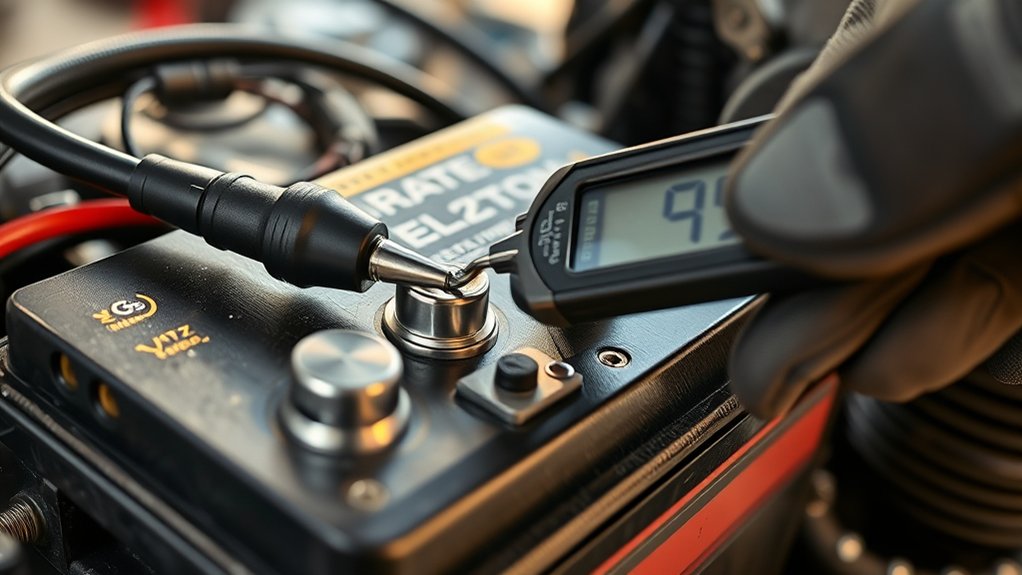
How can you tell if your motorcycle battery is healthy just by measuring its voltage? Start by checking the resting voltage with the ignition off. A healthy 12V battery reads about 12.8–13.0 V. Values near 11.7 V mean about 25% charge, while 10.5 V or below signals a discharged battery.
Use a DC voltmeter across the terminals. Readings under 11 V usually require charging and could indicate damage. When you engage the starter, voltage should drop no more than 1 V. If it falls to 10 V or less, cells may be weak or failing.
Finally, with the engine running, the charging system should raise voltage to roughly 13.6–14.5 V. If it stays near resting voltage, suspect a stator or regulator fault.
Using A Multimeter To Test Your Motorcycle Battery
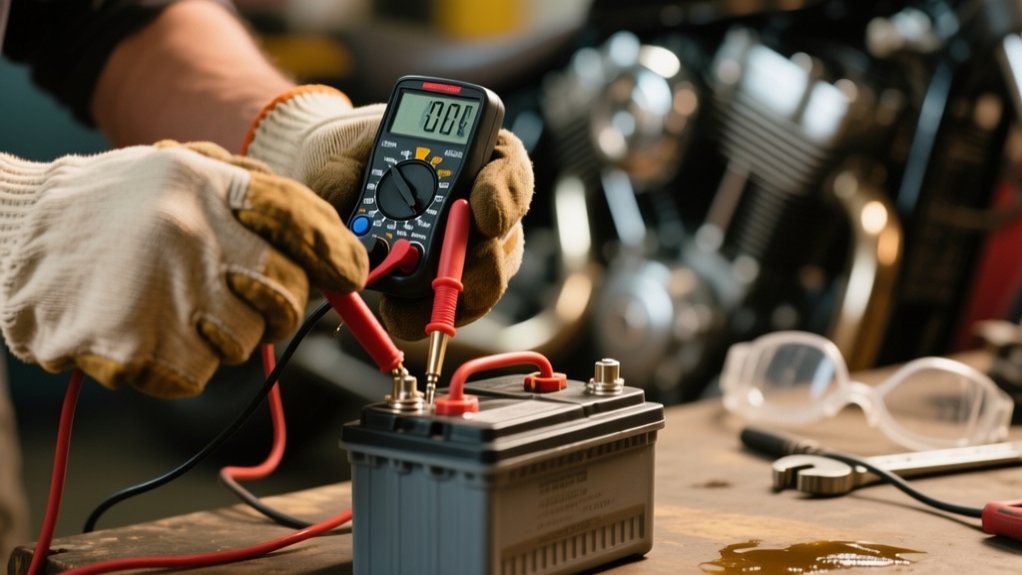
First, set your multimeter to the DC volts mode and choose the 20 V range. This will help you measure the battery’s resting voltage accurately.
Next, place the red probe on the positive terminal and the black probe on the negative terminal to get a baseline reading.
After that, turn the ignition on and crank the engine. Watch how the voltage drops under this load—it’s a great way to check your battery’s health and spot any potential electrical issues.
Multimeter Settings Guide
Set your multimeter to the DC volts mode on the 20V range or use auto-ranging to guarantee accurate readings of your 12V motorcycle battery. This setting ensures you measure voltage precisely without damaging the meter or misreading low voltages.
When testing, connect the red probe to the positive terminal of the motorcycle battery and the black probe to the negative terminal.
Keep these points in mind:
- Use the 20V DC range for accurate voltage reading, as 12V batteries fall well within this limit.
- Always start with the ignition off to get the resting voltage.
- Confirm probe polarity: red on positive terminal, black on negative, to avoid reversed readings.
Correct settings are critical for reliable diagnostics and battery health assessment.
Measuring Battery Voltage
Measure your motorcycle battery’s resting voltage by placing the multimeter’s red probe on the positive terminal and the black probe on the negative terminal with the ignition and all electrical loads off. Set your multimeter to DC volts on the 20V range to get an accurate reading.
A healthy lead-acid battery should show about 12.6 to 12.8 volts at rest. If the voltage reads below 11.7 volts, your battery is roughly 25% charged or less, so charge it before further tests to avoid masking recovery potential.
This simple step lets you check your battery’s state efficiently. Always make certain the battery is disconnected from loads and ignition for a reliable resting voltage measurement, which is vital for diagnosing its overall health.
Voltage Drop Under Load
When you turn the ignition on, you’ll typically notice a slight voltage drop across the battery terminals as electrical loads engage. Using a multimeter, first measure the resting battery voltage. Healthy lead-acid batteries read about 12.6–12.8 V. When accessories activate, voltage should only dip 0.1–0.2 V.
During starter cranking, watch the voltage closely. It shouldn’t drop more than 1 V from the ignition-on reading. Larger drops suggest weak or bad cells.
Key points to remember:
- Voltage under 11 V with ignition off indicates a bad or deeply discharged battery.
- Voltage dropping below 10.5 V during cranking signals likely battery failure.
- Post-start, voltage should rise to 13.6–14.5 V if charging is functioning properly.
Monitoring voltage drop under load helps you diagnose battery health precisely.
Motorcycle Battery Performance Under Starter Load
Although a healthy 12-volt motorcycle battery should rest at about 12.8 V, you’ll find its voltage drops under starter load are the true test of performance.
When you press the starter button, monitor the voltage closely with a multimeter.
A drop no greater than 1 V (around 11.8 V) indicates the battery is strong enough to crank the engine efficiently.
If voltage falls below 10.5 V during cranking, it often signals one or more bad cells, compromising starting power.
Note that if voltage sags sharply but the starter still turns briskly, the battery may quickly recover.
Check voltage immediately after cranking and after idling briefly.
Avoid holding the starter button longer than 15 seconds per attempt to prevent overheating and battery stress.
Diagnosing Your Motorcycle Battery Charging Voltage
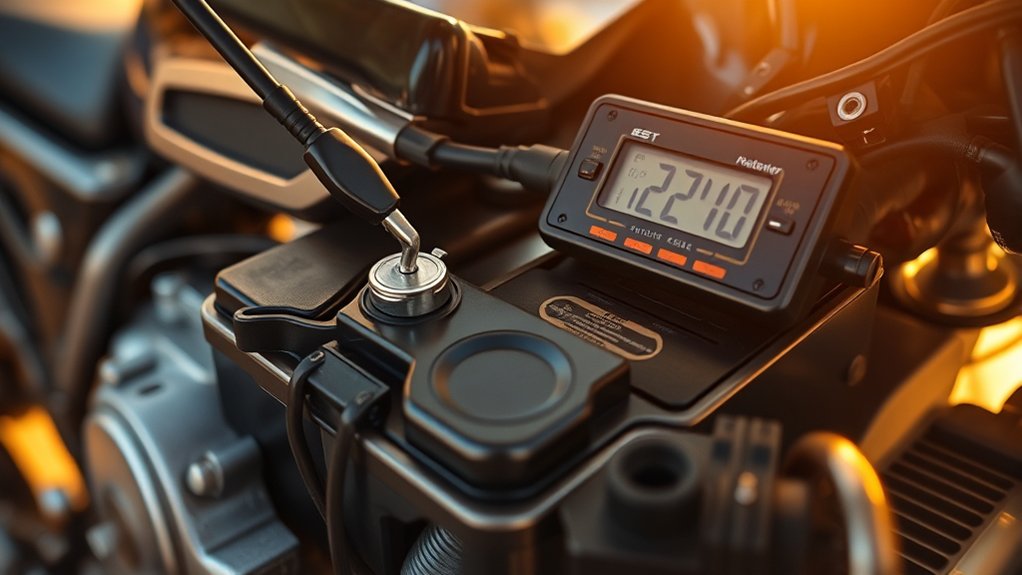
After checking how your battery performs under starter load, the next step is to verify the charging voltage with the engine running. Use a multimeter across the battery terminals at moderate engine revs.
A healthy system reads between 13.6 V and 14.5 V, typically around 14.4 V. If the voltage stays near the resting battery voltage (12.6–12.8 V), suspect the regulator/rectifier, stator, or wiring for lack of charging.
Readings above 15 V indicate overcharging, a fault in the regulator/rectifier that risks battery damage. To guarantee accuracy, repeat the test after warming up the engine.
Key points to remember:
- Normal charging voltage: 13.6–14.5 V
- Voltage near resting battery indicates no charge
- Over 15 V signals dangerous overcharging
Choosing The Right Charger For Your Motorcycle Battery
Selecting the right charger for your motorcycle battery hinges on matching its chemistry and capacity to the charger’s specifications. For 12V lead-acid batteries like wet, AGM, or gel, use a compatible charger with multi-stage charging such as bulk, absorption, and float. Maintenance mode is important to prevent overcharge.
Lithium-ion packs need dedicated chargers with specific voltage algorithms. When shopping at a parts store, make sure the charger supports your battery’s amp-hour rating. Typically, 0.1C for maintenance means 1–2 A for 10–20 Ah batteries.
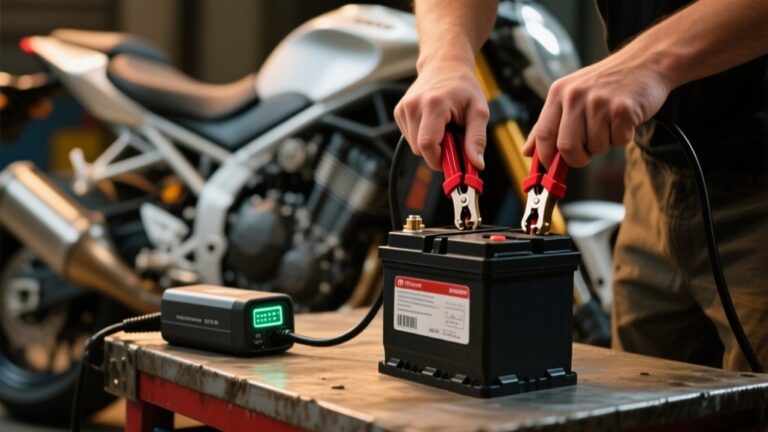
Check for safety features like reverse-polarity protection and spark suppression. Also, confirm the charger can recover batteries below minimum voltage or offers a desulfation mode. Proper connection is critical: always connect the red lead to the positive terminal to avoid damage.
Choose a charger with an LED or digital display to monitor charging status easily and efficiently.
Maintaining And Storing Your Motorcycle Battery
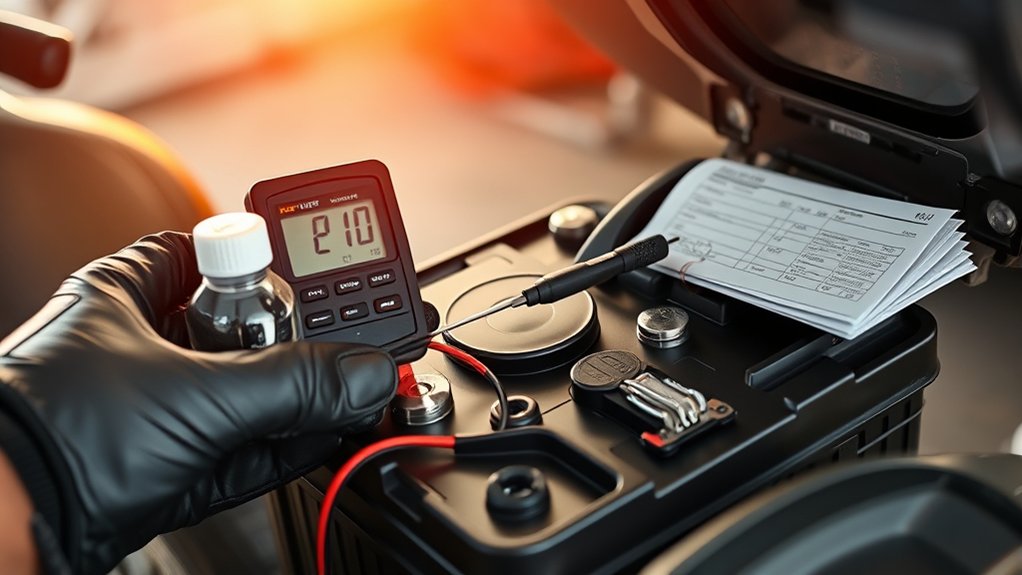
Maintaining and storing your motorcycle battery properly guarantees its longevity and reliable performance. When your new motorcycle sits unused, fit a maintenance-mode trickle charger to keep the battery at a steady 12.6 to 13.0 V resting charge and prevent sulfation.
Always match the charger to the battery chemistry, whether AGM, gel, or lithium, to avoid damage. For conventional lead-acid batteries, check electrolyte levels monthly and top up with distilled water only. Before storage, clean terminals and apply dielectric grease to prevent corrosion.
Key maintenance tips include removing the battery or keeping it on a smart charger during long storage, charging every 4 to 6 weeks. Keep electrolyte levels below vent caps and wipe spills immediately. Use a charger compatible with the battery to prevent undercharging or overcharging.
These steps help you mean the battery stays healthy and ready to power your ride.
Frequently Asked Questions
How Often Should I Replace My Motorcycle Battery?
You should plan motorcycle battery replacement intervals every 3 to 5 years, depending on usage and battery type. Keep mileage tracking to spot trends in performance decline.
If your resting voltage falls below 12.5 V or you notice slow cranking and dim lights, it’s time to replace. In colder climates or with frequent short trips, consider earlier replacement.
Always monitor battery health regularly to avoid unexpected failures.
Can Extreme Weather Affect My Motorcycle Battery Life?
Imagine your battery as a fragile heart battling weather extremes.
Yes, extreme weather markedly affects your motorcycle battery life.
Cold storage without thermal insulation slows chemical reactions, causing rapid discharge and risking electrolyte expansion that can crack the battery case.
Heat accelerates corrosion and fluid loss, shortening lifespan.
To protect your battery, maintain charge during winter, use proper insulation, and avoid prolonged exposure to harsh temperatures to guarantee reliable performance and longevity.
What Are Common Signs of a Failing Motorcycle Battery?
You’ll notice common signs of a failing motorcycle battery when your headlights become dim and your engine experiences slow cranking.
If the starter turns sluggishly and voltage drops markedly during start attempts, the battery isn’t supplying enough current.
Moreover, flickering lights, reduced horn volume, or electronics malfunctioning with the key on indicate battery weakness.
If the battery won’t hold a charge after riding or charging, it’s likely time for replacement.
Is It Safe to Jump-Start a Motorcycle Battery?
You can safely give your motorcycle battery a little “helping hand” by jump-starting it, but you’ll want to be precise.
Use battery monitors to check voltage first, and avoid connecting the black lead directly to the negative terminal. Choose a good chassis ground instead to minimize sparks.
Modern boost converters in jump-starter packs make this safer by evaluating the battery before energizing.
Always limit starter engagement to protect your starter motor and electrical system.
How Do I Dispose of an Old Motorcycle Battery Properly?
You should never toss an old motorcycle battery in household trash. Instead, take it to designated recycling centers or hazardous waste facilities.
When transporting, use an acid-resistant container, keep it upright, and cover terminals with tape to avoid metal contact. Follow local regulations for hazardous transport and disposal.
Many retailers accept old batteries for free or a small fee, ensuring proper recycling of lead, plastic, and electrolyte materials.
Conclusion
Think of your motorcycle battery as the heart of your bike. It needs regular check-ups to keep the whole system running smoothly. By accurately testing voltage with a multimeter, observing performance under load, and guaranteeing proper charging, you’re giving that heart the care it deserves.
Using the right charger and maintaining your battery like a skilled mechanic guarantees longevity and reliability. Treat your battery well, and it’ll power your rides without fail.