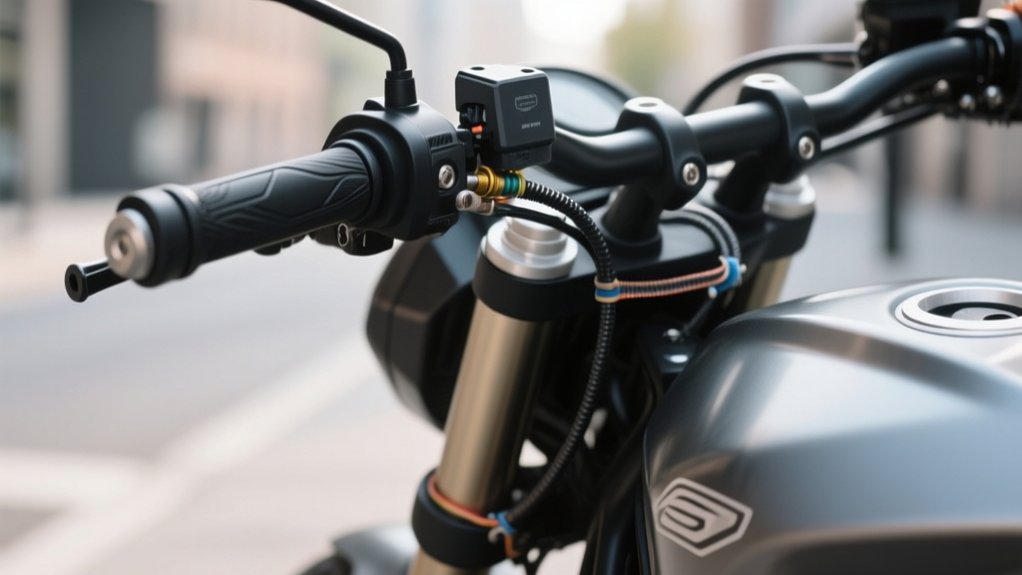
What Is An E Clutch On A Motorcycle – Everything to Know
An E-Clutch on a motorcycle electronically controls clutch engagement and disengagement, letting you shift gears without using the clutch lever while keeping manual gear selection. It uses dual motors, sensors, and a Motor Control Unit to time half-clutch and ignition cuts for smooth, clutchless shifts.
You can always override it manually, and it adjusts for varied riding conditions. If you want to understand its components, benefits, and limitations, more details await.
What Is an E-Clutch and How It Works
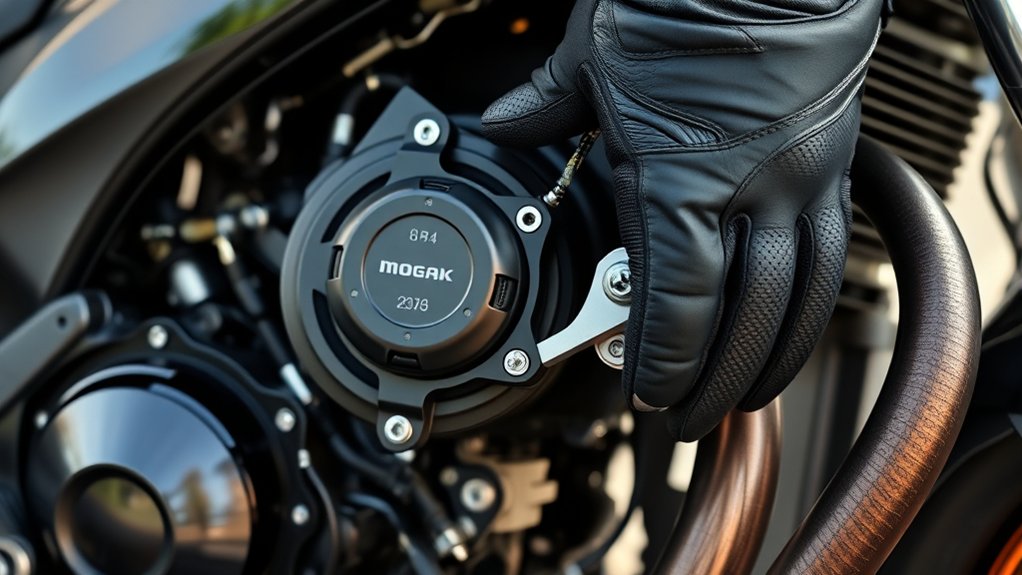
An E-Clutch electronically controls the clutch mechanism on a motorcycle with a manual gearbox. It allows you to shift gears without using the clutch lever. This E-Clutch technology replaces the conventional single clutch-actuator arm with a three-piece assembly, enabling either you or the motor to operate the clutch.
The Motor Control Unit (MCU) communicates with the engine ECU, using inputs like throttle angle, RPM, and gear position to precisely time clutch engagement. During upshifts, it interrupts ignition briefly, allowing clutchless shifts while keeping the clutch engaged.
For downshifts, the system fully disengages then modulates the clutch to emulate an auto-blipper, preventing rear-wheel hop. Despite adding minimal weight, the E-Clutch maintains manual override. Pulling the lever disables automation temporarily, giving you full control over gear changes.
Inside the E-Clutch: Key Mechanical and Electronic Parts
The E-Clutch’s core components include a specialized three-piece actuator assembly and a compact dual-motor drive unit that work together to control clutch engagement electronically.
The actuator assembly replaces the conventional single-piece arm with an upper rod connecting the clutch cable, a motor-driven gear, and a lower push rod that actuates the clutch pack.
The actuator assembly innovatively replaces the traditional arm with a three-part mechanism for enhanced clutch control.
The dual 32-mm electric motors in the drive unit attach to the clutch shaft, delivering precise torque without sacrificing manual lever operation.
The Motor Control Unit (MCU) integrates signals from the engine ECU and a rotation angle sensor, which monitors clutch plate separation.
This allows the MCU to modulate motor output with fine accuracy, enabling features like half-clutch control.
How the E-Clutch Ensures Smooth, Stall-Free Shifts
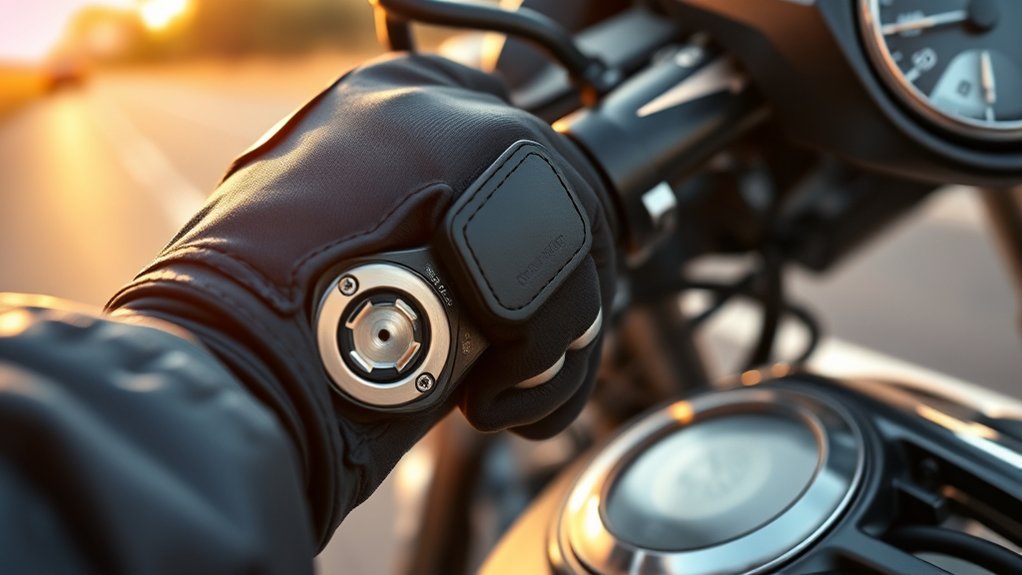
Building on the E-Clutch’s complex actuator and motor control design, it guarantees smooth, stall-free shifts by precisely managing clutch engagement through real-time data inputs. The Motor Control Unit (MCU) receives signals from the engine ECU, throttle angle, gear position, wheel speed, and rotation-angle sensor to modulate the clutch plates with exact timing.
During upshifts, the E-Clutch works by briefly interrupting ignition and fuel while continuously adjusting clutch engagement, enabling clutchless, seamless shifts. For downshifts, it fully disengages the clutch then employs half-clutch control to match engine speed to the lower gear, preventing rear-wheel hop or lockup.
Furthermore, the system automatically opens the clutch at idle and disengages it when RPM drops to prevent stalling, ensuring consistent power delivery and rider confidence.
Riding With an E-Clutch: on the Road and Track
When you’re riding with Honda’s E-Clutch on the street, you’ll notice less left-wrist fatigue and almost no stalls when shifting.
That said, you might want to be a bit more careful during very low-speed maneuvers.
On the track, the system really shines by allowing quick, smooth clutchless upshifts and spot-on auto-blipping downshifts, helping you get the best performance out of your ride.
And if you ever want to take full control, you can manually override the system anytime using the mechanical clutch lever.
Doing this temporarily turns off the electronic control and brings back the traditional clutch feel.
Street Riding Dynamics
Although you can shift gears without pulling the clutch lever thanks to the E-Clutch system, understanding its behavior on the road and track is essential for smooth control. The system uses automatic clutch control to modulate engagement based on engine RPM, throttle angle, and wheel speeds. This allows clutch-less upshifts with ignition cut and precise downshifts with auto-blip functionality.
This reduces shift shock and prevents rear-wheel lockup during rapid gear changes. However, in traffic or low-speed maneuvers, the automatic engagement may feel abrupt or cause lurching due to limited throttle finesse. Here, manual clutch operation becomes valuable, restoring traditional slow-speed control and preventing stalling by automatically opening the clutch at idle.
Mastering this balance helps you confidently shift gears and navigate varied street conditions efficiently.
Track Performance Benefits
Since precise and rapid gear changes are critical on the track, Honda’s E-Clutch enhances your performance by executing clutchless upshifts through controlled ignition interruption and MCU-timed clutch engagement. Acting like an electronic quickshifter, the E-Clutch delivers smooth, clutchless upshifts at any RPM, reducing shift shock and enabling faster, more consistent shifts than manual modulation.
For downshifts, it fully disengages the clutch and applies half-clutch control, matching engine revs to prevent rear-wheel lock or instability during rapid multiple downshifts, especially between 1st and 2nd gear. The MCU continuously adjusts clutch timing based on engine RPM, throttle angle, and wheel speeds, allowing you to focus more on racing lines and braking.
While shift lever sensitivity settings affect pedal feel, the core clutch control remains optimized for track performance.
Manual Override Usage
Engage the manual override on the E-Clutch by pulling the traditional left clutch lever. This instantly disables the motor-driven actuator and lets you operate the clutch conventionally.
This manual override is essential for precise control during pre-rev or race launches. It allows you to modulate the clutch in ways the automatic system can’t match.
Keep in mind the reactivation time varies: about 1 second after a high-RPM lever pull, and roughly 5 seconds after a low-RPM or stop pull.
Key points to bear in mind:
- The manual override disables automatic clutch control immediately, giving you full mechanical control.
- During manual use, the system won’t prevent stalling, so clutch and throttle input must be precise.
- The system reactivates autonomously after the reactivation time, restoring automatic operation.
Manual Clutch Override: When and How to Use It
When you pull the clutch lever, you instantly disable the E-Clutch motors and regain full manual control. This lets you operate the clutch like a conventional motorcycle.
This manual override temporarily suspends the E-Clutch system for about 1 second at high RPM or 5 seconds at low RPM. It lets you perform low-speed maneuvers, race-style launches, or finer throttle-clutch modulation.
You can also switch fully to manual mode via the bike’s menu, maintaining permanent clutch lever control until you revert.
| Situation | Manual Override Use |
|---|---|
| Tight U-turns | Precise clutch modulation |
| Slow uphill/downhill | Prevents unintended stalling |
| Race launches | Enables pre-revving and clutch control |
| Low RPM stops | Extends E-Clutch disable time |
| Menu setting | Switch to permanent manual clutch mode |
E-Clutch Benefits for Beginners and Experienced Riders
E-Clutch takes the complexity out of clutch operation, allowing beginners to start, stop, and shift smoothly without worrying about stalling or precise lever modulation.
This system automates clutch engagement while retaining a manual transmission and clutch lever, so you can override it anytime.
For both novices and seasoned riders, the E-Clutch offers distinct advantages:
- Beginners experience reduced left-hand workload and a lower barrier to entry, making traffic stops and starts less intimidating.
- Experienced riders gain clutchless up- and downshifts with MCU-timed half-clutch control and ignition/fuel interruptions. This enables faster, smoother shifts without shift shock.
- Adjustable settings let you customize shift lever resistance or disable the system for a traditional clutch feel, so you maintain full control over your ride.
Common Limitations and When the E-Clutch Struggles
While the E-Clutch enhances riding ease and shift smoothness, it has limitations that become apparent in specific scenarios. At very low speeds, such as tight U-turns or stop-and-go traffic, the automatic clutch engagement can feel imprecise. This causes shuffling or lurching due to reduced throttle finesse compared to manual operation.
The E-Clutch doesn’t pre-rev before clutch release, so launches lack the refined control an experienced rider achieves with slip-and-rev techniques. After you manually pull the clutch, the automatic clutch system temporarily disables. This happens about one second after a high-RPM pull and up to five seconds after a low-RPM or stopped pull, raising the risk of stalling if you don’t manage the clutch manually.
Also, taking off in high gears slows acceleration, as the system won’t compensate for poor gear choices even when the E-Clutch is active.
E-Clutch vs Traditional and DCT Clutch Systems
Honda’s E-Clutch system redefines clutch operation by automating engagement and disengagement through dual motors and a Motor Control Unit (MCU). The MCU processes multiple inputs to enable clutchless shifting while preserving a conventional foot shifter.
Compared to traditional manual clutches, the E-Clutch separates the actuator into three parts, allowing motor-driven gear actuation alongside manual lever input. Unlike a DCT, which fully automates gear selection without a foot shifter, Honda’s E-Clutch retains the manual gearbox and requires rider input to shift gears, simplifying clutch modulation.
Consider these distinctions:
- Traditional: Rider manually controls clutch via a single actuator rod.
- E-Clutch: Automates clutch pack actuation but keeps manual gear shifts.
- DCT: Fully automatic shifting without foot clutch or lever.
This balance offers smoother clutchless shifts with less complexity and weight than DCTs.
Honda E-Clutch Models and How to Choose
Several midweight motorcycles currently feature the electronic clutch system, giving you options tailored to different riding preferences. Honda offers the E-Clutch on the CB650R and CBR650R, with upcoming 2026 Transalp and customizable E-Clutch builds.
The CB650R E-Clutch suits riders wanting a smooth four-cylinder engine with a standard/naked setup, while the CBR650R targets sportier ergonomics. You benefit from reduced left-wrist fatigue and clutch assistance, but can override the system using the clutch lever for manual control.
| Model | Key Feature |
|---|---|
| CB650R | Smooth four-cylinder, naked |
| CBR650R | Sport-oriented fairing, riding |
| Transalp | 2026 customizable option |
| CB750 Hornet | Alternative with E-Clutch |
Compare prices and features to choose the best Honda E-Clutch model for you.
Frequently Asked Questions
How Does E-Clutch Impact Motorcycle Maintenance Costs?
The E-clutch can increase your maintenance costs due to higher repair complexity and potential replacement frequency of the actuator motors.
While clutch plate inspections remain standard, you’ll face added inspection costs for electronic components.
Software updates and sensor recalibrations are necessary, often requiring dealer visits, which adds to expenses.
Although the mechanical wear is unchanged, the electronic system’s diagnostics and occasional motor replacements mean you should budget for more frequent and specialized servicing.
Can E-Clutch Be Retrofitted to Older Motorcycle Models?
You generally can’t retrofit an E Clutch to older motorcycles without a thorough compatibility assessment.
The process often demands frame modifications and significant wiring changes to integrate sensors and control modules.
Aftermarket warranties may not cover such extensive customization, increasing your risk.
Plus, control ergonomics could be compromised without factory tuning.
For smoother results, consider dedicated auto-clutch kits designed for older bikes or upgrade to a newer model with built-in E Clutch systems.
Does E-Clutch Affect Fuel Efficiency or Consumption?
The E-clutch has a minimal impact on fuel consumption. It optimizes throttle response and clutch timing, reducing inefficient idle behavior and preventing clutch slipping during low-speed riding.
This automation helps maintain smoother power transfer, which can improve efficiency slightly. However, your riding habits play a much larger role in fuel consumption.
If you switch off the E-clutch and slip the manual clutch excessively, you may increase fuel waste despite the system’s efficiency benefits.
Is Specialized Training Required to Ride Motorcycles With E-Clutch?
You don’t need to reinvent the wheel when riding a motorcycle with an E-clutch. Specialized training isn’t required. Your existing riding school experience applies, though rider adaptation is key due to the altered clutch feel caused by electronic control.
The clutch lever feels “floppy” with less resistance, so practicing low-speed maneuvers helps you master manual overrides and understand the system’s behavior. This ensures smooth control without extra formal instruction.
How Reliable Is the E-Clutch System in Extreme Weather Conditions?
You’ll find the E-clutch system highly weather resilient, designed to handle cold starting smoothly by adjusting clutch engagement automatically. Its sealed motors and integrated design minimize moisture ingress, reducing corrosion risks and maintaining performance.
While extreme cold can affect hydraulic response, you can still manually operate the clutch. With proper maintenance, using correct fluid and making certain seals remain intact, you’ll guarantee corrosion resistance and reliable functionality even in harsh, humid, or corrosive environments.
Conclusion
When it comes to mastering your ride, remember: “slow and steady wins the race.” An e-clutch offers precise, smooth shifts without sacrificing control, making it ideal for both beginners and seasoned riders.
It combines electronic finesse with mechanical reliability, reducing stalls and fatigue. While it’s not flawless, understanding its operation and limits lets you harness its full potential.
Embrace the e-clutch to elevate your riding experience with confidence and efficiency.