Does Motorcycle Insurance Cover Rentals – Myth or Fact
You typically get partial coverage for rental motorcycles under your personal insurance, but coverage varies widely. Liability and collision protection may apply, yet many personal policies exclude peer-to-peer rentals unless you get specific endorsements.
Rental companies often provide state-mandated liability plus damage waivers for lower out-of-pocket risk. However, deductibles and limits still apply, so confirming details and obtaining written proof from your insurer is vital to avoid gaps. Understanding these nuances helps guarantee you’re fully protected.
How Personal Motorcycle Insurance Usually Covers Rentals
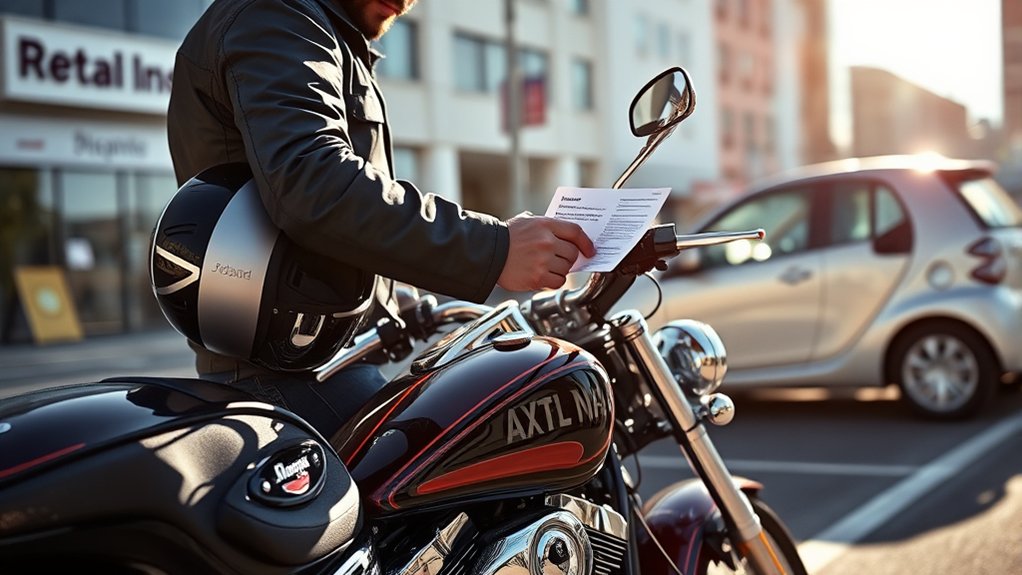
Although personal motorcycle insurance can sometimes cover rental motorcycles, the extent of that coverage varies significantly depending on your insurer and policy terms. Typically, personal motorcycle insurance may extend liability coverage and collision coverage to rental bikes, but many insurers exclude peer-to-peer rentals like Twisted Road or Riders Share.
If your policy includes rental coverage, you generally must provide the rental company with a declarations page proving active liability and physical damage limits to avoid purchasing supplemental protection. Keep in mind that deductibles and policy limits govern repair costs, and you might need to pay the deductible upfront during claims processing.
Because coverage depends on your insurer and state, you should call your carrier, specify the rental type, and get written confirmation before declining any supplemental protection.
When Does Personal Motorcycle Insurance Cover Rentals?
Understanding when your personal motorcycle insurance covers rentals requires careful review of your policy details and insurer guidelines. Coverage often hinges on insurer confirmation, especially regarding peer-to-peer rentals. Many policies exclude these unless you have a specific coverage endorsement or a higher-tier plan.
Inclusive and collision coverage on your personal motorcycle insurance may apply to rental bikes, helping reduce out-of-pocket expenses. But you’ll likely need to provide proof if requested by the rental platform.
Liability coverage might extend to rentals depending on your state, though rental agreements typically include minimum liability protection.
Before declining rental platform protection, always get explicit, documented confirmation from your insurer that your policy covers rentals via the platform you intend to use. This helps minimize the risk of denied claims or coverage gaps.
Rental Company Insurance: What’s Included
While rental companies vary in their insurance offerings, most include at least the state-mandated liability coverage in their agreements. This protects you against third-party bodily injury and property damage up to the minimum required limits.
Motorcycle rental insurance often adds optional damage waivers that reduce your deductible limits, typically ranging from $1,000 to $3,000. Rental company policies require a valid license and a credit card for the security deposit.
Some platforms provide owner protection covering up to $1,000,000 in liability and damage. Confirm coverage specifics, exclusions, and limits before renting.
| Coverage Type | Details |
|---|---|
| Liability Protection | State-mandated minimum limits |
| Damage Waiver | Optional, caps renter’s out-of-pocket |
| Security Deposit | Credit card required |
| Owner Protection | Up to $1,000,000, bike value capped |
Motorcycle Rental Insurance vs Car Rental Insurance
Because motorcycles carry higher risks than cars, their rental insurance policies differ in coverage terms, pricing, and exclusions. Motorcycle rental insurance typically includes liability coverage and optional collision damage waivers, similar to car rental insurance, but often with stricter conditions like mandatory helmet use and exclusions for high-risk activities.
While your personal motorcycle insurance may cover liability and physical damage, it frequently excludes peer-to-peer rentals, so you must verify coverage before renting. Rental company protection usually provides state-required liability coverage plus optional damage waivers with high deductibles.
Unlike car rentals, credit card exclusions commonly apply to motorcycle rentals and peer-to-peer platforms, meaning you can’t rely on card benefits. Understanding these distinctions helps you navigate the specific risks and coverage gaps between motorcycle and car rental insurance.
Understanding Damage Waivers in Motorcycle Rentals
Damage waivers in motorcycle rentals operate as daily add-ons that limit your out-of-pocket expenses for repairs by charging a fee based on coverage tiers: Minimum, Standard, or Premium. Each tier impacts both the daily cost and the deductible. Lower tiers cost less but require a larger security deposit and higher deductible, often ranging from $1,000 to $3,000.
On peer-to-peer platforms, protection plans can cost $46–$64 per day and may still leave you liable for a deductible during claims processing. Since personal motorcycle insurance often excludes peer-to-peer rentals, you should verify coverage or secure a damage waiver through the rental company.
Damage waivers reduce financial risk but don’t cover all scenarios, so understanding these terms is essential when renting a motorcycle.
Common Exclusions in Motorcycle Rental Insurance
When you rent a motorcycle, it’s really important to take a close look at what the insurance covers—and what it doesn’t.
For example, many policies actually exclude peer-to-peer rentals, so if you’re renting from another individual rather than a company, you might be out of luck. Also, watch out for high deductibles that can surprise you when you make a claim.
On top of that, insurance usually won’t cover certain high-risk activities. Things like stunt riding, track days, or going off-road are often off the table.
Knowing these common exclusions ahead of time can save you from unexpected expenses and make sure you get the right protection for your ride.
Coverage Limitations Explained
Although renting a motorcycle can be convenient, you should carefully review coverage limitations in your insurance to avoid unexpected liabilities. Many personal insurance policies exclude peer-to-peer rentals, so you must confirm coverage before relying on your policy.
Rental companies typically offer liability coverage at state minimums but impose deductible limits ranging from $1,000 to $3,000. Damage waivers vary by tier and often require you to pay deductibles during claims.
Coverage exclusions commonly include theft without a police report, illegal activities, and personal belongings. Owner protection may cap at a specified motorcycle value, limiting your recovery.
Since credit cards usually don’t cover peer-to-peer rentals, declining platform protection without insurer approval could leave you personally liable for damages beyond your policy’s coverage.
High-Risk Activity Exclusions
Since motorcycle rental insurance policies aim to manage risk, they explicitly exclude coverage for high-risk activities like stunt riding, racing, and track use. These policy exclusions guarantee insurers avoid liability for damages arising from inherently dangerous behavior.
You should be aware that damage coverage typically doesn’t extend to off-road riding or dirt-trail use, which most policies prohibit due to increased risk. Riding under the influence or while committing illegal acts voids coverage entirely. Licensing violations, such as operating without proper endorsement or required protective gear, also aren’t covered.
Understanding these limitations helps you avoid denied claims and potential financial liability. When renting, carefully review your contract and insurance details to confirm which high-risk activities are excluded. This way, you’ll comply with all terms and maintain valid coverage.
How to Verify Your Motorcycle Rental Insurance Coverage
Before you book your motorcycle rental, it’s a good idea to call your insurer. Make sure your policy actually covers peer-to-peer motorcycle rentals. Ask specifically about liability, collision, and full coverage protections.
Also, don’t just take their word for it—request written confirmation. This should include any conditions or exclusions so you don’t run into surprises later on.
Clear communication and having everything documented will help you understand your coverage limits better.
That way, you can decide if you need to buy extra protection or if you’re all set. It’s always better to be safe than sorry!
Confirm With Insurer
Before booking a motorcycle rental through a peer-to-peer platform, call your insurer to confirm whether your existing policy covers such rentals. Clearly explain you’re renting a privately owned motorcycle via peer-to-peer rentals and request insurer confirmation on liability coverage, collision and all-risk protection, and any deductibles and limits.
Insist on receiving written documentation, such as an email or endorsement reference, that explicitly states coverage details.
During the call, focus on these key points:
- Verify if your policy’s coverages extend to motorcycle rentals on peer-to-peer platforms.
- Obtain clear terms on deductibles and coverage limits.
- Document the call’s date, agent name, and summary for future reference.
This method guarantees you have precise insurer confirmation before proceeding with the rental.
Documentation And Communication
When verifying motorcycle rental insurance coverage, maintaining thorough documentation and clear communication with your insurer is essential. Before booking a motorcycle rental via a peer-to-peer platform like Riders Share, explicitly inform your insurance provider and request written confirmation regarding liability coverage, collision, and comprehensive applicability.
Obtain exact excerpts from your insurance policy or declarations page referencing rental or non-owned vehicle coverage for accurate reference. Furthermore, analyze the platform’s protection limits and deductible amounts, noting how these interact with or replace your personal policy.
Confirm coverage for specific rental details such as dates, bike model, and platform. Also, clarify any exclusions, such as off-road use. Keeping dated documentation and clear communication guarantees you can substantiate coverage during disputes, reducing risk and broadening your understanding of insurance boundaries in peer-to-peer motorcycle rentals.
Dedicated Motorcycle Rental Insurance Options
Although renting a motorcycle offers flexibility and convenience, securing dedicated rental insurance is essential to manage liability and potential damage risks.
Motorcycle rental insurance, especially through peer-to-peer platforms like Riders Share or rental company plans such as EagleRider, provides tailored coverage including liability coverage and optional damage protection. These plans often feature tiered options with varying renter deductibles and out-of-pocket limits.
Key considerations include owner protections covering physical damage and liability, typically at no cost to owners. Renters pay for damage waivers or insurance add-ons, with platform deductibles ranging from $1,500 to $3,000.
Daily costs can be significant, typically $46 to $64, and renters might still face financial exposure during claims processing.
Always verify your personal policy’s applicability to peer-to-peer rentals before declining dedicated coverage to avoid coverage gaps.
Frequently Asked Questions
Can International Motorcycle Rentals Be Covered by U.S. Insurance Policies?
You can get international coverage on U.S. motorcycle insurance policies, but it’s rare and often requires cross border endorsements. You’ll need to check for policy exclusions and confirm liability limits carefully.
Passport requirements and foreign loss adjustment processes may apply, which can complicate claims. Since policy reciprocity varies by country, you must notify your insurer and secure written confirmation before renting abroad.
Otherwise, consider standalone rental insurance to avoid gaps.
Are There Age Restrictions Affecting Motorcycle Rental Insurance Eligibility?
It’s ironic that your freedom to rent a motorcycle often depends more on your age than your skills. Yes, minimum age and license requirements strictly affect insurance eligibility.
If you’re a young rider, expect age verification, possible age surcharges, or denied coverage. Some insurers impose senior limits too.
Age waivers can help but aren’t guaranteed. Always check these factors before renting to avoid denied claims or unexpected costs.
How Do Insurance Claims for Motorcycle Rentals Impact Personal Premiums?
When you file claims for motorcycle rentals, it can impact your personal premiums by potentially causing premium spikes, especially if you have a poor claims history. Deductible transfers might apply, which increases your out-of-pocket costs.
Liability exposure from rental accidents can also raise your rates. Coordinating multi-policy coverage can help manage these costs. Accident forgiveness programs may limit how much your premiums go up.
Always review your insurer’s terms to understand how rental claims affect your overall insurance profile.
Is Roadside Assistance Included in Motorcycle Rental Insurance Plans?
Roadside assistance isn’t always included in motorcycle rental insurance plans. You’ll often find roadside coverage offered as an add-on, covering towing limits, lockout assistance, fuel delivery, battery jumpstarts, and sometimes mobile mechanic services.
Trip interruption benefits may also be available but depend on the provider. To avoid surprises, you should review the rental agreement carefully and request written details about what roadside services are included and any extra daily costs before declining additional coverage.
Do Insurance Policies Cover Theft of Rented Motorcycles in Foreign Countries?
Imagine renting a bike abroad like entrusting your car to a valet in a foreign city. You’d want clear rules. Insurance policies sometimes cover rental theft in foreign jurisdictions, but you must follow local regulations closely.
Filing police reports and providing thorough loss documentation are essential. Security deposits and insurance waivers often influence coverage limits. Always confirm with your insurer and rental provider. Coverage varies widely, so don’t assume theft is automatically included.
Conclusion
So, does your personal motorcycle insurance cover rentals? It often does, but not always. Coverage depends on your policy specifics and rental terms.
Rental company insurance can fill gaps, yet exclusions are common, so don’t assume you’re fully protected. Wouldn’t you want to verify coverage before hitting the road?
To avoid surprises, review your policy carefully and consider dedicated motorcycle rental insurance for thorough peace of mind.