What Is A Chopper Motorcycle – Meaning & More
A chopper motorcycle is a heavily customized bike built to look long, low, and one-of-a-kind. You’ll usually see stretched frames, long front forks, raked steering, stripped-down parts, and bold paint or handmade details.
Choppers grew out of postwar California custom culture. They became famous for their rebellious style and craftsmanship.
Choppers ride best as relaxed cruisers, not quick commuters. If you’re curious about how they compare with bobbers, there’s more to uncover.
What Is a Chopper Motorcycle?

A chopper motorcycle is a heavily customized bike built to stand out, not blend in. When you look at chopper motorcycles, you’ll notice stretched frames and long front forks. You’ll also often see a steeper rake angle and a hardtail rear end.
These changes shape the bike’s profile, and they affect how it handles. In many cases, you’re choosing style over stock comfort and easy performance. A custom chopper puts your personality front and center.
Every chopped-off or lengthened part serves a visual purpose. Today, you’ll find builds that range from stripped-down and agile to bold, art-like machines. No matter the design, customization defines the category, and it’s what separates a chopper from a factory motorcycle.
How Chopper Motorcycles Got Started
You can trace chopper motorcycles back to California in the late 1940s and 1950s. That’s when veterans started stripping their stock bikes down—mostly to cut weight, but also to add more personality. Before true choppers really took shape, bobbers helped set the tone. They did this by removing extra parts and simplifying the ride.
From there, custom culture took off fast. Builders began stretching frames, lengthening forks, and transforming these bikes into bold symbols of individuality.
Early Origins in California
In late-1940s and 1950s California, chopper motorcycles began as stripped-down, personalized machines. They were built by returning WWII veterans who chopped stock bikes by removing fenders and other nonessential parts to cut weight and make them their own.
You can see how the term “Chopper” came straight from that cutting process. Builders then borrowed hot-rod ideas, reshaping frames, shortening rears, and later raking the neck to alter steering geometry.
If you wanted your bike to stand out, you didn’t just ride it. You reworked it. By the late 1950s and into the 1960s, custom shops in Los Angeles and San Francisco refined the style with elongated forks, hardtails, and bold paint.
That’s when California choppers became a clear symbol of individuality.
Bobbers Before Choppers
Before choppers had long forks and stretched frames, bobbers laid the groundwork.
After World War II, veterans would strip bikes down, shorten fenders, and ditch anything extra to save weight and sharpen performance.
Those bobbers, or “bob jobs,” gave you the first look at a no-frills motorcycle built for speed and attitude.
In the 1950s, riders on the West Coast pushed things further with neck mods, rakes, and longer forks.
They turned simple bobbers into the first true choppers.
In some regions, people even used “bobber” and “chopper” interchangeably at first.
As parts became easier to find, you could take the same hot-rod mindset and build something bolder.
That set the stage for the chopper style you know today.
Custom Culture Takes Off
As custom culture took off after World War II, chopper motorcycles began as stripped-down stock bikes that veterans reshaped for their own taste and performance goals. You’d chop off fenders, trim extras, and lighten the bike for quicker handling and a cleaner look.
The style grew fast on the West Coast, especially in Los Angeles. Hot-rod influence and local custom shops turned frame changes into art.
Builders stretched frames, raked necks, and fitted long front forks and tall handlebars. That created a longer, more dramatic profile.
By the 1960s and 1970s, choppers became a symbol of individuality. Easy Rider pushed them into the mainstream.
Even after factory bikes rose in the 1980s, the culture survived. It lived on through aftermarket parts and custom builders.
What Makes a Chopper Bike Unique?
What makes a chopper stand out is its extended forks and stretched stance. That’s what gives it that unmistakable long, low look.
You’ll also notice the stripped-down custom design, where builders remove anything extra and shape the bike around a personal style. And that mix of bold geometry and minimalist craftsmanship makes the ride feel just as distinctive as it looks.
Extended Fork Styling
Long, stretched front forks are one of the clearest clues that you’re looking at a chopper. With extended fork styling, the front end reaches far ahead of the frame. Fork extensions can add a few inches, or even 30+ on extreme builds.
That extra length changes the rake angle, wheelbase, and steering feel. Your bike may turn slower at low speeds, but it can feel steadier on the open road. Builders often pair longer forks with modified triple trees and steering heads to keep everything aligned.
Because the front end carries more weight and trail increases, careful frame geometry matters. You still get the classic stretched silhouette. With smart parts choices, you can keep enough control to ride it well.
Stripped-Down Custom Design
A true chopper stands out because it’s stripped down to the essentials.
You’ll notice the custom build removes fenders, passenger pegs, and excess wiring.
That gives it a clean chopper look.
Builders often stretch the frame with extended front forks and more rake.
So the bike sits low and long.
Many choppers also use hardtail frames or simplified suspension.
This keeps weight down and the silhouette sharp.
That lighter construction can make cruising feel agile.
But it usually trades away comfort and familiar handling.
What really makes your chopper unique is personalization.
Custom paint, a one-off tank, and bespoke handlebars turn each bike into a rolling piece of craftsmanship.
Every detail serves style first, not mass-market practicality.
Chopper vs. Bobber: What’s the Difference?

Though both styles fall under custom motorcycles, choppers and bobbers differ in how far they stray from stock.
A bobber usually keeps your STOCK frame and suspension, then trims fenders, lights, and other extras for a leaner look.
A chopper goes much further.
Chopper builders often stretch the frame, lengthen forks, and alter rake angles, sometimes adding a hardtail rear.
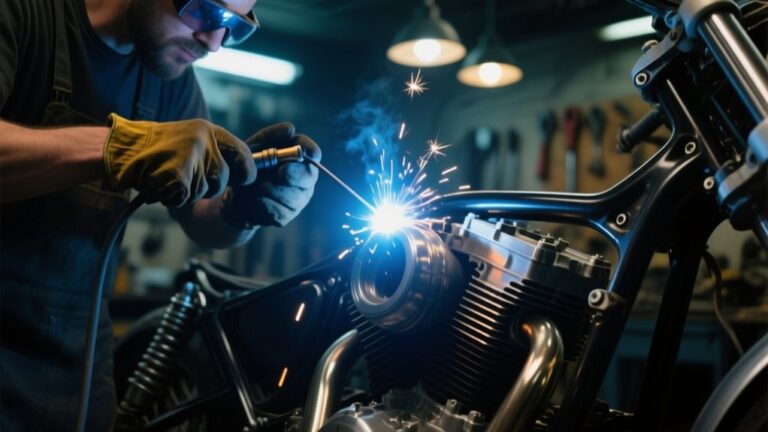
That means more fabrication, welding, and money, but also a bolder silhouette.
- Feel the thrill of pure individuality.
- Appreciate a cleaner, simpler profile.
- Notice the pride of a true custom build.
- Choose the style that matches your vision.
If you want a quicker, cheaper conversion, bobbing makes sense.
If you crave radical styling, a chopper delivers.
How a Chopper Motorcycle Feels to Ride
Swing a chopper into motion and you’ll feel right away that it’s built for style and cruising, not quick, sporty handling.
The long rake and extended forks slow your steering, so you’ll need bigger inputs at low speed.
That stretched geometry can feel stable in a straight line.
But it also makes quick direction changes feel twitchier than on a stock bike.
If your chopper skips rear suspension, every bump reaches you harder.
The ride then has a firm, jarring edge.
High ape hanger bars and forward controls put you in a stretched, upright stance.
It looks iconic, but it asks less of comfort.
On smooth city streets or coastal roads, the bike feels relaxed and distinctive.
At moderate speeds, it stays easygoing and that’s where its character shines.
Who Should Ride a Chopper Motorcycle?

Choppers are best for riders who care more about personal expression and craftsmanship than factory-stock performance.
If you love turning a stock bike into something unmistakably yours, this style fits you.
You’ll enjoy hands-on fabrication, working with a custom shop, or using a kit that makes a chopper feel truly personal.
You should also be comfortable trading some comfort and sharp handling for stretched frames, long forks, and a laid-back cruise.
Budget-minded hobbyists can start with donor bikes like a Sportster, CB, or XS650 and build gradually.
- Pride in your own vision
- Excitement from real craftsmanship
- Freedom to stand out
- Connection to chopper culture
How to Buy or Build a Chopper
When you’re ready to buy or build a chopper, first decide if you want a factory-styled model or a custom project. A Honda Fury or Harley Breakout gets you riding sooner, but a custom bike gives you far more control.
If you’re building, start with a donor like a Sportster, CB, or XS650. Then weigh a conversion kit that adds long forks and triple trees without cutting the frame.
Plan your budget honestly. Basic builds often begin near $20,000, while showpiece projects can pass $50,000.
A rolling chassis saves fabrication time. A ground-up build takes welding skill and geometry know-how.
Before you buy parts, check local rules, lights, emissions, and paperwork. Ask an experienced shop to help with installation and compliance.
Why Choppers Still Matter in Motorcycle Culture
Even today, choppers matter because they stand for individuality, craftsmanship, and the urge to make a motorcycle unmistakably your own. You’re not just riding; you’re joining a legacy that began in late-1950s California and still shapes custom motorcycles today.
The early-2000s revival brought choppers back into the spotlight. And aftermarket parts made building one easier than ever.
- You feel the freedom of a bike that refuses to blend in
- You respect the skill behind every cut, weld, and stretch
- You connect with a culture that prizes rebellion and expression
- You see how classic style can still deliver modern reliability
When you choose a chopper, you keep that spirit alive. You also make a statement that never feels mass-produced.
Frequently Asked Questions
Are Chopper Motorcycles Legal to Ride on Public Roads?
Yes, you can ride a chopper on public roads if you meet your local rules.
You’ll need proper registration, a valid title or VIN, and insurance.
You also must have the required equipment, like lights, mirrors, a horn, and working brakes.
Some places also check emissions, noise, tires, and fenders.
If you’ve heavily modified the frame or engine, you may need extra inspections or special paperwork before you’re legal to ride.
How Much Does It Cost to Build a Chopper Motorcycle?
Building a chopper can burn through your wallet like a match in dry grass. You’ll usually spend $5,000–$15,000 on a kit.
A modest custom build often starts around $20,000. If you want a show-quality machine, you could easily pass $50,000.
Elite builds can also top $100,000. Don’t forget paint, labor, welding, registration, insurance, and upkeep, which will push your total higher.
Can You Daily Ride a Chopper Motorcycle Comfortably?
Yes, you can daily ride a chopper motorcycle, but comfort depends on the build.
You’ll feel more road shock on a hardtail, and the long forks can make low-speed handling slower in traffic.
A softail frame, a better seat, and upgraded suspension can make it much more livable.
You’ll also want enough fuel range and some storage for everyday trips.
Don’t forget safety gear, too, like proper lights, mirrors, and ABS if available.
What Engine Sizes Are Common in Chopper Motorcycles?
You’ll most often see choppers with V-twin engines from about 750cc to 1,800cc. Many custom builds also land around 1,200cc to 1,800cc for strong torque and that classic throb.
About 550cc to 900cc inline-fours, like Honda CB donors, also show up often.
If you’re chasing lighter handling or a smaller budget, 250cc to 650cc twins or singles can work well for your build.
Do Chopper Motorcycles Require Special Maintenance?
Yes, chopper motorcycles do need special maintenance.
You should inspect the frame and welds often, especially around stretched forks and altered rake.
Check the steering bearings, alignment, tires, and wheel bearings regularly too.
If yours is a hardtail, pay extra attention to the seat and rear-end stress.
Also, inspect wiring, fuel lines, and fasteners every 1,000–2,000 miles.
Keep chrome and paint protected as well.
Conclusion
So, if you’re drawn to a chopper, you’re chasing more than a motorcycle. You’re chasing attitude on two wheels.
With its stretched-out frame, sky-high bars, and low-slung stance, a chopper looks like it rolled out of a dream and onto the street. It won’t suit everyone, but if you love custom style and a ride that turns heads, a chopper can be your perfect match.