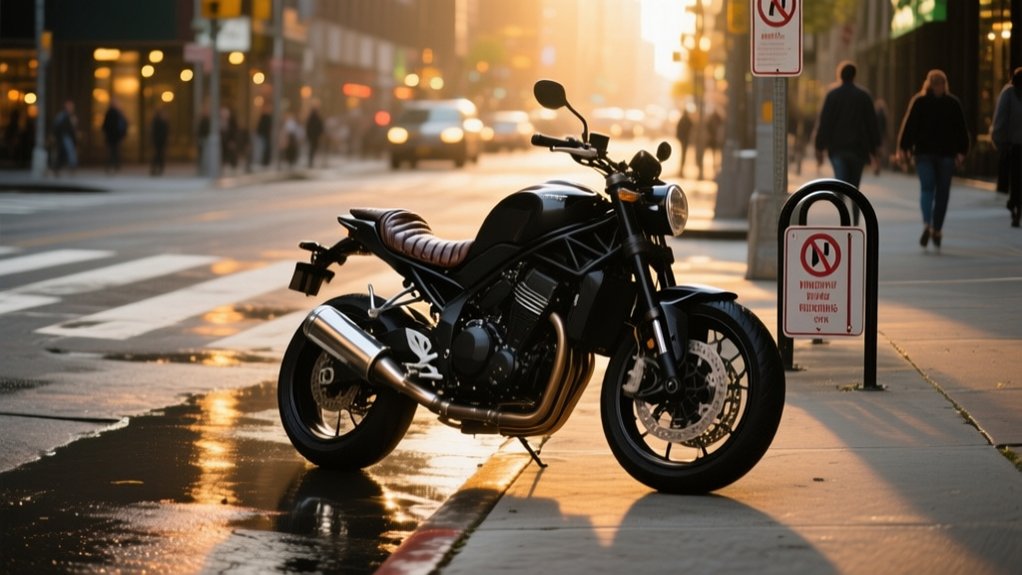
Can You Park A Motorcycle On The Sidewalk – Yes or No?
No, you generally can’t park a motorcycle on the sidewalk.
Most cities treat plated motorcycles as motor vehicles, and sidewalk parking is usually banned.
This is especially true downtown or anywhere you’d block pedestrians, ramps, bus stops, hydrants, or private property.
Local signs, municipal code, and campus rules can make the difference.
If you want the safest option, use marked motorcycle parking or legal street spaces.
There’s also more to know, and violations can lead to tickets, towing, or impoundment.
Can You Park a Motorcycle on the Sidewalk?
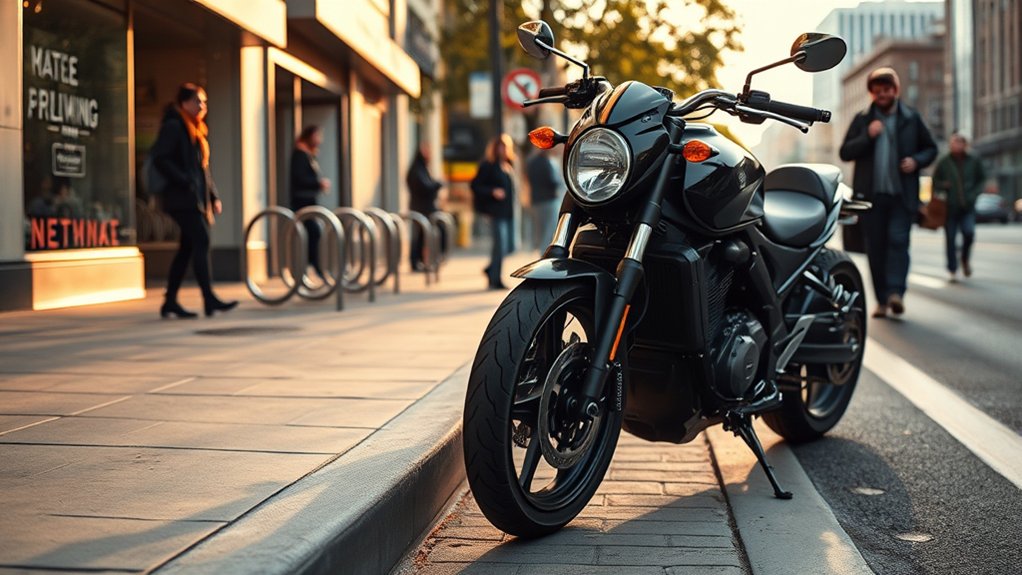
Can you park a motorcycle on the sidewalk? You usually shouldn’t assume so.
In many U.S. cities, your motorcycle counts as a motor vehicle, so sidewalk parking can violate local rules. Seattle and similar places often treat plated scooters and motorcycles the same way.
You could get a parking ticket, or even a tow, if you leave one there. Check the municipal code, posted signs, or campus rules before you stop.
If the city offers designated motorcycle parking, curb slots, or a marked scooter area, use that instead. When no legal space exists nearby, park off the sidewalk.
Lock your bike to an approved fixture if allowed. That simple check helps you avoid penalties, theft risk, and unnecessary hassle.
Why Sidewalk Motorcycle Parking Is Usually Illegal
Even if a sidewalk looks wide enough, you usually can’t treat it like a legal parking spot for your motorcycle. Most U.S. laws ban parking a motor vehicle there, and your plated bike usually counts.
A wide sidewalk still isn’t a legal motorcycle spot; most laws treat your plated bike as a motor vehicle.
That means your Moto Guzzi can draw a ticket even if you thought parking on the sidewalk was harmless. Police often target downtown blocks where enforcement is tighter and tagged motorcycles are easy to spot.
Even when a local code seems vague, you still must keep clear access for pedestrians, bus stops, driveways, hydrants, and ADA routes. Otherwise, you risk fines and towing.
Rules differ by city, so check the ordinance before you stop. If you use meter apps or receipts nearby, save proof in case someone questions your parking.
When Sidewalk Parking Is Allowed
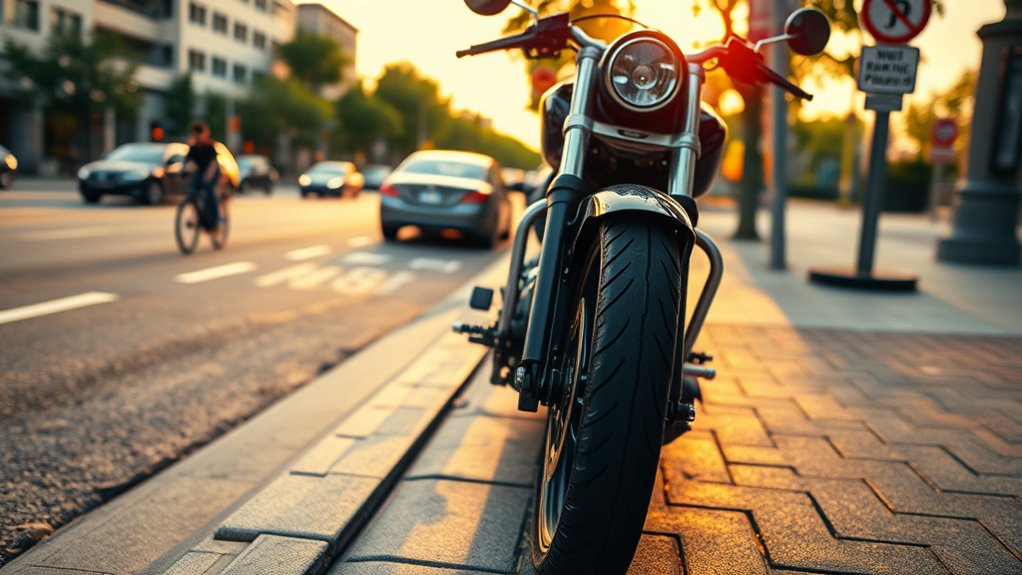
Sidewalk parking is only allowed in a few places. It’s usually for smaller scooters or mopeds that local rules treat differently from plated motorcycles.
If your ride isn’t required to carry plates, you may find ordinances that permit sidewalk parking. Still, confirm the exact rules before you stop.
Even when it’s legal, you can’t block walkways, ramps, hydrants, bus stops, or entrances to private property.
- Check city ordinances before you rely on a sidewalk spot.
- Look for curb slots, scooter racks, or marked motorcycle spaces first.
- Watch for signs, since downtown areas often enforce rules more strictly.
If a city offers designated parking, use it. It’s usually the safest way to avoid tickets or towing, and it keeps pedestrian access clear.
What Motorcycle Laws Apply in Seattle?
In Seattle, you generally can’t park a motorcycle or any plated motor vehicle on the sidewalk. City rules and state law protect pedestrian right-of-way.
Keep your bike off sidewalks, curb cuts, bus stops, fire hydrants, and accessible ramps. Officers can issue citations, order impoundment, or even cut locks to move it.
If you ride a small scooter or moped under 50cc, enforcement may vary. Your tag status still matters, though.
Park in marked motorcycle spaces, regular street spaces, or paid garages downtown. If you use PayByPhone or a meter, save your receipt and a photo of the bike in case you need to dispute a ticket.
Make sure you’ve got the right endorsement and registration before riding.
How City Parking Rules Change by Location
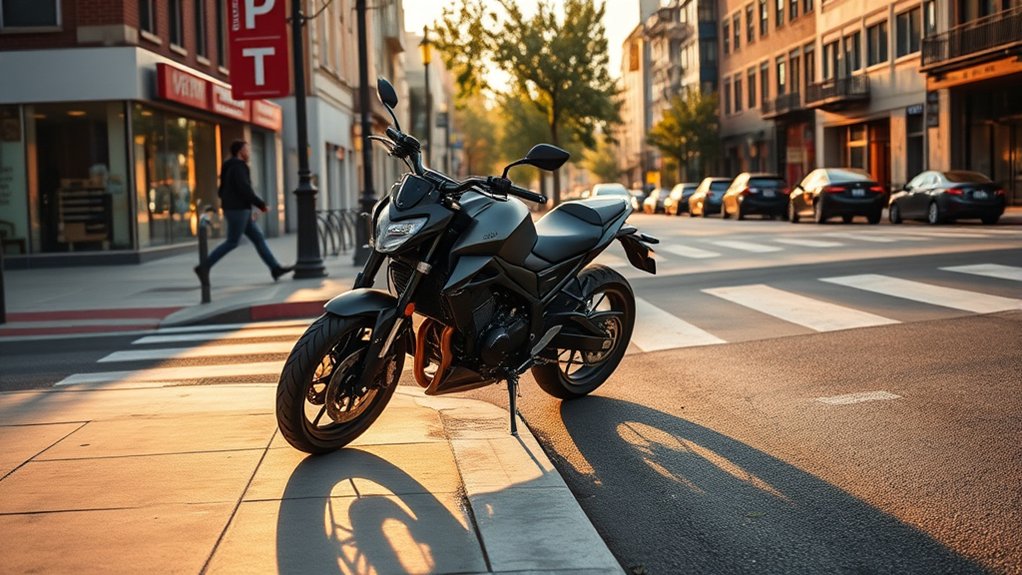
City parking rules can change a lot from one block to the next. So check the local ordinance before you leave your motorcycle on a sidewalk.
Check the local ordinance before leaving your motorcycle on a sidewalk; rules can change block by block.
In many cities, especially downtown, officers treat sidewalk parking as a ticketable offense. They may tow it if you ignore posted rules.
You’re also more likely to get cited near campuses and in places with active parking patrols.
Don’t park on sidewalks near transit stops, fire hydrants, curb cuts, or pedestrian paths.
Look for designated motorcycle or scooter curb spaces if the city offers them.
Remember that some places allow bicycles or tiny mopeds, but still ban most motor vehicles.
If you’re unsure, pick a legal curb space. Avoid the risk of a fine or tow.
What Counts as a Motorcycle or Moped?
A bike’s label matters more than you might think.
If your ride has an engine over 50cc, or your state’s code treats it as a motorcycle, you’ll usually need registration, plates, and the full set of motorcycle rules.
Smaller 49cc machines often fall into moped or scooter categories, which can change how parking laws apply.
That distinction matters because a tagged motor vehicle is generally barred from sidewalk parking.
Some places handle untagged sub-50cc scooters more like bicycles.
Don’t guess from size alone.
Check engine displacement, top speed, plate status, and your local motor vehicle code.
Your state may use different thresholds, so verify the rules before you park.
When Parking Enforcement and Towing Happen
You’re most likely to face parking enforcement in downtown or other busy business areas, because parking officers patrol those places more often and sidewalk issues get noticed quickly.
If you block a fire lane, bus stop, or pedestrian path, or if you park on private property, your motorcycle can be towed, and you may end up owing towing and storage fees.
To avoid getting ticketed, park only where it’s clearly allowed, and keep any photos or payment receipts.
That way, if you decide to challenge the enforcement later, you’ll have something to back it up.
Enforcement Hotspots
In high-enforcement areas like downtown Seattle, parking officers and tow crews often target motorcycles on sidewalks. This is especially true when bikes block commercial loading zones, bus stops, or ADA access.
You should assume busy downtown corridors draw the most attention. This is especially the case during special events and peak business hours.
If your bike has a plate, officers can cite it and log the tow more easily. Unplated 49cc scooters may slip past some checks, but they can still get removed if they block access.
- Watch for enforcement near storefronts and transit stops.
- Expect more patrols when crowds increase.
- Keep receipts and citations for disputes.
You can document parking with photos, but that won’t stop a lawful tow in a hotspot.
Towing Risk Factors
Towing risk climbs fast when a motorcycle or scooter sits where it clearly shouldn’t. Especially on sidewalks in downtown cores, officers treat the bike as an obstruction or illegal parking violation.
You’re also far more likely to get towed if you block pedestrian routes, bus stops, hydrants, fire lanes, or private access points. Those spots carry higher liability.
If your two-wheeler has no visible plate, officers may skip a ticket. They can go straight to removal when it looks abandoned or unsafe.
Repeated illegal parking, or leaving a bike in metered spaces without payment, can trigger towing after multiple citations. Even if you snapped a PayByPhone receipt or locked the bike to a post, that won’t stop impoundment when enforcement decides the parking itself is unlawful.
Avoiding Parking Tickets
When parking enforcement is active, even a short stop on the sidewalk can trigger a ticket or a tow. So don’t assume a motorcycle or scooter can “fit” where cars can’t.
In many cities, including downtown Seattle, sidewalk parking is illegal. Officers can fine you on sight. Use a municipal garage or PayByPhone spot instead, then photograph the receipt right away in case a citation disappears.
Choose marked motorcycle parking when you can. Lock your bike to something immovable with a heavy-duty chain and disc-lock.
If you get ticketed or towed, document signs, meters, GPS, and bike position. Act fast if the ticket’s missing or your bike’s gone. Call enforcement or the tow lot immediately and dispute the issue with photos.
Why Downtown Seattle Parking Needs Extra Caution
Downtown Seattle needs extra caution. Parking enforcement is active, and a motorcycle left on the sidewalk can still draw a ticket or a tow if it blocks pedestrian access or ignores posted signs.
Assume plated motorcycles and larger scooters count as motor vehicles. They generally can’t use sidewalks downtown.
Even if a block seems quiet, enforcement can change fast. A spot that feels “safe” today may be illegal tomorrow.
Street parking also increases theft risk. Lock your bike to something solid and use disc locks or alarms.
You’ll usually do better in a garage, a marked motorcycle space, or a legal curbside spot.
If you park downtown, keep your receipt or a photo of your ticket. It can help if there’s a dispute or theft.
How To Use PayByPhone and Save Ticket Proof
Set up PayByPhone before you park, then enter your license plate number, zone code, or phone number to pay for the meter remotely.
Once you finish, take a clear photo or screenshot of the confirmation screen. Also keep your emailed or text receipt so it’s all together with the date, time, zone, transaction ID, and amount.
If you receive a citation, photograph it alongside your receipt. Then keep all of your proof backed up until the contest window closes.
PayByPhone Setup
To get PayByPhone up and running, download the app or use the web service.
Create an account, add your credit or debit card, and enter your phone number and vehicle plate each time you park.
After that, confirm the parking zone and set the session length carefully.
This helps you avoid underpaying or overstaying.
PayByPhone then records your session and provides a receipt tied to your account and transaction ID.
Keep the receipt details handy in case enforcement ever asks.
Check the zone number before you submit payment.
Turn on alerts so you know when time is running low.
Review local rules, since some cities limit remote extensions.
If you need to address an enforcement question, match the receipt details to your session.
Save Ticket Photo
Once you’ve paid through PayByPhone, save proof right away so you’re covered if a ticket gets questioned. Open the receipt and note the date, time, zone, and transaction ID. Then snap a clear photo of that screen before you close the app.
| Proof | What to capture | Why it helps |
|---|---|---|
| Receipt screen | Date, time | Shows payment timing |
| Receipt screen | Zone, ID | Matches the stall |
| Ticket front | Full details | Documents the citation |
| Ticket back | Officer notes | Helps spot errors |
| Parked bike | Curb, signs | Shows context |
If you get a paper ticket, photograph the front and back. Also take photos of your motorcycle and nearby signage. Store everything in a dated cloud folder so you can attach it fast when you appeal.
Keep Parking Proof
After you pay in PayByPhone, lock in proof right away so you can back up your parking session if anyone questions it.
Open the app, enter the zone number from the meter or curb sign, pick your bike, and confirm payment.
This logs your payment electronically.
Then save evidence:
- Take a clear photo of the confirmation screen showing the zone, time, amount, and transaction ID.
- Keep the emailed or SMS receipt, and back it up digitally for the full appeal window, often 14–30 days.
- If a ticket shows up, photograph the ticket on your motorcycle, plus the meter, signs, and plate.
- If you’re downtown, also take a wide shot showing your bike’s exact position.
Save the transaction ID and timestamp for quick reference when you appeal.
Check Your Motorcycle Endorsement Before Buying
Before you buy a motorcycle or scooter in Washington, make sure you have the right endorsement to ride it legally. Most motorcycles and larger scooters need an M class endorsement or an M endorsement on your license, so check before you spend money.
Some small scooters, usually 50cc or under, may fall under moped rules instead. They can still need registration or a permit, so don’t assume they’re automatically covered.
Visit the Washington Department of Licensing motorcycle page to confirm testing, training, and application steps. If you want to carry passengers, use HOV lanes, or ride a higher-capacity bike, verify your endorsement covers those privileges.
Buying first and sorting the paperwork later can lead to fines, impoundment, denied insurance, and needless legal risk.
Frequently Asked Questions
Do Scooters Follow the Same Sidewalk Parking Rules as Motorcycles?
Not always. You’ll usually face the same sidewalk parking rules only if your scooter counts as a motor vehicle in your area.
Small scooters under 50cc and unplated models often get treated more like bicycles. Larger, tagged scooters usually follow motorcycle rules and can’t park on sidewalks.
You should check local DOT or city codes first. Enforcement and penalties vary a lot, and theft risks stay high too.
Can I Park Half on the Curb and Half on the Sidewalk?
No, you shouldn’t.
Half on the curb and half on the sidewalk can still block pedestrians and invite a ticket.
You need to keep your bike fully within a legal parking space or designated motorcycle spot.
If you’re unsure, check local signs or the city code before you leave it there.
When in doubt, park elsewhere and avoid the hassle.
Are Sidewalk Parking Rules Different at Private Businesses?
Yes, they can be different at private businesses, but you still need to check city rules first.
A business can post its own parking rules, ban sidewalk parking, and have your motorcycle towed or removed.
You can usually use designated motorcycle spots, curb cutouts, or private lots instead.
Don’t block entrances, ramps, bus stops, or ADA paths, even if the business seems to allow it.
What Signs Indicate Motorcycle Parking Is Allowed on Sidewalks?
Look for signs that explicitly say “Motorcycle Parking Allowed” or show a motorcycle pictogram.
Those are your best legal cue.
Also, check curb markings, permit-only notices, hour limits, and meter instructions.
Don’t park where you see “No Parking,” “No Motor Vehicles,” bus stop, fire lane, or loading zone signs.
If signs are missing, check local parking rules online before you leave your bike.
Can a Parking Ticket Be Contested for Sidewalk Motorcycle Parking?
Yes, you can contest it, and you’ve got a fighting chance if you act fast.
Gather time-stamped photos, nearby signs, payment receipts, and any tow records.
Check whether your bike counts as a motor vehicle under local code.
Or see if there’s a moped exception in your area.
If signage was unclear or enforcement was inconsistent, raise that.
Don’t let the grass grow under your feet—file your appeal before the deadline and stay factual.
Conclusion
So, can you park your motorcycle on the sidewalk? Usually, no. Unless you enjoy turning a quick stop into a ticket, tow, or an awkward chat with parking enforcement.
In Seattle, rules change fast. Sidewalks are not your personal garage. Check the signs and use PayByPhone.
Don’t assume “small bike, no problem.” A little caution beats a big fine. Before you ride in, make sure your endorsement, your plan, and your parking spot all line up.