How To Get Motorcycle License In Md – Full Guide
To get a motorcycle license in Maryland, you’ll need a current Maryland driver’s license.
You also must pass the 25-question knowledge test.
Next, you must complete the on-cycle Rider Skill Test.
Alternatively, you can finish an approved MSF Basic Rider Course to waive the riding test.
Bring proof of identity, residency, and the required fees.
You’ll also need insurance documentation.
You must bring a street-legal motorcycle.
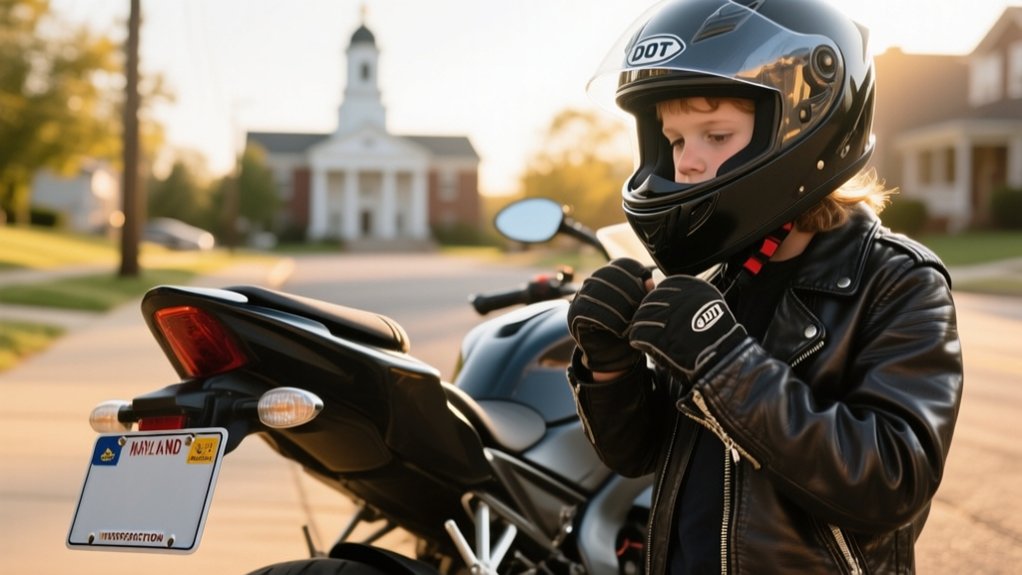
It should pass T-CLOCKS and you must wear a DOT helmet and proper safety gear.
FAST TRACK may be available if you are eligible and 18 or older.
Keep reading to see which option fits you best.
What You Need for a Maryland Motorcycle License
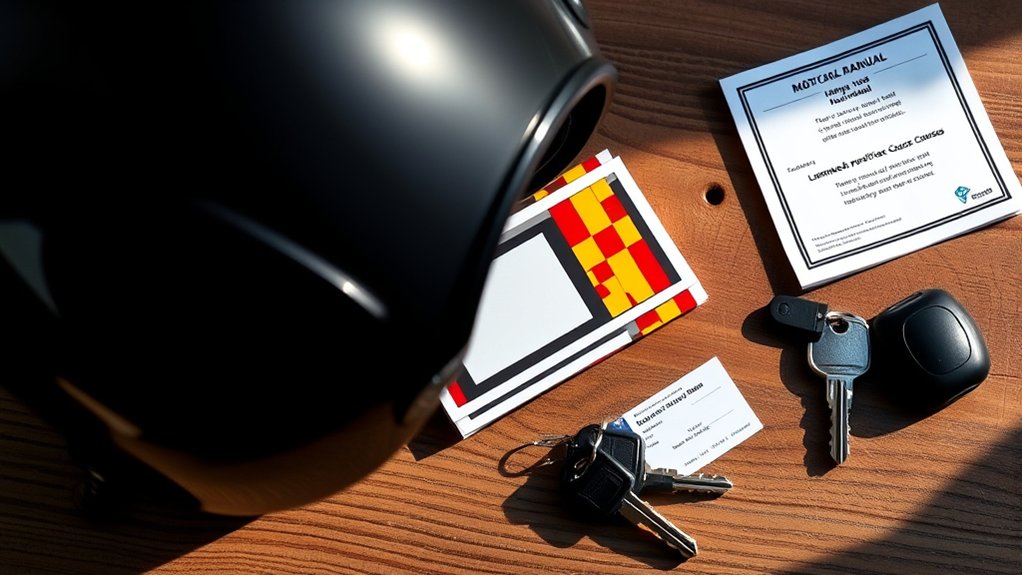
To get your Maryland motorcycle license, start with the right paperwork and equipment.
Bring proof of identity, proof of residency, your current Maryland driver’s license, and any required fees for adding a Class M endorsement.
If you’re over 18 and already licensed in Maryland, you can use FAST TRACK.
You’ll also need a street-legal, insured, registered, and properly tagged motorcycle that passes a T-CLOCKS inspection.
Wear the required PPE: a USDOT helmet, eye protection, full-finger gloves, long pants, a long-sleeved jacket or shirt, and over-the-ankle footwear.
For FAST TRACK, you must pass the knowledge test and the on-cycle Rider Skill Test.
If you don’t pass, the MVA may issue a learner’s permit or send you to rider training.
Maryland Motorcycle License Options
You’ve got a few options for getting your Maryland motorcycle license, and the best one really depends on your experience level and schedule.
If you want to test the same day, the MVA Fast Track option may be a good fit.
On the other hand, if you take an MSF/Basic Rider Course, you can often skip the on-cycle MVA test.
When you compare these routes side by side, it becomes much easier to figure out which path is the quickest and simplest way to earn your Class M license.
MVA Fast Track
Maryland’s MVA Fast TRACK program lets eligible drivers over 18 knock out both the motorcycle knowledge test and the on-cycle Rider Skill Test the same day.
You won’t need to get a learner’s permit first or wait 14 days.
You must schedule a Fast TRACK appointment through your myMVA account and attend a select MVA branch with certified Motorcycle Safety Program Instructors.
Study the Motorcycle Operators Manual first. You need at least 21 correct answers out of 25 on the knowledge test.
Then bring your street-legal, insured, registered motorcycle for the T-CLOCKS check and the Rider Skill Test.
Wear a DOT helmet, eye protection, gloves, long pants, a long-sleeved top, and over-the-ankle footwear.
If you pass both tests, you’ll get a FAST TRACK Completion Certificate for your Class M endorsement.
MSF Course Path
If the MVA Fast TRACK route doesn’t feel like the right fit, the MSF Basic Rider Course gives you another path to a Maryland motorcycle license.
In this hands-on class, you spend about a day and a half learning core riding skills, safety habits, and road control.
When you pass the MSF Basic Rider Course, you get a completion certificate. This helps you skip the on-cycle skills test at the MVA.
That means you can add your Class M endorsement to your license more quickly. Bring your certificate, get your photo taken, and you may walk out the same day.
If you’re new to riding, instructors strongly encourage this route. It builds confidence and can help you become a safer, more prepared rider.
License Option Comparison
Maryland offers a few ways to earn your Class M motorcycle license, and each one fits a different level of experience.
If you already ride, the Maryland MVA FAST TRACK can work well.
You schedule one appointment, take the knowledge and on-cycle tests the same day, and if you pass, you get a FAST TRACK Completion Certificate.
For many new riders, the MSF Basic Rider Course is often the easier choice.
It waives the riding test and often lets you add Class M the same day.
You can also test directly with the MVA, but your Maryland motorcycle must be street-legal, insured, registered, and fully equipped.
On the knowledge test, you need 21 correct answers out of 25.
Who Qualifies for Maryland FAST TRACK Licensing
To qualify for Maryland FAST TRACK licensing, you must already hold a Maryland driver’s license.
You also must be at least 18 years old.
This motorcycle option is for current Maryland license holders who want to add a Class M endorsement through FAST TRACK Licensing.
You’ll need to schedule your appointment in your myMVA account.
Appointments only run May through September at select MVA branch offices.
Before you go, read the Motorcycle Operators Manual (DL-001) since you’re expected to know the rules.
Bring a street-legal, insured, registered motorcycle.
Also bring the required gear: DOT helmet, eye protection, long sleeves, full-fingered gloves, long pants, and over-the-ankle footwear.
You must be ready for both the knowledge test and the on-cycle Rider Skill Test the same day.
How to Pass the Maryland Motorcycle Knowledge Test?
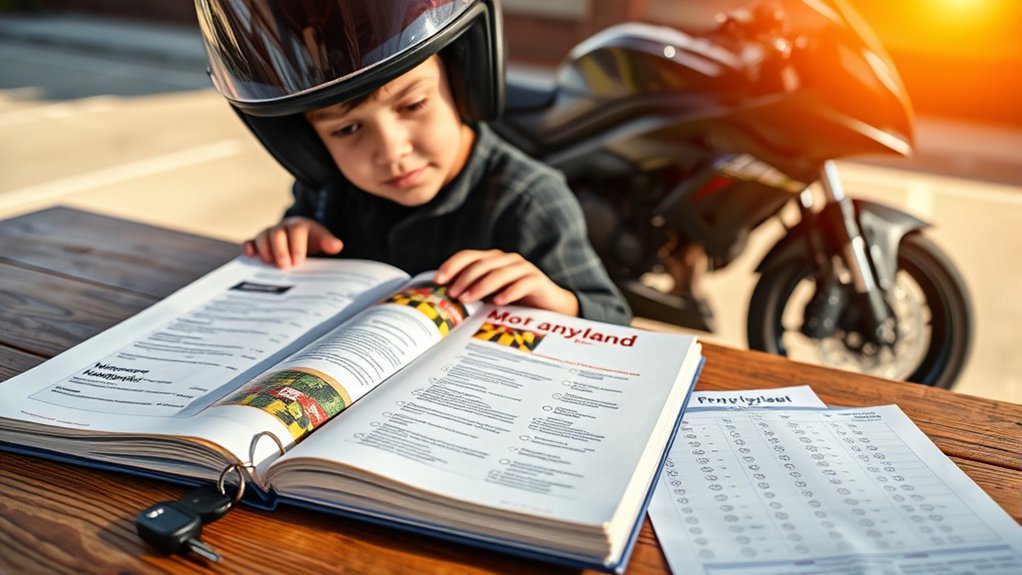
Once you’ve scheduled your FAST TRACK appointment or lined up your regular MVA test, your next step is passing the Maryland motorcycle knowledge test. You’ll face 25 multiple-choice questions, and you need at least 21 correct to pass.
Schedule your FAST TRACK or regular MVA test, then pass the 25-question Maryland motorcycle knowledge exam with at least 21 correct.
Study the Motorcycle Operator’s Manual (DL-001) carefully. Focus on road rules, traffic signs, safe riding practices, and braking and stopping guidance. Then reinforce what you learn with practice tests and cheat-sheet style Q&A sets. This helps you recognize likely questions and remember answers faster.
Review one manual section at a time. Take timed practice tests to build confidence. Revisit missed questions until they feel easy.
If you don’t pass, you’ll get coaching and a different second test. Failing twice can lead to counseling and referral to the Basic Rider Course.
What to Bring to Your MVA Appointment
Show up prepared so your MVA appointment goes smoothly. Bring your current Maryland driver’s license. If you’re applying for a new license, bring the ID the MVA asks for.
For FAST TRACK Licensing, carry your completed certificate or your MSF/Basic Rider Course card. This lets you skip the Motorcycle Test and get your Class M endorsement right away.
If you’re taking the on-cycle test, bring a street-legal, insured, registered motorcycle. Also bring proof of insurance, registration, and any required fees for your license or learners permit.
| Item | Why you need it | Notes |
|---|---|---|
| License/ID | Confirms eligibility | Must be current |
| Course proof | Bypasses testing | FAST TRACK Licensing |
| Motorcycle gear | Keeps you protected | Wear all required items |
Don’t forget a helmet, eye protection, gloves, pants, jacket, and over-the-ankle footwear.
How the Maryland Motorcycle Skills Test Works
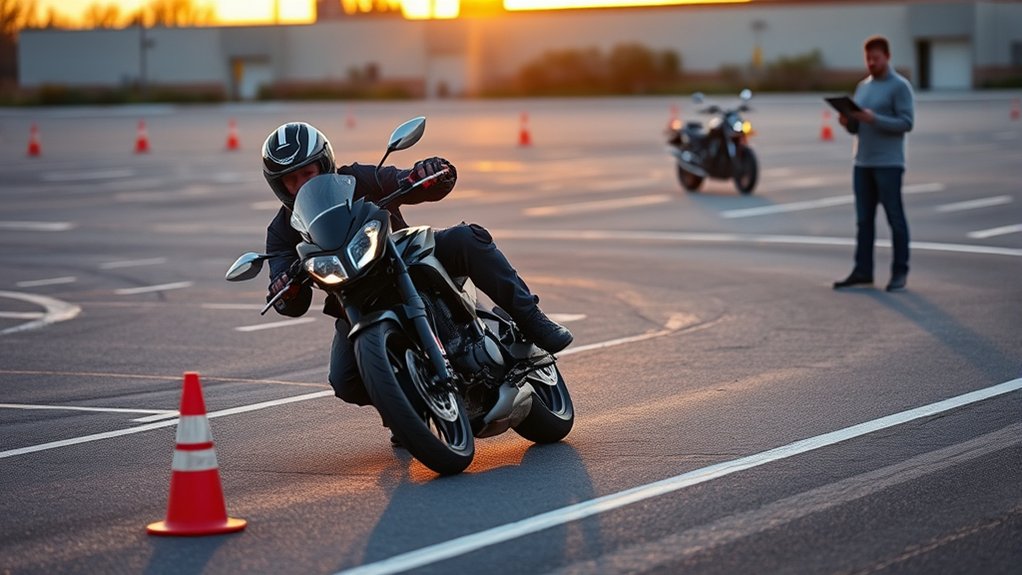
To take the Maryland Motorcycle Skills Test, you’ll first need to pass the 25-question knowledge test and complete a T-CLOCKS inspection. After that, you’ll demonstrate your controlled riding skills on a closed course.
Before test day, make sure your motorcycle is street-legal, insured, registered, and properly equipped. You should also plan to wear the required helmet, eye protection, gloves, long pants, long sleeves, and over-the-ankle footwear.
If you don’t pass on your first try, you’ll receive coaching and next-step guidance. And if you fail the riding test, you’ll be issued a Class M learner’s permit and you’ll need to retest.
Skills Test Overview
After you pass the knowledge test with at least 21 correct answers out of 25, Maryland schedules the on-cycle Rider Skill Test (RST). It checks whether you can handle a motorcycle safely in real riding conditions.
During this TRACK Licensing, test, Skill Test, you ride your own street-legal, insured, registered motorcycle. It must pass the T-CLOCKS inspection first.
The examiner watches how you use the clutch and throttle, stop quickly, make slow turns, and hold lane position. You’ll also need proper gear: helmet, eye protection, gloves, long sleeves, sturdy pants, and over-the-ankle boots.
- FAST TRACK riders may test the same day.
- Others get an MVA appointment.
- If you fail twice, you’ll get counseling and course options.
Test Prep Steps
Once you know what the Maryland motorcycle skills test covers, you can plan your prep with confidence. Start by studying for the 25-question knowledge test. You need 21 correct answers to pass. Then practice the Rider Skill Test basics, and review the T-CLOCKS inspection so you’re ready before the ride.
If you’re a Maryland-licensed driver over 18, the Fast Track program may let you complete both tests the same day by appointment at select branches.
| Step | What to do | Why it matters |
|---|---|---|
| 1 | Study the handbook | Build confidence |
| 2 | Prepare your bike and gear | Reduce stress |
| 3 | Schedule smartly | Save time |
Bring a street-legal, insured, registered motorcycle and required gear. That includes a helmet, eye protection, jacket, gloves, pants, and over-the-ankle footwear. You should be ready without last-minute fixes.
Pass Or Retest
If you pass the 25-question knowledge test with at least 21 correct answers, you can move on to the on-cycle Rider Skill Test.
It includes a T-CLOCKS inspection and can lead to a FAST TRACK Completion Certificate or a Class M endorsement.
If you don’t pass, Maryland gives you one coaching session.
Then you’ll take a second knowledge test that’s different from the first.
If you fail again, staff will explain your Basic Rider Course options.
- Pass the RST on your first try and keep moving forward.
- Fail the RST once and you’ll get a Class M learner’s permit plus training info.
- Fail twice, and staff will usually recommend the Basic or Alternate Basic Rider Course.
If you’re 18+ and licensed in Maryland, you can book FAST TRACK by appointment.
You can finish both tests the same day.
When the MSF Course Makes Sense
The MSF Basic Rider Course makes the most sense if you’re a new rider. It’s also a great option if you want a structured, low-pressure way to learn the basics before hitting public roads.
You’ll get classroom instruction and hands-on riding drills, usually over about a day and a half. That means you can build skills step by step.
Many beginners say it’s worth every penny because it teaches safe habits. It also boosts your confidence before you ride solo.
It can also simplify the MVA process. After you complete the course, you can often skip the on-cycle skills test and present your certificate to get your Class M endorsement more easily.
Even if FAST TRACK is an option for experienced riders, prioritize the BRC when you’re starting out.
Maryland Motorcycle License Costs and Fees
You’ll typically pay the standard MVA issuance fees when you add a Class M endorsement, and the exact amount can vary depending on your transaction—so it’s smart to check myMVA for the current fee.
If you take the MSF Basic Rider Course or Fast Track, you’ll pay course tuition, but passing can help you skip the on-cycle test and avoid extra trip-related costs.
Also, you generally won’t pay a separate written-test fee, though permit processing, required safety gear, and any other required steps for testing can still affect your total.
License Fee Breakdown
Maryland motorcycle licensing costs usually come from a few MVA charges.
These can include the knowledge test, an endorsement or license processing fee, and sometimes the standard fee to add the Class M endorsement to your driver’s license.
You’ll pay these charges at the MVA.
So, check the current fee schedule before you go.
- Check whether you’re adding an endorsement or getting a new license change.
- Bring every required document so you don’t pay for a wasted visit.
- Confirm current MVA fees before booking, since amounts can change.
If you use FAST TRACK or a rider course path, the MVA may handle processing the same day after you qualify.
That can simplify your visit, but you still need to meet every requirement and bring the right motorcycle and gear.
Test And Course Costs
When you compare test and course costs, it helps to separate MVA fees from rider-school expenses.
You’ll pay MVA transaction fees when you add Class M.
Any Fast Track appointment still requires your own bike, helmet, eye protection, gloves, long pants, long sleeves, and over-the-ankle boots.
If you pass the Fast Track knowledge test and Rider Skill Test, you get a completion certificate.
If you complete an approved MSF Basic Rider Course, you get a completion card.
It usually lets you skip the on-cycle test and finish licensing quickly at a branch.
The written test needs 21 correct answers out of 25.
MSF tuition and study packs vary by provider, so compare prices before you register.
Maryland Motorcycle Gear and Motorcycle Inspection Rules
Before you head to the Maryland MVA for your rider skill test or Fast Track appointment, make sure you and your motorcycle are ready. Your bike must be street-legal, registered, insured, properly titled and tagged, and transported legally to the branch.
Before testing, staff may do a T-CLOCKS check. This can include tires, controls, lights, oil, chassis, horn, and signals to confirm it’s safe.
- Wear a USDOT-compliant helmet and approved eye protection.
- Put on full-fingered gloves, long pants, a long-sleeved jacket or shirt, and over-the-ankle footwear.
- Bring a motorcycle that’s two- or three-wheeled and accepted for testing. Some autocycles or conversions may not qualify.
If your bike fails inspection or you’re missing required gear, you can’t take the on-cycle test. You may need to get a Class M learner’s permit instead.
Next Steps for Your Class M License
Once you’ve finished the gear and inspection prep, the last step is getting your Class M added to your Maryland license.
If you pass FAST TRACK’s knowledge test and on-cycle Rider Skill Test at a participating MVA branch, you’ll receive a Completion Certificate. Then you can upgrade the same day.
If you completed the MSF Basic Rider Course, bring your completion card instead. In that case, you won’t need the riding test.
If you miss the FAST TRACK ride test, you’ll get a Class M learner’s permit. You’ll also receive guidance for more training.
| Path | What You Need | Result |
|---|---|---|
| FAST TRACK | Test pass, documents, fees | Same-day endorsement |
| Rider course | Completion card | Add Class M |
| FAST TRACK fail | Learner’s permit | Extra practice |
Bring your documents and pay any fees. Then leave with your updated license if everything checks out.
Frequently Asked Questions
How Long Does It Take to Get a Maryland Motorcycle License?
It can take the same day if you’re eligible for FAST TRACK.
Or, if you finish an MSF/BRC course and bring your completion card to the MVA.
If you use the standard route, it may take longer.
You’ll need a learner’s permit, test appointments, and time to pass both the knowledge and on-cycle tests.
Your total timeline depends on availability, preparation, and how quickly you complete each step.
Can I Ride With a Learner’s Permit in Maryland?
Yes, you can ride with a Maryland motorcycle learner’s permit, but you have rules to follow.
You must ride with a licensed Class M rider who’s at least 21 and has held the license for three years, unless you complete an approved Basic Rider Course.
You can’t carry passengers, and you may need an “L” plate.
Wear the required gear, and avoid restricted roads or riding at night.
Do Maryland Motorcycle Licenses Expire With My Regular License?
Yes. In Maryland, your motorcycle endorsement follows your regular driver’s license, so it expires on the same date. You don’t need a separate renewal.
When you renew your driver’s license, you refresh the Class M at the same time. If your main license is suspended or revoked, the endorsement ends too.
Any updated, duplicate, or corrected license will keep the same motorcycle expiration date.
Can I Transfer an Out-Of-State Motorcycle License to Maryland?
Yes, you can transfer your out-of-state motorcycle license to Maryland.
You’ll need to visit an MVA branch with your valid out-of-state license, proof of identity, Maryland residency, and your Social Security number or proof you’re ineligible.
If your endorsement is current and unrestricted, Maryland usually issues a Class M without tests.
If it’s expired or restricted, you may need a knowledge test, skills test, or an approved rider course.
Is There a Vision Test for Maryland Motorcycle Licensing?
Yes, you’ll take a vision test for Maryland motorcycle licensing. The MVA checks your eyesight during your licensing visit or a FAST TRACK appointment.
You must meet the state’s acuity and field standards. If you wear glasses or contacts, bring them and expect that requirement on your license.
If you don’t pass, you’ll need an eye exam from a licensed professional before the MVA can issue your endorsement.
Conclusion
Getting your Maryland motorcycle license is straightforward when you know the steps.
Start by studying for the knowledge test and gathering your documents.
Then choose the path that fits you best.
You can go with FAST TRACK or take the MSF course.
For example, if you’re a new rider and want to skip extra test appointments, an approved safety course can help you move faster.
It also builds confidence before you ride on the road.
Once you’re licensed, you can ride legally and safely.