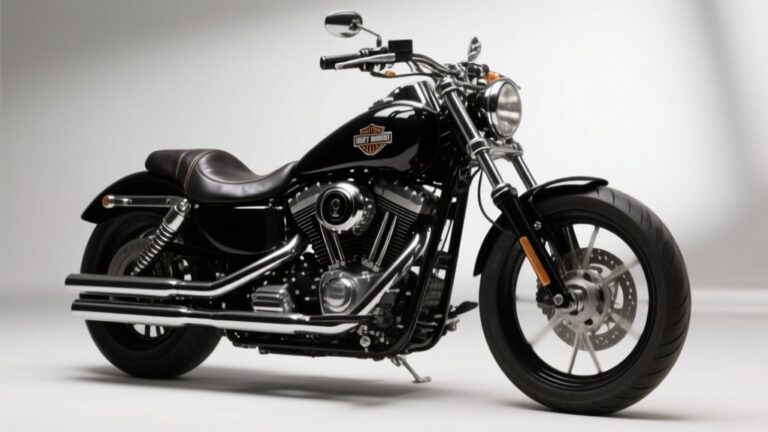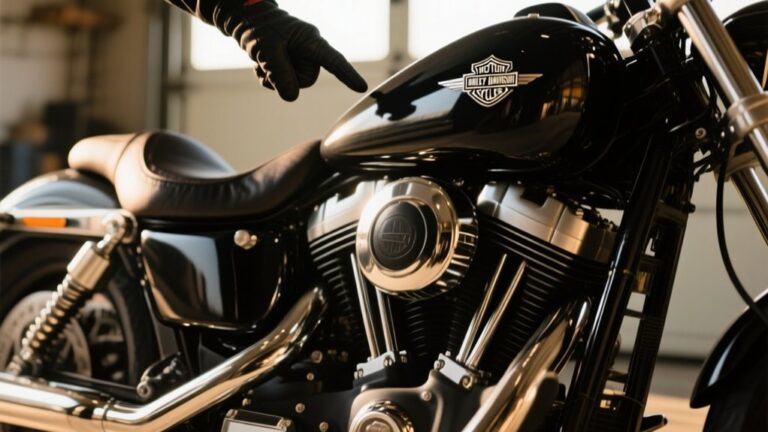
How To Strap A Harley To A Trailer – Beginner’s Guide
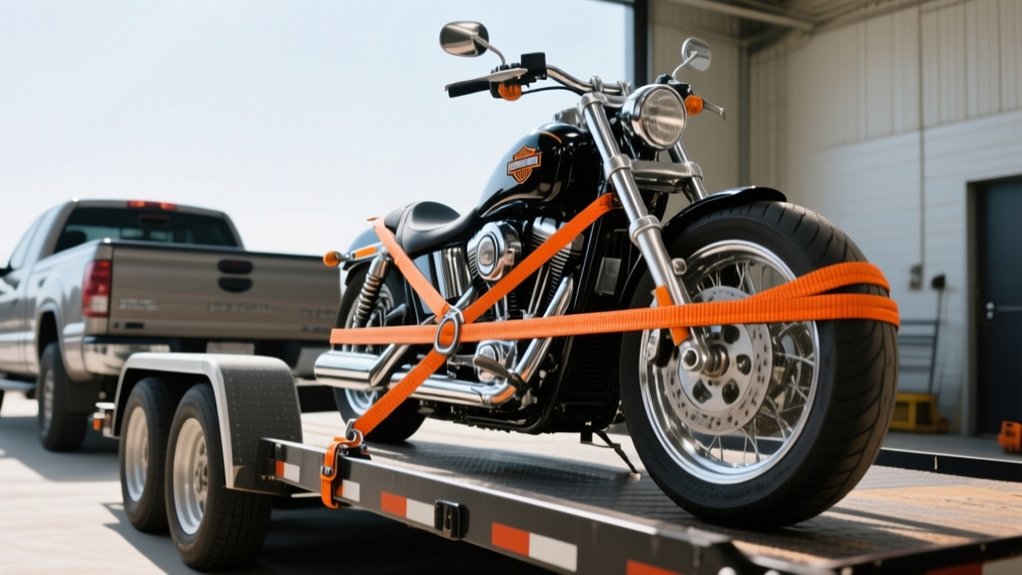
To strap your Harley to a trailer, start by securing the front wheel in a quality wheel chock. Then attach ratchet straps to factory-recommended points like the lower triple clamps and handlebar harnesses. Use soft ties to protect the front end from scratches while applying even tension to compress the suspension halfway.
Make sure you have balanced weight distribution across the trailer. Avoid over-tightening the straps, and regularly check their tension. Following these steps sets a strong foundation for safe, stable transport and reveals essential tips for flawless setup.
Trailer and Tie-Down Equipment for Your Harley
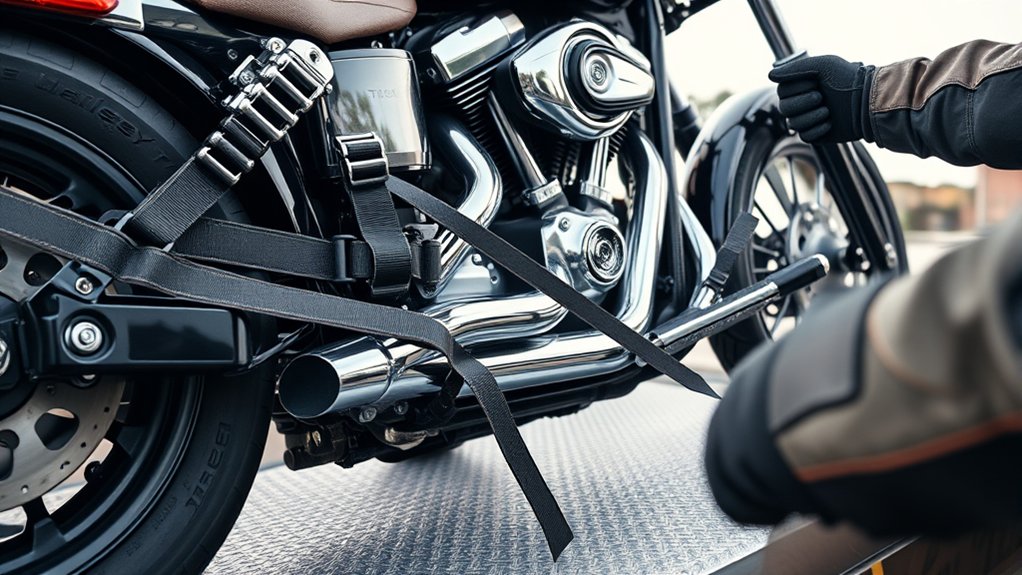
When transporting your Harley, choosing the right trailer and tie-down equipment is essential for safety and protection. An enclosed trailer is ideal because it shields your bike from weather and debris.
Choosing the right trailer and tie-down gear ensures your Harley stays safe and protected on every journey.
Start by securing the front wheel in a quality wheel chock; this stabilizes the bike and reduces excessive strap tension.
Mount D rings at factory-recommended points on the trailer floor to provide solid anchor points.
Use high-capacity ratchet straps rated at 1.5 times your bike’s weight to secure your motorcycle effectively.
Wrap straps around the lower triple clamps and handlebar harnesses to add another layer of protection and prevent scratches.
Compress the suspension slightly when tightening straps to stabilize the bike side to side.
Proper equipment and setup ensure your motorcycle-to-trailer connection offers peace of mind during transport.
It’s all about making sure your bike stays safe and sound on the road.
Preparing Your Trailer for Balanced Weight Distribution
Securing your Harley with proper tie-downs and wheel chocks sets the foundation, but positioning the bike correctly on the trailer is key to maintaining balanced weight distribution. Start by identifying trailer spots that allow even weight across both axles. Avoid placing too much weight on one side to prevent trailer sway and enhance stability during transit.
Position the motorcycle so its front and rear align balanced relative to the trailer’s centerline, ensuring neither end bears excessive load. Mark mounting points for D-rings to facilitate consistent, accurate load placement on future trips.
Distributing weight properly prevents front or rear bias, which can adversely affect handling and braking performance. Doing this makes your ride safer and more controlled throughout transport. It’s all about keeping things steady and smooth while you’re on the move.
Taking a little extra time here really pays off.
Loading Your Harley Safely Onto the Trailer
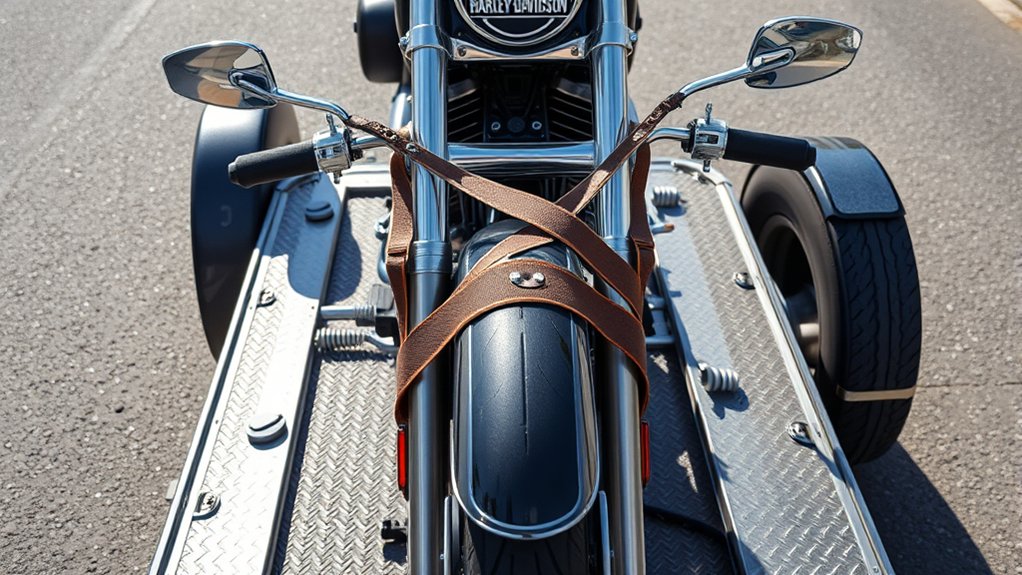
Before you load your Harley onto the trailer, make sure the ramp is firmly secured and has a non-slip surface to prevent accidents. Position the ramp at a good angle so you can get on smoothly.
Ride the motorcycle slowly in low gear, keeping it straight and centered as you go up the ramp.
Engage the transmission to stop the bike from rolling back while you’re loading.
When you get to the trailer bed, keep the bike steady and lined up properly.
Once the front wheel reaches the trailer, make sure it’s in the right spot and stabilized in the wheel chock to stop any movement.
Don’t start with the tie-downs until the bike is completely secured.
Following these steps will help you load safely and keep both you and your Harley protected.
Securing the Front Wheel of Your Harley With Wheel Chocks and D-Rings
After positioning your Harley’s front wheel in the wheel chock, focus on firmly anchoring it to prevent any rolling during transit. Securely install the wheel chock in your trailer to eliminate movement. Mark the D-ring mounting points near the front wheel for consistent placement each time you load.
Attach ratchet straps or soft ties from these D-rings to the front axle or triple tree, applying even tension. Tighten the straps just enough to slightly compress the front suspension, ensuring stability without risking damage.
Throughout your journey, regularly inspect the front wheel securing system to confirm the wheel remains stable and properly restrained.
This precise setup minimizes wheel movement, protecting your Harley and ensuring safe transport. It might seem like a lot of steps, but each one helps keep your bike safe and sound on the road. So, take your time and double-check everything before you hit the road.
Protecting Handlebars With Soft Ties and Ratchet Straps
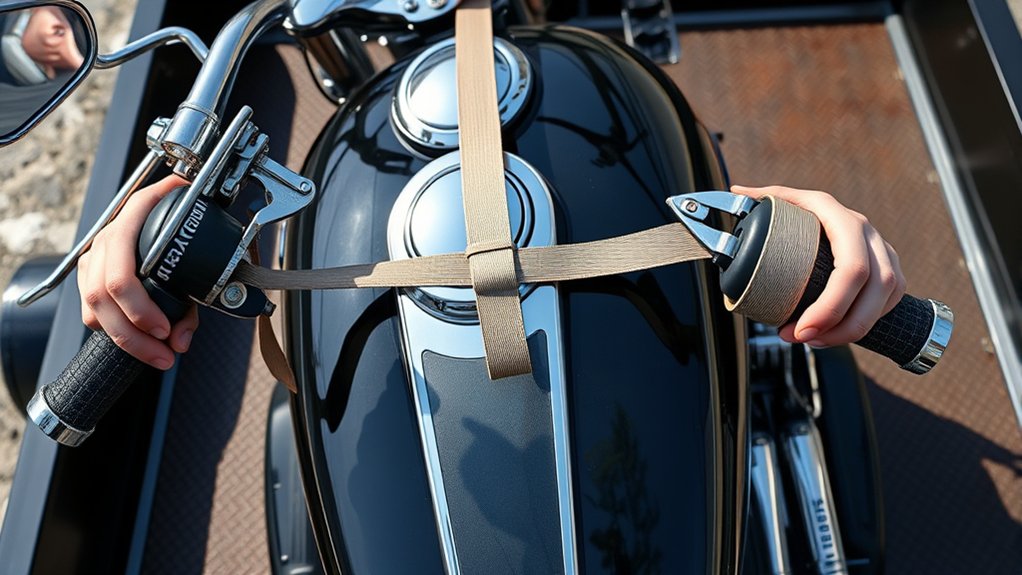
You’ll want to use soft ties to wrap around your handlebars or triple clamps—that way, you can prevent scratches and metal damage. It’s a good idea to pair them with ratchet straps, too.
These help apply even pressure without over-tightening, which could harm delicate parts.
Make sure the soft ties are placed just right to cushion and secure the handlebars.
And don’t forget to check them regularly for wear while you’re transporting your bike. That way, everything stays safe and sound.
Soft Tie Benefits
Although securing a Harley to a trailer demands strong straps, using soft ties around the handlebars or triple clamps is essential to prevent scratches, dents, and structural damage. Soft ties cushion and evenly distribute tension, protecting sensitive components from concentrated pressure.
When you use soft ties, you wrap padded, non-abrasive material around chrome, paint, and wiring to avoid abrasion. You also reduce the risk of bending or warping by spreading strap tension evenly.
Plus, soft ties help maintain strap positioning, preventing slipping or shifting during transit.
They really enhance overall security when combined with ratchet straps. Proper placement of soft ties is critical. It prevents damage and ensures your straps hold firmly without causing stress points.
Ratchet Strap Techniques
When securing your Harley, use soft ties or handlebar harnesses to protect the handlebars from scratches and damage before attaching ratchet straps.
First, route the ratchet straps around these protective ties, then connect them to designated anchor points on the trailer.
Tighten the ratchets gradually, compressing the front suspension while holding the handlebars firmly. Avoid over-tightening to prevent damage.
Make sure each strap runs at a downward and slightly forward angle. This positioning maintains tension and enhances stability during transit.
During your trip, regularly inspect the strap tension and the condition of soft ties to prevent loosening or shifting.
Following these ratchet strap techniques ensures your Harley remains secure and undamaged throughout your journey.
Strapping the Front End to Compress Suspension Safely
You’ll want to attach soft ties around the front forks or the triple clamp. Just be sure to steer clear of the brake lines and wiring so you don’t accidentally cause any damage.
Then, use ratchet straps at about a 45-degree angle, tightening them gradually until the suspension compresses roughly halfway. This way, you get good stability without putting too much load on it.
Keep an eye on the tension during transit and adjust it as needed to make sure the front end stays nice and secure.
Correct Strap Attachment
To compress the front suspension safely, attach soft ties securely around the lower triple tree or handlebars. Be careful to avoid brake lines and wiring that could get damaged.
Then, connect your ratchet straps to the trailer anchor points at a 45-degree angle, applying downward and slightly forward tension.
Tighten the straps gradually until the front suspension compresses about halfway. Make sure it’s stable without overstressing any components.
Keep the tension even on both sides to balance the fork compression.
Use soft ties to protect delicate parts from strap damage.
Attach ratchet straps to trailer anchors at a precise 45-degree angle.
Tighten straps slowly to compress suspension about 50%.
Check and adjust tension regularly during transit to keep everything secure.
Following these steps will guarantee your Harley’s front end stays safe and the suspension’s integrity is preserved.
Suspension Compression Limits
Although securing your Harley’s front end is essential, compressing the suspension beyond 50-60% of its full travel risks damaging the fork seals and tubes.
To compress safely, use soft ties or handlebar harnesses to apply gentle downward force on the forks. Avoid over-tightening straps, as excessive tension can cause seal leaks or bend the fork tubes.
While tightening, regularly check suspension compression to ensure it stays within the safe limit. Over-compression stresses internal components and may lead to costly repairs.
Always consult your motorcycle’s manufacturer guidelines for specific suspension compression recommendations during transport.
Front End Stability
When securing your Harley’s front end, make sure the front wheel is properly seated in a wheel chock. This helps prevent any unwanted movement during transit. It’s a crucial step for overall front-end stability.
Next, use soft ties around the front fork or triple tree. Just be careful to avoid brake lines and wiring so you don’t cause any damage. Tighten the straps at a 45-degree angle—downward and slightly forward. This way, you safely compress the suspension without overloading it.
Aim to compress the front suspension about halfway. Doing this creates controlled tension that stabilizes the bike nicely.
Finally, remember to regularly check and readjust the straps during transit. This will keep the compression steady and prevent any shifting.
Here are the key points to follow:
- Position front wheel securely in the wheel chock
- Use soft ties on fork or triple tree, avoiding brake lines
- Tighten straps at 45° angle to compress suspension halfway
- Inspect and adjust straps regularly during transit
Securing the Rear Wheel and Frame for Stability
Ensuring the rear wheel remains immobilized is essential for maintaining your Harley’s stability during transport. Start by securing the rear wheel with a wheel chock or a dedicated rear wheel tie-down strap to prevent any movement.
Attach your straps to sturdy points on the frame or swingarm, steering clear of sensitive components like exhaust pipes or brake lines.
Cross the rear straps in an X-pattern for maximum lateral stability. This helps prevent side-to-side shifting.
Tighten the straps gradually to compress the suspension slightly, keeping the bike upright and stable.
This method minimizes suspension travel and enhances security. By following these precise steps, you’ll guarantee your Harley stays firmly in place, ready for safe transit without risking damage or instability.
Double-Checking Strap Tension and Harley Stability Before Transit
Before you hit the road, take a moment to carefully inspect each strap. Make sure it’s tightened to the correct tension and isn’t showing any signs of damage.
Next, give the Harley a gentle push from different angles. This helps you check if it stays upright and secure.
If you notice any movement or slack, don’t hesitate to adjust the straps. Keep rechecking until the motorcycle feels firmly immobilized and ready for transit.
Inspect Strap Tightness
Although you’ve already tightened the straps, you should regularly verify their tension and the Harley’s stability to prevent any movement during transit. Start by inspecting each strap for slack or wear, tightening as needed.
Test the bike’s firmness by applying gentle pressure to detect any shift.
Make sure the front wheel chock and securing accessories remain correctly positioned and engaged.
Ultimately, confirm the Harley’s weight distribution is balanced after tightening to avoid uneven stress on the tie-down points.
Follow these steps to maintain secure transport:
- Check all straps for tightness and minimal slack
- Apply gentle pressure to test motorcycle stability
- Verify front wheel chock and accessories are properly engaged
- Inspect tie-down points for wear or looseness and adjust straps accordingly
Confirm Motorcycle Stability
Double-checking the tension of all straps is essential to confirm your Harley remains stable and secure during transit. Make certain straps are tight enough to prevent movement, but not so tight that they stress the suspension. Gently rock the bike side to side and front to back, tightening any loose straps.
Verify the front wheel is firmly seated in the wheel chock, keeping the bike upright and centered. Inspect attachment points and straps for wear or slack, maintaining proper tension. Confirming stability prevents shifting that could cause damage or accidents.
| Strap Tension | Wheel Chock Fit | Bike Stability |
|---|---|---|
| Secure | Firm | Upright |
| No slack | Centered | No movement |
| No wear | Locked | Balanced |
| Properly adjusted | Stable | Confident ride |
Adjust And Recheck
Once you secure all straps initially, take time to adjust and recheck their tension to guarantee your Harley stays firmly in place. Start by gently pushing and pulling the motorcycle to detect any movement. If the bike shifts, re-tighten the straps accordingly.
Make sure the front wheel is snugly held in the chock. This helps keep the bike upright and stable. Also, inspect all anchor points, D-rings, and straps for any signs of wear or damage to maintain security.
Remember, strap tension should be firm enough to prevent movement but not so tight that it stresses the suspension.
Finally, plan periodic checks during transit, especially after rough terrain, to keep everything stable and safe.
Follow these steps to transport your Harley confidently and securely:
- Test for shifting and adjust straps
- Verify front wheel stability in chock
- Inspect all attachment hardware
- Recheck tension periodically en route
Common Mistakes and Troubleshooting When Securing Your Harley
When securing your Harley to a trailer, avoid over-tightening the straps. Too much compression on the suspension can cause damage and mess with your ride quality. Always check the straps for wear or damage before you use them. Using compromised straps risks failure and slippage during transit.
Avoid over-tightening straps to protect your Harley’s suspension and check for wear before every trip.
Make sure you attach the straps only to strong, structural points on both your bike and the trailer. This helps keep everything secure.
Using crossed straps at the right angles is a smart move because it maximizes lateral stability and stops your bike from shifting around.
During your trip, take a moment now and then to check and retighten the straps. Vibrations and bumpy roads can loosen them up.
If you notice any movement, don’t just keep going—stop and reassess where the straps are and how tight they are. Fixing these common mistakes will keep your Harley stable and safe, reducing the chance of damage or accidents while you’re on the road.
Tips for Driving Safely While Towing Your Harley
Keeping your Harley secure on the trailer is only part of the equation; how you drive with that load matters just as much. To preserve safety and protect your motorcycle, you need to adapt your driving style appropriately.
Here are essential tips for towing your Harley safely:
Drive wider around turns to accommodate trailer tracking and prevent shifting. Maintain a steady speed; avoid sudden acceleration or braking to reduce stress on tie-downs. Use smooth, gentle steering inputs to minimize trailer sway and maintain stability.
Regularly check strap tension and the bike’s security during long trips, especially after rough roads. Always adhere to your vehicle and trailer’s specified towing speeds and weight limits to ensure perfect control and safety on the road.
Frequently asked questions
What Type of Trailer Is Best for Transporting a Harley?
The best trailer for transporting your Harley is an enclosed aluminum trailer with a weight capacity that exceeds your bike plus tie-down gear.
Enclosed trailers protect against weather, debris, and theft. Plus, aluminum construction keeps the weight low and resists rust.
Look for features like dovetail ramps and low deck heights to make loading easier.
This combo guarantees durability, safety, and convenience when you haul your Harley over long distances.
It just makes the whole process smoother and less stressful.
Can I Use Bungee Cords Instead of Ratchet Straps?
You shouldn’t use bungee cords instead of ratchet straps to secure your Harley. Bungee cords lack the tensile strength and adjustable tension needed for safe transport.
They stretch under load, risk slack, and can fray or break, compromising stability.
Ratchet straps provide superior locking mechanisms and precise tension control. This ensures your bike stays firmly in place during transit, reducing the risk of shifting, damage, or accidents.
Always choose ratchet straps for reliability.
How Do Weather Conditions Affect Strapping My Harley?
When it comes to strapping your Harley, don’t let weather throw a wrench in the works. Rain and moisture weaken straps, reducing grip and risking slippage.
Heat makes synthetic straps more flexible, causing slack if unchecked.
Cold can make them brittle, leading to cracks or breaks.
Always inspect straps for damage and protect them from UV exposure.
Make sure to adjust tension regularly, especially during sudden weather shifts like storms or high winds.
Is It Necessary to Disconnect the Battery Before Transport?
You don’t always have to disconnect the battery before transport, but it’s often recommended. Doing so prevents electrical drainage, avoids accidental activation of alarms or systems, and protects the battery from vibration damage.
If you’re transporting your Harley over long distances or storing it for a while, disconnecting the battery is a smart move.
Always check your owner’s manual to see if your specific model requires it for safe transport.
What Maintenance Checks Should I Do After Unloading My Harley?
After your Harley’s journey, don’t overlook the gentle reminders of wear. You should inspect all straps and tie-downs for fraying or damage, making sure they’re still good for future use. Also, check the wheel chock and mounting points to ensure everything is secure.
Take a close look at the suspension, handlebars, and frame for any stress caused during transit. It’s a good idea to clean off any dirt and grime too, as this helps prevent corrosion.
Finally, double-check that all securing hardware and mounting points are tight and undamaged. This way, your bike stays safe and ready for the next ride.
Final Thought
Now that you’ve mastered each step, from balanced loading to securing those essential straps, your Harley is ready for the journey. But don’t just assume it’s locked down. A final check could reveal surprises that save you headaches on the road.
Stay sharp, tighten those straps once more, and only then hit the highway. Your bike’s safety depends on your attention to detail. Are you really ready to roll?