Is Motorcycle Lane Splitting Legal In California – Guide
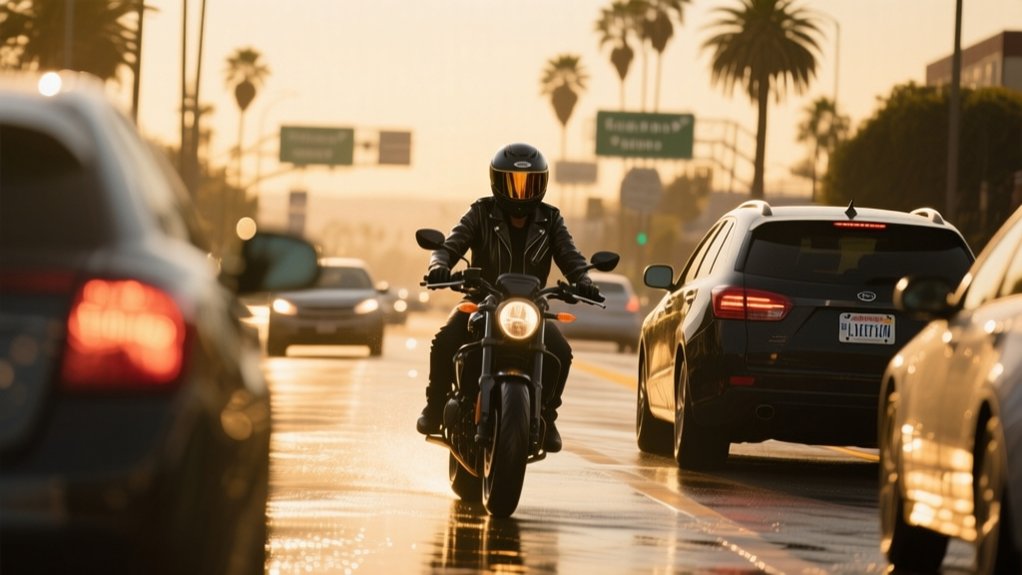
Yes—if you ride a motorcycle in California, you may lane split between rows of stopped or moving vehicles traveling in the same direction, as long as you do it safely and prudently. The law doesn’t set a specific speed limit, but CHP guidance says to keep a modest speed difference and avoid the shoulder.
Fault can still shift under comparative negligence, and a crash won’t automatically block recovery. Keep reading for the practical rules that matter most.
What California’s Lane Splitting Law Means
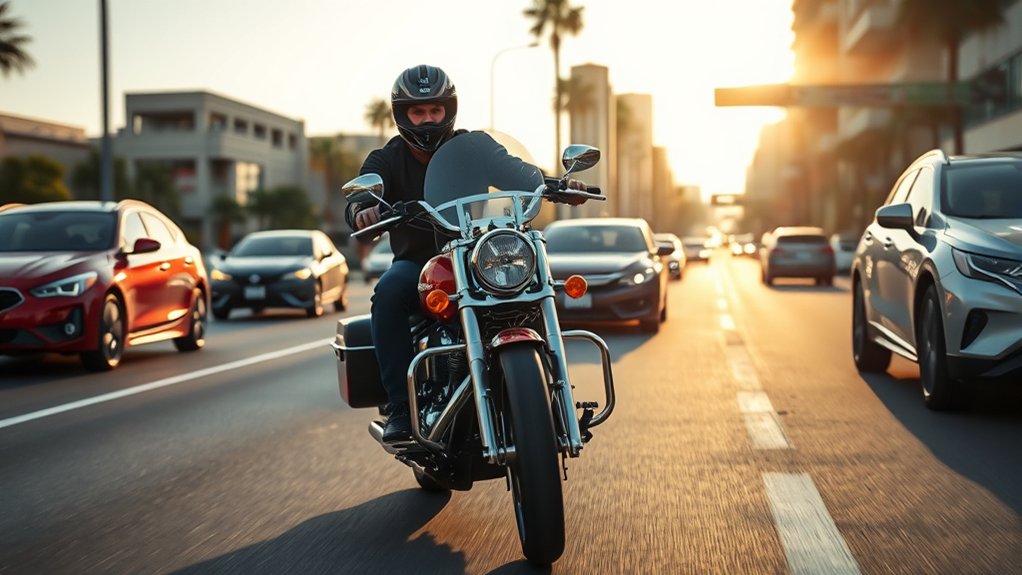
California’s lane splitting law means you may lawfully ride a motorcycle between rows of stopped or moving vehicles traveling in the same direction, because Vehicle Code § 21658.1 expressly permits it.
California law permits motorcycle lane splitting between vehicles traveling in the same direction.
Under the California Vehicle Code, lane splitting is lawful when you stay within ordinary traffic flow and exercise due care in congested traffic.
The statute doesn’t impose hard numeric limits.
Instead, California Highway Patrol issues safety guidance.
That guidance advises you to keep a modest speed differential, usually near 10 mph when traffic is moving.
It also says to avoid splitting when speeds rise markedly.
This guidance informs safe practice, but it isn’t a separate crime.
For fault and insurance, California evaluates your conduct case by case.
Lane Splitting vs. Lane Filtering
Lane splitting and lane filtering aren’t the same practice, even though both involve a motorcycle moving between vehicles in the same direction.
Under California law, lane splitting covers travel between stopped or moving traffic, while lane filtering usually means advancing between stopped cars to the front at a light.
You should distinguish them because legal analysis depends on context.
- Lane splitting: moving traffic or stopped traffic
- Lane filtering: stopped vehicles only
- CHP guidelines: advise a cautious speed differential
- Liability: facts control, not labels
In California, the distinction matters in enforcement and civil claims.
Your conduct may be lawful, yet comparative negligence can still apply if you acted unreasonably.
What CHP Says About Safe Lane Splitting
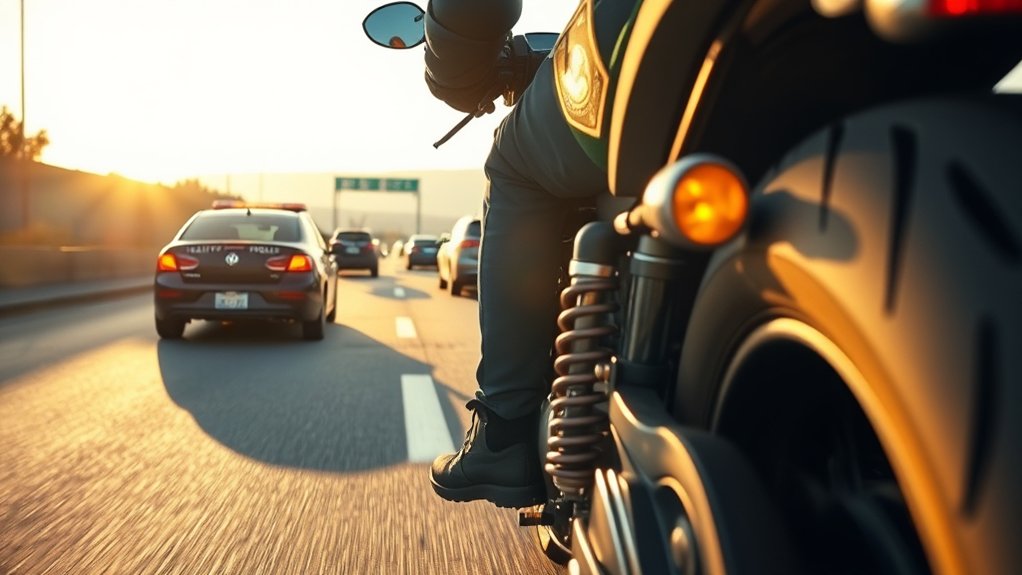
When you lane split, CHP guidance says you should keep your speed close to the flow of traffic—generally no more than about 10 mph faster than the surrounding vehicles. It also recommends avoiding lane splitting when traffic is moving above roughly 30 mph.
Where possible, CHP suggests staying between the far-left lanes to help visibility and keep things more predictable for other drivers. And while CHP guidance isn’t an enforceable rule on its own, officers, insurers, and courts may look at it when assessing what you did—especially if there’s a crash.
CHP Safe Speed Guidance
CHP guidance says you should keep your motorcycle speed close to surrounding traffic. Generally, that means staying within about 10 mph of the vehicles around you while lane splitting. Treat this CHP guidance as a practical benchmark for safe speeds and traffic flow, not as a statute, yet officers, insurers, and courts may weigh it in a fault analysis.
Keep your speed near surrounding vehicles.
Avoid lane splitting above about 30 mph.
Favor the far-left lanes when possible.
Never ride on the paved shoulder.
If you exceed the recommended speed gap, you can weaken your motorcycle safety position after a crash. For that reason, adjust your speed conservatively, maintain control, and follow CHP guidance whenever you lane split.
Lane Position And Visibility
For safer lane splitting, position your motorcycle where CHP guidance says visibility is strongest.
Preferably, aim for the space between the far-left lane and the adjacent lane on multi-lane roads. This helps reduce contact with merging traffic and limits blind-spot exposure.
Keep your lane position slightly rearward of a vehicle’s A-pillar. Avoid lingering beside trucks or SUVs, where blind spots are greatest.
Maintain a steady line. Weaving can reduce visibility and create uncertainty for other motorcycle riders and drivers.
Keep a space cushion on both sides. This helps you retain an escape path if a door opens or traffic shifts.
Scan wheel movement and turn signals continuously. Adjust immediately when a vehicle signals a lane change.
High-visibility gear and lights further improve detectability.
When Lane Splitting Gets Risky
Even though lane splitting is legal in California, it gets risky fast when your speed exceeds the CHP-recommended differentials. Generally, that means more than about 10 mph faster than surrounding traffic when traffic is moving above 30 mph. At times, 50 mph is treated as an outer limit. In lane splitting, treat the CHP-recommended speed differential as a hard safety benchmark.
Visibility hazards like Tule fog or dusk can reduce detection quickly. Riding beside trucks or buses also increases blind spots. Center lanes versus far-left lanes can create more conflict points. Excessive rider speed raises crash risk and fault exposure.
When traffic shifts suddenly, you may lose your margin. If you weave through narrowing gaps, you invite turbulence, merges, and impact. Keep your maneuvers measured, keep your brakes covered, and stay disciplined with your speed.
Where Lane Splitting Is Legal in California
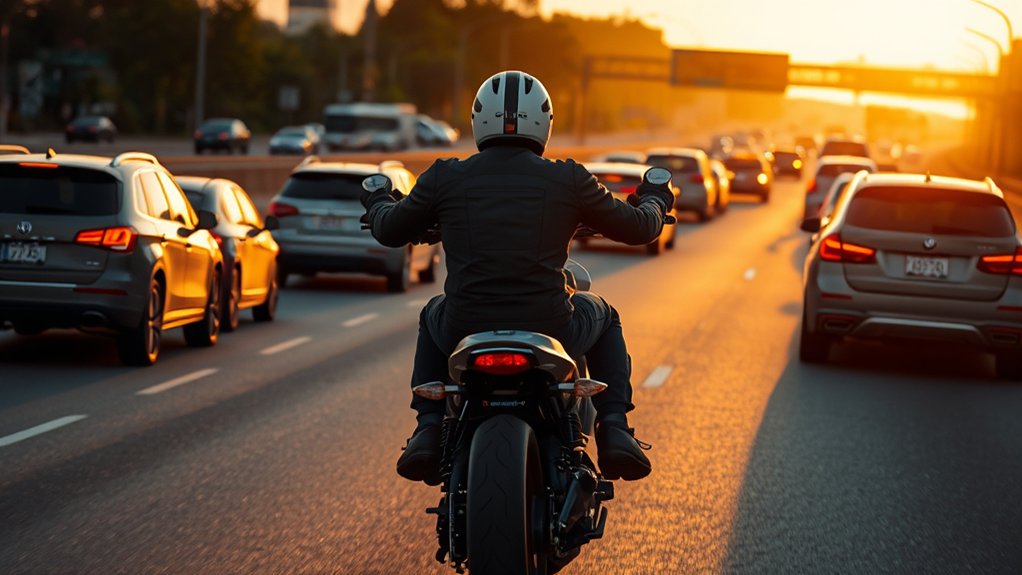
Lane splitting is legally permitted throughout California under Vehicle Code section 21658.1, whether you’re on a divided highway like State Route 99 or an undivided city street, so long as you ride safely and prudently.
Under the California Vehicle Code, you may lane split between moving or stopped vehicles traveling in the same direction. You don’t need a separate statewide endorsement beyond a valid motorcycle license.
California Highway Patrol guidance is nonbinding, yet it advises you to limit speed differentials and favor the far-left lanes when conditions allow. Motorcycle riders should also note that riding on the paved shoulder isn’t lane splitting and remains unlawful.
In every setting, legality turns on your conduct, traffic conditions, and prudent operation, not on the roadway’s classification alone.
Who’s at Fault After a Lane-Splitting Crash?
After a lane-splitting crash in California, fault isn’t automatically decided. Instead, the outcome depends on the specific facts—things like each person’s speed, where you were positioned in traffic, and what each driver did right before the crash.
California uses a pure comparative negligence system. That means if you’re found partially at fault, your recovery may be reduced based on your percentage of fault—but you’re not automatically barred from recovering anything.
And if the other driver blocked your lane, swerved into your path, or opened a door into you, that kind of conduct can shift substantial liability—or even lead to sole liability—onto the other driver.
Fault Depends On Facts
Fault in a lane-splitting crash isn’t automatic. California applies pure comparative negligence, so liability turns on the specific facts and each party’s conduct.
If you’re involved in lane splitting, courts examine whether you followed CHP guidance, kept a modest speed differential, and used a prudent lane position. Evidence will shape the fault analysis.
- Your speed and spacing matter.
- The driver’s lane change or door opening matters.
- Witnesses and video can corroborate conduct.
- Medical records help tie injuries to the crash.
If you were splitting responsibly, that can support your defense. If the driver blocked you or moved unpredictably, their liability may increase.
Insurers won’t guess. They’ll weigh the record and assign fault accordingly.
Comparative Negligence In California
California’s pure comparative negligence rule means a lane-splitting crash doesn’t automatically make you, or the other driver, fully liable.
Fault is assigned based on each party’s conduct, and your recovery is reduced by your percentage of responsibility.
In California, lane splitting isn’t a presumption of fault.
If you split reasonably and a driver makes an un-signaled lane change or doors you, you can still recover damages under comparative negligence.
Officers, insurers, and courts often rely on CHP guidance to assess reasonableness and fault allocation.
You should preserve evidence such as dashcam footage and photos, plus witness statements and proof you stayed close to traffic flow.
If you exceeded recommended speed differentials, your percentage of fault may rise.
However, coverage can’t be denied solely because you were lane splitting.
How Drivers Can Avoid Lane Splitting Crashes
To reduce the risk of a lane-splitting collision, check your mirrors and blind spots before changing lanes. A motorcyclist may be filtering between the far-left lanes, and you can cut them off if you don’t notice the shift.
In California traffic, lane splitting requires your constant attention to motorcycle riders. Signal early before any lane change, and keep your lane position smooth, not abrupt.
Leave extra space when traffic slows or stops. Don’t block or impede a splitting rider.
You should especially watch Highway 99, Highway 58 interchanges, and harvest or Tule fog conditions. Visibility drops there, and truck traffic rises, so move with extra caution.
If you move without care, you may cause a preventable crash and face a legal violation.
Frequently Asked Questions
Does Lane Splitting Affect Motorcycle Insurance Claims in California?
Yes, lane splitting can affect your motorcycle insurance claim in California. You generally won’t lose coverage just because you were lane splitting, but your insurer may assign you partial fault if you split lanes unreasonably.
That can reduce your payout under comparative negligence. Preserve dashcam footage, photos, and witness statements, because insurers use this evidence to assess speed, positioning, and whether your conduct followed CHP safety guidance.
Can Passengers Ride Safely During Lane Splitting?
Yes, you can, but only with extreme caution. You should keep your passenger secured, helmeted, and braced, because lane splitting compresses risk like a vice.
Maintain a small speed differential, ideally around 10 mph or less. Avoid large trucks or blind spots.
You’ll also need training, clear hand signals, and agreed emergency procedures. Then both you and your passenger can respond safely in traffic.
Are Motorcycle Helmets Required While Lane Splitting?
No, lane splitting doesn’t create a separate helmet rule. But you still have to follow California’s helmet laws.
If you’re under 18, you must wear a helmet. If you’re 18 or older, you generally must wear one unless a statutory exemption applies.
Even when you aren’t strictly required to wear one, you should still use a DOT-compliant helmet. Not wearing a helmet can affect injury claims, comparative fault, and damages after a crash while lane splitting.
Does Lane Splitting Change Traffic Ticket Penalties?
Yes, it can. If you lane split unsafely, officers can still cite you under existing traffic laws. Penalties depend on the underlying offense, not the act of splitting itself.
That means you may face the same fines, points, and insurance consequences as you’d for speeding, unsafe lane changes, or reckless riding. If you follow CHP guidance and ride reasonably, you’re less likely to worsen a ticket or a liability finding.
Can Lane Splitting Be Used on Highways During Rush Hour?
Yes, you can lane split on highways during rush hour in California, as long as you do it safely and prudently.
California Vehicle Code §21658.1 allows it, and CHP expects you to keep your speed close to traffic flow, usually within about 10 mph.
Avoid unsafe conditions, and use the far-left lanes when possible.
Also, keep in mind that officers may assess fault based on your speed, visibility, and lane choice.
Conclusion
So, is motorcycle lane splitting legal in California? Yes—only when you do it with care, judgment, and strict attention to the surrounding traffic. If you misjudge speed, space, or timing, the line between lawful riding and dangerous conduct can vanish in an instant.
You now know the rules, the risks, and the fault issues that can follow a crash. Stay alert, stay visible, and don’t assume every gap is safe.