
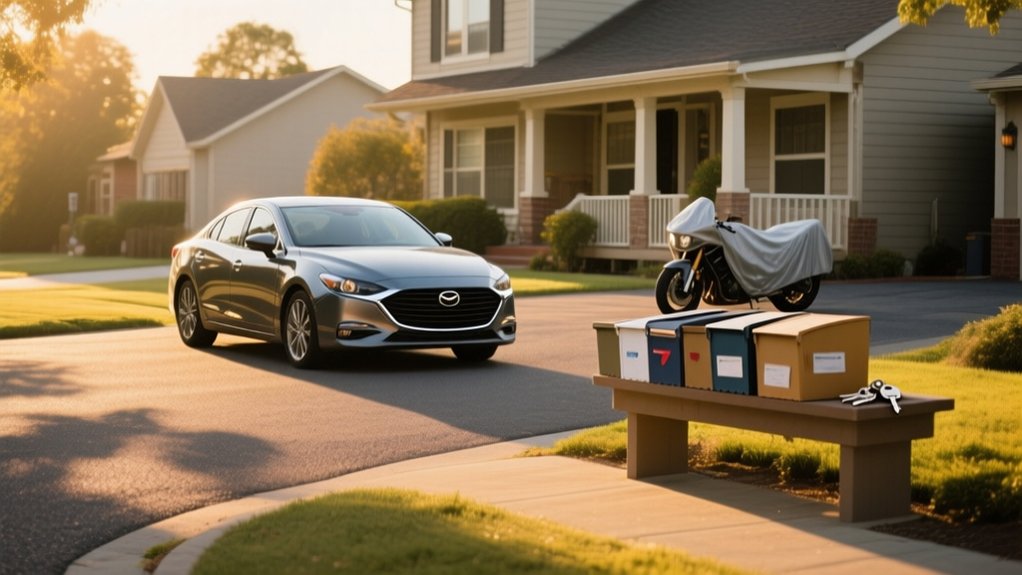
What Insurance Companies Bundle Home Auto And Motorcycle Insurance
You can bundle home, auto, and motorcycle insurance with carriers like State Farm, Progressive, Allstate, Farmers, and Geico.
USAA, Mercury, and local agents may also be worth checking if you’re eligible.
Bundles usually link separate policies under one account.
They can cut costs by about 5% to 25%, depending on your ZIP code, driving record, and bike coverage.
You should compare at least three itemized quotes.
That way, you can see which insurer offers the best total value.
Which Companies Bundle Home, Auto, and Motorcycle Insurance?

When you shop for a home, auto, and motorcycle bundle, the biggest national names to check are State Farm, Allstate, Progressive, Farmers, Liberty Mutual, and Nationwide. Each generally offers multi-policy discounts when you combine homeowners or renters/condo coverage with auto and motorcycle insurance.
When bundling home, auto, and motorcycle insurance, start with major carriers like State Farm, Allstate, Progressive, Farmers, Liberty Mutual, and Nationwide.
For a home auto motorcycle bundle, compare the State Farm bundle and Mercury bundle against your ZIP-code pricing. Availability and savings vary by state and policy form.
If you qualify, the USAA motorcycle bundle can deliver strong value. It’s especially worthwhile alongside homeowners and auto coverage.
You can also explore bundling home and auto with a Lemonade renters auto bundle. Motorcycle options are limited, though.
Always verify insurer underwriting rules before you buy. Also confirm whether the motorcycle policy is in-house, since that can affect claims handling and discount eligibility.
How Home, Auto, and Motorcycle Bundles Work
Home, auto, and motorcycle bundles usually keep separate policies for each line of coverage. They link them under one account so the insurer can apply a multi-policy discount, often in the 5% to 25% range depending on the carrier and state.
You’ll still have distinct home, auto, and motorcycle coverage forms. However, the insurance company prices them together as one combined premium.
During quoting, they review driving records, motorcycle use, home replacement cost, prior claims, and your ZIP code. That means the bundle can shift rates more than a single-policy quote.
Bundling also gives you one agent, one billing cycle, and one renewal date. Claims handling can be simpler if one event affects both your home and your vehicles.
Not every carrier offers motorcycle bundling everywhere. So you should verify eligibility first.
Why Bundle Home, Auto, and Motorcycle Coverage?
You can often lower your total premium by bundling your home, auto, and motorcycle coverage. Many insurers offer multi-policy discounts—commonly around 4% to 20% or more—depending on the carrier and your state.
You’ll also get a smoother experience by keeping everything with one insurer. Billing is more streamlined, and after a single loss, it can be easier to coordinate claims between your home and vehicles.
Plus, if you have multiple vehicles and a motorcycle, bundling can make liability management (and umbrella coverage, if you have it) simpler—and in many cases, more affordable.
Cost Savings
Bundling home, auto, and motorcycle coverage with one insurer can cut total premiums by roughly 5% to 20%, depending on the carrier, state, and your risk profile. When you bundle home, auto, and motorcycle policies, you typically unlock a multi-policy discount that creates measurable insurance savings.
With policy bundling, you may also streamline billing and reduce administrative costs. That can help trim your net out-of-pocket expense.
Use insurer comparisons to test discount percentages across State Farm, Allstate, Farmers, Progressive, and USAA. Each motorcycle bundle prices risk differently.
Your savings can vary based on homeowners, condo, or renters coverage, along with ZIP code, home value, driving record, and vehicle type. Compare at least three quotes before you commit, since a bigger bundle discount doesn’t always beat separate-policy pricing.
Streamlined Coverage
Beyond the premium savings, bundling home, auto, and motorcycle coverage can simplify your insurance setup. You work with one single carrier, one bill, and one renewal timeline.
That streamlines claims handling when multiple assets are involved. It also helps you align deductibles and liability limits across policies.
With home, auto, motorcycle bundling, you can reduce coverage gaps that pop up when different insurers handle your policies. Many carriers also extend a multi-policy discount.
Still, insurer availability matters because not every company writes motorcycle coverage. Before you commit, check for a custom parts endorsement and agreed value protection on your bike.
Also ask whether an umbrella policy can sit on top of all three policies. That coordination can give you cleaner coverage and faster adjustments.
What Discounts Come With Multi-Policy Bundles?
Multi-policy bundles usually trim premiums by roughly 4% to 30%.
Exact savings depend on the insurer, your ZIP code, underwriting profile, and coverages you choose.
You can also see bundle discounts vary across home-auto, motorcycle packages, and other combinations.
| Carrier example | Reported savings | Note |
|---|---|---|
| Mercury | 17% HO-3 + auto | ZIP code variation applies |
| Farmers | ~20% average | Home and auto switchers |
| State Farm | $1,073 annual | New bundled customers |
You may also qualify for multi-policy savings like an umbrella discount.
That can add another percentage off your premium.
Beyond price, consolidated billing and streamlined claims can reduce admin time.
Confirm your quote, since advertised carrier examples rarely match every policyholder exactly.
Which Policy Types Can You Combine?

Which policies can you combine? You can usually pair auto + home, auto + motorcycle, or auto with homeowners (HO-3), condo (HO-6), or renters (HO-4) coverage. Many insurers let you bundle motorcycle with home or renters/condo and auto to earn a multi-policy discount.
National carriers such as State Farm, Progressive, Allstate, Geico through partners, Farmers, Nationwide, and USAA often support these bundled policies. Your home, auto, and motorcycle coverage still use separate policy forms, so each contract keeps its own limits and deductibles.
The insurer links the accounts to apply pricing credits. This can also improve streamlined claims handling and billing coordination. Discount values vary by insurer and line, so your exact savings depend on the policy mix you choose and how the carrier rates each risk.
How to Compare Bundle Quotes and Coverage
When you compare bundle quotes, ask for firm premiums for auto, home, and motorcycle coverage, plus the exact multi-policy discount. That way, you can see both the itemized savings and the total savings side by side.
Next, double-check that liability, uninsured/underinsured motorist, and dwelling or contents limits match across all three policies—and that deductibles are the same too. You want to make sure you’re not accidentally weakening your protection.
Finally, don’t just look at price. Compare motorcycle-specific features, claims ratings, and any approved repair networks, because those details can make a big difference in the real value of the bundle.
Compare Bundle Savings
To compare bundle savings accurately, ask each insurer for itemized premiums for the home, auto, and motorcycle policies. This helps you see base rates, each discount, and any motorcycle-specific credits. Don’t rely on a single combined price.
Build your home and auto insurance bundle analysis with these checks:
- Compare itemized premiums by line, and estimate bundling discounts by ZIP code.
- Measure multi-policy savings against coverage limits and deductibles, not just price.
- Review claims handling and service, plus insurer ratings from sources like J.D. Power or AM Best.
Then compare quotes from national bundle-friendly carriers and a local agent.
Look for safe-rider, anti-theft, and other auto and motorcycle bundle credits. Validate any advertised percentage before you trust it.
A quote with lower premiums won’t win if service, repairs, or liability support are weaker.
Match Coverage Limits
Before you compare price, make sure each bundle quote matches on coverage limits. You’re comparing the same protection, not just the same premium.
To bundle home, auto, and motorcycle effectively, match coverage limits across every policy. Start by equalizing liability limits, including umbrella levels, where available.
If your auto uses 100/300/100, keep home, condo, or renters liability consistent. Ideally, align at least $300,000 if you can.
Next, verify UM/UIM limits are identical on auto and bike. Also align medical payments and PIP limits to the same levels.
Then check extensive collision deductibles for each vehicle. Confirm whether claims trigger a single deductible or separate deductibles.
For motorcycles, compare agreed value vs. actual cash value rules. These choices change payout math.
Finally, confirm specialty motorcycle coverages are offered at equivalent limits. This helps ensure the bundle performs the same way in a claim.
Check Policy Features
Once the limits line up, compare how each insurer structures the bundle. Verify explicit multi-policy discounts for auto, home, and motorcycle coverage, including stated percentages. Some carriers publish them, while others don’t.
Check these points:
- policy linkage: separate policies vs. one combined contract
- agreed value vs ACV, roadside assistance, and liability limits
- deductible alignment, including single-loss options and affordability
Ask how claims coordination works when one event hits your car, home, and bike. Processing rules can affect payout speed, so this matters.
Then review insurer financial strength, customer service ratings, and state availability. A strong carrier in one state may not offer the same bundle elsewhere. Compare these features side by side, and don’t assume the cheapest quote delivers the best protection or the cleanest claims experience.
How to Choose the Best Bundle for You
When you compare home, auto, and motorcycle bundles, start with insurers that explicitly offer all three policies. Examples include State Farm, Progressive, Allstate, Geico, Farmers, and USAA.
Choosing a single-provider bundle can make it easier to manage and usually unlocks a multi-policy discount. It can also simplify the claims process.
A single-provider bundle can simplify management, unlock discounts, and make claims easier.
To bundle home auto motorcycle effectively, compare insurers that offer motorcycle coverage in your state. Ask for a combined premium quote so you can see the real savings.
Next, check coverage compatibility between policies. Look at liability limits, comprehensive and collision coverage, and agreed value versus actual cash value.
Make sure homeowners liability aligns with your exposure. If your total risk is higher than standard limits, consider adding umbrella liability.
Then compare claims service ratings and local agent availability. Also confirm whether you can file claims 24/7.
Finally, verify discounts like anti-theft and training, and ask how much they add on top of the multi-policy discount. This helps you choose the lowest-risk, lowest-cost option.
Frequently Asked Questions
Does Bundling Affect My Claims Process?
Yes, bundling can streamline your claims process, but it won’t change the underlying coverage rules.
You’ll usually work with one insurer, one account, and often one claim number. That can reduce coordination time.
If one event hits your home and motorcycle, you may get a faster adjuster and repair scheduling.
You’ll still typically have separate deductibles. Multiple claims can also affect your future rates with that carrier.
Can I Bundle if My Motorcycle Is Seasonal?
Yes, you can usually bundle if your motorcycle’s seasonal.
Many major insurers offer multi-policy discounts, and they may include a laid-up bike if you keep the right coverage options active.
You’ll want to tell your insurer before you suspend regular riding coverage.
Some carriers require continuous coverage to keep the discount.
Check your state rules, then ask your agent how storage status affects pricing and eligibility.
Will Bundling Lower My Deductible Amounts?
No, bundling usually won’t lower your deductible amounts. You’ll typically get a multi-policy discount, but your home, auto, and motorcycle deductibles stay separate. That’s unless your insurer offers a rare deductible-alignment option or endorsement.
If you choose lower deductibles, you’ll usually pay higher premiums. You can also ask about umbrella coverage, which increases liability protection, but it doesn’t reduce underlying deductibles.
Always verify policy terms with your agent before you bind coverage.
Are Bundle Discounts Available in Every State?
No, you won’t find bundle discounts in every state. You’ll see them where insurers file and regulators approve them.
You’ll miss them where state rules limit multi-policy pricing.
You can compare State Farm, Allstate, Progressive, Farmers, and Geico, but verify local availability.
You’ll also need to check whether motorcycle coverage qualifies, since eligibility and discount percentages vary by state and policy mix.
Can I Switch One Policy Without Losing the Bundle?
Yes, you can often switch one policy, but you may lose some or all of the bundle discount if you drop below the carrier’s qualifying policy count.
You should ask whether the discount depends on specific combinations, like home plus auto plus motorcycle.
Get written before-and-after quotes, and compare net premiums.
Also, align effective dates to avoid gaps, refund issues, or cancellation fees.
Keeping two qualifying policies can help preserve a reduced discount.
Conclusion
When you bundle home, auto, and motorcycle insurance, you can simplify your coverage. You may also lower your total premium.
Compare discounts, deductibles, and limits across carriers. A cheaper bundle isn’t always the best value.
Check whether one company truly works for all three policies. Or would splitting coverage save you more?
In the end, the smartest bundle balances price, protection, and convenience. That way, you get three goals from one decision.