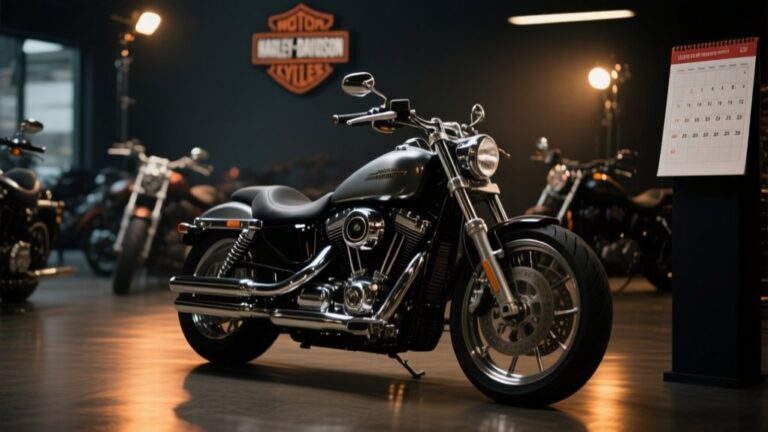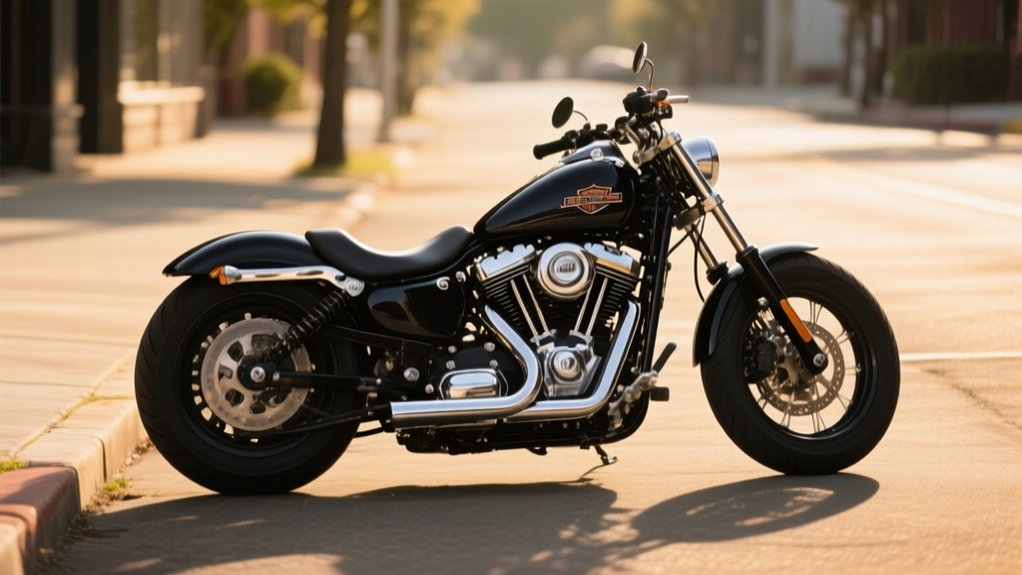
What Is A Harley Softail – The Full Story
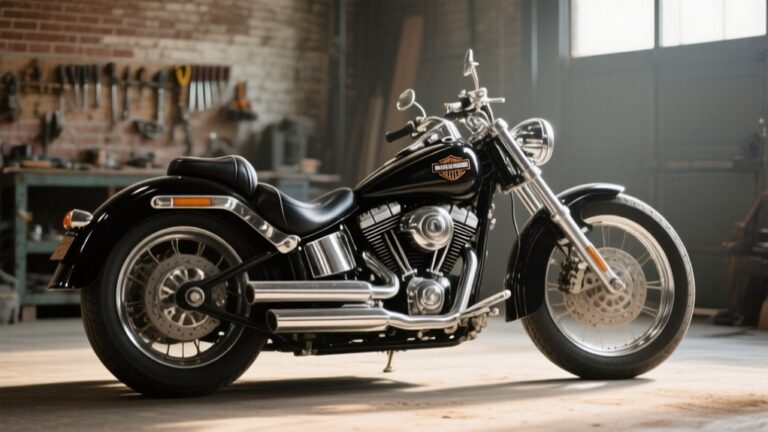
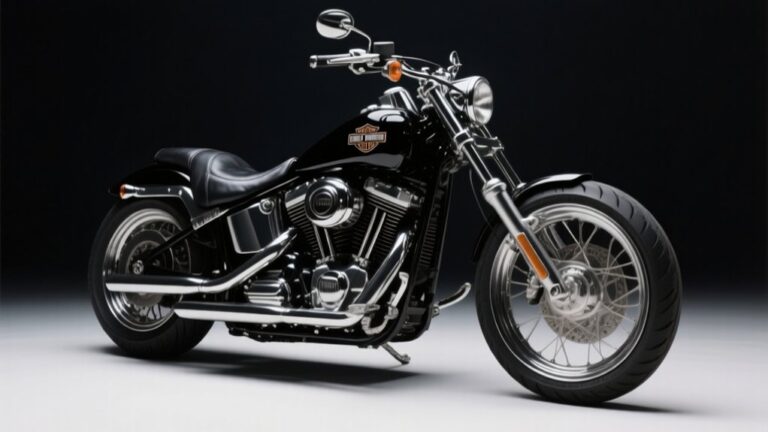
You’ll find the Harley Softail uniquely blends classic chopper style with modern engineering. It features a hidden rear suspension that mimics a rigid frame’s vintage look. The 2018 redesign introduced a monoshock setup, boosting stiffness, handling, and comfort.
With various front forks—from springer to telescopic—you can tailor ride feel and aesthetics. Powered by smooth Milwaukee-Eight engines, it offers solid performance and customization options.
As you explore further, you’ll discover how its evolution shapes the rider experience today.
What Makes a Harley Softail Unique

What sets a Harley Softail apart from other motorcycles? It’s the clever frame design that gives you the classic rigid hardtail look while hiding modern rear suspension for comfort. You’ll find hidden twin shock absorbers or a rear shock absorber tucked under the seat, achieving suspension concealment without disrupting the vintage aesthetics.
This pseudo-rigid frame blends old-school style with contemporary technology, letting you enjoy smooth rides without sacrificing that iconic chopper silhouette. If you’re into custom builds, the Softail’s unique frame is a favorite platform because it maintains that traditional hardtail appearance but delivers modern ride quality.
You get the best of both worlds, style and functionality, thanks to Harley’s innovative approach to rear suspension and frame design. It’s pretty cool how they’ve managed to keep that vintage vibe while making the ride so much more comfortable.
Why the 2018 Softail Redesign Was a Game-Changer
Although Harley-Davidson had maintained the Softail’s classic frame design for over twenty years, the 2018 redesign completely transformed the platform by introducing a new monoshock setup beneath the seat. This major frame update replaced the traditional twin-shock design with a single rear shock and a rigid swingarm.
In 2018, Harley-Davidson revolutionized the Softail with a sleek monoshock frame, replacing the classic twin shocks.
This change markedly increased chassis stiffness and improved handling.
The updated chassis is lighter and more rigid, which enhances ride quality and stability. Thanks to this 2018 redesign, you’ll notice sharper control and better damping performance on every ride.
Harley-Davidson also integrated Milwaukee-Eight engines into the new Softail frame, modernizing the lineup and boosting overall performance.
This game-changing redesign set a new standard for the Softail, blending classic style with contemporary engineering for a superior riding experience.
How the Softail Frame and Front Forks Shape Your Ride
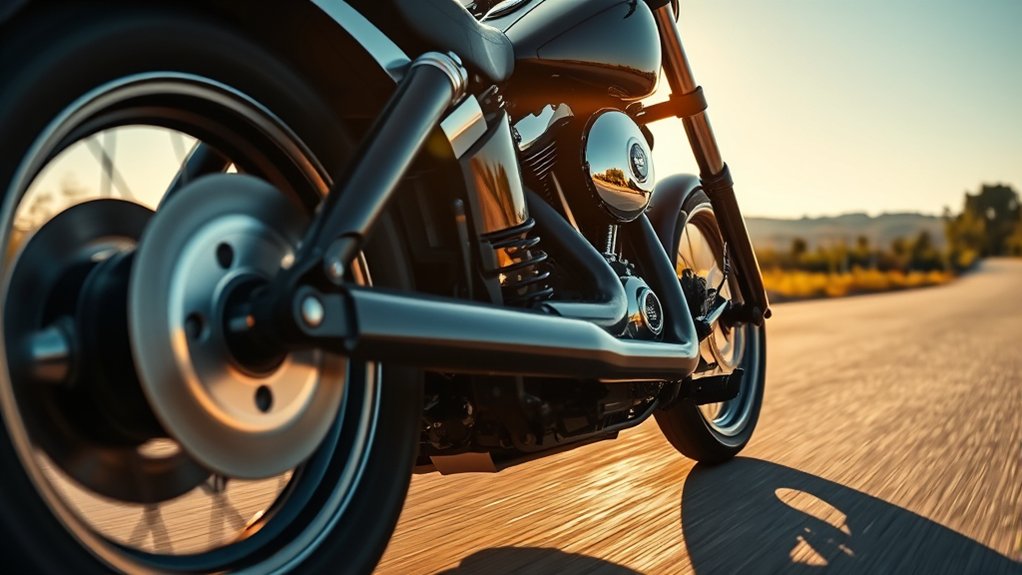
You’ll notice the Softail frame cleverly hides its rear suspension, keeping that classic hardtail look but with modern comfort.
When it comes to front forks, choosing between styles like springer, leading link, or telescopic really changes how your bike handles and feels on the road.
Getting to know these design choices helps you see how they shape not just the ride quality, but also the iconic style of your Softail.
Softail Frame Evolution
Since its inception in the 1970s, the Harley Softail frame has transformed how riders experience comfort without sacrificing classic style. Designed by Bill Davis, the original Softail frame cleverly used a cantilever swingarm with rear suspension hidden beneath the seat, mimicking a rigid hardtail’s look.
This Softail evolution continued, culminating in the 2018 redesigned frame featuring a monoshock that enhances chassis rigidity and handling. Alongside updated springer forks, these changes refined ride quality while preserving Harley’s iconic aesthetic.
| Feature | Impact |
|---|---|
| Cantilever Swingarm | Creates hardtail illusion |
| Monoshock Rear Suspension | Improves stiffness & comfort |
| Redesigned Frame | Increases chassis rigidity |
This evolution lets you enjoy classic style with modern performance.
Front Fork Variants
How does the front fork design affect your Softail’s ride and style? Harley-Davidson offers several front fork variants, from vintage front forks like the classic Springer forks to modern front forks featuring lightweight telescopic designs.
If you opt for a Softail with Springer forks and a 21-inch front wheel size, you get that iconic, traditional chopper look paired with a softer ride comfort thanks to its front suspension setup.
On the other hand, telescopic forks provide improved stability and damping, enhancing your ride without sacrificing style. These front fork variants reflect Harley-Davidson’s commitment to blending nostalgia with modern technology, letting you choose how your Softail feels and looks on the road.
Your choice in front fork design directly shapes both ride comfort and the bike’s distinctive presence. So, it’s really about what kind of ride and look you want to roll with.
Impact On Handling
Although the Softail’s classic appearance might suggest otherwise, its frame and front fork design play an essential role in delivering a precise and stable ride. The 2018 redesign’s monoshock suspension, mounted under the seat, dramatically boosts chassis stiffness and handling stability, giving you confident control.
The swingarm and front forks work together to optimize weight distribution and steering geometry, enhancing responsiveness and agility. If you ride a Springer fork model, you’ll notice sharper steering feedback.
Older twin-shock Softails tend to transmit more vibration, which reduces ride comfort and handling precision.
Thanks to Milwaukee-Eight engines with counterbalancers, newer Softails minimize engine vibration, further improving suspension performance. Overall, these elements combine to give you a balanced ride with excellent handling and refined comfort.
Popular Harley Softail Models and Their Differences
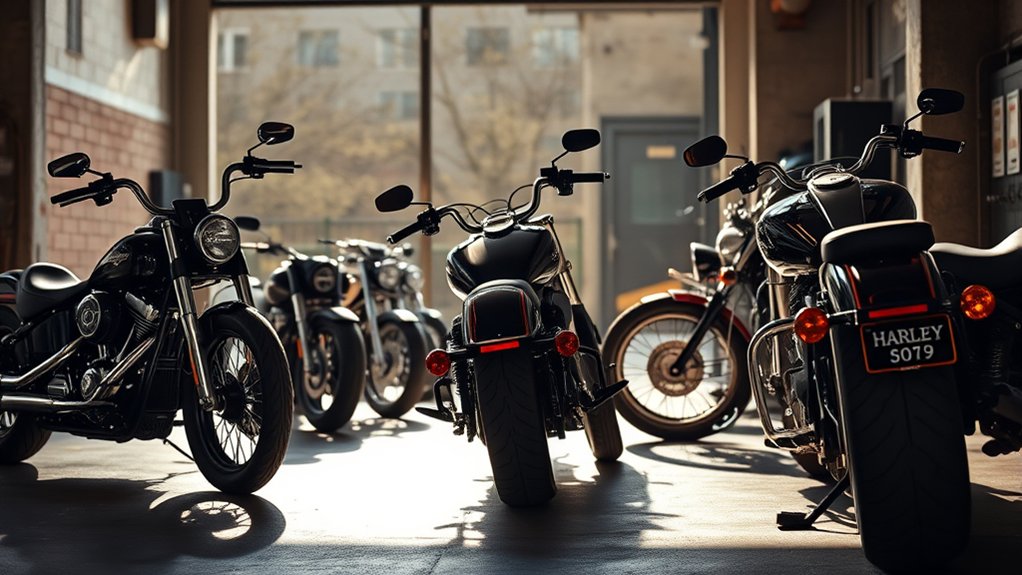
You’ll find the Harley Softail lineup offers distinct models like the Heritage, Fat Boy, Deuce, and Cross Bones, each with unique design elements and features.
From the Heritage’s classic 1950s vibe to the Cross Bones’ minimalist bobber style, these bikes cater to different tastes and riding experiences.
When you look closer, you’ll notice how their styling, front forks, and performance options really set them apart.
Understanding these key differences will make it easier to pick the right Softail that fits your ride perfectly.
Softail Model Variants
What sets each Harley Softail model apart lies in its unique blend of styling and mechanical features. When you explore Softail models, you’ll notice distinct differences in suspension configurations, front forks, and design cues.
For instance, the Heritage Softail offers classic cruiser styling, while the Springer Softail stands out with its traditional springer forks.
The Fat Boy impresses with solid wheels and a bold headlight housing, emphasizing a timeless look. Meanwhile, the Deuce features a sleek, low-profile design that merges modern and vintage elements seamlessly.
Softail Slim and Softail Deluxe bring contrasting styling, from minimalist to luxurious.
Low Rider and Cross Bones vary in suspension and wheel sizes. Each model caters to different riding preferences.
Customization options abound across the lineup. So, whether you want a bike that’s classic, bold, or somewhere in between, there’s a Softail built just for you.
Key Design Differences
Each Harley Softail model brings its own distinct design elements that go beyond just styling, impacting ride feel and performance. You’ll notice the Softail frame cleverly conceals the rear suspension with a hidden shock, maintaining the rigid look of a traditional hardtail while providing modern comfort.
Early Softails used a cantilever swingarm design with outboard shocks. But post-2018 models improved this with a centrally mounted monoshock under the seat. This change boosts chassis stiffness and trims weight, making for a smoother, more responsive ride.
Different front fork styles, like springer forks on the Heritage Softail or telescopic forks on the Fat Boy, create unique handling characteristics. These variations in rear suspension, swingarm design, and front forks really define each model’s personality.
It’s a blend of classic aesthetics with evolved engineering designed to suit your riding preferences.
Which Engines Bring the Softail to Life
While the Harley Softail has maintained its classic look over the decades, the engines powering these bikes have evolved considerably to enhance performance and ride quality. You’ll find that the engine evolution highlights Harley-Davidson’s commitment to blending tradition with modern powertrain advancements.
The lineup started with the reliable Evolution V-twin engines, known for their lightweight aluminum heads and barrels. Then came the Twin Cam engines in the late 1990s, which introduced internal counterbalancers to reduce vibration and improve comfort.
Today, the Milwaukee-Eight engines power Softails, delivering higher horsepower and torque through a dual-counterbalanced V-twin design.
Key engine milestones include:
- Evolution engines: lightweight and reliable V-twin design
- Twin Cam engines: internal counterbalancers for smoother rides
- Milwaukee-Eight engines: enhanced power and torque
- Continuous focus on reliability and ride quality
Each step in this evolution shows how Harley-Davidson keeps pushing the envelope without losing that iconic feel riders love. It’s pretty cool to see tradition and innovation ride side by side.
How to Customize Your Harley Softail
The power and performance of the Milwaukee-Eight engine give you a strong foundation, but the true appeal of a Harley Softail lies in how you make it your own. Softail customization thrives on the versatility of the Softail platform, allowing you to tailor everything from suspension upgrades to wheel and fender mods.
You can choose from a vast selection of aftermarket parts or factory accessories showcased in Harley’s Inspiration Gallery. Whether you’re enhancing the tank and exhaust or building a unique custom build based on CVO or limited edition models, personalization is key.
The 2018 Softail redesign provides a modern frame that supports advanced modifications, making it easier than ever to achieve your desired look. Be it a bobber, chopper, or bagger that truly reflects your style.
Future Trends and the Softail’s Ongoing Evolution
As Harley-Davidson keeps pushing the boundaries of engineering, you can expect the Softail line to evolve with cutting-edge technology and refined performance. The Softail evolution embraces future trends by integrating advanced technology such as ride-by-wire and modern suspension systems.
You’ll notice a focus on lightweight construction and performance improvements that align with industry standards and rider preferences.
Plus, Harley-Davidson will expand customization options and limited-edition releases to keep enthusiasts engaged. Key aspects shaping the Softail’s future include enhanced safety features and smarter electronics.
Agile frames with lightweight materials will also play a big role.
Broader customization options tailored to riders are on the way, along with exclusive limited-edition models appealing to collectors. This ongoing evolution guarantees the Softail remains a perfect blend of classic style and modern innovation.
Frequently asked questions
How Do Harley Softails Compare in Price to Other Harley Models?
Harley Softails generally cost more than Sportster models but less than high-end Dyna and Touring bikes. You’ll find Softails priced between $15,000 and $25,000, offering a sweet spot of classic style and modern tech.
If you want exclusivity, CVO Softails can push over $30,000.
What Are Common Maintenance Issues for Harley Softails?
You’ll want to keep an eye on your Harley Softail’s rear suspension since shock absorbers and pivot points wear out over time. Vibration issues pop up, especially with rubber-mounted engines, so check engine mounts regularly.
Electrical glitches, like faulty wiring or sensors, can affect lighting and electronics, mainly in older models.
Don’t forget to maintain brake pads, rotors, and fluid.
Also, watch for leaks or adjustments needed in the primary drive and clutch systems.
Can Beginners Comfortably Ride a Harley Softail?
Yes, you can comfortably ride a Harley Softail as a beginner. Its lower seat height and wide handlebars give you better control and confidence.
The lightweight engine options, like the 107 or 114 cubic inch models, make handling easier.
Plus, the improved suspension ensures a smooth ride. These features combine to create a bike that’s beginner-friendly.
It lets you focus on learning and enjoying the road without feeling overwhelmed.
How Does Insurance Typically Cost for a Harley Softail?
Think of insuring a Harley Softail like protecting a prized vintage car. It costs more because of its value and uniqueness.
Insurance typically runs between $300 and $1,200 annually, depending on your age, riding history, and where you live.
Bigger engines and custom mods boost premiums since they raise repair costs.
Are Harley Softails Suitable for Long-Distance Touring?
Yes, Harley Softails are definitely suitable for long-distance touring. You’ll appreciate their comfortable seating and wind protection, especially on models like the Heritage Classic.
With the 2018 chassis upgrade, they handle better and feel more stable on highways.
Plus, you can easily add touring accessories like larger windshields and saddlebags to enhance comfort and storage.
Their powerful Milwaukee-Eight engines ensure smooth, reliable cruising for your extended rides.
Final Thought
Now that you know what makes a Harley Softail stand out, from its game-changing 2018 redesign to the powerful engines under the hood, you’re ready to appreciate its blend of classic vibes and modern tech.
Whether you’re customizing your ride or eyeing future trends, the Softail’s unique frame and smooth forks deliver that timeless cruiser feel. It’s like riding a chariot through the digital age.
Get ready to own the road with style and soul.