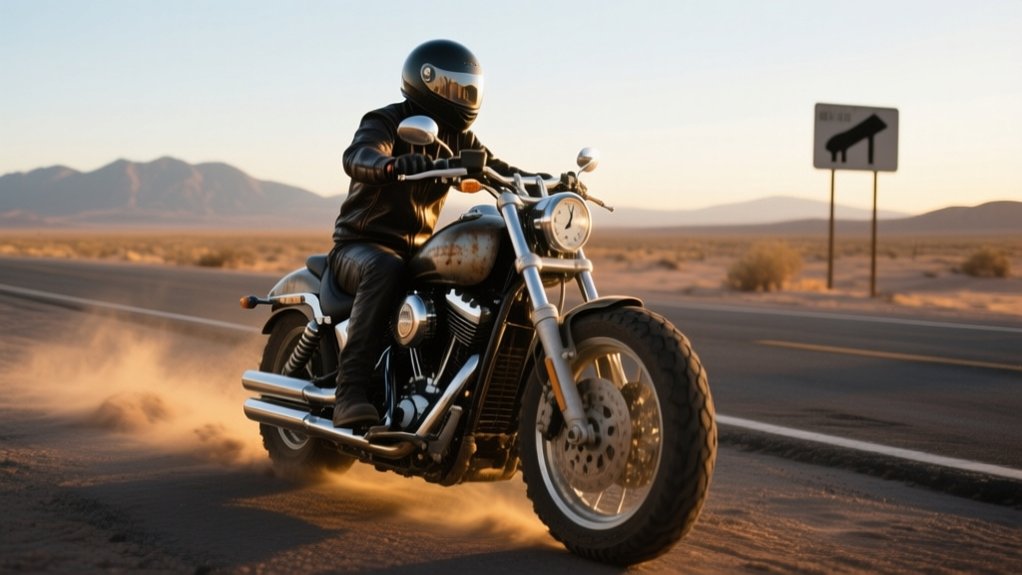
What Is The Hoka Hey Motorcycle Challenge – What to Know
The Hoka Hey Motorcycle Challenge is a grueling, no-GPS endurance ride. It was founded in 2010 by Medicine Show Land Trust.
You ride solo along a changing, prescribed route. The ride can stretch 10,000 to 11,000 miles.
You use written directions, maps, and a compass only. No hotels, chase crew, or shortcuts are allowed.
Checkpoints verify your progress throughout the journey. It tests your discipline, resilience, and self-reliance.
There’s plenty more to uncover about what it demands.
What Is the Hoka Hey Motorcycle Challenge?
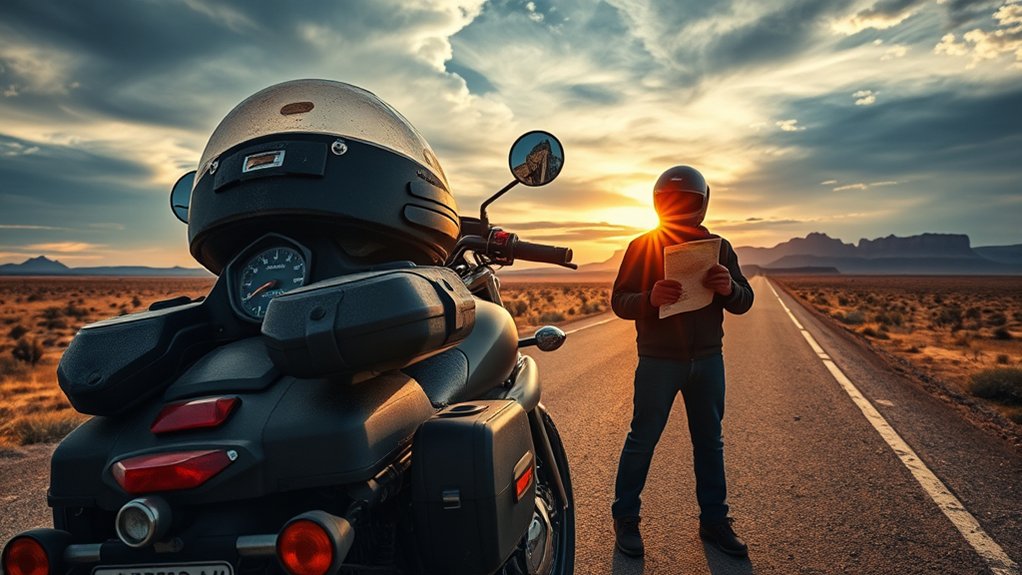
The Hoka Hey Motorcycle Challenge is a grueling endurance ride.
It was founded in 2010 by Medicine Show Land Trust, and it pushes you through roughly 11,000 miles over two to three weeks.
There are no hotels and no GPS.
You ride solo and use traditional navigation to guide the way.
You manage every mile yourself.
Along the route, you confront extreme terrain, which can include mountains, forests, deserts, and swamps.
This long-distance event can feel like a vision quest.
It tests your discipline, resilience, and judgment under pressure.
Each year’s theme shapes the challenge’s purpose.
It emphasizes honor, integrity, compassion, and personal growth.
You can also follow riders through a public tracking link.
The Hoka Hey Motorcycle Challenge raises charitable funds while building a community around endurance and respect.
How Does the Hoka Hey Challenge Work?
To take on the Hoka Hey Challenge, you ride a prescribed long-distance route without GPS or other electronic navigation. You follow the provided directions and rely on your own skills to stay on course.
You manage every mile yourself, and the Hoka Challenge tests your endurance as much as your navigation. Expect to spend 2–3 weeks on the road, living on your motorcycle and sleeping beside the bike whenever and wherever you need to.
You won’t book hotels or lean on a chase crew. Instead, you’ll push through rough terrain, weather, and fatigue while staying solo for long stretches.
Organizers use public tracking links so supporters can monitor your progress and status in real time. The format rewards self-reliance, discipline, and the core values of Respect, Honor, Integrity, and Compassion.
What Is the Hoka Hey Route and Distance?

Typically spanning about 10,000 to 11,000 miles, the Hoka Hey route is a punishing long-distance loop.
It can keep riders on the road for two to three weeks with no hotels.
There are also no room for shortcuts.
You’ll follow a prescribed path that changes yearly.
That route mixes mountain ranges, deserts, forests, reservations, and parks.
In some years, the route has pushed far beyond 10,000 miles.
That includes early editions that crossed Alaska or much of the lower 48.
You navigate old school, with no GPS, and you must obey directions exactly.
Along the way, checkpoints verify progress and keep you on course.
The result is a relentless test of endurance, accuracy, and self-reliance.
It plays out across a constantly changing American landscape.
What Do Riders Need to Prepare?
Before you line up for the Hoka Hey, you need to prepare for life on the bike for 2 to 3 weeks and roughly 11,000 miles without hotels or easy outs. Your motorcycle setup should support long-range endurance, because you’ll ride through mountains, deserts, forests, rain, and cold nights.
Navigation: Practice map-reading, compass work, and written route instructions. GPS isn’t allowed.
Gear and spares: Pack weatherproof gear, layers, tools, tubes, and parts you can fix on the road.
Conditioning: Train your body and mind for long hours, sleep management, remote sections, and solo decision-making.
You’ll also need to prepare for the challenge’s community expectations. That means respect, integrity, compassion, and fundraising commitments.
Why Do Riders Take on Hoka Hey?

Riders take on the Hoka Hey Motorcycle Challenge for more than the mileage, weather, or the lack of easy exits.
More than miles or weather, the Hoka Hey tests resolve where easy exits disappear.
You enter a vision quest that can last two to three weeks and cover about 11,000 miles, pushing you toward transformation through fatigue, uncertainty, and solitude.
The old-school format strips away GPS, hotels, and easy support, so you rely on self-reliance, navigation, and judgment every day.
You also test the values of Respect, Honor, Integrity, and Compassion while hardening your warrior spirit.
The route’s deserts, mountains, national parks, and technical roads demand constant adaptation.
Many riders also pursue charitable fundraising, using the event to give back while proving what they can endure.
Frequently Asked Questions
How Are Riders Timed During the Challenge?
You’re timed continuously from the moment you start riding. Organizers track your progress in real time.
You must stay on your bike, keep moving along your assigned route, and avoid hotels or overnight shortcuts. They don’t allow GPS, so you navigate using the provided directions and your own methods.
Checkpoints and the finish line mark official status. Public tracking updates show your elapsed time and completion progress throughout the challenge.
What Happens if a Rider Misses a Checkpoint?
If you miss a checkpoint, you usually lose official status, ranking, and often the chance to finish the Challenge. Organizers track checkpoints publicly, so they can see the miss right away.
You’ll also lose recognition, fundraising credit, and live tracking eligibility. In rare cases, they may review proof of a medical or mechanical issue, but you can’t count on an exception. Route compliance is enforced strictly throughout.
Are Motorcycles Modified for the Challenge?
Yes—your bike can be modified, but you’ll usually keep it stock or lightly tuned for reliability.
In a long-distance endurance ride, nearly 80% of riders add practical upgrades, not horsepower.
You’d likely see reinforced luggage racks and bigger saddlebags.
Auxiliary fuel, crash bars, skid plates, and better lighting are common too.
Heated grips and suspension tweaks also help with long days in the saddle.
You can’t rely on GPS, so you’ll need simple, non-electronic navigation tools instead.
How Is Emergency Support Handled Along the Route?
You’ll handle emergency support largely on your own.
Carry first-aid gear, tools, and a plan for delayed help.
The route doesn’t include an official medical escort.
So you can’t count on immediate extraction.
Organizers use checkpoints and tracking to locate you.
That helps coordinate responders if needed.
You should also arrange roadside assistance and local contacts.
Remote terrain can slow outside rescue, so plan evacuation coverage.
Can Riders Participate More Than Once?
Yes, you can ride it more than once.
Each Challenge draws about 300 riders, and plenty of them return for later editions, so you’re joining a familiar but still demanding field.
You can also take part in multiple themed routes across different years.
Since you’ll ride roughly 10,000 to 11,000 miles over 2 to 3 weeks, repeat entries let you test your endurance and track your growth.
Conclusion
So, if you’re thinking the Hoka Hey Motorcycle Challenge sounds like a fun ride with a little bragging rights, think again. It’s a brutal test of endurance, planning, and mental grit.
You’ll need more than a full tank and a tough bike. You’ll need discipline, navigation skill, and the patience to keep going when comfort disappears.
In the end, the real challenge isn’t just the route. It’s whether you can outlast your own limits.