

When Was Ducati Founded – Timeline & Facts
Ducati was founded in Bologna on 4 July 1926 as Società Scientifica Radio Brevetti Ducati. It initially made radio and telephone gear before moving into motorcycles.
In 1946, you saw the Cucciolo clip-on engine launch its two-wheeled era. Then, full bikes arrived at Borgo Panigale from 1948.
Taglioni’s desmo engineering later defined Ducati’s identity. Ownership changed hands several times before the brand returned to Italian control.
From there, Ducati headed toward its 2026 centenary.
When Was Ducati Founded?
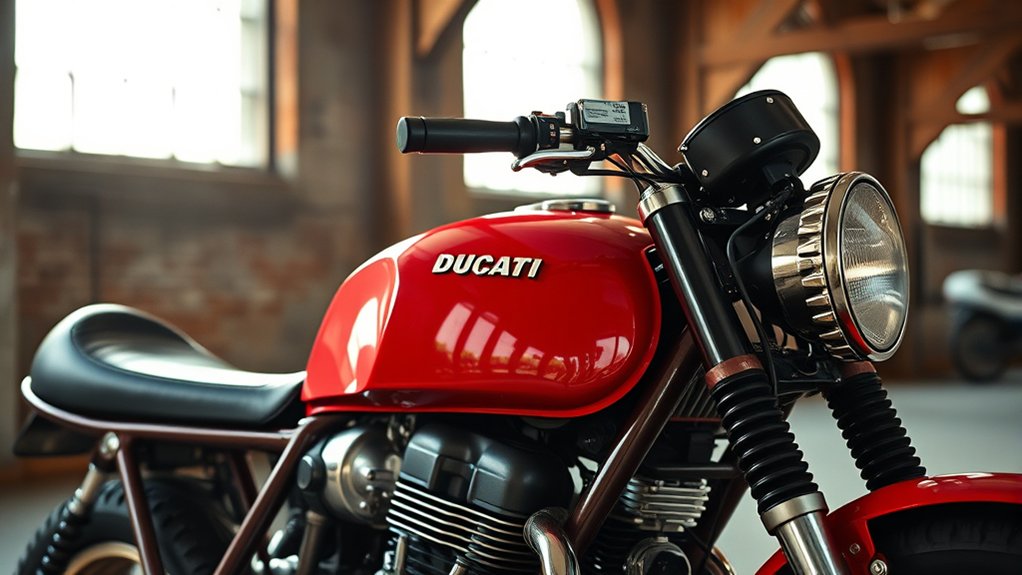
Ducati was founded on 4 July 1926 in Bologna as Società Scientifica Radio Brevetti Ducati. It was originally created to study radio and telephone transmission technologies.
Founded on 4 July 1926 in Bologna, Ducati began as Società Scientifica Radio Brevetti Ducati, studying radio and telephone technologies.
You can trace Ducati’s formal start to Adriano Cavalieri Ducati’s short-wave radio experiments in 1924. These helped launch the company two years later.
At first, Ducati focused on radio and electronic components, including capacitors and receivers. This work was done under what would become Ducati Meccanica.
In the 1930s, the company acquired and developed the Borgo Panigale site. This laid the groundwork for later industrial expansion.
After World War II, Ducati moved into motorcycles. Still, its official founding date remained 4 July.
That anniversary now marks Ducati’s centenary timeline. It leads to celebrations in 2026.
Ducati’s Origins in Bologna
You can trace Ducati’s beginnings back to Bologna, where it was founded on 4 July 1926 as Società Scientifica Radio Brevetti Ducati. In fact, the story starts with Adriano Cavalieri Ducati’s 1924 short-wave radio work, which included one of the first transatlantic contacts with the United States.
At first, the company focused on radios and electronic components, but then it began expanding abroad by the late 1920s.
Later on, in the 1930s, it shifted more toward precision mechanics.
Bologna Beginnings
Bologna was the cradle of Ducati’s story. On 4 July 1926, the company was founded there as Società Scientifica Radio Brevetti Ducati to research radio and telephone transmission technologies.
You can trace its rise through Bologna’s industrial growth. Adriano Cavalieri Ducati’s 1924 short-wave radio work gave the firm early credibility in wireless communication.
| Year | Bologna milestone |
|---|---|
| 1926 | Founded in Bologna |
| 1930s | Built labs and a Mechanical Measurements Center |
| 1935 | Expanded to Borgo Panigale |
| 1946 | Introduced Cucciolo production |
Founding in 1926
On 4 July 1926, the company was founded in Bologna as Società Scientifica Radio Brevetti Ducati, with a clear mission to study radio and telephone transmission technologies. You can trace Ducati to Adriano Cavalieri Ducati’s 1924 short-wave radio breakthrough, which shaped its scientific direction.
In Bologna, you’d see early teams testing shortwave signals and making radio parts, including capacitors, instead of motorcycles. That same year, Ducati sent its first international order: 3,000 Manens capacitors to Buenos Aires, proving its reach beyond Italy.
As demand grew, the Bologna base expanded into precision mechanics and electromechanics. This led to the Borgo Panigale factory site, with land acquired in 1935, as the company developed further.
How the Cucciolo Started Ducati Motorcycles

In March 1946, Ducati introduced the Cucciolo—a 48cc clip-on single-cylinder engine based on a Siata design. It quickly became the company’s first motorized bicycle product.
Mounted on a bicycle, the Cucciolo weighed around 45 kg, could reach nearly 65 km/h, and it used very little fuel. And because sales were so strong—topping 200,000 units by 1950—Ducati didn’t stop there. Instead, it began building full motorcycles at Borgo Panigale in 1948.
Cucciolo’s 1946 Debut
March 1946 marked Ducati’s turn toward motorcycles. That’s when it began producing the Cucciolo, a 48cc clip-on engine made to motorize bicycles.
You can imagine the Ducati brothers bringing Siata’s 1946 design into Borgo Panigale. The Cucciolo gave riders a practical, fuel-sipping route into mobility.
- A compact engine clamped to a bicycle frame.
- A lightweight ride weighing about 45 kg as a motorized bicycle.
- A modest machine that could reach roughly 65 km/h.
- A reliable commuter cutting through postwar streets.
Birth of Ducati Motorcycles
Ducati’s move from the Cucciolo into full motorcycle production began with a much older starting point.
The company itself was founded in Bologna on 4 July 1926 as Società Scientifica Radio Brevetti Ducati, originally focused on radio and telephone transmission technologies.
After the Second World War, you saw Ducati pivot in March 1946.
At IRI’s request, it adopted the Cucciolo, a 48-cc clip-on engine from Siata of Turin.
That lightweight bicycle motor delivered strong fuel economy and about 65 km/h.
Demand surged through the late 1940s.
By 1950, Cucciolo sales had topped 200,000 units.
At that point, you watched Ducati shift from engines to complete Ducati motorcycles, beginning with the Ducati 60.
This success laid the groundwork for Ducati Meccanica SpA in 1953 and its racing future.
The Ducati Models That Built the Brand
From a humble clip-on engine to a race-bred V-twin icon, Ducati built its reputation model by model. You can trace that rise through key machines that changed its course.
- The Cucciolo (1946) began as a 48cc clip-on engine, powered bicycles, and sold more than 200,000 units by 1950.
- In the 1950s, the 98cc Gran Sport, or Marianna, dominated its class and showed Ducati’s growing focus on competition.
- The Mach 1 (1960s) then proved you could get thrilling speed from a 250cc road bike, making it the era’s fastest in its class.
- In 1973, the 750SS brought the desmodromic valve to a V-twin road bike, and you saw Ducati’s high-performance identity lock in.
Fabio Taglioni and Ducati’s Engineering Breakthroughs

In 1954, Fabio Taglioni joined Ducati after time at FB Mondial. Over the next three decades, he began reshaping the company’s engineering direction.
You can trace Ducati motorcycling history through his 30-year run. During that time, he sketched more than a thousand engine and motorcycle projects.
He introduced the desmodromic valve, refined it for racing, then brought it into production. That trademarked desmo V-twin showed up in the 750SS in the early 1970s.
He also paired twin-cylinder engines with lightweight trellis chassis. This sharpened handling and helped improve track results.
As Ducati moved from small singles like the Gran Sport “Marianna” to high-revving overhead-cam and desmo twins, Taglioni’s ideas delivered precise, race-proven performance. That performance became what defined the brand.
How Ducati Changed Hands Over Time
After wartime damage pushed the Ducati brothers to sell the company in 1948, Ducati began a long series of ownership changes that reshaped its future. You can trace the shifts clearly across decades of motorcycling history:
- In 1975, EFIM put Ducati under state control, then sold it to VM Motori in 1978.
- In 1985, Cagiva acquired Ducati and kept the name alive on the bikes you recognize.
- In 1996, Texas Pacific Group bought 51%, later took full control, and launched Ducati Motor Holding SpA in a 1999 IPO.
- In December 2005, Ducati returned to Italian ownership through Investindustrial, then joined Audi Volkswagen via Lamborghini in 2012.
Through each transfer, Ducati earned its place by surviving upheaval and preserving its identity.
Ducati’s Road to the Centenary
With Ducati’s ownership history settled into a modern era under Audi Volkswagen, the brand turned its attention to a major milestone: its 100th anniversary in 2026.
On July 4, 2025, you saw Ducati launch its Road to Centenary campaign on the 99th anniversary of its 1926 founding in Bologna.
The initiative traces a chronological journey from 1926. It highlights key figures, iconic models, and engineering advances that shaped the brand.
Ducati also opened an official Museum Instagram profile. You can follow its historical, technical, and sporting legacy worldwide.
The Borgo Panigale Experience lets you explore the museum’s past and the Borgo Panigale factory’s present, where bikes still get built.
Through digital content and on-site programming, Ducati reaches loyal fans and new generations alike ahead of 2026.
Frequently Asked Questions
Who Founded Ducati?
You’d answer that Ducati was founded by Adriano Cavalieri Ducati and his brothers, Marcello and Bruno, in Bologna in 1926.
Adriano led the venture as the main scientific mind, building on his work in short-wave radio.
You can trace their company from radio parts, like vacuum tubes and capacitors, to later motorcycle production.
In 1948, postwar damage forced the family to sell the business to Italian state holdings.
What Does Ducati’s Name Mean?
Ducati’s name comes from the Ducati family surname, so you’re hearing a proper name rather than a translated word. The three Ducati brothers, Adriano, Marcello, and Bruno, used it when they founded their Bologna company in 1926.
It first appeared in Società Scientifica Radio Brevetti Ducati, then stayed as the brand shifted from radio parts to motorcycles. Over time, you’ve come to associate Ducati with Italian engineering, racing, and performance.
Where Was Ducati’s First Factory Located?
You can trace Ducati’s first factory to Bologna, Italy. The company set up its initial production site after founding in 1926.
Ducati later expanded in 1935 into the Borgo Panigale district. It acquired land for a much larger manufacturing complex.
After the war, that site became its main factory. Today, it’s home to the Ducati Museum and visitor experience, reflecting its industrial history and community role.
What Happened to Ducati During World War II?
During World War II, you’d see Ducati as a workshop under siege.
Bombers and military damage hit its Bologna and Borgo Panigale factories, and production stalled.
After the war, the company rebuilt from the rubble.
It kept its precision skills and shifted to radios, cameras, and projectors.
In 1946, it launched the Cucciolo engine.
Then in 1948, the Ducati brothers sold it amid recovery and rebuilding.
When Did Ducati Enter Motorcycle Racing?
You’d see Ducati enter motorcycle racing in the early 1950s, when it fielded tuned versions of its small-displacement bikes.
In 1953, it showed the 98S sports model at the Milan Show.
Then, in 1954, hiring engineer Fabio Taglioni pushed Ducati’s racing program forward.
His 98cc Gran Sport quickly proved competitive in endurance and road races, setting the stage for Ducati’s later racing success.
Conclusion
By now, you can trace Ducati’s story from its 1926 founding in Bologna to its rise as a motorcycle legend. You’ve seen how the Cucciolo sparked its two-wheeled future. You’ve also seen how landmark models and Fabio Taglioni’s genius fueled its climb.
And then there were the ownership changes, which helped steer its path. Like a red thread stitched through Italian engineering history, Ducati’s journey has kept accelerating.
As it neared its centenary, it wasn’t just surviving. It was roaring ahead.


